Artwork
Santa Clara e Santa Coleta
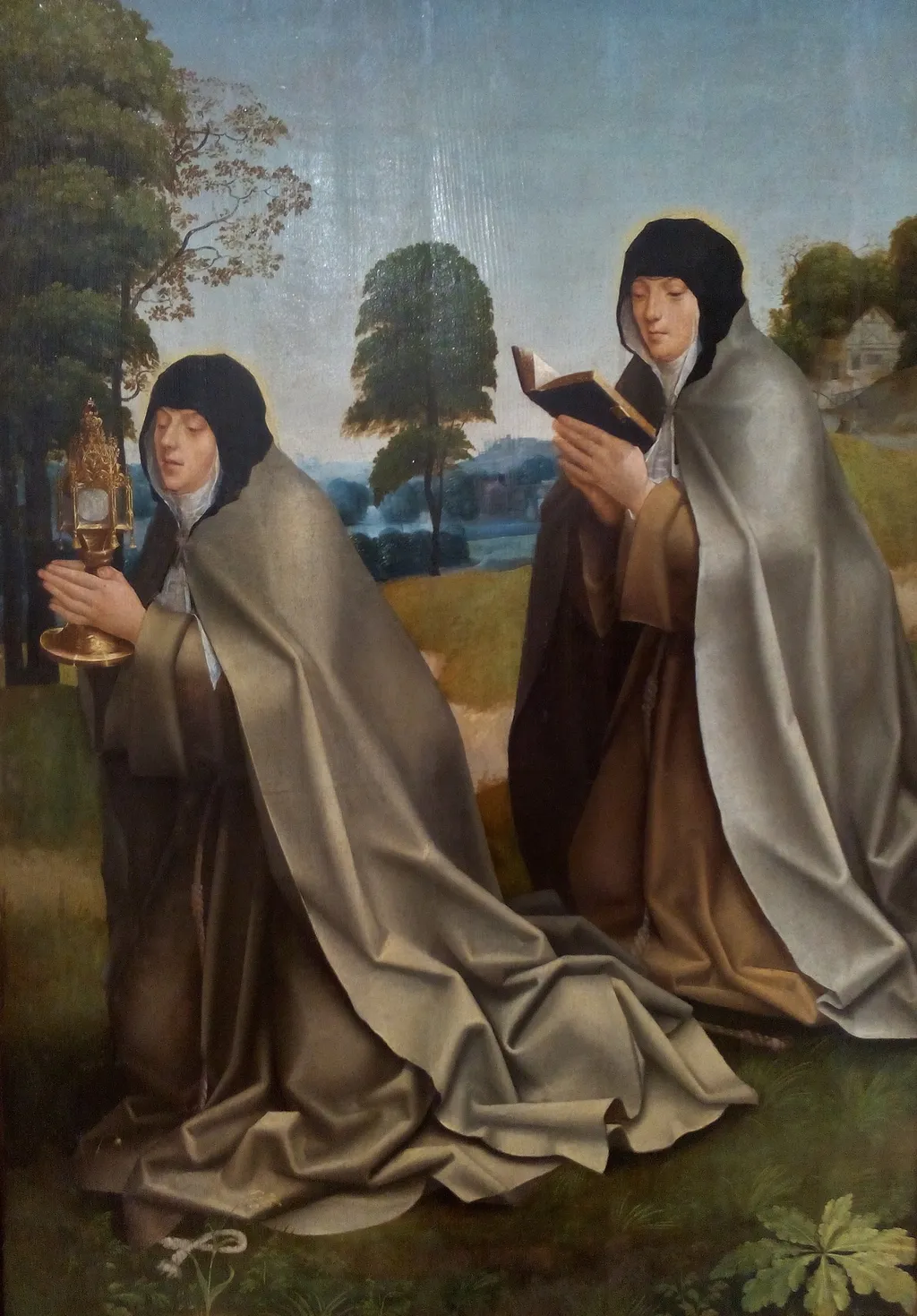
Santa Clara e Santa Coleta is an unspecified painting by the Northern Renaissance artist Master of Lourinhã. It dates from 1520 and is held in the collection of the National Museum of Ancient Art.
About this work
Overview
Likely of North Netherlandish origin, the painter worked within the Northern Renaissance tradition, blending detailed naturalism with spiritual restraint.
Painted in 1520 by the Master of Lourinhã, a Portuguese artist active in the early 16th century, this panel depicts two female saints in quiet devotion. Likely of North Netherlandish origin, the painter worked within the Northern Renaissance tradition, blending detailed naturalism with spiritual restraint. The work is now held in the collection of the National Museum of Ancient Art in Lisbon, where it remains one of the few surviving panels attributed to this elusive figure.
Subject & Meaning
The figures are Saint Clare of Assisi and Saint Colette of Corbie, both reformers of the Poor Clares order. Clare, on the left, holds a pyx—symbolizing the Eucharist, a central element of her devotion—while Colette, on the right, holds an open book, representing her scholarly piety and adherence to monastic rule. Their kneeling posture and unified gaze suggest shared spiritual focus, emphasizing humility and contemplative life over theatrical display.
Technique & Style
The painting employs fine brushwork characteristic of Northern Renaissance traditions, with meticulous attention to fabric folds, metallic textures, and atmospheric depth. The robes are rendered with subtle gradations of color, and the golden pyx displays intricate detailing. The landscape background—softly modeled trees, a distant body of water, and a pale sky—creates a serene, enclosed world, reinforcing the saints’ withdrawal from worldly concerns.
History & Provenance
The panel’s early history is undocumented, but it likely originated in a Portuguese religious institution, possibly a convent associated with the Franciscan reform movement. It entered the National Museum of Ancient Art’s collection in the 19th century, among early acquisitions of medieval and Renaissance Portuguese art. Its attribution to the Master of Lourinhã rests on stylistic comparisons with other unsigned works from the same period and region.
Context
In early 16th-century Portugal, devotional imagery of female saints was common in monastic settings, especially among orders emphasizing poverty and contemplation. The painting reflects broader European trends in Northern Renaissance art—detailed realism, symbolic objects, and quiet emotional tone—adapted to local religious sensibilities. The choice of Clare and Colette, both reformers, may have resonated with contemporary efforts to renew monastic discipline.
Legacy
As one of the few signed or attributable works from the Master of Lourinhã, this painting offers insight into the transmission of Northern techniques in Portugal during the transition from Gothic to Renaissance styles. While not widely known outside Portugal, it remains a key example of early 16th-century Portuguese panel painting, illustrating how devotional themes were rendered with quiet dignity and technical precision.
Artist & collection
Artist
The Master of Lourinhã (Portuguese: Mestre da Lourinhã) was a Portuguese painter of religious scenes active between 1510 and 1525.

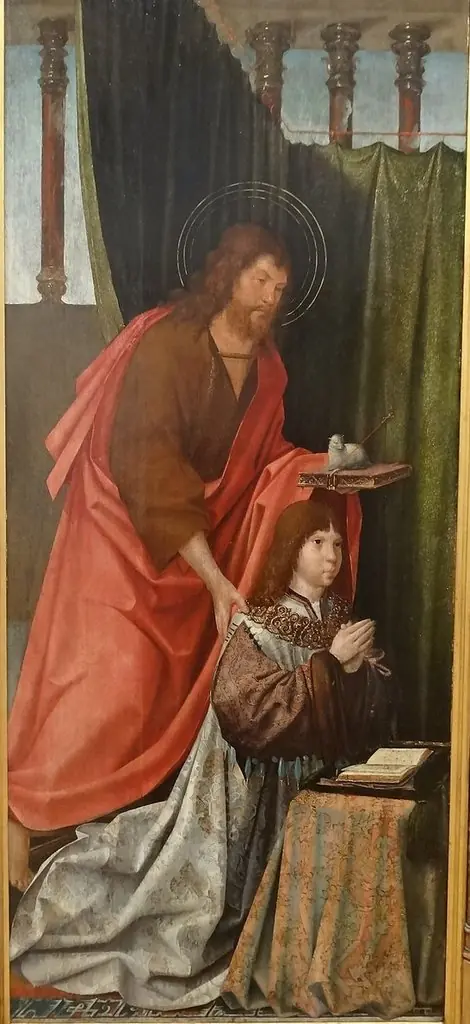
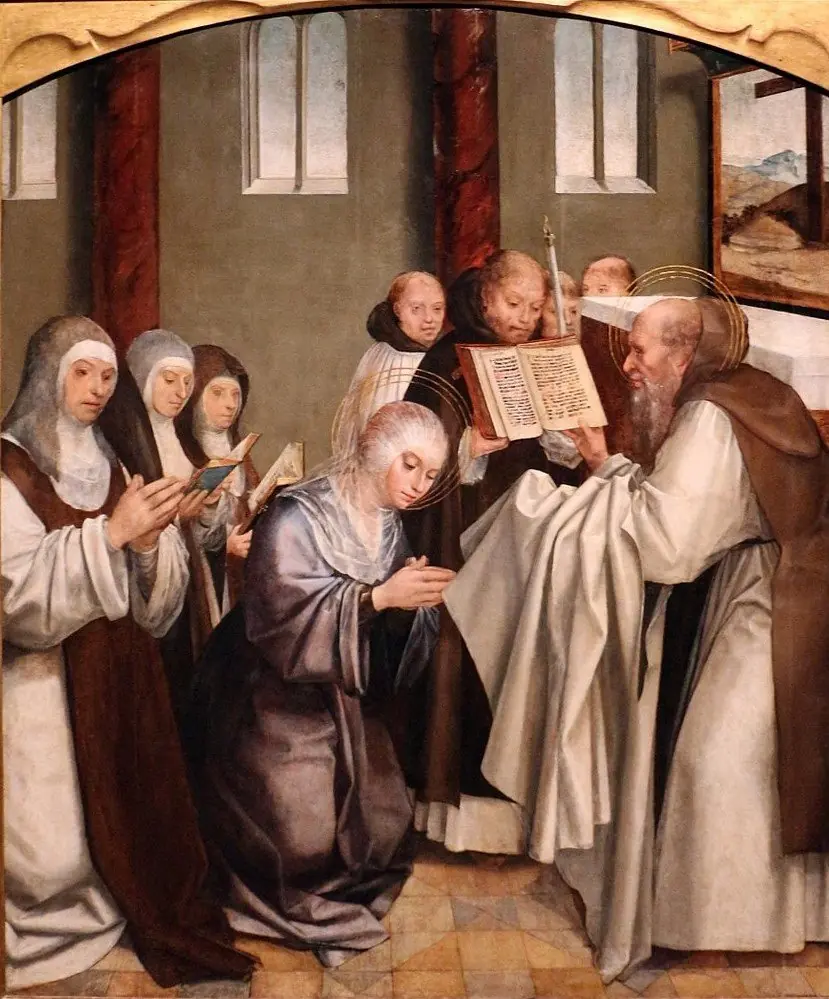
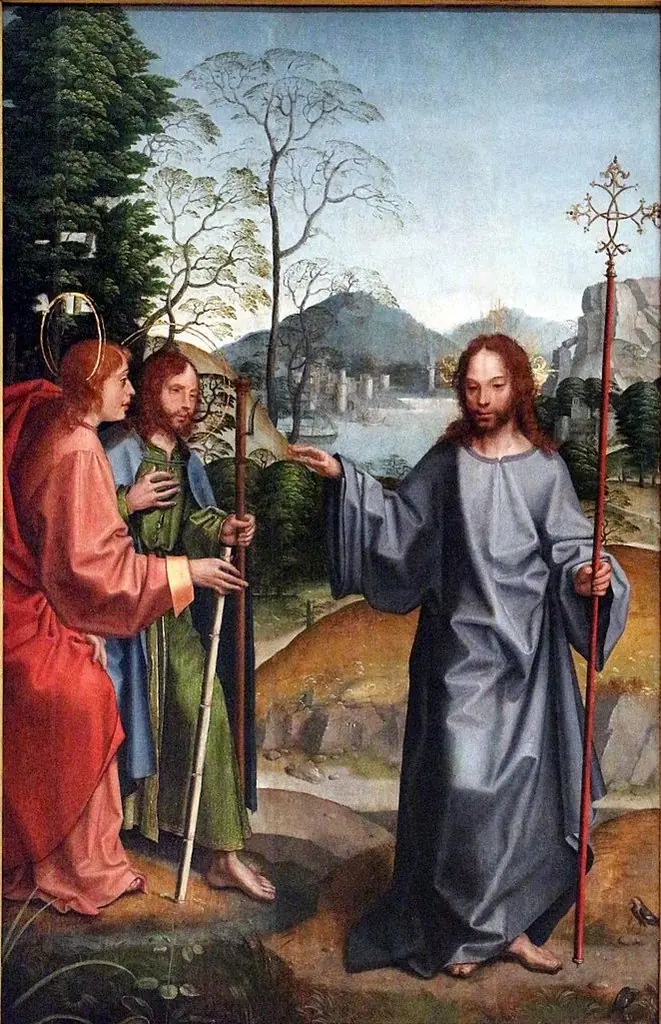
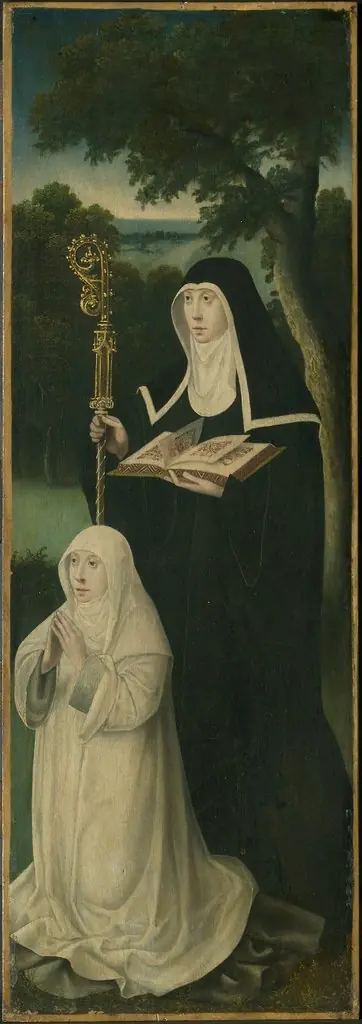 Saint Gertrude of Nivelles and an Augustinian Canoness
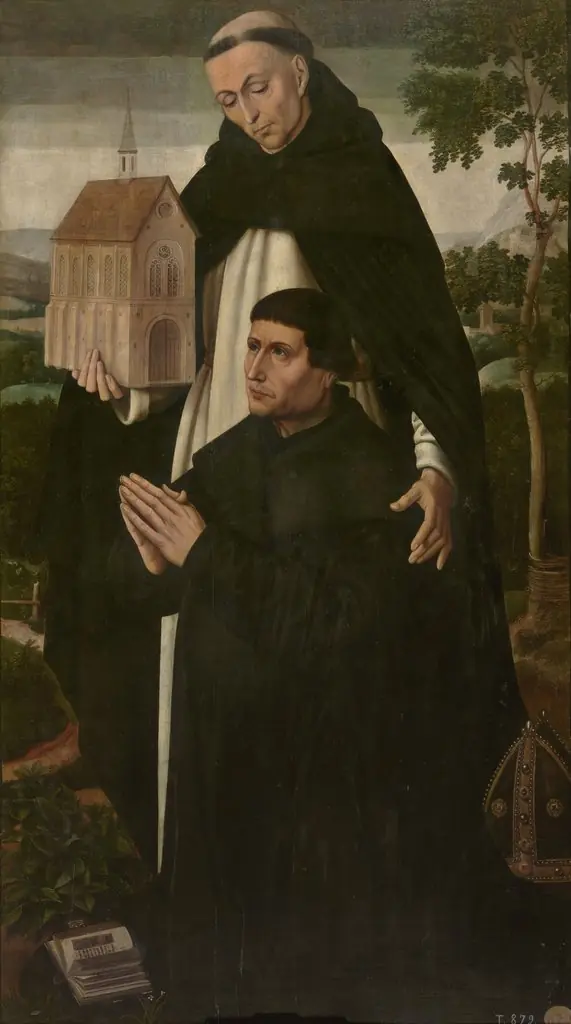 Santo Tomás y un donante
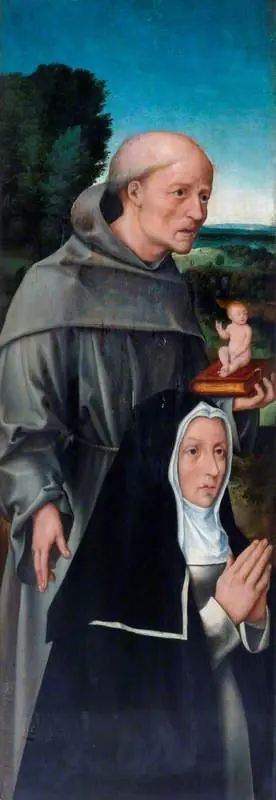 Saint Anthony of Padua with a Nun
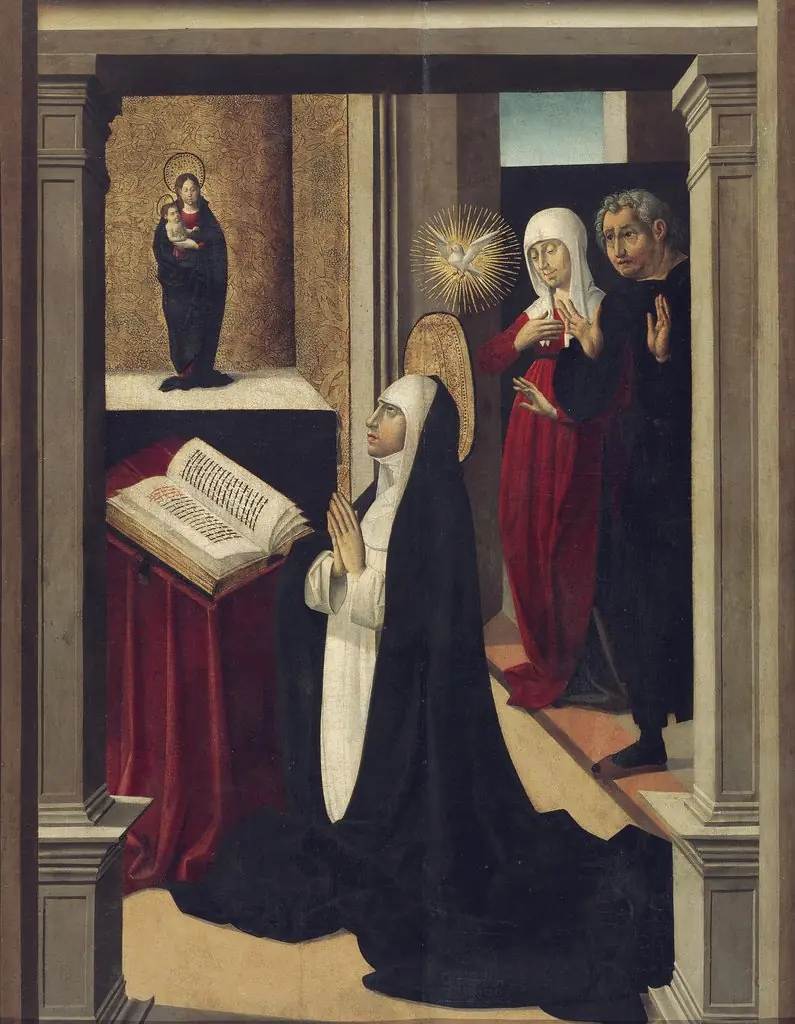 The Calling of Saint Catherine of Sienna
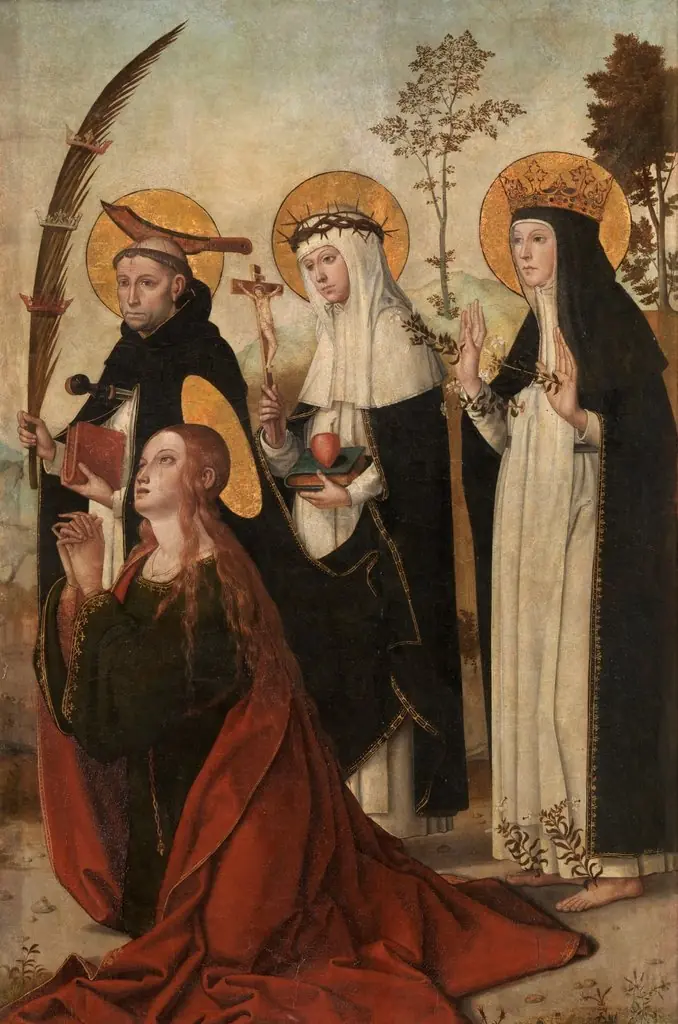 Mary Magdalene Saint Peter of Verona Saint Catharine of Sienna and Blessed Margaret of Hungary
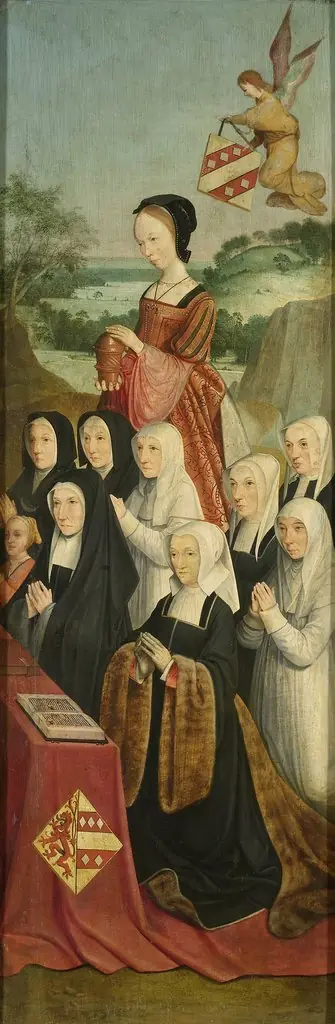 Memorial Panel with Nine Female Portraits, inner right wing of an altarpiece
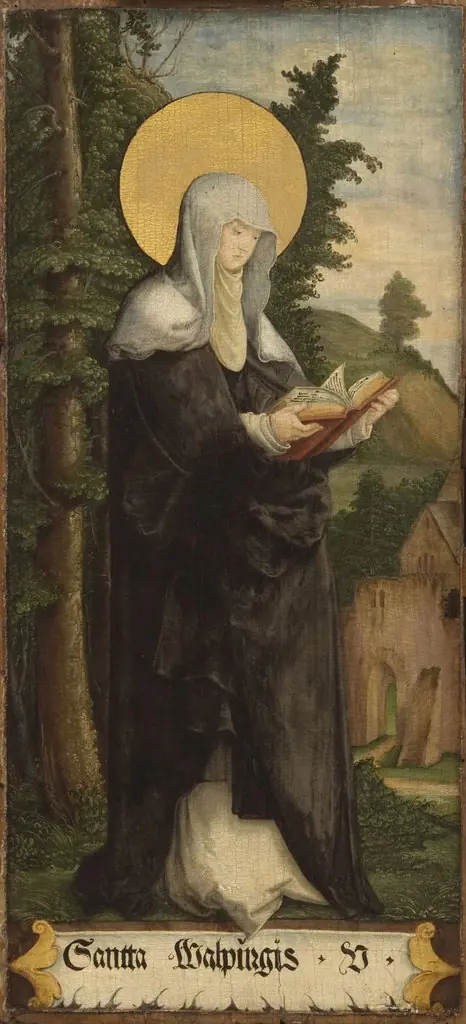 Saint Walpurgis
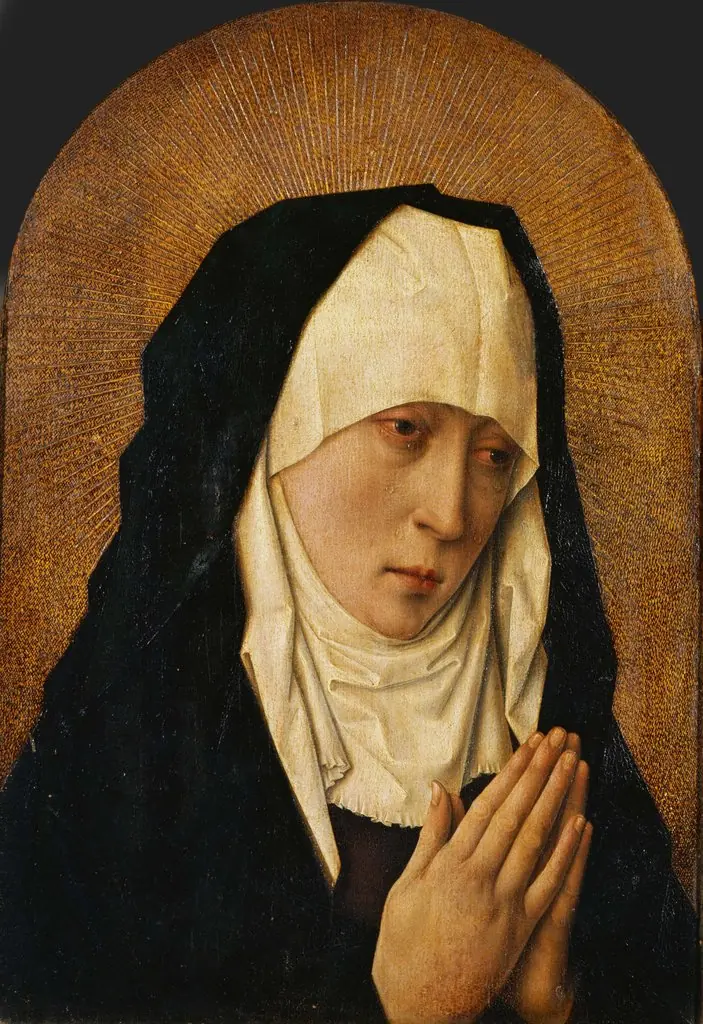 Mater Dolorosa
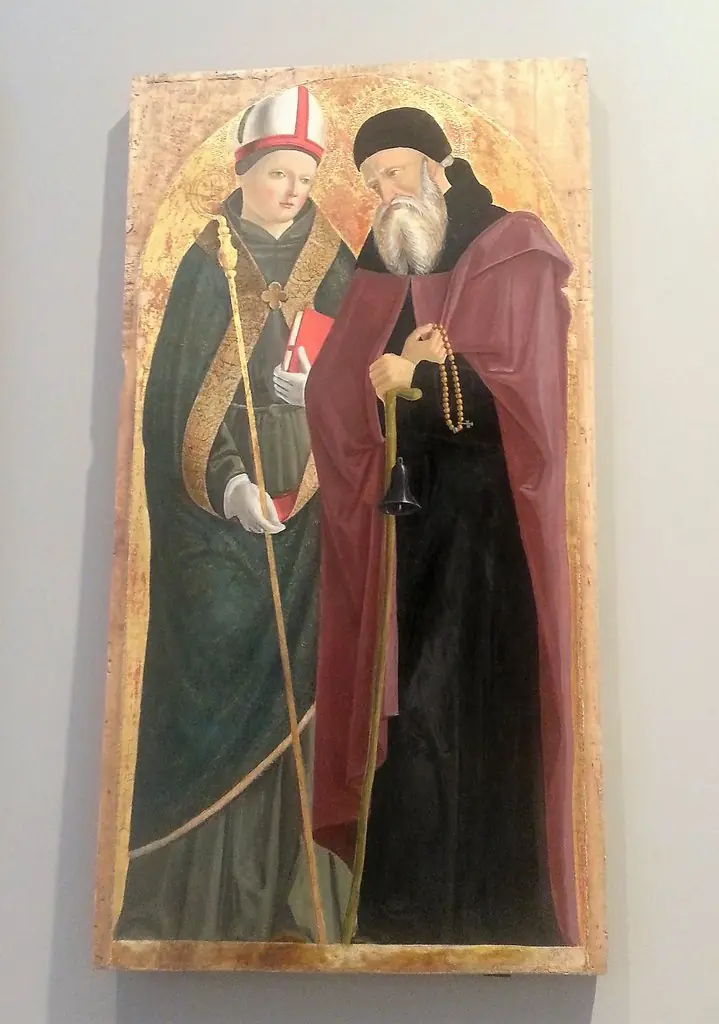 Saints Ludwig of Toulouse and Saint Antonio Abate
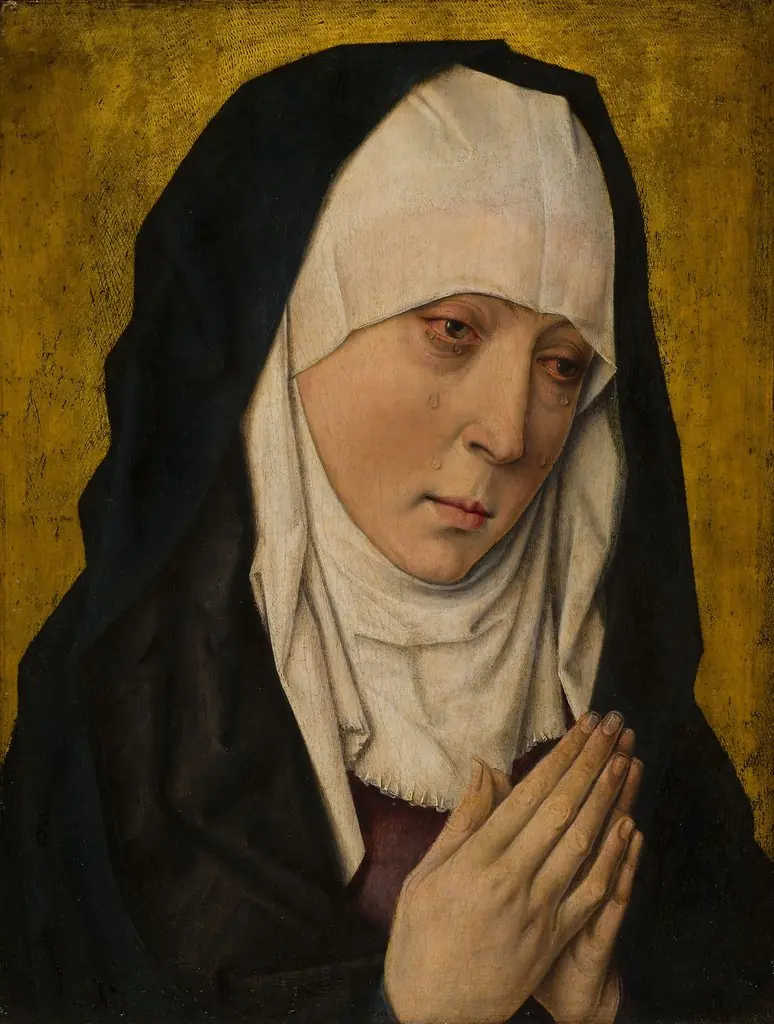 Mater Dolorosa (Sorrowing Virgin)
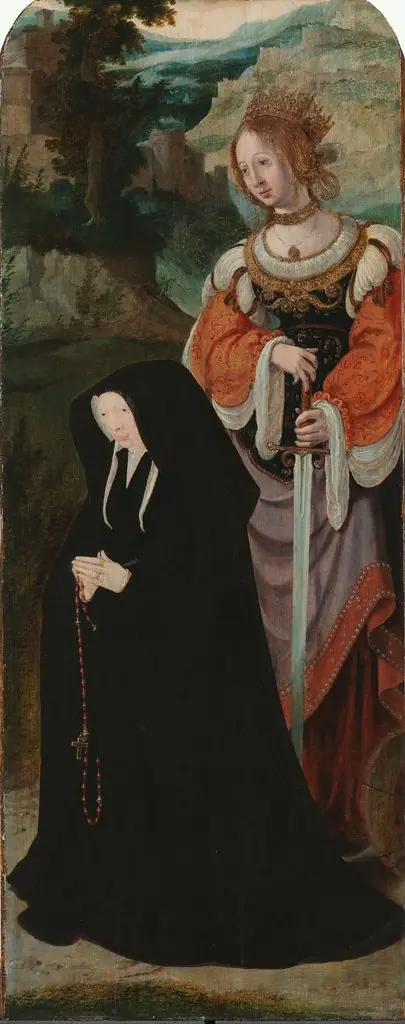 Wing of Lazarus tritptych with donor and Saint Catharine
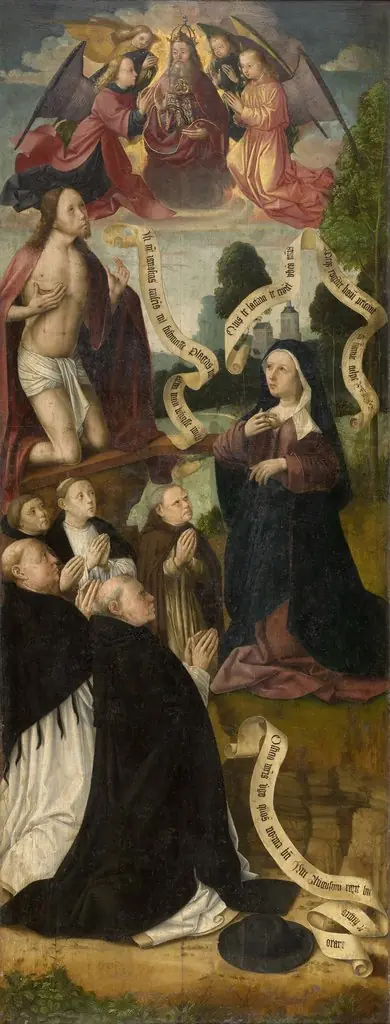 Stairway to Heaven