Artwork
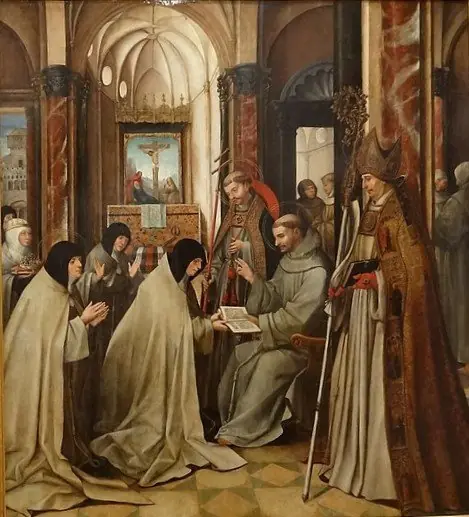
São Jerónimo entrega o hábito a Santa Eustóquia com Santa Paula
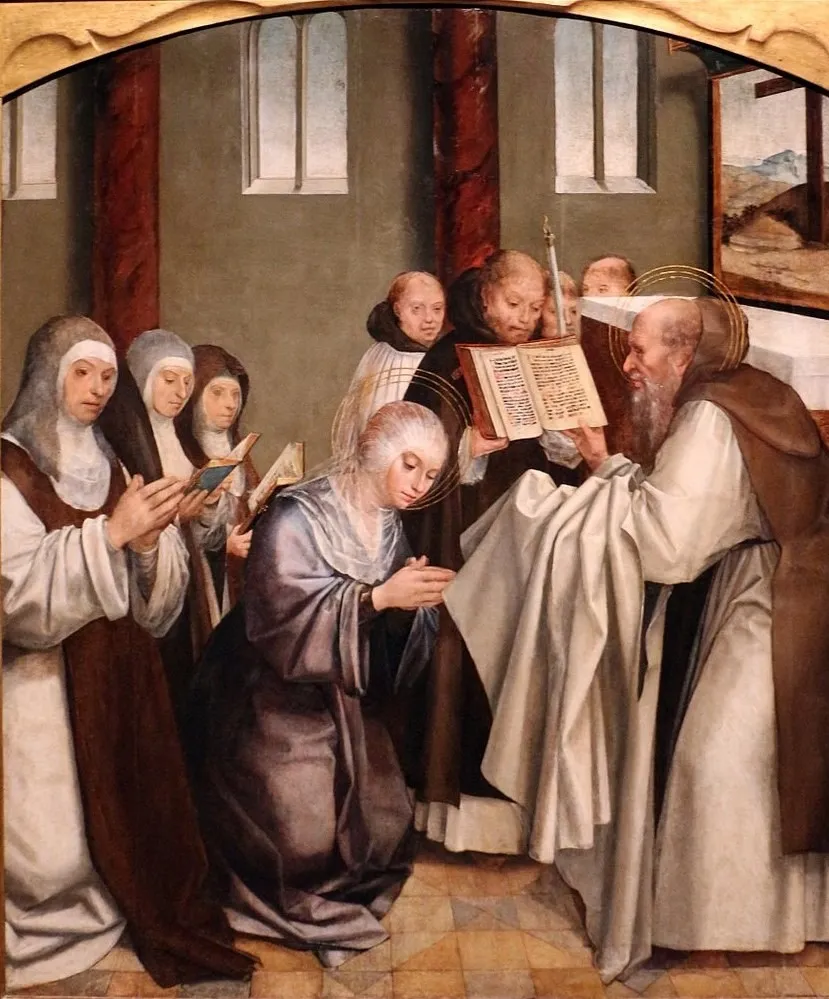
São Jerónimo entrega o hábito a Santa Eustóquia com Santa Paula is an unspecified painting by the Northern Renaissance artist Master of Lourinhã. It dates from 1520 and is held in the collection of the National Museum of Ancient Art.
About this work
Overview
The painting is now held in the National Museum of Ancient Art in Lisbon, where it remains a key example of early Portuguese panel painting.
Painted in 1520 by the Master of Lourinhã, this work is one of the few surviving religious panels attributed to this Portuguese artist active in the early 16th century. Likely of North Netherlandish origin, the painter worked within the Northern Renaissance tradition, blending local devotional themes with detailed, quiet realism. The painting is now held in the National Museum of Ancient Art in Lisbon, where it remains a key example of early Portuguese panel painting.
Subject & Meaning
The scene illustrates Saint Jerome, the translator of the Bible, bestowing the monastic habit upon Saint Eustochia, his spiritual daughter and collaborator. Saint Paula, Eustochia’s mother and fellow ascetic, stands nearby as witness. The act symbolizes the transmission of religious authority and the founding of a contemplative community. Books held by all figures emphasize scholarship and devotion as central to their spiritual identity.
Technique & Style
The painting employs fine brushwork and muted, earth-toned pigments typical of Northern Renaissance portraiture. Figures are rendered with careful attention to fabric texture and facial expression, conveying solemnity rather than drama. The tiled floor and architectural backdrop suggest spatial depth, while the grouping of figures creates a quiet, intimate hierarchy centered on the moment of habit-giving.
History & Provenance
The panel likely originated as part of a devotional altarpiece in a Portuguese convent or church, possibly linked to Augustinian or Benedictine communities devoted to Saint Jerome. Its survival into the modern era is rare, as many such works were lost to secularization or damage. It entered the National Museum of Ancient Art’s collection in the 19th century through institutional acquisitions of ecclesiastical art.
Context
In early 16th-century Portugal, religious imagery often reflected humanist interests in early Christian figures, especially those tied to scriptural scholarship. Saint Jerome’s prominence in this period aligned with broader European trends in monastic reform and biblical study. The painting’s quiet tone contrasts with more theatrical Counter-Reformation works, suggesting a lingering influence of pre-Reformation Northern European piety.
Legacy
As one of the few signed or attributable works by the Master of Lourinhã, this painting helps define the stylistic boundaries of early Portuguese panel painting. It remains a reference point for understanding how Northern European techniques were adapted in Portugal before the full impact of Italian Renaissance models. Its preservation offers insight into the devotional culture of Lisbon’s religious institutions in the early 1500s.
Artist & collection
Artist
The Master of Lourinhã (Portuguese: Mestre da Lourinhã) was a Portuguese painter of religious scenes active between 1510 and 1525.

 S. Francisco delivering the Statutes of the Order to Santa Clara
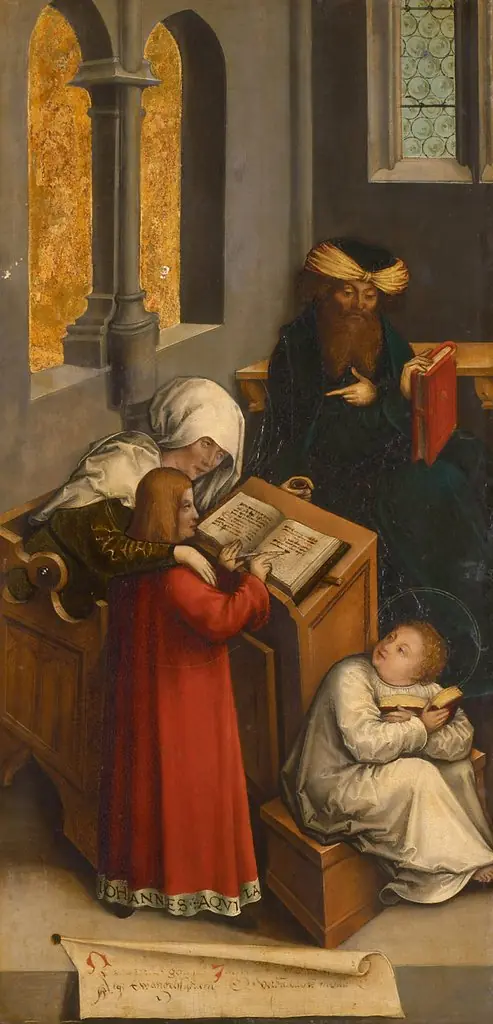 John the Evangelist is taught to write
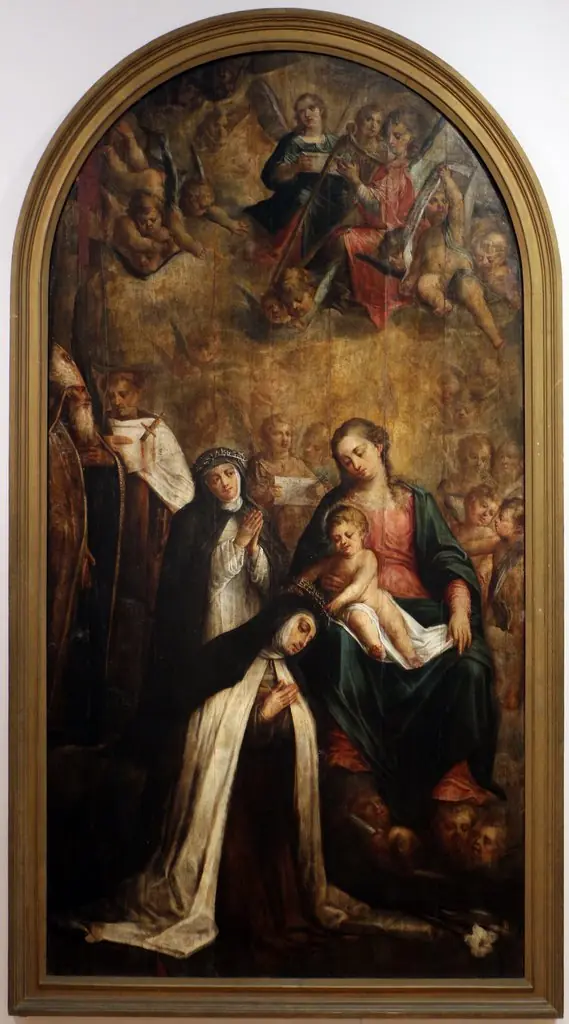 Saint Mary Magdalene of Pazzi crowned with thorns
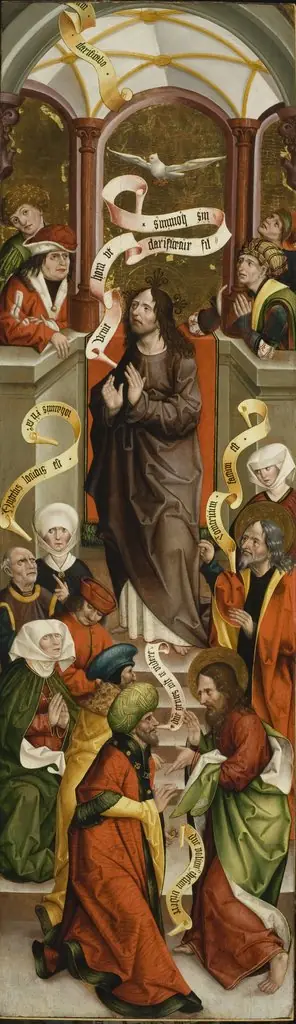 Christ Preaching in the Temple
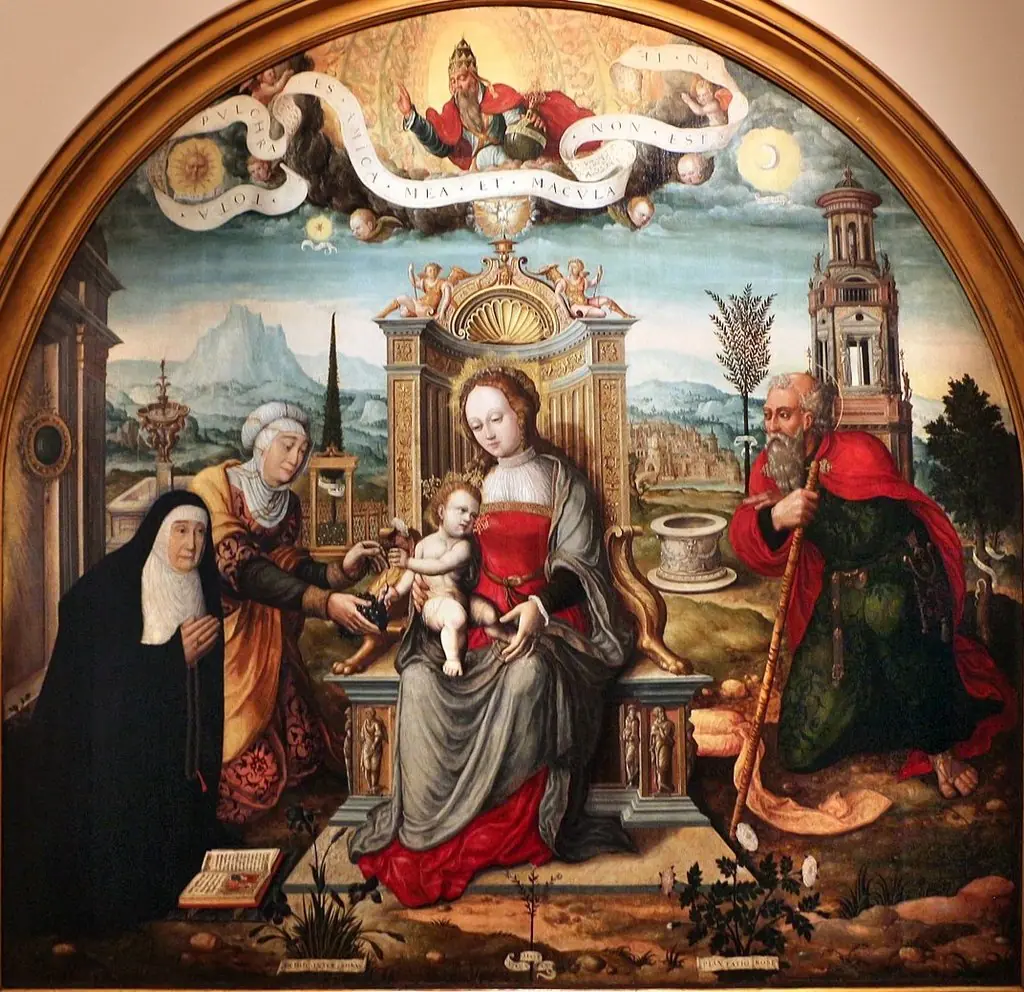 A Virgem Maria e o Menino Jesus com Santa Ana, São Joaquim e Doadora
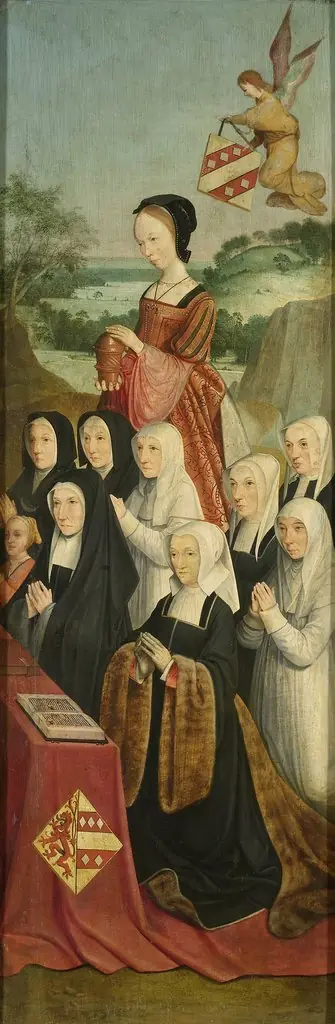 Memorial Panel with Nine Female Portraits, inner right wing of an altarpiece
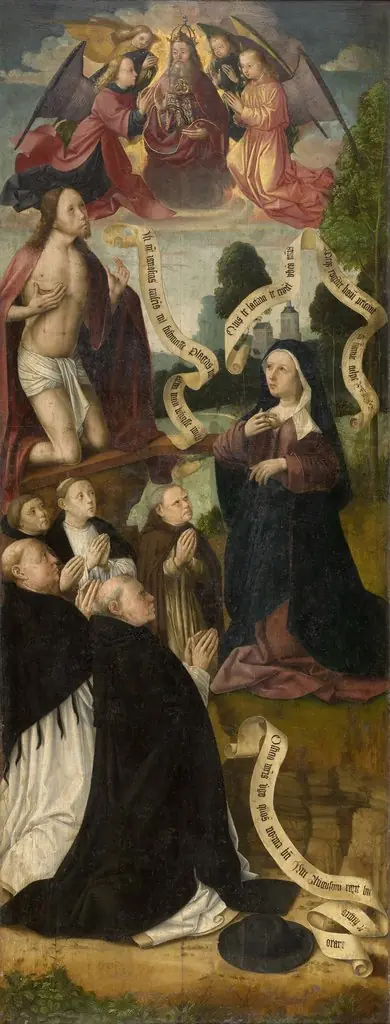 Stairway to Heaven
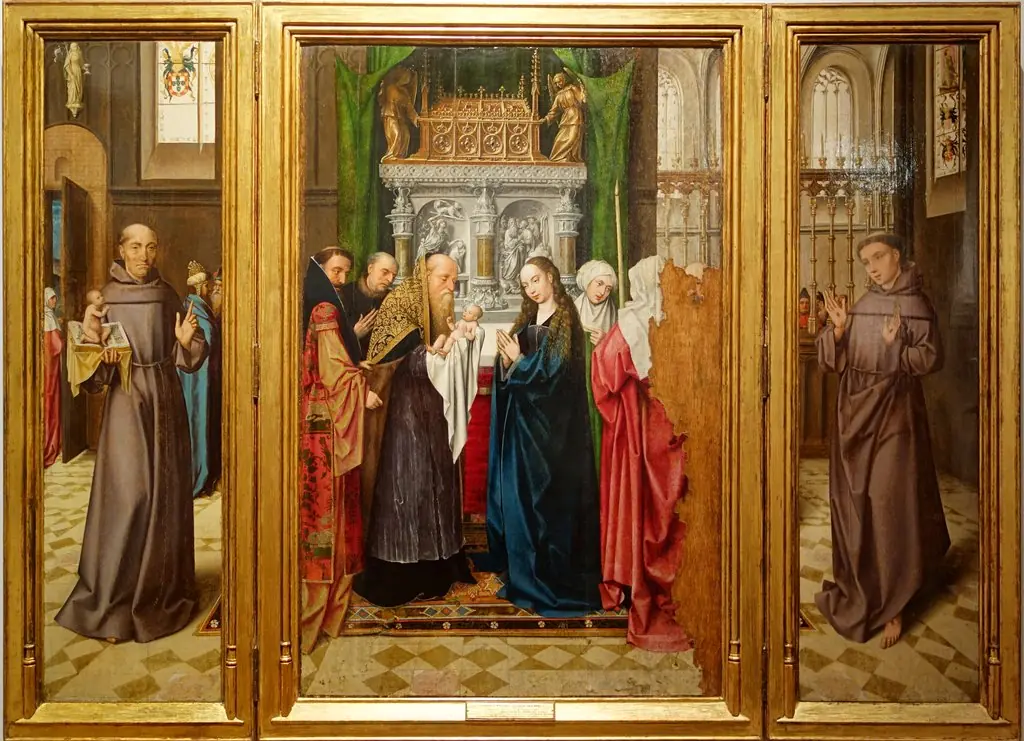 Triptych of the Presentation of Jesus in the Temple
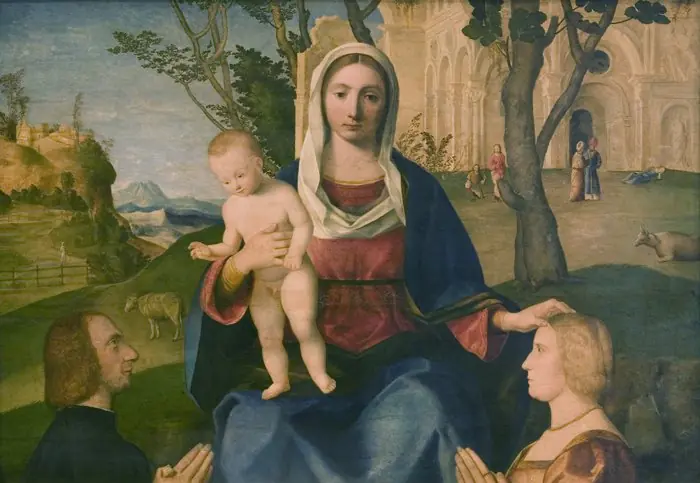 The Virgin and Child with a Male and a Female Donor
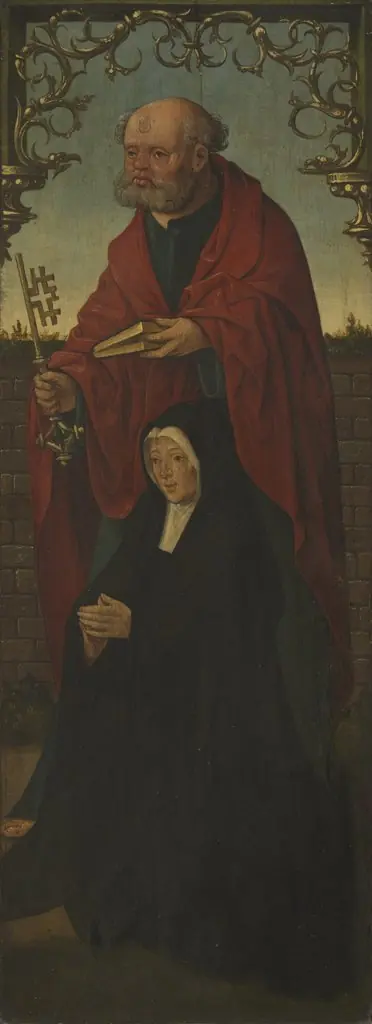 Saint Peter and a Donor; Saint Thomas (reverse)
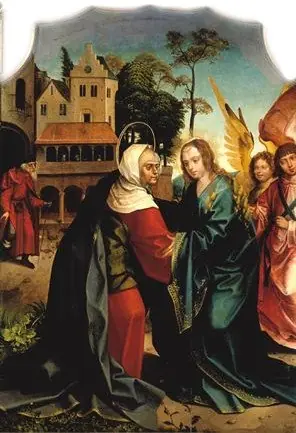 Visitation
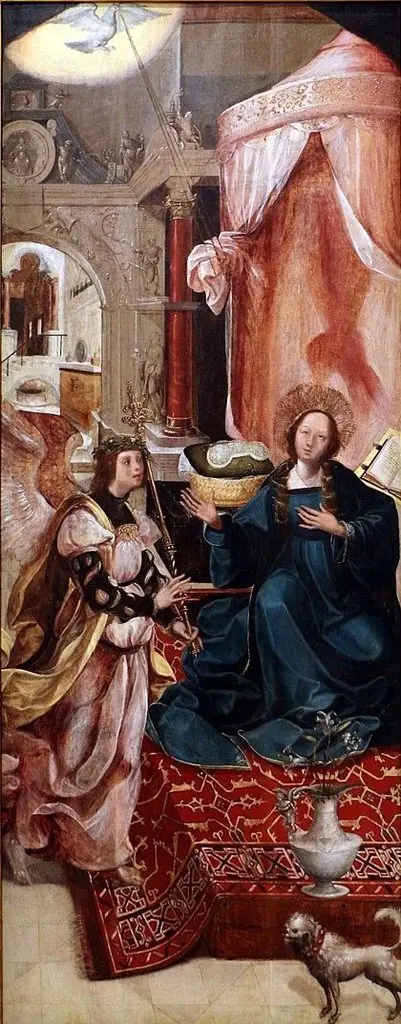 Anunciação