Artwork
Saint Catherine and Saint Barbara (pair)
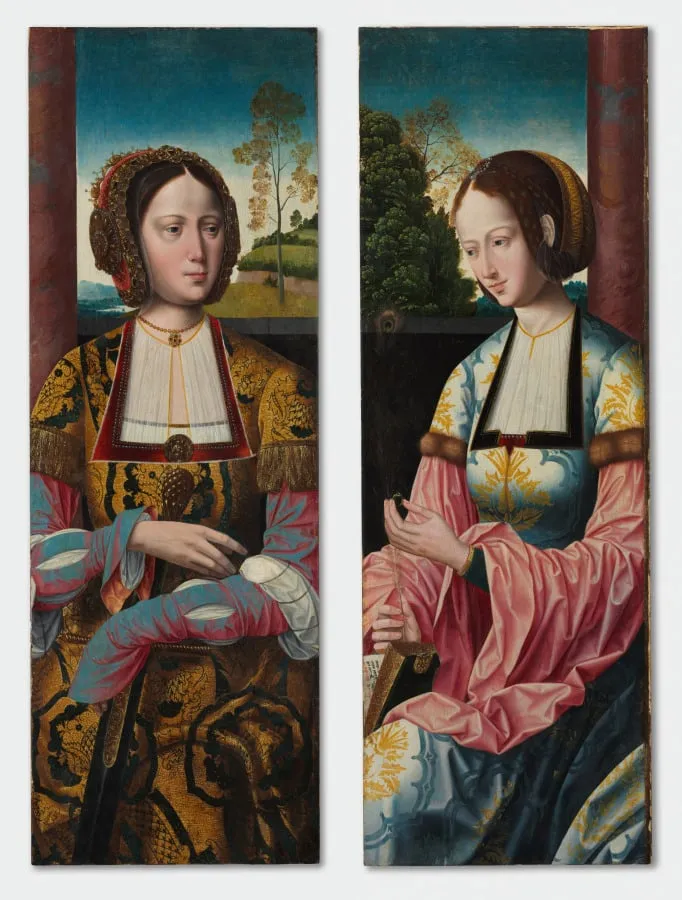
Saint Catherine and Saint Barbara (pair) is an unspecified painting by the Northern Renaissance artist Master of the Holy Blood. It dates from 1520 and is held in the collection of the Cleveland Museum of Art.
About this work
Overview
The pair of panels depict Saint Catherine and Saint Barbara, each rendered as a standing figure holding attributes linked to their hagiographies.
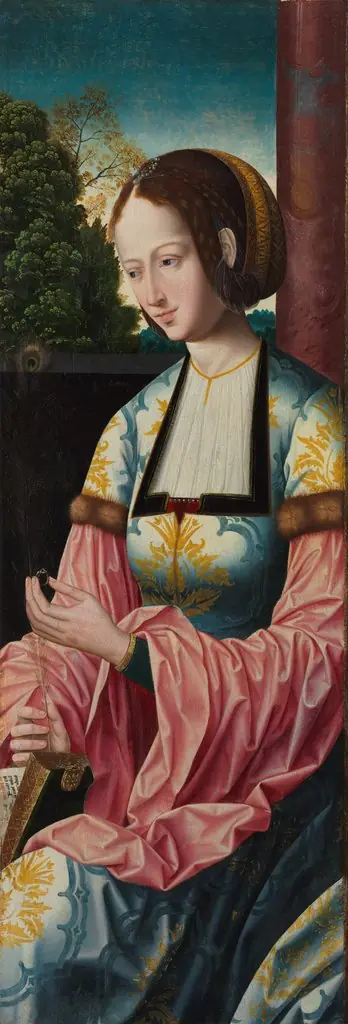
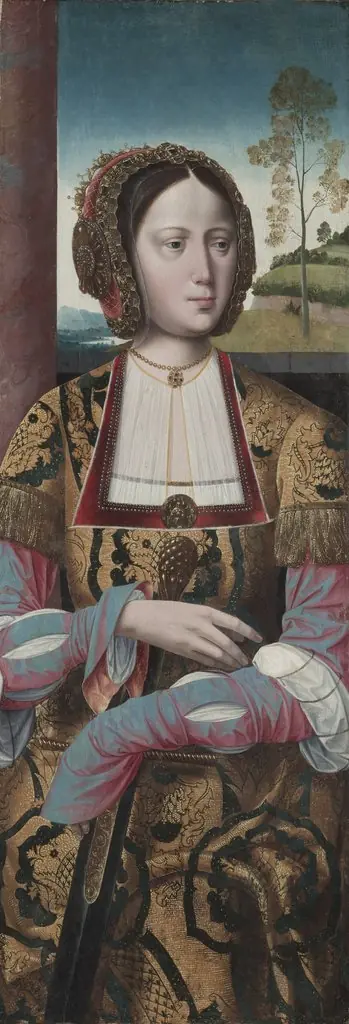
The pair of panels depict Saint Catherine and Saint Barbara, each rendered as a standing figure holding attributes linked to their hagiographies. Catherine is shown with a sword, the instrument of her martyrdom, while Barbara carries a book and a ring, symbols of her learned devotion and spiritual marriage. The works originally functioned as the lateral wings of a larger altarpiece, the central panel of which is now missing.
Subject & Meaning
In the iconography, Catherine’s sword references the legend of her beheading, emphasizing her steadfast faith. Barbara’s book denotes her scholarly pursuits, and the ring alludes to the legend of her mystical union with God, sometimes illustrated by the transformation of her tormenting cords into peacock feathers.
Technique & Style
The paintings exhibit the meticulous detail and luminous colour typical of early‑15th‑century Flemish panel work. Fine brushwork renders the saints’ garments and accessories, while the handling of light creates a subtle modelling of form, reflecting the influence of contemporary masters active in Bruges.
History & Provenance
The artist remains anonymous; scholars refer to him as the “Master of the Chapel of the Holy Blood” after a related work in Bruges. The panels were likely commissioned for a local church altar, flanking a now‑lost central image that may have portrayed the Holy Family. Their survival is tied to the commercial prosperity of Bruges during the 1400s‑early 1500s, when the city attracted merchants, bankers, and Burgundian patrons.
Context
Bruges in the 15th century was a hub of artistic production, home to figures such as Jan van Eyck, Petrus Christus, Hans Memling, and Gerard David. The city’s wealth supported a range of visual arts, from large altarpieces to intimate devotional panels and illuminated manuscripts, providing a fertile environment for the creation of works like these saintly portraits.
Artist & collection
Artist
Master of the Holy Blood (active 1510–1520) was an Early Netherlandish painter, whose workshop was located in Bruges (Belgium).

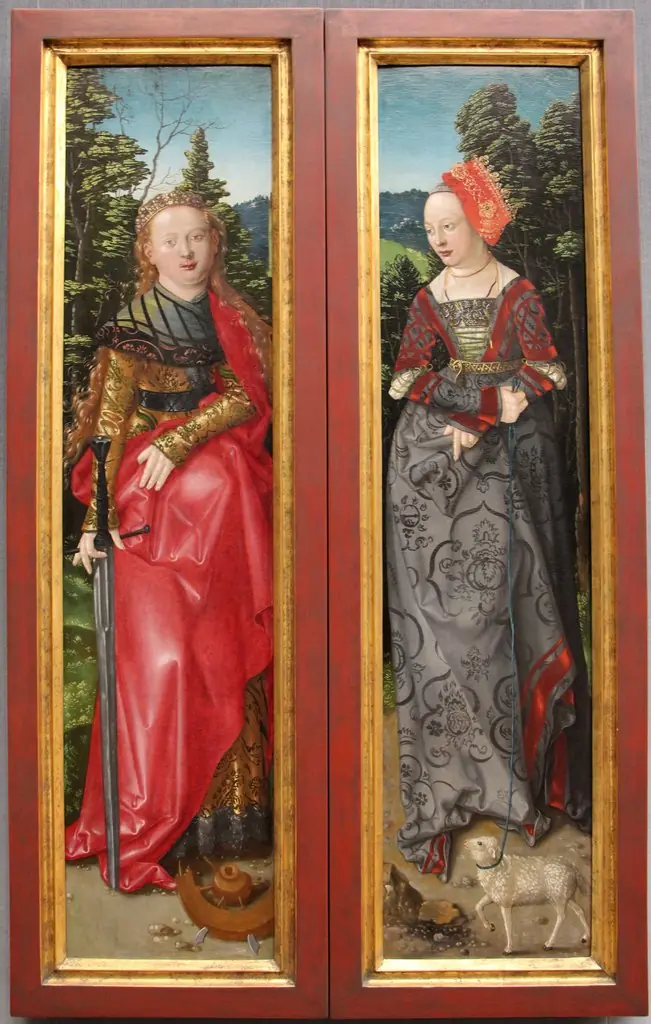 Der Dreikönigsaltar Außentafeln: Die Heiligen Katharina und Agnes
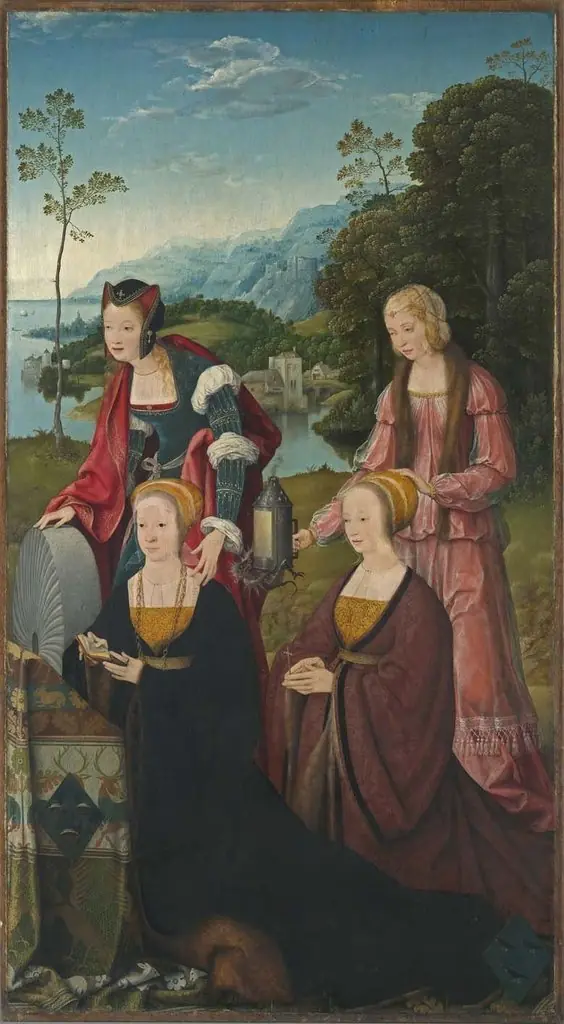 Marientod Altar: Saints Christina and Gudula with donors Christina and Sibilla Hackeney behind outside: SS. Sebastian and Roch
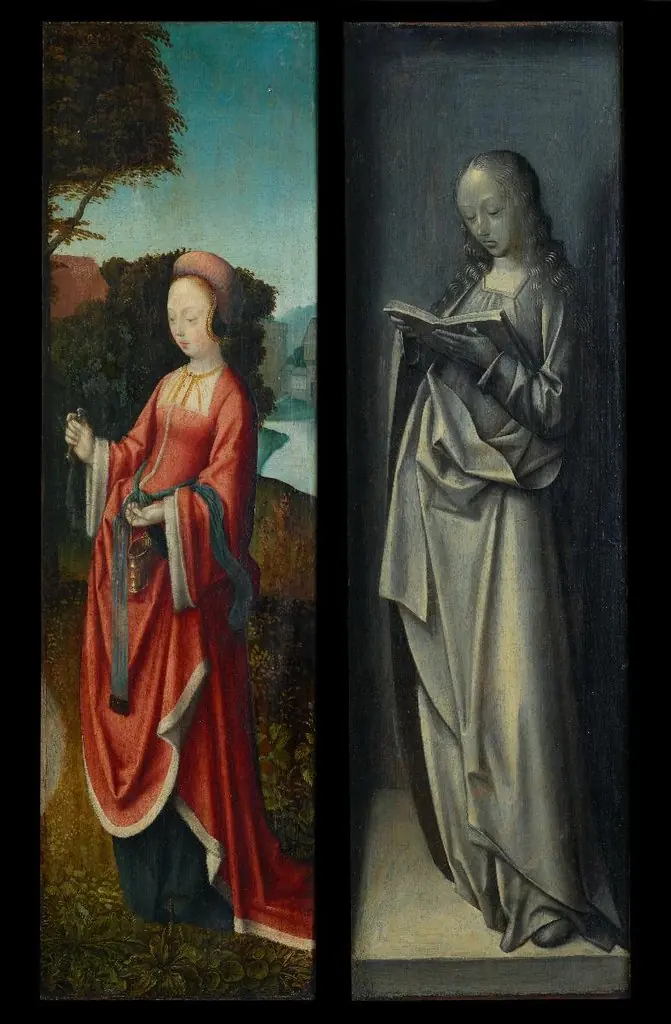 Rechter Flügel: St. Martha. Aussenseite: Verkündigungsmaria
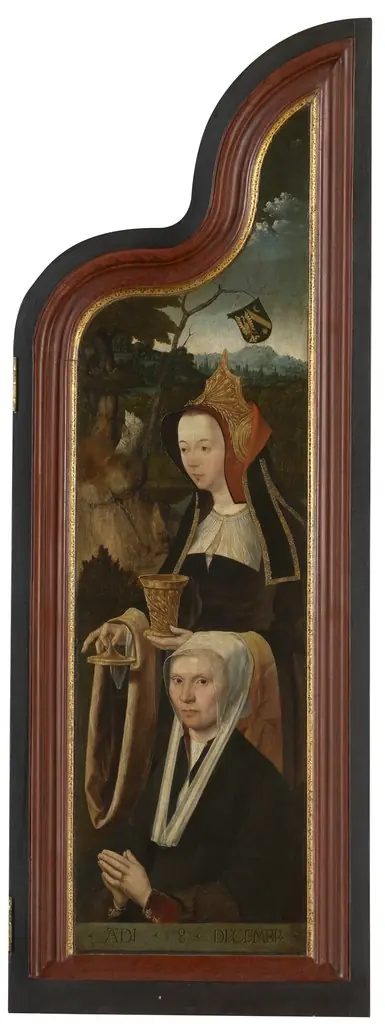 Portrait of Gerbrich Claesdr
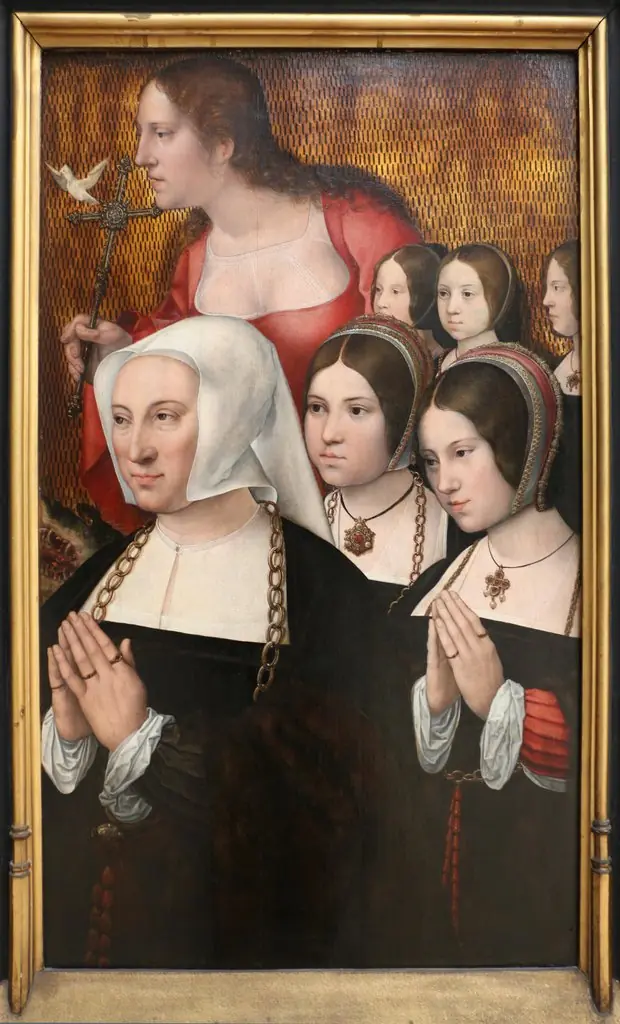 Portrait of Marguerite Numan, wife of Philippe Haneton, with her five daughters and Saint Margaret
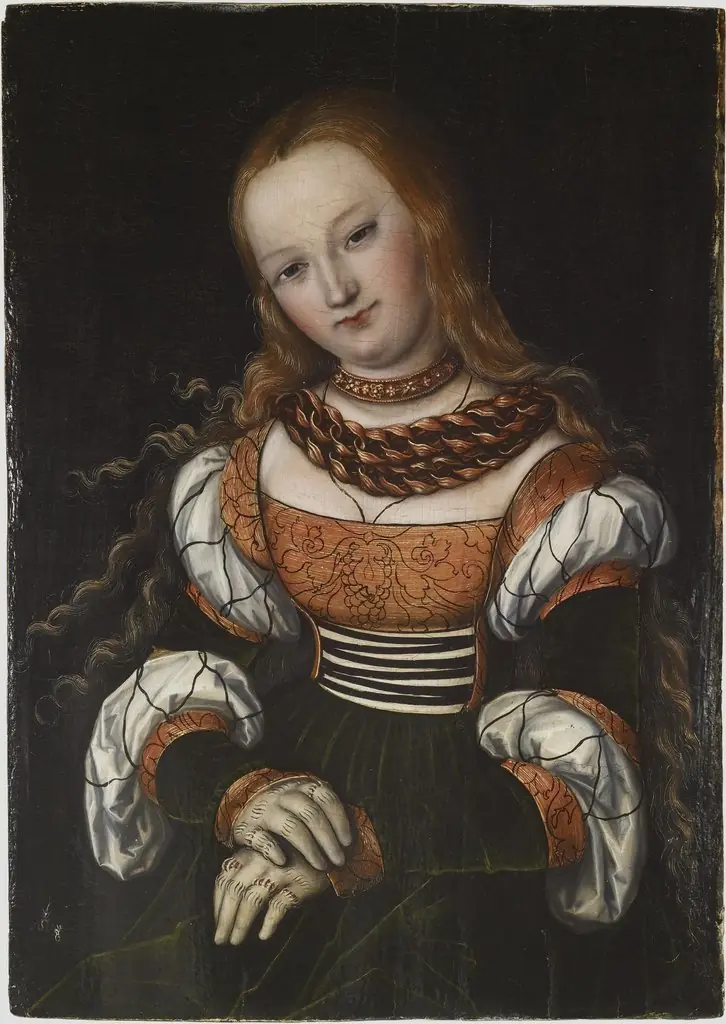 Portrait of a young woman
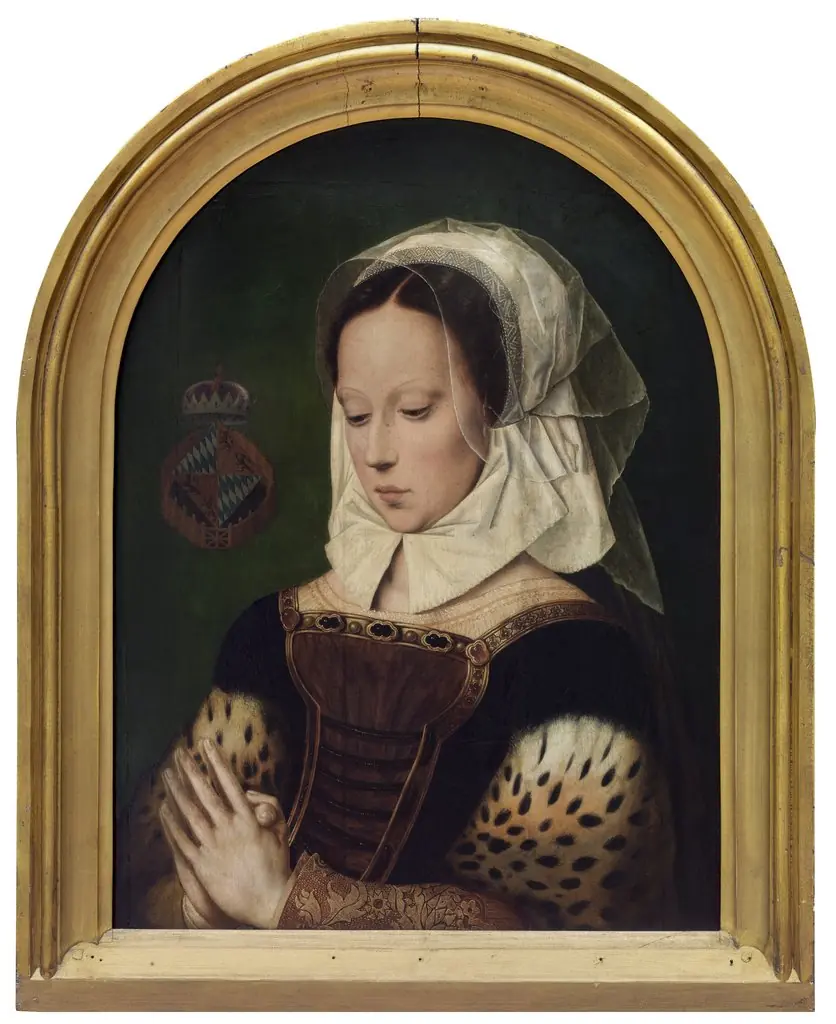 Woman at Prayers
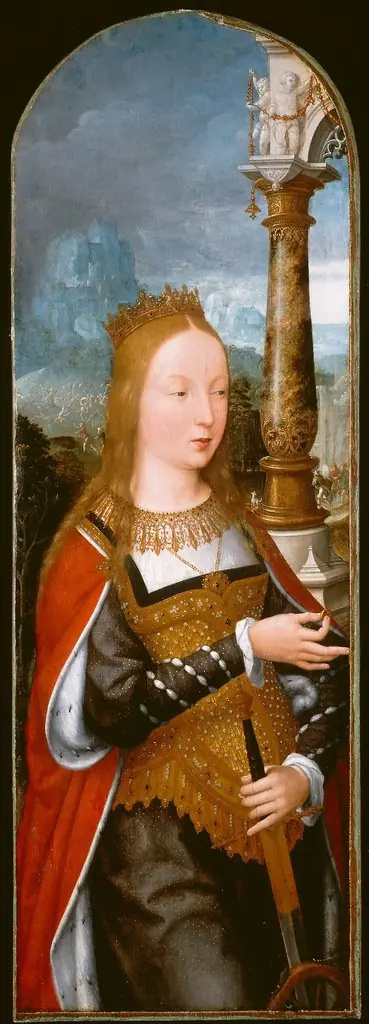 Saint Catherine
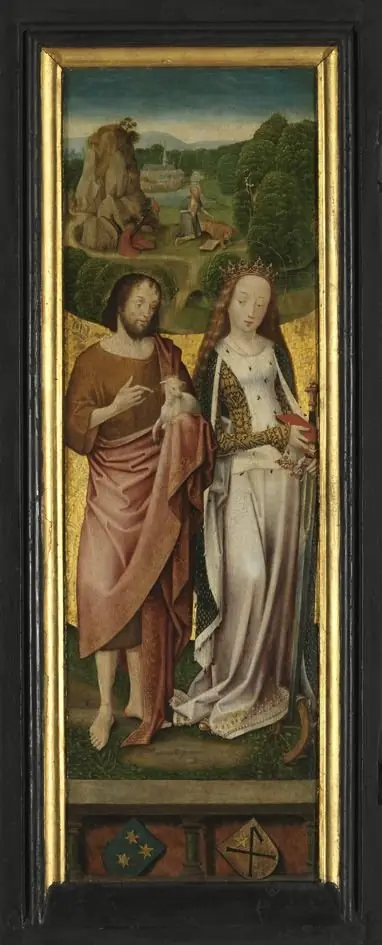 Flügelpaar: Die hll. Johannes der Täufer und Katharina (Außenseite: Engel der Verkündigung)
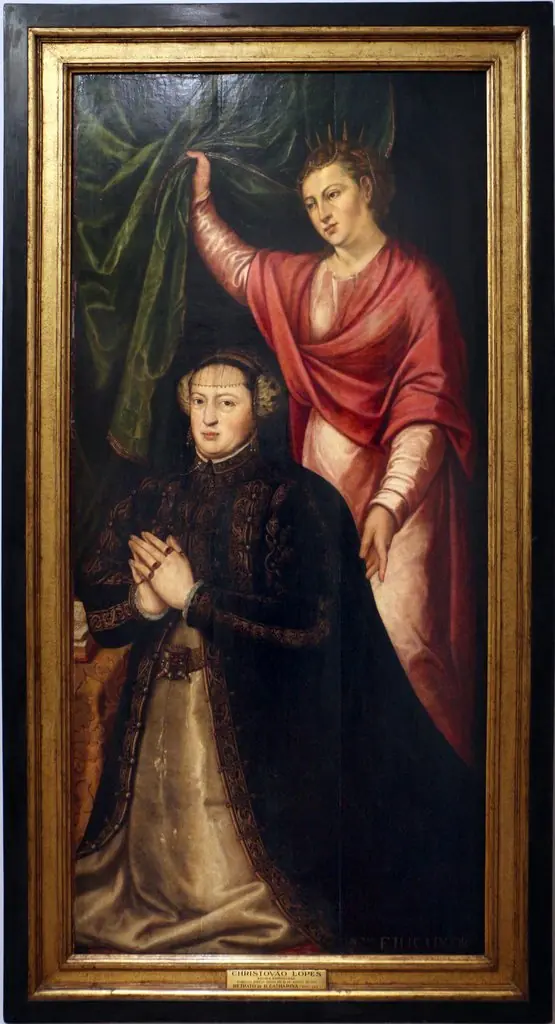 Catherine of Habsberg and St. Catherine of Alexandria altar piece