Artwork
Sibylla Tiburtina
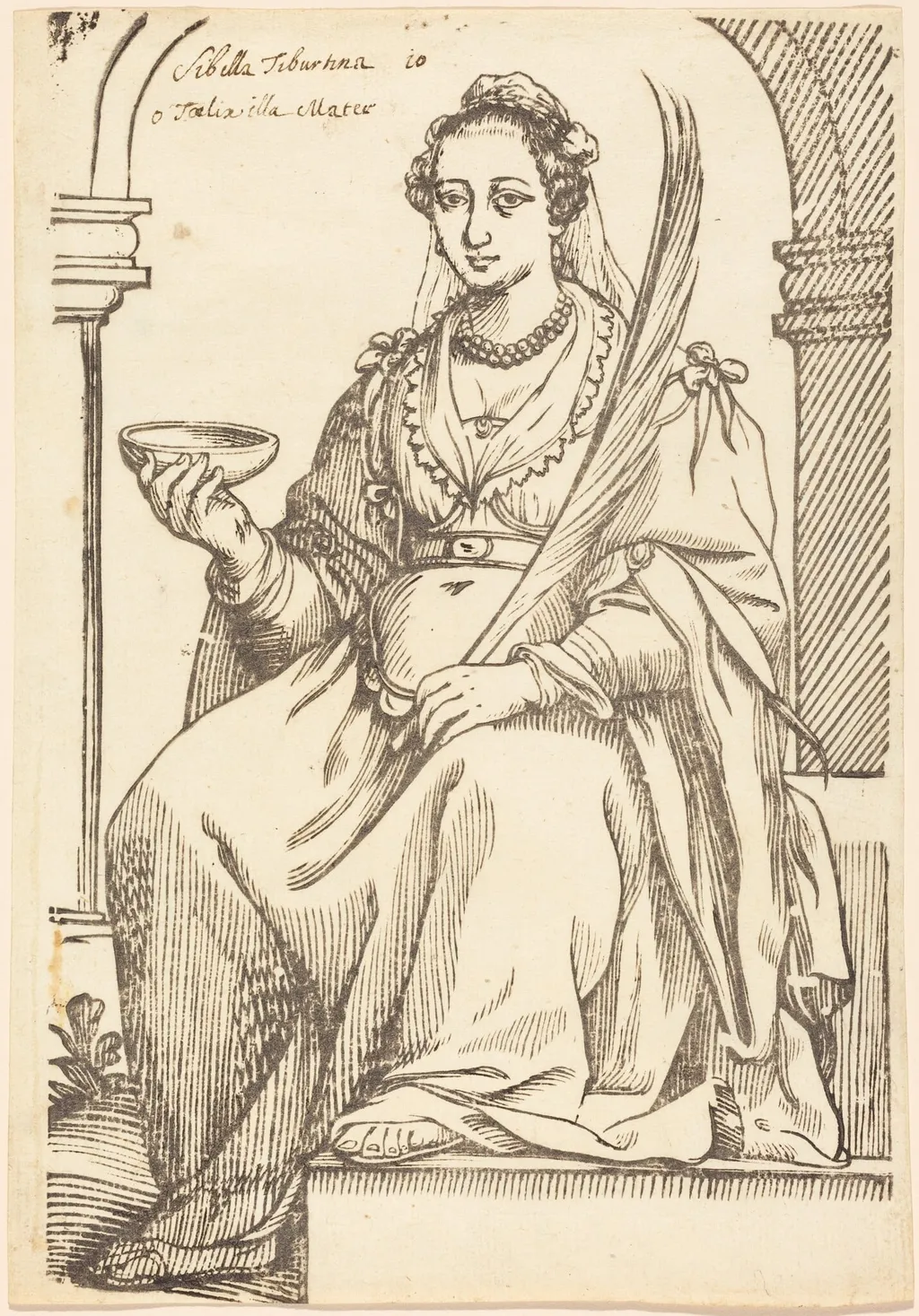
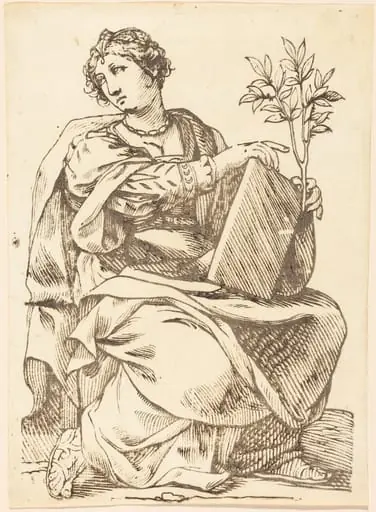
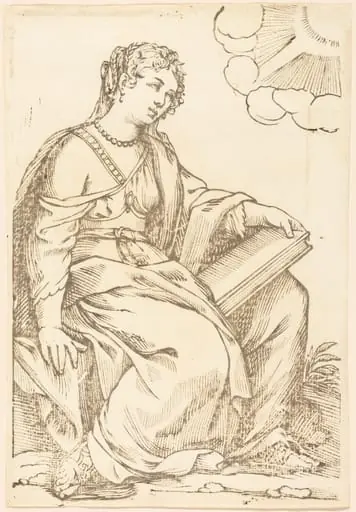
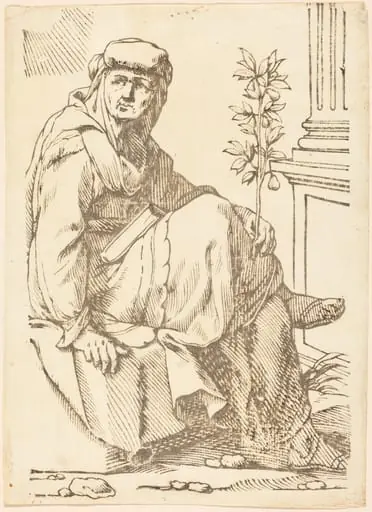
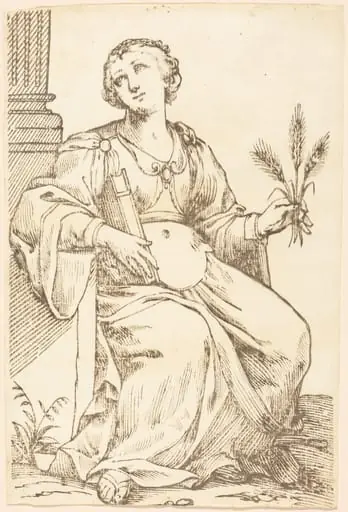
Sibylla Tiburtina is an ink print by the Baroque artist Paul Maupin. It dates from 1625 and is held in the collection of the National Gallery of Art.
About this work
Overview
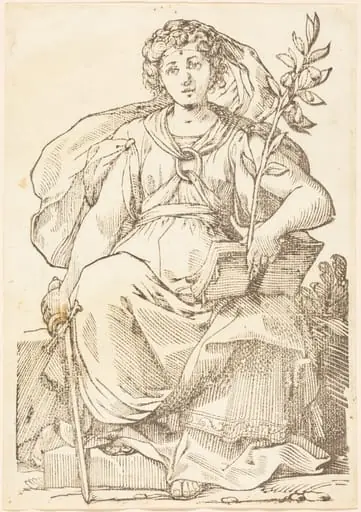
Created around 1625, Sibylla Tiburtina is a black-and-white woodcut on laid paper attributed to Paul Maupin.
Created around 1625, Sibylla Tiburtina is a black-and-white woodcut on laid paper attributed to Paul Maupin. The print depicts a seated female figure in classical attire, holding a scroll and a small bowl, set against a plain draped background with a vertical pillar on the left. Latin text above her head identifies her as the Tiburtine Sibyl, a prophetic figure from ancient tradition. The composition reflects early 17th-century Northern European printmaking conventions.
Subject & Meaning
The figure represents the Tiburtine Sibyl, one of the classical prophetesses believed to foretell the coming of Christ. Her attributes—the scroll, symbolizing divine revelation, and the bowl, possibly indicating ritual purification—reinforce her role as a seer. The Latin inscription confirms her identity, aligning the image with Christian interpretations of pagan oracles. The seated pose and formal dress suggest dignity and authority, common in depictions of sibyls during the Renaissance and Baroque periods.
Technique & Style
Executed as a woodcut, the image relies on bold, linear contrasts typical of the medium, with fine incised lines defining drapery and facial features. The background is minimally detailed, using flat tonal areas to suggest fabric and space. The figure’s stylized anatomy and rigid posture reflect the conventions of early 17th-century German and Netherlandish printmaking, where clarity and symbolic clarity often outweigh naturalism.
History & Provenance
The print is attributed to Paul Maupin, a lesser-known German engraver active in the early 1600s. Few of his works survive, and this piece is among the few securely documented. It likely circulated as part of devotional or scholarly collections, where images of sibyls were used to illustrate theological texts. Its preservation on laid paper suggests it was produced in a region with established print workshops, possibly in the Rhineland or southern Germany.
Context
In the early 17th century, images of sibyls remained popular in Protestant and Catholic regions alike, often paired with Old Testament prophets to affirm the universality of divine prophecy. This print fits within a broader tradition of religious print culture that blended classical antiquity with Christian doctrine. The use of Latin text and classical iconography indicates an audience familiar with humanist scholarship, even if the print itself was modest in scale and production.
Legacy
Sibylla Tiburtina contributes to the enduring visual legacy of sibyls in European art, preserving a specific interpretation from a transitional period between Renaissance humanism and Baroque religiosity. Though not widely reproduced, it reflects the persistence of classical motifs in print media long after their peak. As a rare surviving work by Maupin, it offers insight into the niche but significant role of minor printmakers in disseminating religious imagery.
Artist & collection