Artwork
Saint George and the Dragon
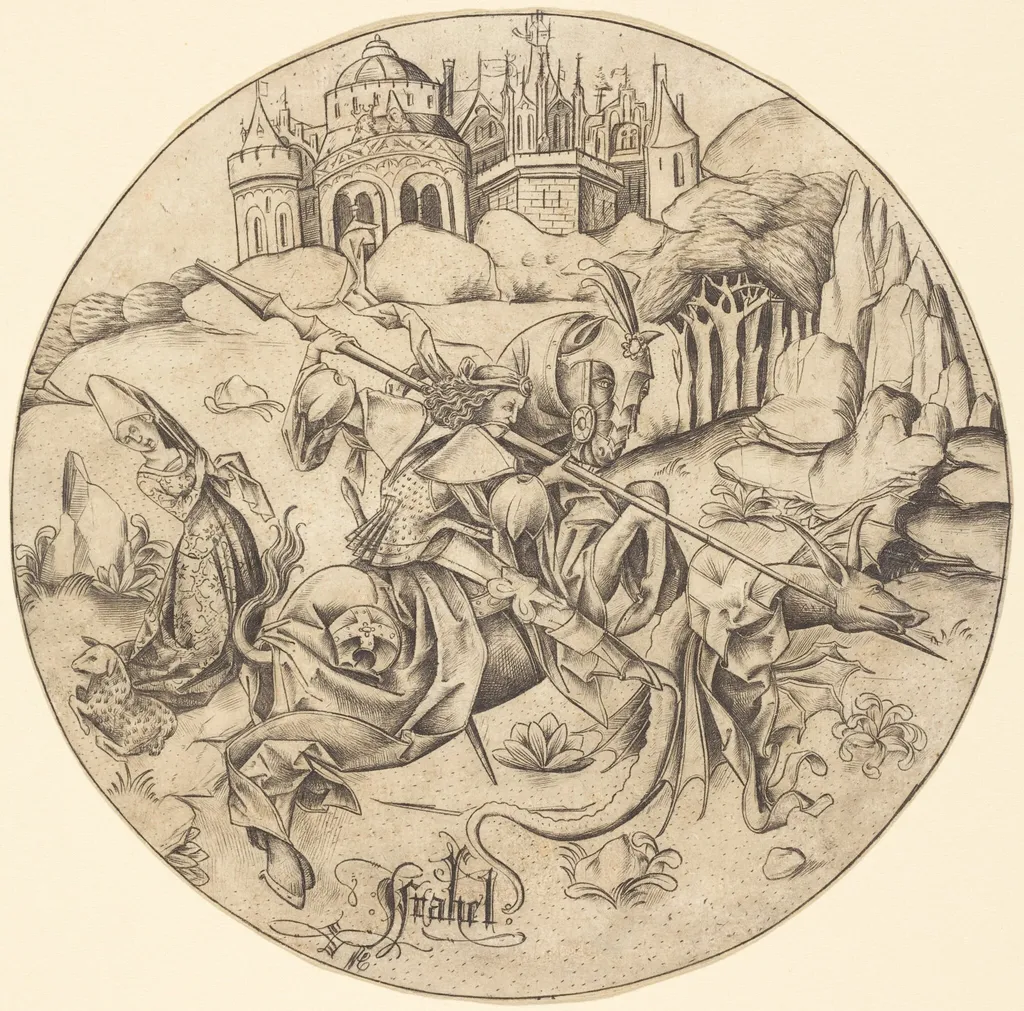
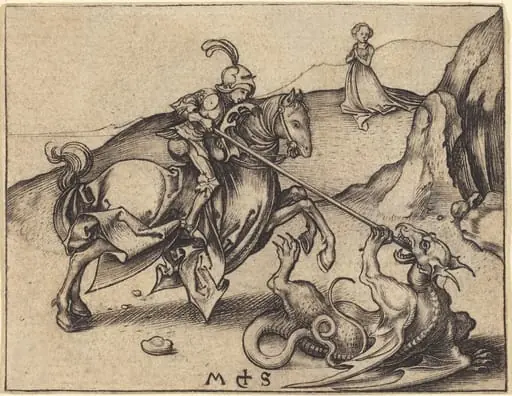
Saint George and the Dragon is an ink print by the Renaissance artist Israhel van Meckenem. It dates from 1468 and is held in the collection of the National Gallery of Art.
About this work
Overview
Created around 1468 by Israhel van Meckenem, this engraving on laid paper depicts the legendary confrontation between Saint George and the dragon.
Created around 1468 by Israhel van Meckenem, this engraving on laid paper depicts the legendary confrontation between Saint George and the dragon. Van Meckenem, a German goldsmith and printmaker, was among the most productive engravers of the 15th century, producing over six hundred works. This piece exemplifies his skill in translating narrative scenes into fine linear detail, using the technical precision of engraving to capture both action and atmosphere.
Subject & Meaning
The scene illustrates the hagiographic tale of Saint George, a Christian martyr and soldier, defeating a dragon that terrorized a city. The narrative symbolizes the triumph of faith over chaos and evil. Van Meckenem includes bystanders reacting with fear and resistance, reinforcing the communal stakes of the miracle. The dragon, though monstrous, is rendered with anatomical detail, grounding the myth in a tangible, physical struggle.
Technique & Style
Van Meckenem employed fine, controlled engraving lines to model form and depth, using cross-hatching to build shadow and texture across armor, scales, and landscape. The composition is densely packed with figures and movement, yet the background city remains calm and orderly, framed by towers and domes. This contrast heightens the drama of the foreground battle while suggesting divine order beyond the immediate chaos.
History & Provenance
The print was made during the height of van Meckenem’s career in the late 1460s, a period when engraved prints were increasingly circulated across Europe. As a prolific producer, he often adapted compositions from other artists, though this work reflects his own compositional ingenuity. Its survival in multiple impressions suggests it was widely distributed, likely used for devotional or educational purposes among literate lay audiences.
Context
In the 15th century, images of Saint George were popular in both religious and secular contexts, especially in regions influenced by chivalric ideals. Engravings like this one served as accessible devotional aids, allowing images of saints to reach beyond the reach of painted altarpieces. Van Meckenem’s work reflects the growing market for printed images, bridging the gap between manuscript illumination and the coming age of mass reproduction.
Legacy
Van Meckenem’s technical mastery helped establish engraving as a respected medium for narrative art. His adaptation of religious themes into finely detailed prints influenced later generations of Northern European printmakers. Though not the first to depict Saint George, his version contributed to the visual vocabulary of the subject, embedding its dramatic tension into the emerging culture of printed imagery.
Artist & collection
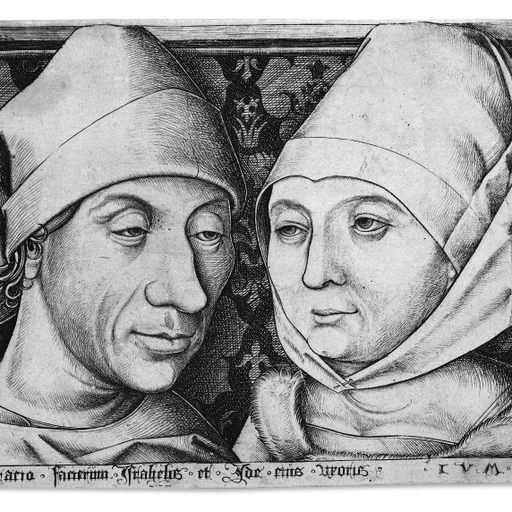
Artist
Israhel van Meckenem (c. 1445 – 10 November 1503), also known as Israhel van Meckenem the Younger, was a German printmaker and goldsmith, perhaps of a Dutch family origin. He was the most prolific engraver of the…