Artwork
The Circumcision
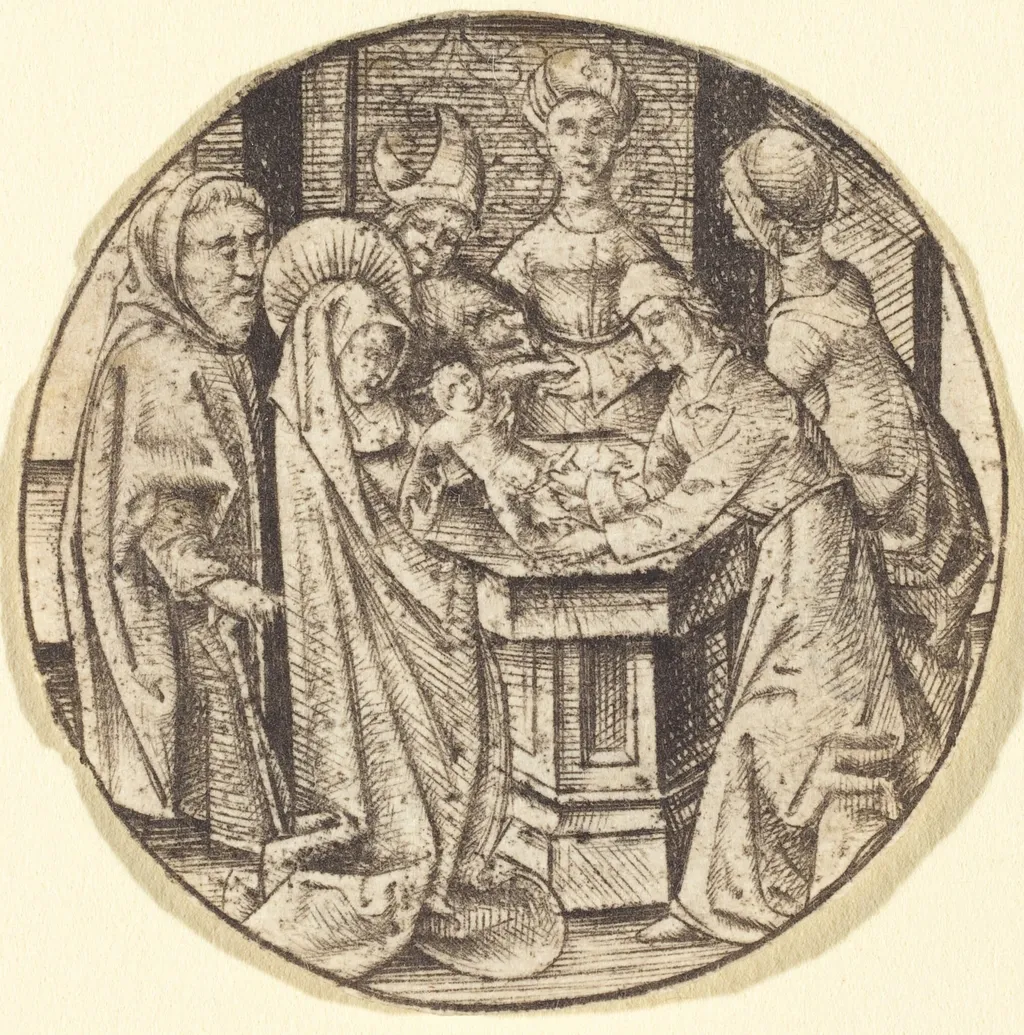
The Circumcision is an ink print by the Renaissance artist Israhel van Meckenem. It dates from 1475 and is held in the collection of the National Gallery of Art.
About this work
Overview
With over six hundred engravings attributed to him, he was among the most productive artists of his time.
Israhel van Meckenem, a German goldsmith and engraver active between 1465 and 1503, produced *The Circumcision* around 1475 as part of his extensive printmaking output. With over six hundred engravings attributed to him, he was among the most productive artists of his time. This work exemplifies his practice of adapting existing compositions into the medium of engraving, contributing to the spread of religious imagery in Northern Europe.
Subject & Meaning
The scene illustrates the circumcision of the infant Jesus, a moment described in the Gospel of Luke that affirms his entry into the covenant of Abraham. The composition centers on the child held by a woman, surrounded by figures in varied poses—some observing, others reaching toward the child. The event, occurring on the eighth day after birth, carried theological weight in medieval Christian thought, emphasizing Christ’s humanity and obedience to Jewish law.
Technique & Style
Van Meckenem employed fine, precise lines and dense cross-hatching to model form and suggest volume without color. The figures’ drapery, the architectural backdrop with arched windows, and the textured floor are rendered through intricate networks of parallel strokes. This method, characteristic of Northern Renaissance engraving, allows for subtle gradations of light and shadow, enhancing the spatial depth and tactile quality of the scene despite its monochrome medium.
History & Provenance
Created during the height of van Meckenem’s career, the print likely circulated among religious households and clergy in the Rhineland. As a skilled artisan who also worked in metal, he produced prints both for devotional use and commercial sale. While no specific early ownership records survive, the print’s survival in multiple museum collections suggests it was widely copied and distributed in the late fifteenth century.
Context
In late fifteenth-century Northern Europe, engraved prints served as accessible religious images for those who could not afford paintings or stained glass. Van Meckenem’s work responded to growing demand for devotional subjects, often drawing from panel paintings or illuminated manuscripts. His adaptations helped standardize visual narratives, making biblical stories familiar across regions through reproducible imagery.
Legacy
Van Meckenem’s prolific output influenced later engravers by demonstrating the potential of the medium for detailed narrative expression. Though less celebrated than contemporaries like Dürer, his technical precision and consistent production helped establish engraving as a respected art form. *The Circumcision* remains a representative example of how religious themes were visually codified and disseminated in the decades before the Reformation.
Artist & collection
Artist
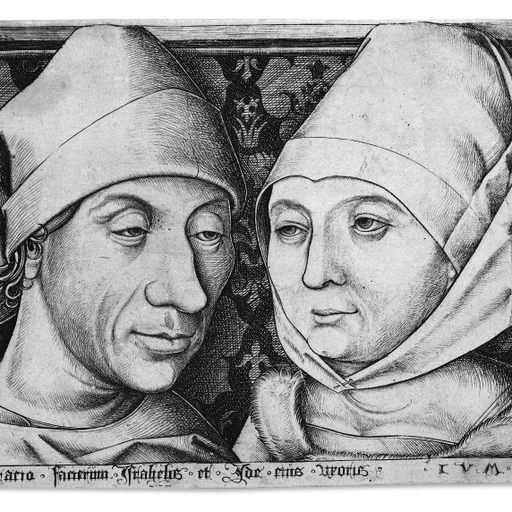
Israhel van Meckenem (c. 1445 – 10 November 1503), also known as Israhel van Meckenem the Younger, was a German printmaker and goldsmith, perhaps of a Dutch family origin. He was the most prolific engraver of the…

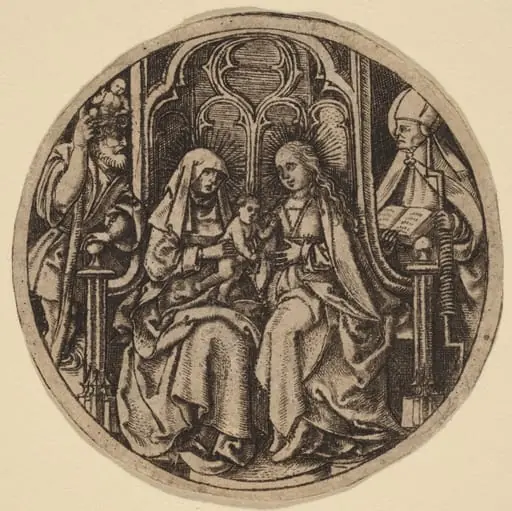 Madonna and Child with Saints Christopher and Erasmus
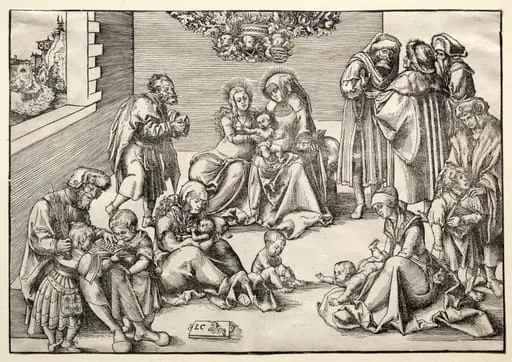 The Holy Family and Kindred
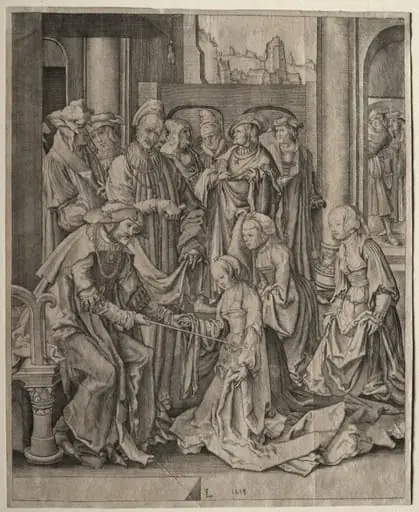 Esther before Ahasuerus
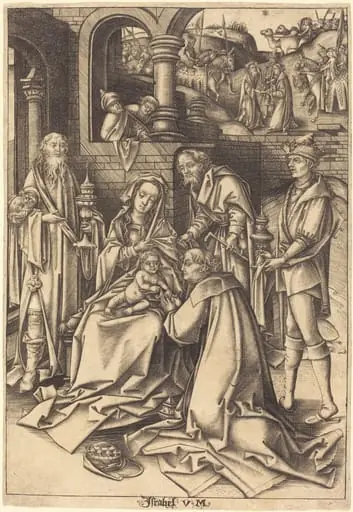 The Adoration of the Magi
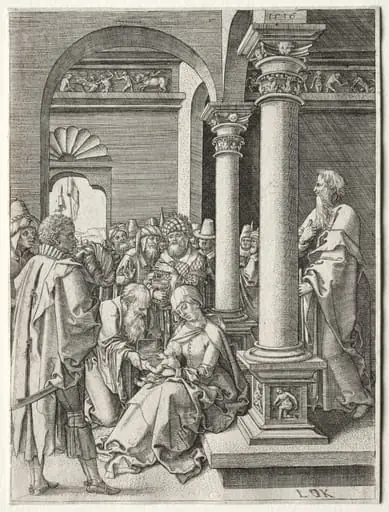 L'Adoration des Rois
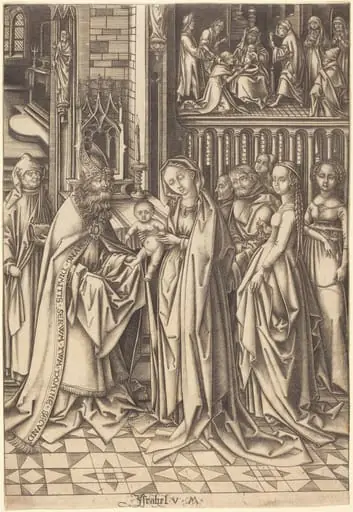 The Presentation in the Temple
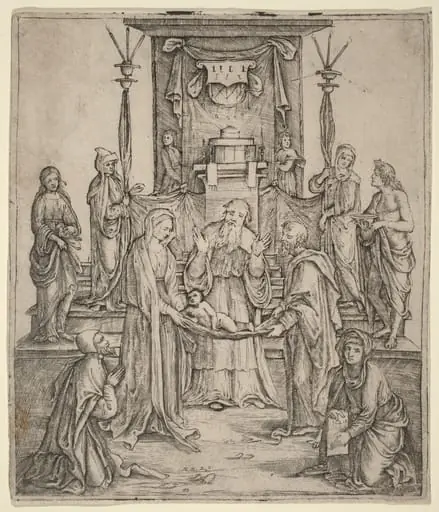 Presentation of Christ
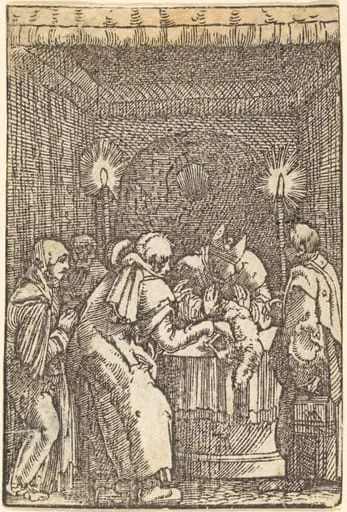 Joachim's Offering Refused
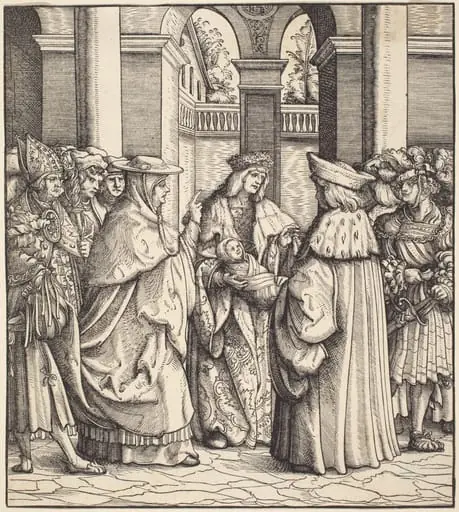 The Archbishop Blessing the Child after the Baptism
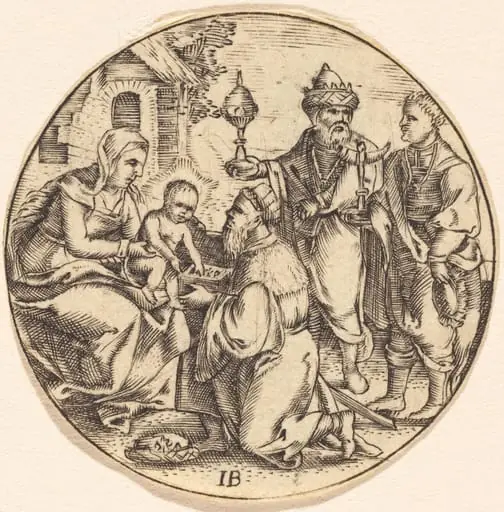 The Adoration of the Magi