Artwork
The Stoning of Saint Stephen
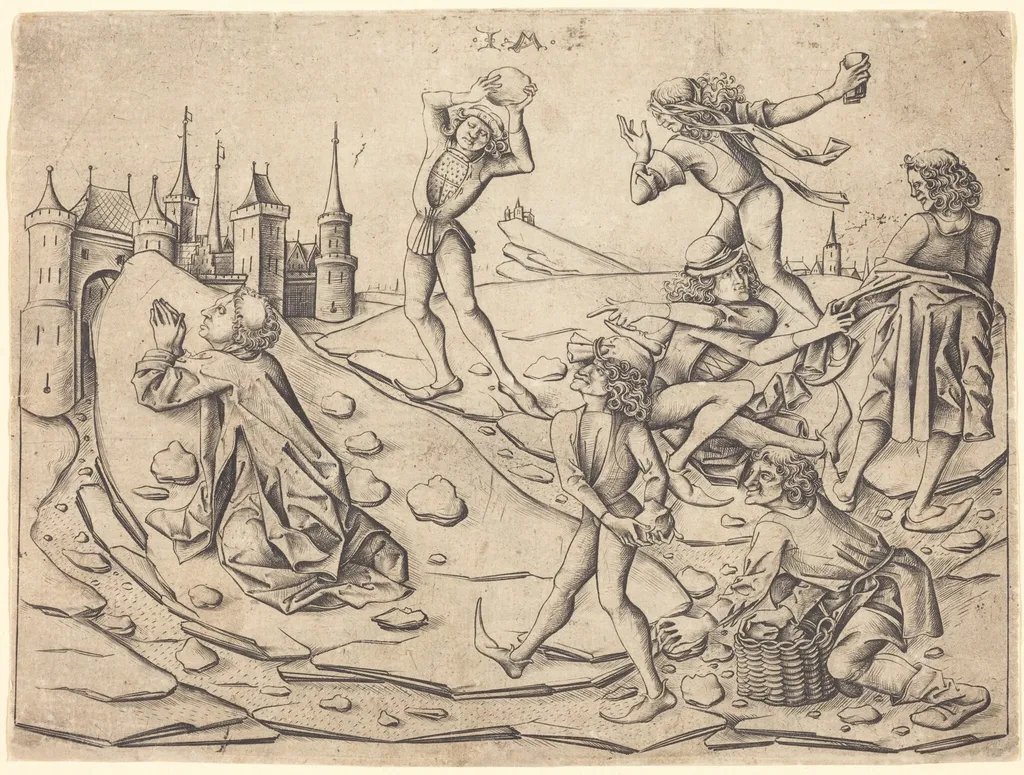
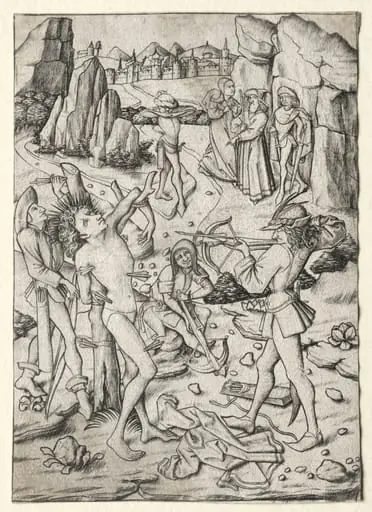
The Stoning of Saint Stephen is an ink print by the Renaissance artist Israhel van Meckenem. It dates from 1470 and is held in the collection of the National Gallery of Art. Created circa 1470, this engraving on laid paper portrays the biblical martyrdom of Saint Stephen.
About this work
Overview
Created circa 1470, this engraving on laid paper portrays the biblical martyrdom of Saint Stephen. Executed by the German artist Israhel van Meckenem, it belongs to the early Northern European print tradition and exemplifies the detailed line work typical of fifteenth‑century engravings.
Subject & Meaning
The image captures the moment Stephen is attacked by a crowd hurling stones. The central figure lies on the ground, arms raised, while surrounding onlookers either participate, pray, or observe. A distant walled city with towers provides a quiet backdrop, contrasting with the violent foreground.
Technique & Style
Van Meckenem employed fine, intersecting lines to build tonal depth, using dense cross‑hatching to render shadows and emphasize the twisted, tense bodies. The sharp linear quality and crowded composition reflect the artist’s skill in conveying movement and drama within the limits of the engraving medium.
History & Provenance
Israhel van Meckenem, active between 1465 and 1503, was the most prolific engraver of his century, producing over six hundred prints, many of which were copies of earlier works. This print forms part of his extensive output that helped disseminate Northern European visual culture during the late medieval period.
Context
The depiction aligns with contemporary devotional practices that emphasized the suffering of saints. By rendering Stephen’s martyrdom in a vivid, chaotic scene, the work served both as a visual aid for meditation and as a testament to the growing demand for portable, reproducible religious imagery in the late fifteenth century.
Artist & collection
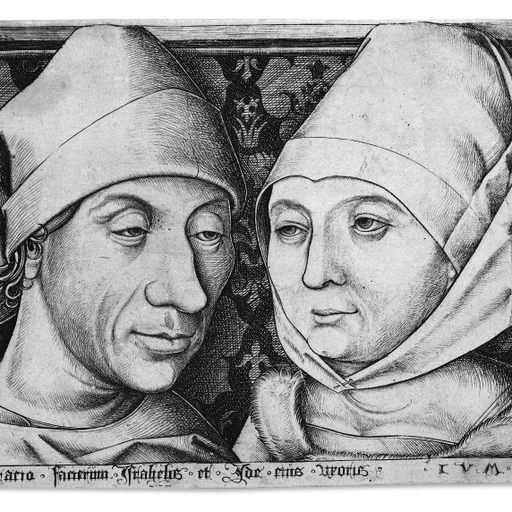
Artist
Israhel van Meckenem (c. 1445 – 10 November 1503), also known as Israhel van Meckenem the Younger, was a German printmaker and goldsmith, perhaps of a Dutch family origin. He was the most prolific engraver of the…

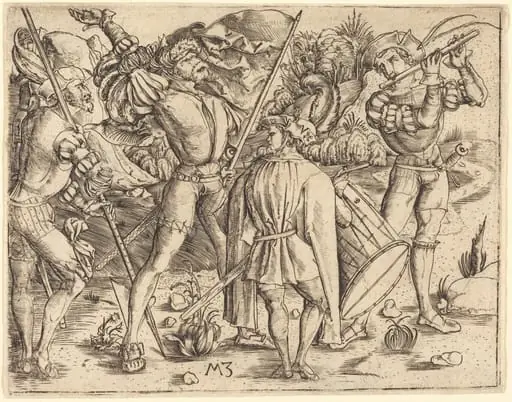 Four Soldiers
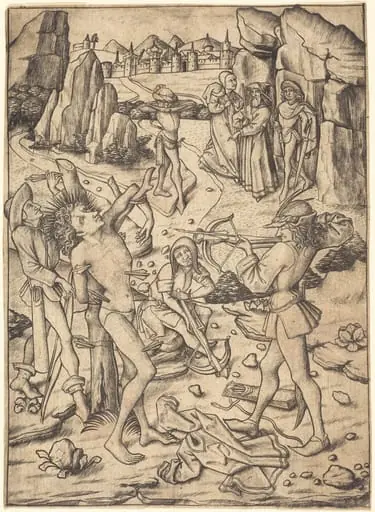 Martyrdom of Saint Sebastian
 The Martyrdom of St. Sebastian
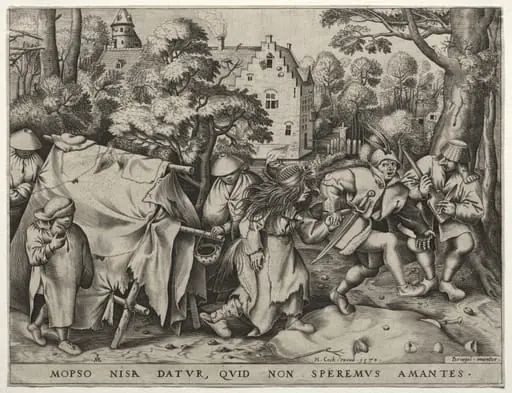 The Wedding of Mopsus and Nisa (The Dirty Bride)
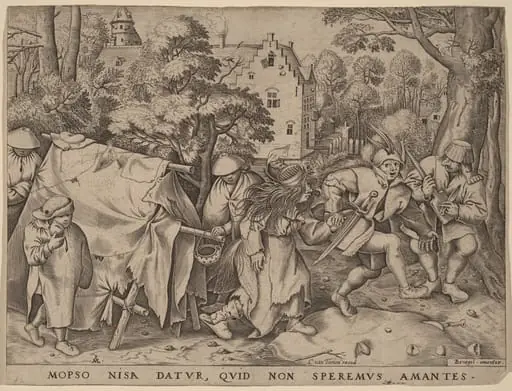 The Wedding of Mopsus and Nisa
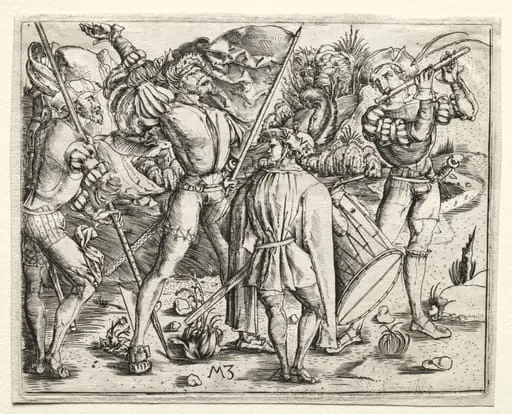 Four Soldiers and Military Band
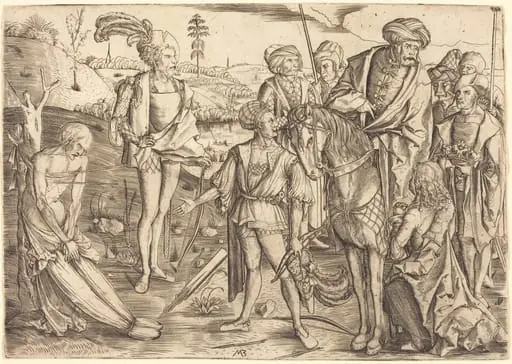 The Testing of the King's Sons
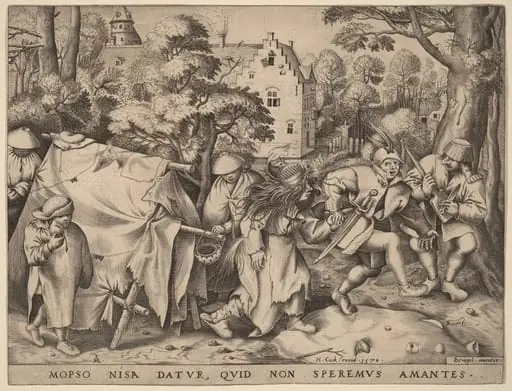 The Wedding of Mopsus and Nisa
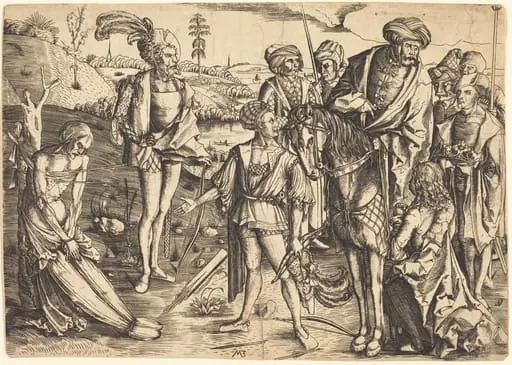 The Testing of the King's Sons
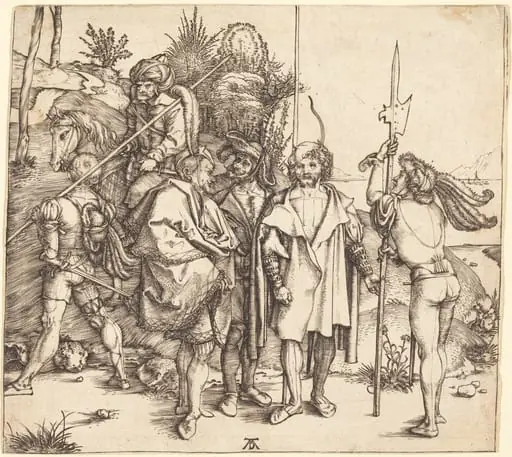 Five Soldiers and a Turk on Horseback