Artwork
Bain-froid chevrier, dit "de l'École" (Chevrier's Cold-Bath Establishment, Sometimes called the "School-Baths")
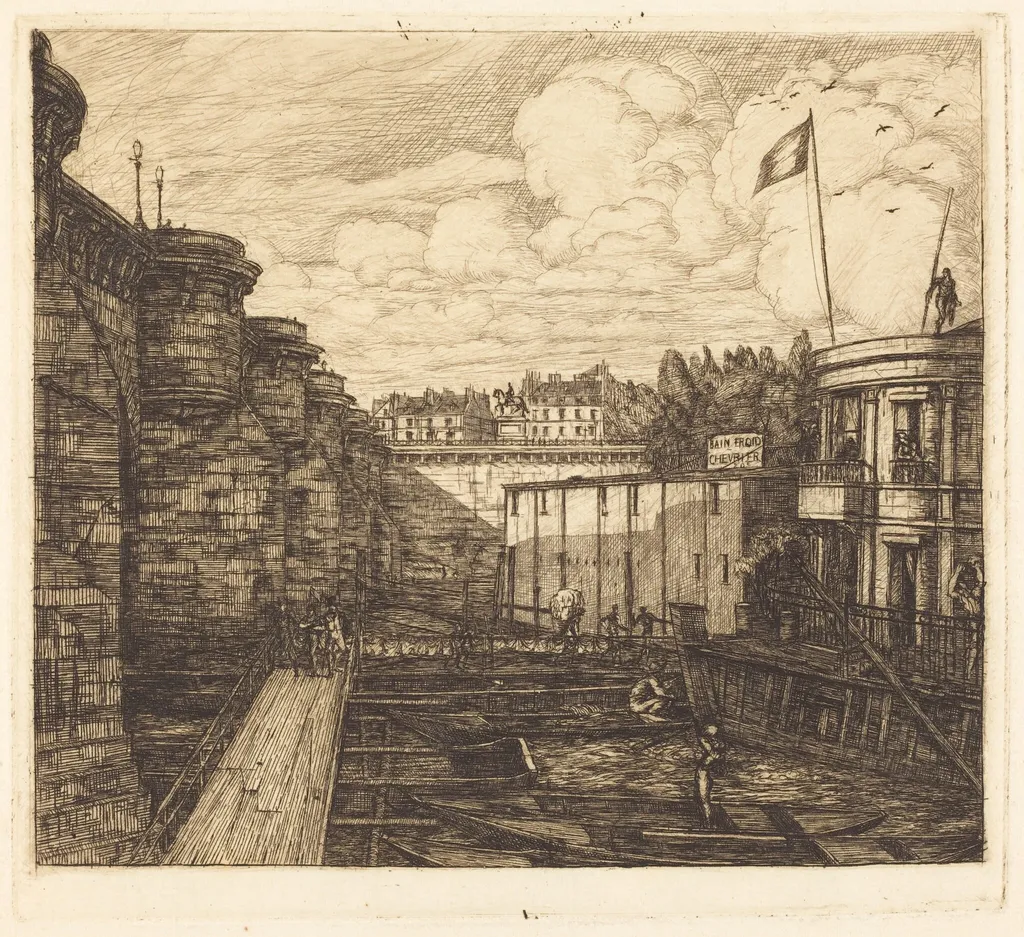
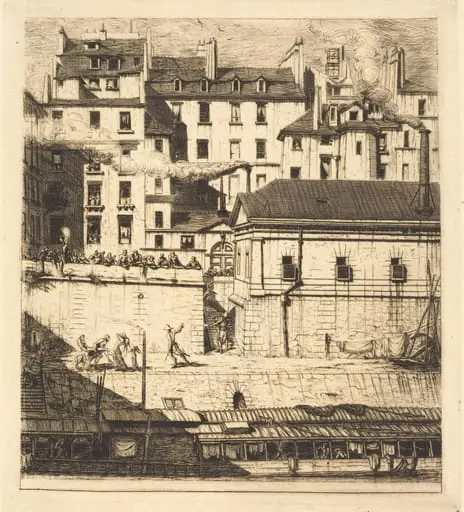
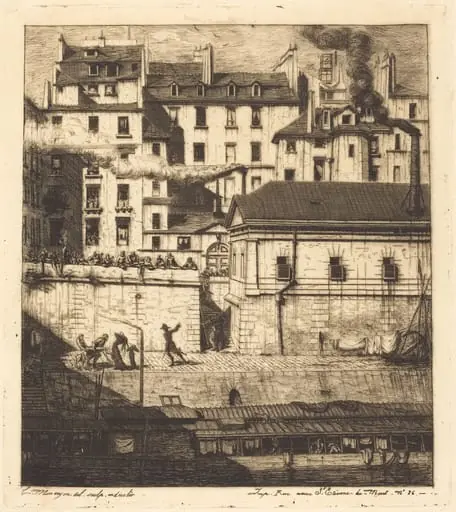
Bain-froid chevrier, dit "de l'École" (Chevrier's Cold-Bath Establishment, Sometimes called the "School-Baths") is an ink print by the Impressionist artist Charles Meryon. It dates from 1864 and is held in the collection of the National Gallery of Art.
About this work
Overview
Created in 1864, *Bain‑froid Chevrier, dit « de l’École »* is an etching on laid paper by French printmaker Charles Meryon. The work records a crowded riverside setting that includes a prominent public bathhouse, identified by a small inscription on its façade. Figures in various poses populate the steps, docks and nearby boats, rendering a lively yet orderly scene of 19th‑century leisure.
Subject & Meaning
The print captures a cold‑water bathing establishment known as the Bain‑froid Chevrier, a venue where patrons—both clothed and nude—gathered for refreshment. By presenting the bathhouse alongside bustling river traffic, Meryon juxtaposes public hygiene with the everyday rhythms of Parisian life, offering a snapshot of social interaction in a semi‑public space.
Technique & Style
Meryon employed traditional intaglio methods, incising fine lines into a copper plate with acid before inking and pressing the image onto laid paper. The dense network of lines conveys architectural detail, water ripples, and textile textures with remarkable precision, reflecting the artist’s meticulous approach to rendering urban environments.
History & Provenance
Meryon, whose career unfolded in the mid‑19th century, produced most of his oeuvre after turning to etching because of his colour‑blindness. The print was likely issued shortly after its creation and has since entered museum collections that focus on French graphic arts, illustrating the artist’s broader interest in documenting Parisian scenes.
Context
During the 1860s, Paris experienced rapid modernization under Haussmann, yet public bathhouses remained essential for hygiene and recreation. Meryon’s focus on such a venue aligns with contemporary concerns about public health and the growing visibility of everyday urban life, themes that recur throughout his body of work.
Artist & collection
Artist
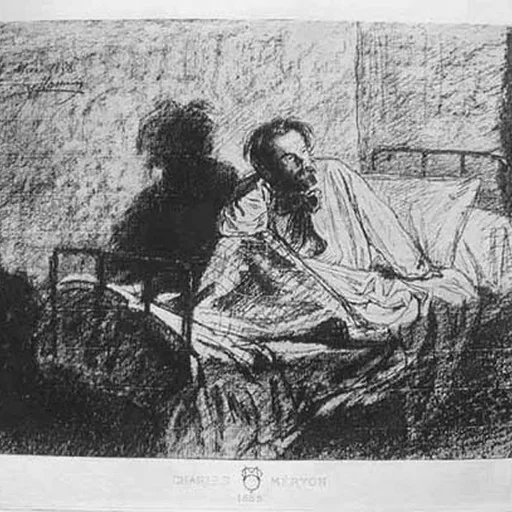
Charles Meryon (sometimes Méryon, 23 November 1821 – 14 February 1868) was a French artist who worked almost entirely in etching, as he had colour blindness.