Artwork
Etchings of Paris: The Little Bridge
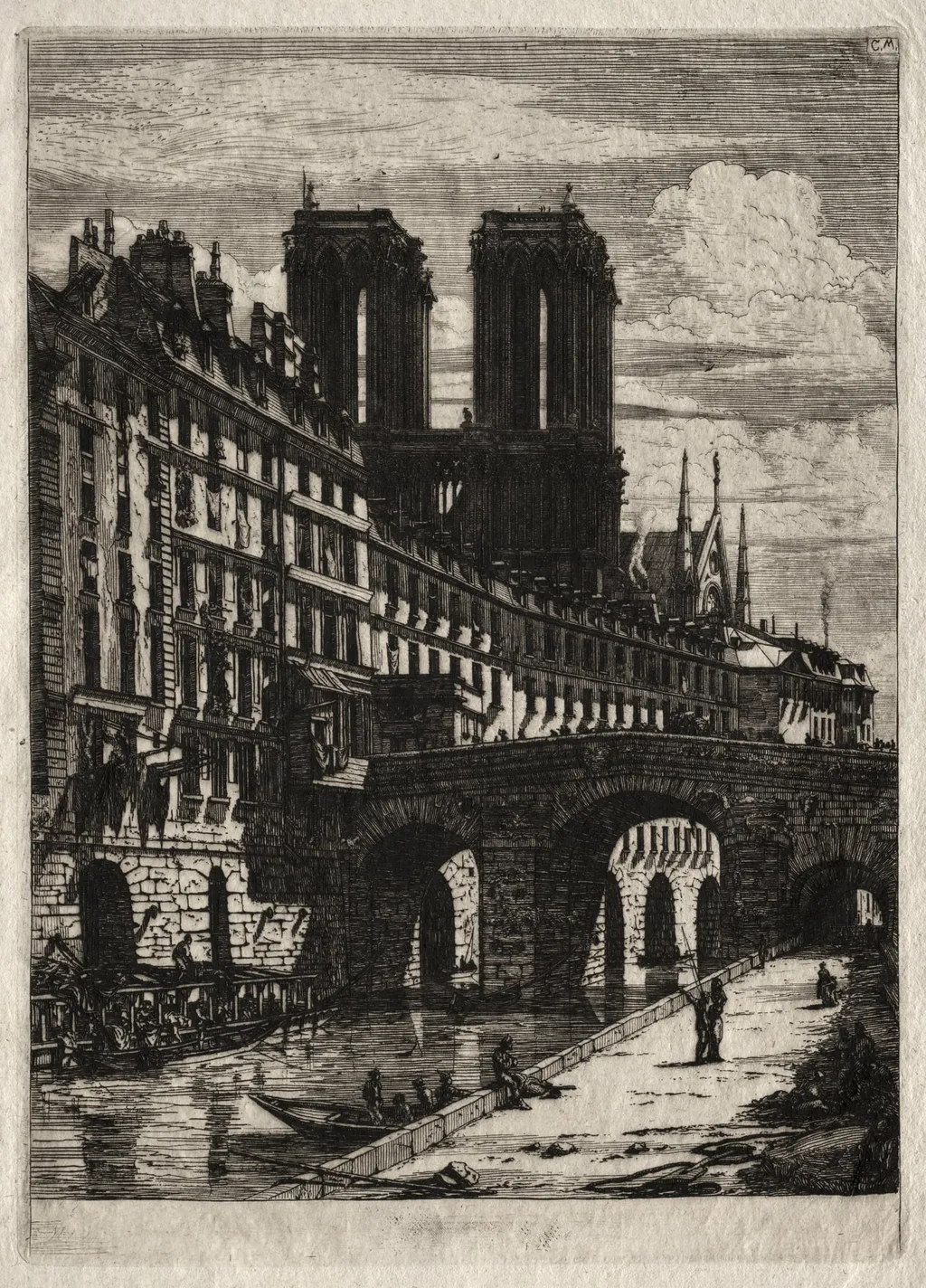
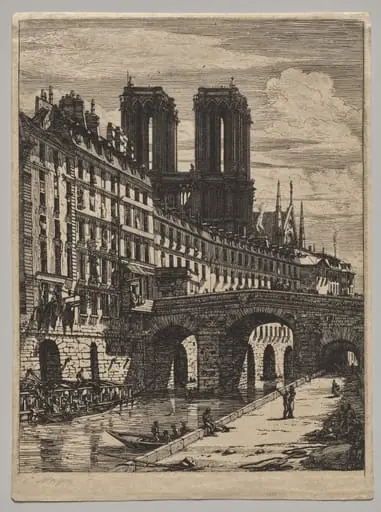
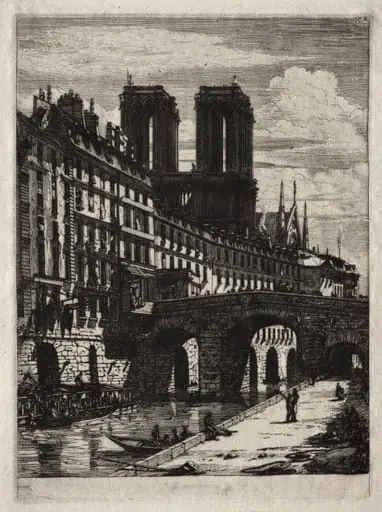
Etchings of Paris: The Little Bridge is a print by the Impressionist artist Charles Meryon. It dates from 1850 and is held in the collection of the Cleveland Museum of Art.
About this work
Overview
Charles Meryon’s etching 'The Little Bridge' captures a view of the Pont Neuf in Paris with Notre-Dame rising in the distance. Though he began with a camera lucida to trace the scene’s outlines, he deliberately altered elements to enhance visual harmony. The result is not a documentary record but a carefully composed interpretation, balancing observed detail with artistic intention.
Subject & Meaning
Meryon’s focus on architecture and shadow suggests an interest in the city’s enduring structure and quiet atmosphere.
The scene centers on the Pont Neuf, Paris’s oldest standing bridge, framed by the Gothic towers of Notre-Dame. Meryon’s focus on architecture and shadow suggests an interest in the city’s enduring structure and quiet atmosphere. The accidental resemblance of a shadow to a sphinx’s profile, noted later by the artist, adds a layer of unintended symbolism, hinting at mystery within the urban landscape.
Technique & Style
Meryon employed etching to achieve fine linear control and tonal depth. He combined multiple vantage points—a low riverside sketch and a higher view from the bridge’s parapet—to construct a plausible, if not strictly accurate, perspective. His revisions, such as elongating the cathedral towers, reveal a preference for expressive composition over topographical fidelity.
History & Provenance
Created in the mid-19th century, this print belongs to Meryon’s series of Parisian views, produced between 1853 and 1860. It was part of a broader effort to document the city’s architecture during a period of rapid transformation. The work was known to contemporaries like Charles Baudelaire, who corresponded with Meryon and recorded his reflections on the etching’s subtle details.
Context
Meryon worked during a time when Paris was being reshaped by Haussmann’s renovations. His prints offered a counterpoint to modernization, focusing on the city’s older structures with a sense of melancholy precision. Unlike photographers seeking objectivity, he treated architecture as a vessel for mood, aligning his work with Romantic sensibilities rather than emerging realist trends.
Legacy
Meryon’s etchings influenced later artists interested in urban atmosphere and the interplay of light and stone. Though not widely celebrated in his lifetime, his meticulous technique and poetic reworking of reality earned posthumous recognition among printmakers and urban historians. His approach to combining observation with imaginative adjustment remains a distinctive contribution to 19th-century graphic art.
Artist & collection
Artist
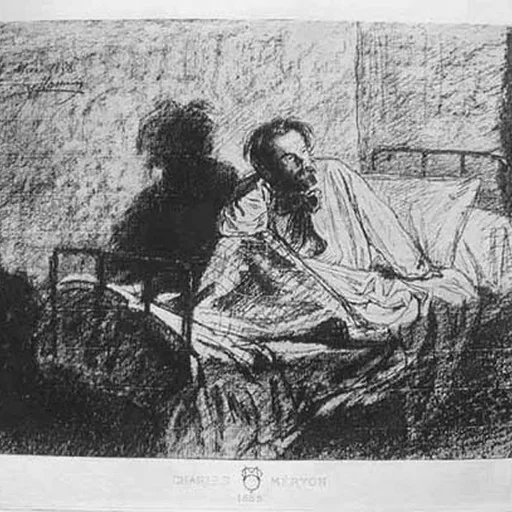
Charles Meryon (sometimes Méryon, 23 November 1821 – 14 February 1868) was a French artist who worked almost entirely in etching, as he had colour blindness.

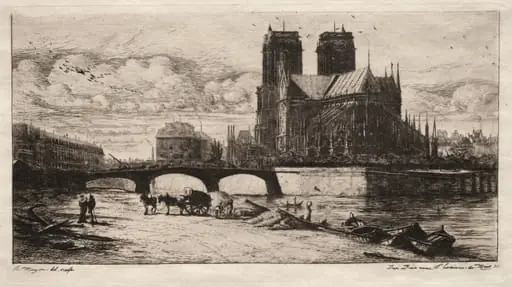 Etchings of Paris: The Apsis of the Cathedral of Notre Dame
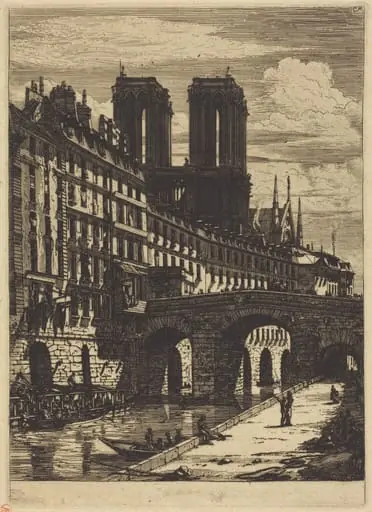 Le Petit Pont, Paris
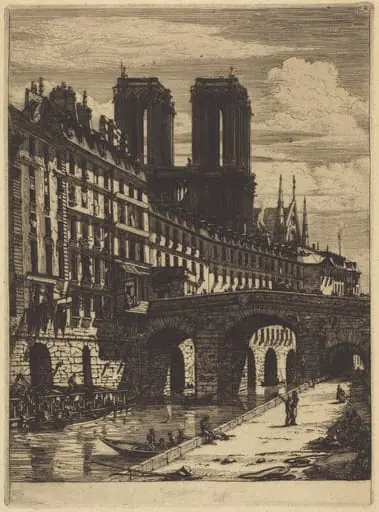 Le Petit Pont, Paris
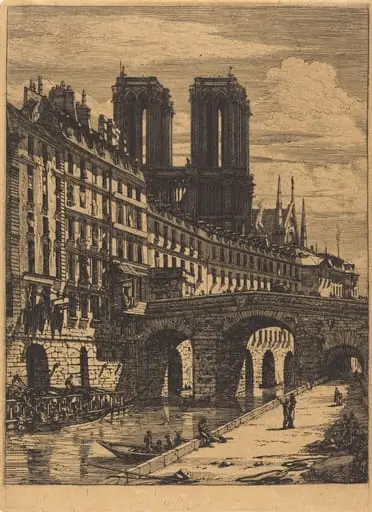 Le Petit Pont, Paris
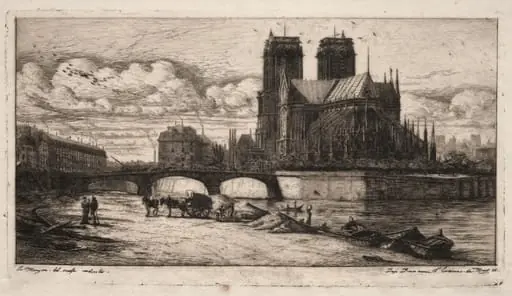 Etchings of Paris: The Apse of the Cathedral of Notre Dame
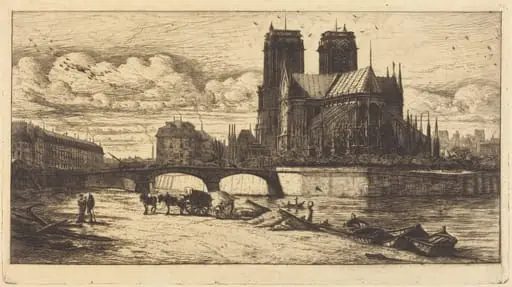 L'abside de Notre-Dame de Paris (The Apse of the Cathedral of Notre-Dame, Paris)
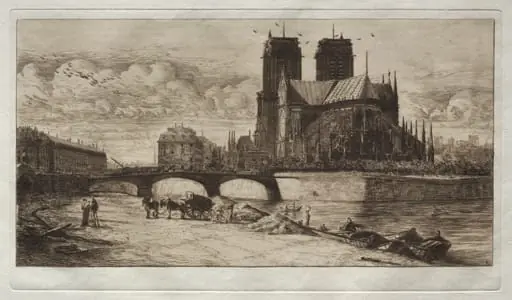 L'Abside de Notre Dame de Paris
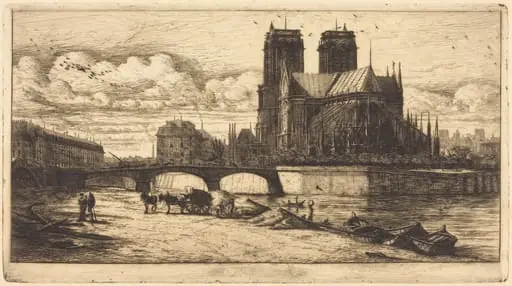 L'abside de Notre-Dame de Paris (The Apse of the Cathedral of Notre Dame, Paris)
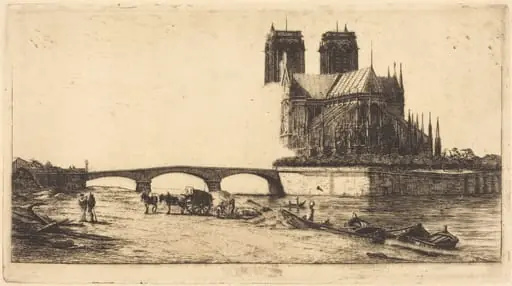 L'abside de Notre-Dame de Paris (The Apse ofthe Cathedral of Notre-Dame, Paris)
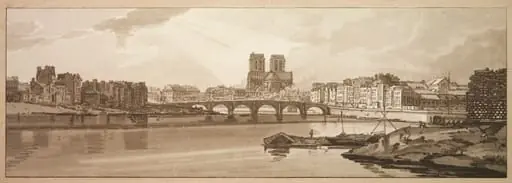 A Selection of Twenty of the Most Picturesque Views in Paris: View of Pont de la Tournelle & Notre Dame taken from the Arsenal
 Petit Pont, Paris
 Etchings of Paris: Le Petit Pont