Artwork
Separation of Light from Darkness
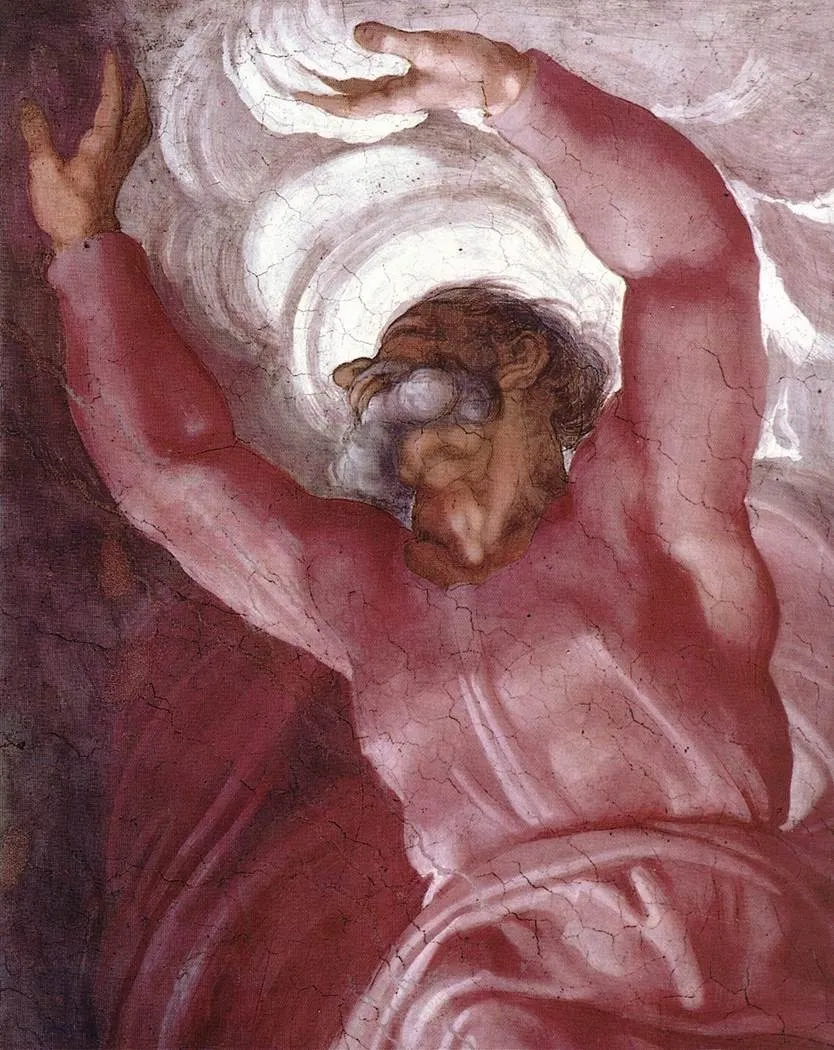
Separation of Light from Darkness is a fresco painting by the High Renaissance artist Michelangelo. It dates from 1512 and is held in the collection of the Vatican Museums.
About this work
Separation of Light from Darkness is a fresco by Michelangelo, painted around 1512 on the Sistine Chapel ceiling.
Separation of Light from Darkness is a fresco by Michelangelo, painted around 1512 on the Sistine Chapel ceiling. It sits in the Vatican Museums and takes its name from the Genesis story of God creating light.
The panel is the first of nine central scenes that run along the ceiling’s middle. It is one of five smaller panels that alternate with four larger ones, and Michelangelo finished it in the summer of 1512, the final year of the ceiling project.
Check out the museum: Vatican Museums.
Overview
The fresco titled Separation of Light from Darkness occupies the first position among the nine central panels that line the middle of Michelangelo’s ceiling in the Sistine Chapel. Executed in the summer of 1512, it belongs to the final phase of the ceiling’s decoration and is situated within the Vatican Museums.
Subject & Meaning
The scene illustrates the opening act of the Genesis creation narrative, drawing on verses three to five of the first chapter. It portrays the moment when divine command brings forth light, distinguishes it from darkness, and establishes the cycles of day and night, marking the completion of the first day.
Technique & Style
Rendered as true fresco, the work was painted directly onto wet plaster, allowing the pigments to become integral to the wall surface. Michelangelo employs a compact composition, using muscular figures and dynamic drapery to convey the divine act within a limited spatial framework.
History & Provenance
Commissioned as part of Pope Julius II’s extensive program to adorn the chapel, the panel remained in situ from its completion in 1512. It has never been removed from the Sistine ceiling and continues to be displayed in its original location within the Vatican’s papal chapel.
Context
The fresco is one of five smaller panels that alternate with four larger narrative scenes along the central band of the ceiling. This alternating pattern creates a rhythmic visual sequence, linking the creation stories with later biblical episodes depicted in the surrounding panels.
Artist & collection

Artist
Michelangelo di Lodovico Buonarroti Simoni (6 March 1475 – 18 February 1564), known mononymously as Michelangelo, was an Italian sculptor, painter, architect, and poet of the High Renaissance.

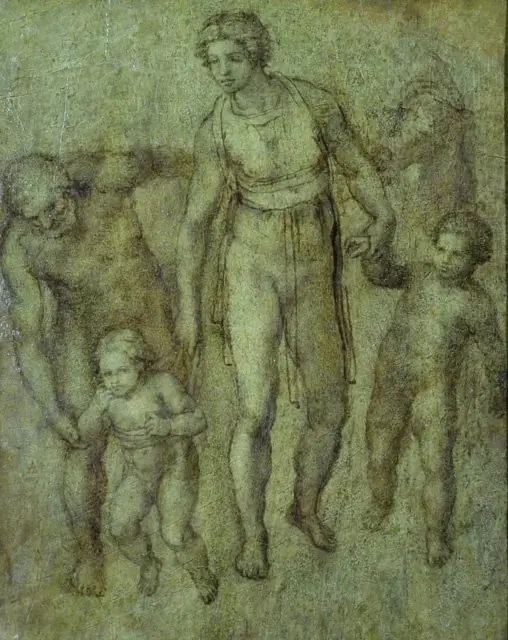
![Male Nude [recto], by Michelangelo](https://artifactworldgallery.com/img/michelangelo--male-nude-recto--8c3354d89884753a-w320.webp)
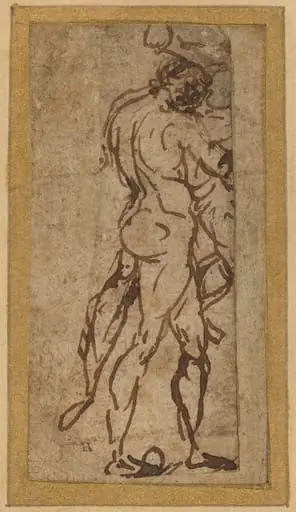
![Male Nude [verso], by Michelangelo](https://artifactworldgallery.com/img/michelangelo--male-nude-verso--d48a81b2ad2bdbb8-w320.webp)