Artwork
The Two Sons of Noah
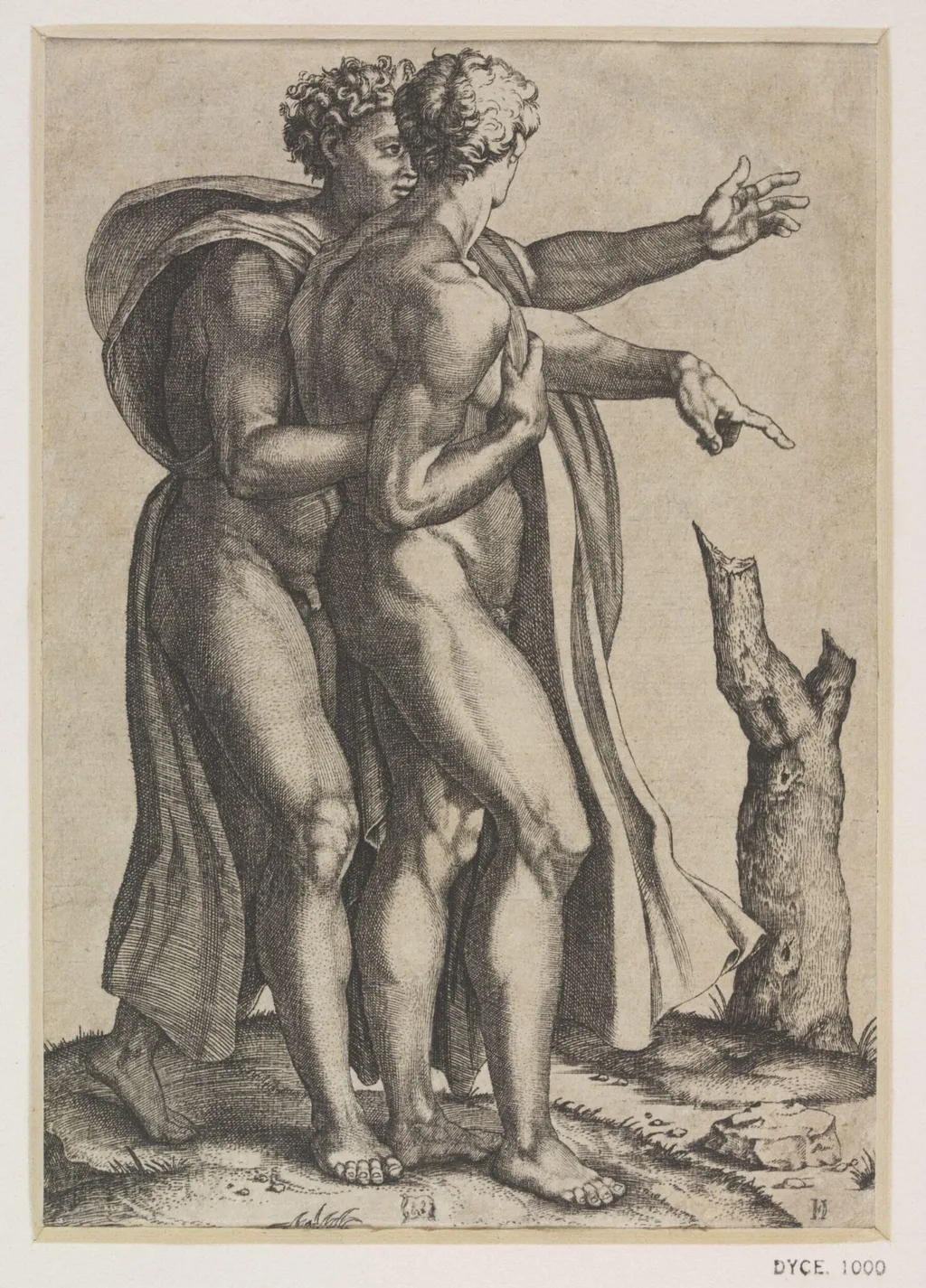
The Two Sons of Noah is a print by the Renaissance artist Michelangelo. It dates from 1490 and is held in the collection of the Victoria and Albert Museum.
About this work
Overview
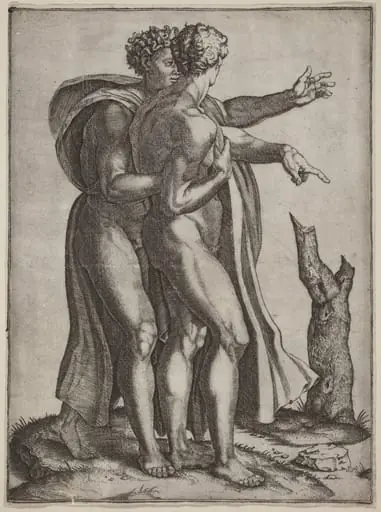
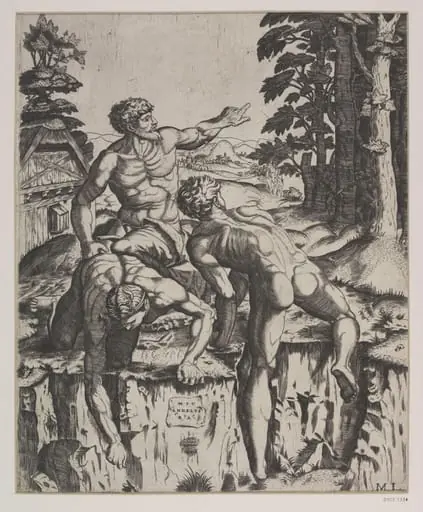
The Two Sons of Noah is a print on paper based on a fresco by Michelangelo, depicting a scene from the biblical account of Noah's drunkenness, focusing on Noah's two sons.
Subject & Meaning
The print illustrates a specific moment from the biblical narrative, where one son, muscular with curly hair, gestures towards a broken tree trunk with an attached paper or cloth, while the other son is bent forward, with the first son's arm resting on his back. The composition conveys a sense of movement and interaction between the two figures.
Technique & Style
Characterized by sharp lines and deep shadows, the print exemplifies Renaissance stylistic conventions, emphasizing strong, realistic forms. This technique was typical in Renaissance prints to achieve a sense of muscularity and dynamism.
History & Provenance
Derived from Michelangelo's original fresco in the Sistine Chapel, the print's specific creation date and artist are not provided, though it is clearly a reproduction of a well-known Renaissance work.
Context
Created in the context of Renaissance art's fascination with biblical themes and the revival of classical techniques, the print reflects the era's artistic values of realism and emotional expression.
Legacy
As a reproduction of Michelangelo's work, the print contributes to the broader dissemination of Renaissance artistic ideals and biblical narratives throughout history, though its individual impact is not distinguished from the original fresco.
Own this work as a print
Artist & collection

Artist
Michelangelo di Lodovico Buonarroti Simoni (6 March 1475 – 18 February 1564), known mononymously as Michelangelo, was an Italian sculptor, painter, architect, and poet of the High Renaissance.

![Male Nude [recto], by Michelangelo](https://artifactworldgallery.com/img/michelangelo--male-nude-recto--8c3354d89884753a-w320.webp)
![Male Nude [verso], by Michelangelo](https://artifactworldgallery.com/img/michelangelo--male-nude-verso--d48a81b2ad2bdbb8-w320.webp)
 Two Nude Men
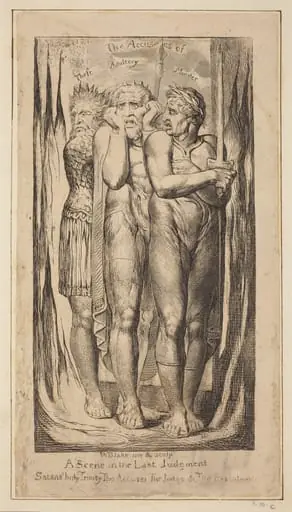 War (The Accusers of Theft, Adultery, Murder)
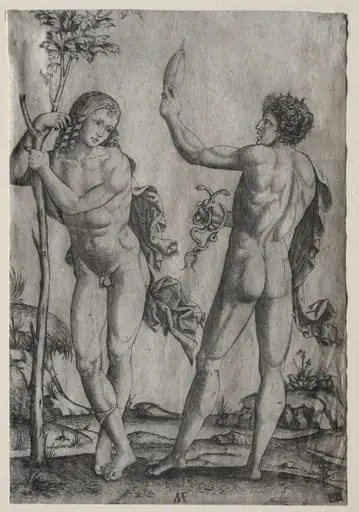 Two Nude Men Beside a Tree
 The Bathers
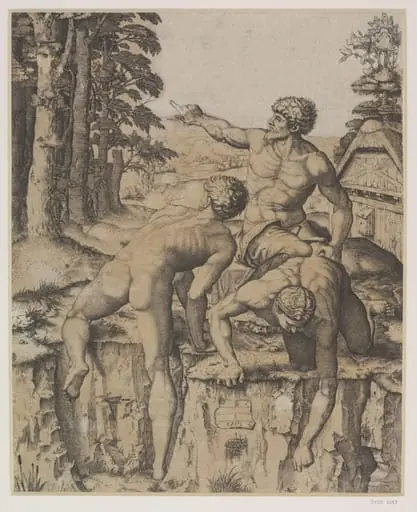 Untitled
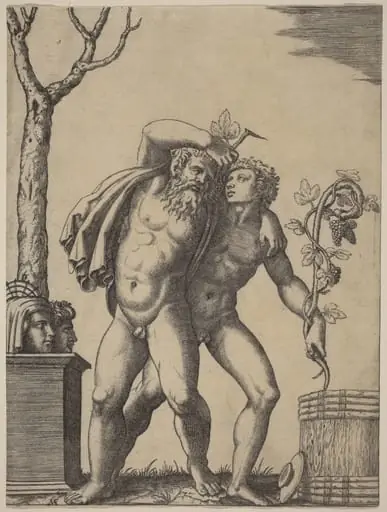 A Young and an Old Bacchant
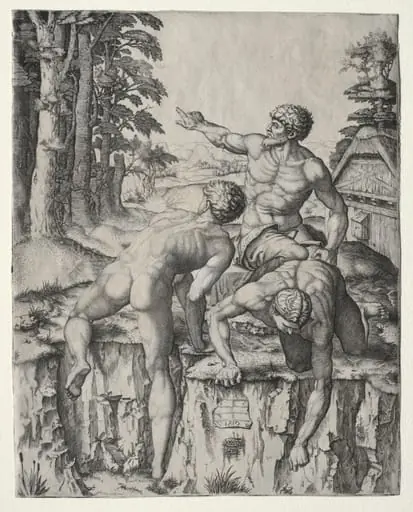 The Climbers (Three Figures from Michelangelo's Battle of Cascina)
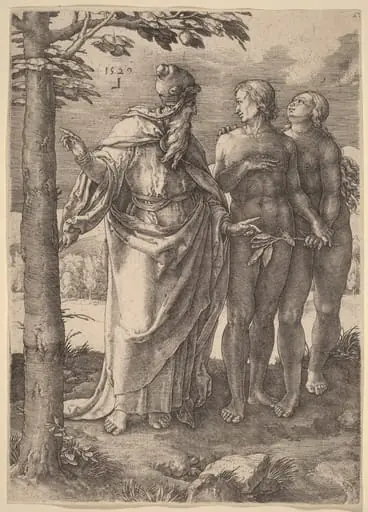 The First Prohibition
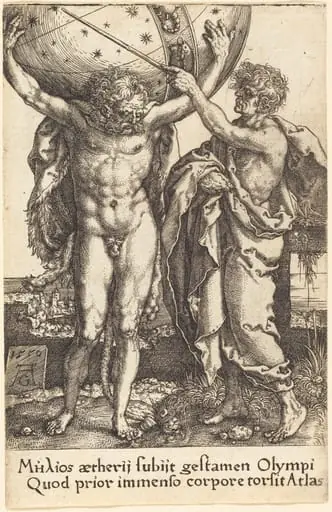 Hercules and Atlas
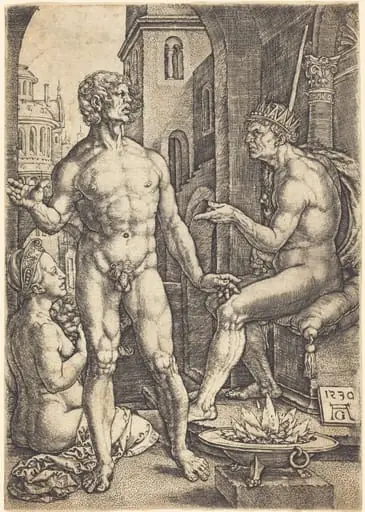 Mucius Scaevola
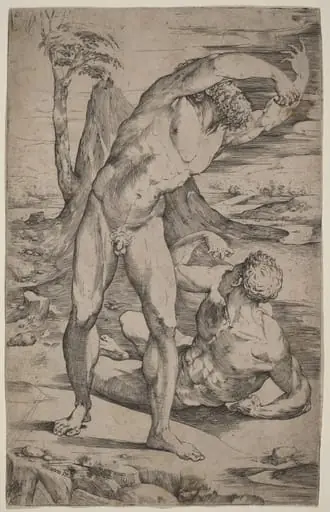 Two Male Nudes Gesturing in a Landscape
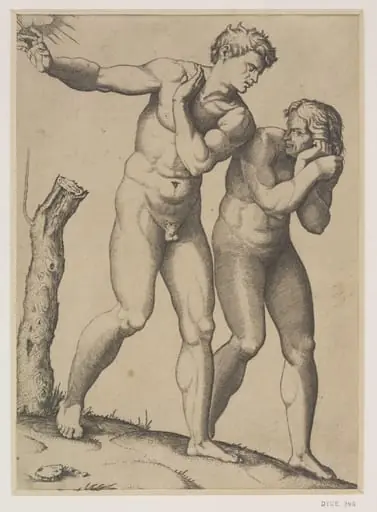 The Expulsion of Adam and Eve from Paradise