Artwork
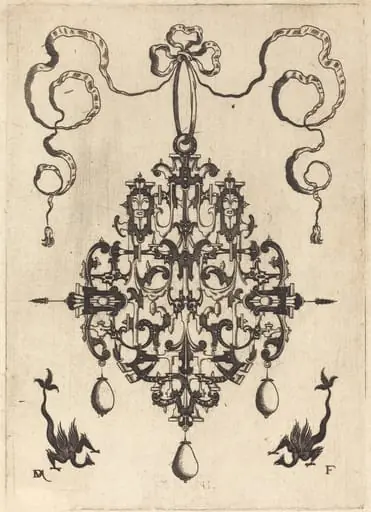
Large Pendant, Ornamental Foliage Design
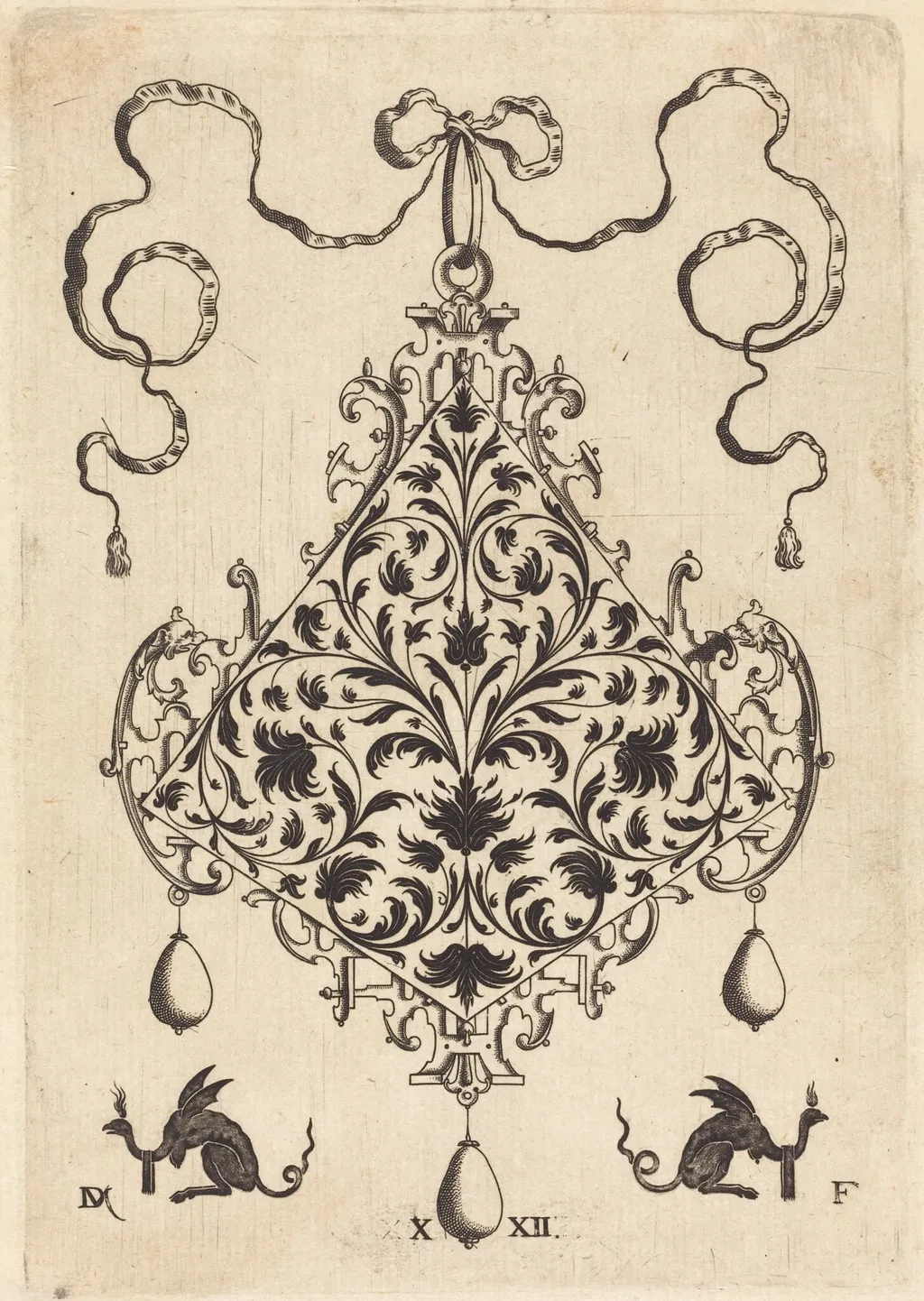
Large Pendant, Ornamental Foliage Design is an ink print by the Renaissance artist Daniel Mignot. It dates from 1596 and is held in the collection of the National Gallery of Art.
About this work
Overview
Rendered in monochrome, the composition centers on a complex arrangement of foliage, with delicate, interwoven leaves and blossoms forming the main structure.
Created in 1596 by Daniel Mignot, this engraving depicts an ornate pendant fixture designed for decorative use. Rendered in monochrome, the composition centers on a complex arrangement of foliage, with delicate, interwoven leaves and blossoms forming the main structure. The work was produced by incising fine lines into a metal plate, then transferring the image via inked printing, a technique characteristic of Renaissance metal engraving.
Subject & Meaning
The pendant design features a central cluster of stylized botanical forms, suggesting an idealized natural order rather than a literal chandelier. Two small animals, possibly rabbits, rest at the lower corners, adding a touch of whimsy and symbolic vitality. Dangling egg-shaped elements may represent suspended lights, hinting at the object’s functional purpose while emphasizing its role as a decorative artifact in elite interiors.
Technique & Style
Mignot employed precise engraving tools to carve thin, controlled lines into a copper plate, using cross-hatching to model light and shadow. The density and direction of the lines create a sense of volume and texture in the foliage, while fine parallel strokes define the delicate curves of petals and stems. The absence of color focuses attention on the intricacy of line work, typical of Northern European printmaking traditions of the period.
History & Provenance
The engraving was produced during a period when ornamental designs were widely circulated among artisans and craftsmen. Though no early ownership records are documented, such prints were often used as patterns for metalworkers, glassmakers, and architects. Its survival suggests it was valued as a reference or collector’s item, possibly within a workshop or private collection of decorative arts.
Context
In late 16th-century Europe, detailed engravings of decorative motifs were essential tools for artisans designing interiors for nobility. Mignot’s work reflects the era’s fascination with natural forms, influenced by Mannerist aesthetics and the revival of classical ornament. Such designs bridged fine art and applied crafts, serving both aesthetic and practical functions in the production of luxury objects.
Legacy
This engraving contributes to a broader corpus of Renaissance decorative prints that informed craftsmanship across Europe. While Mignot is not widely known today, works like this preserved design vocabulary used by generations of artisans. Its precision and detail exemplify the role of printmaking as a medium for transmitting visual ideas beyond the confines of individual workshops or courts.
Artist & collection


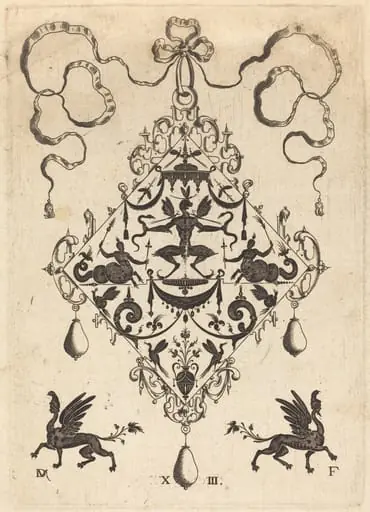 Large Pendant, Winged Fantasy Creature Holding Two Snakes
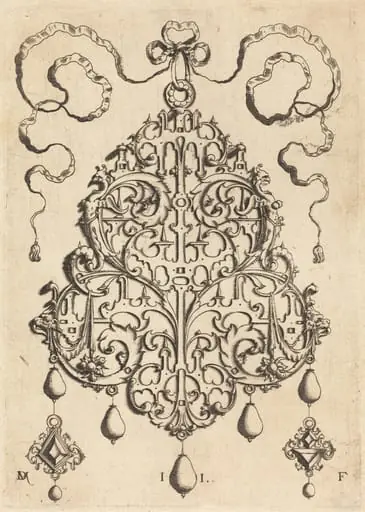 Large Strapwork Pendant with Two Hangers as Earrings at Left and Right
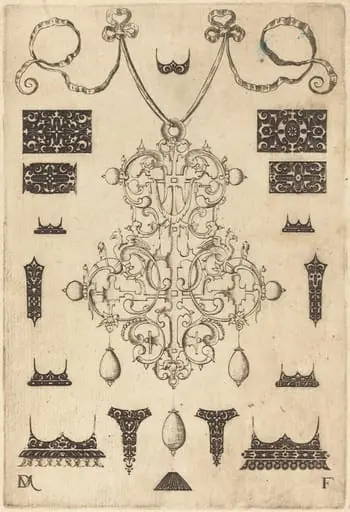 Large Pendant with Three Drops Below, Surrounded by Fifteen Different Studs
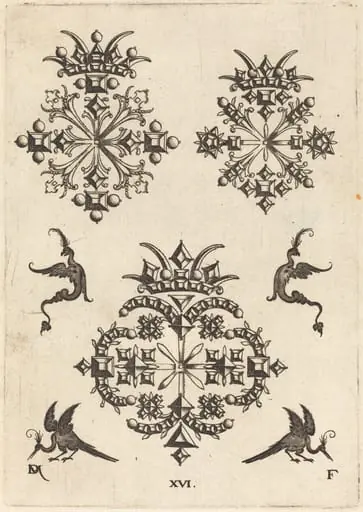 Three Brooches with Fantasy Birds at Left, Right, and Bottom
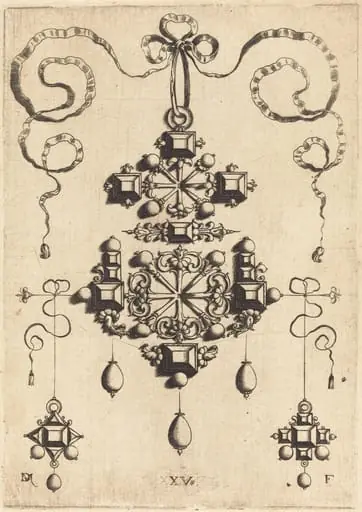 Pendant with Two Double Crosses, Surrounded by Four Diamond-Shaped Stones, Five Table-Stones, and Thirteen Pearls
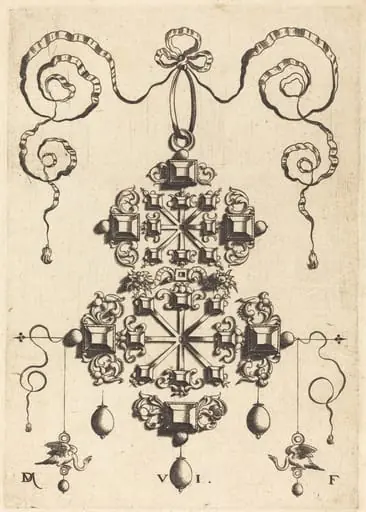 Large Pendant with Two Double Crosses, Surrounded by Six Large and Sixteen Small Table-Stones
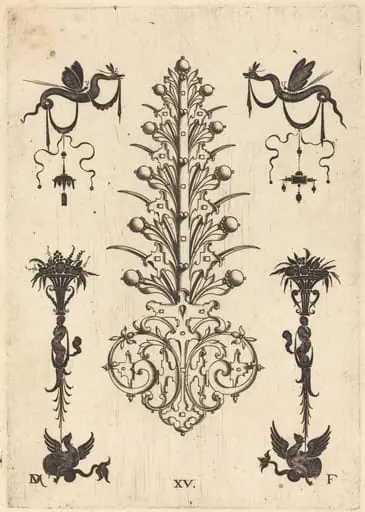 Hyacinth-Shaped Brooch with Winged Snakes at Top and Winged Animals at Bottom
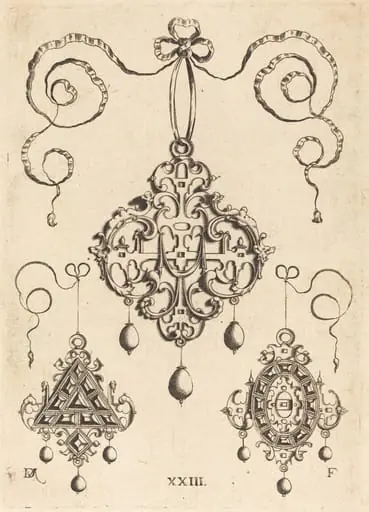 Three Strapwork Pendants, The Lower Ones Triangular and Oval
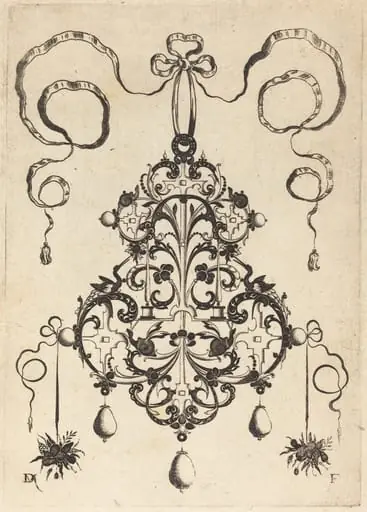 Large Pendant, Lower Left and Right Two Bunches of Grass and Fruit
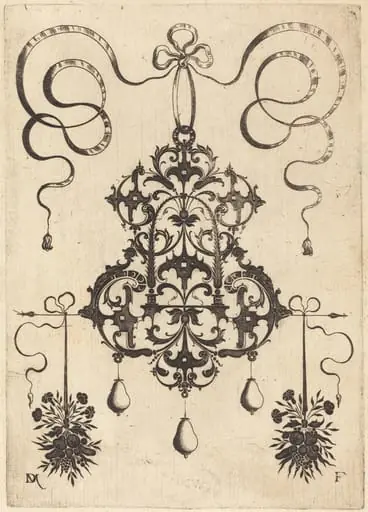 Large Pendant, Lower Left and Right Two Bunches of Grass, Flowers, and Fruit
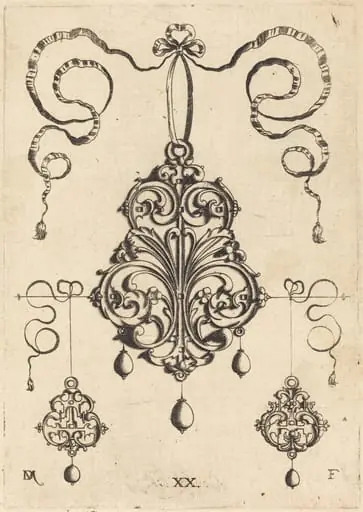 One Large and Two Smaller Strapwork Pendants
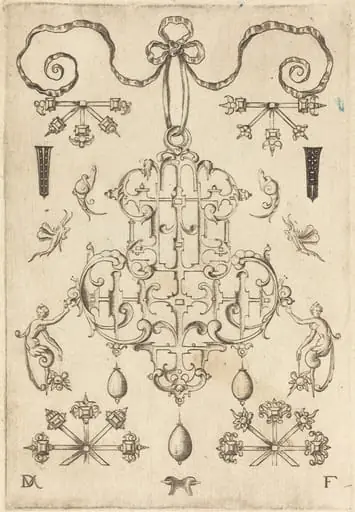 Large Pendant with Three Drops Below
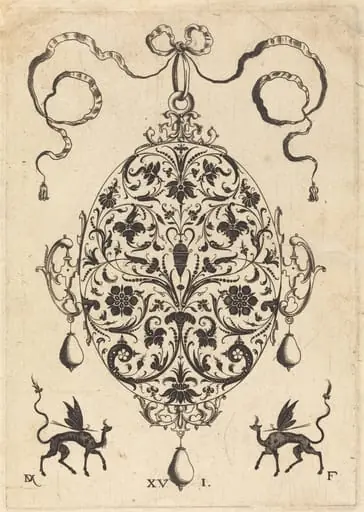 Large Pendant, Upright Oval with Floral Ornament
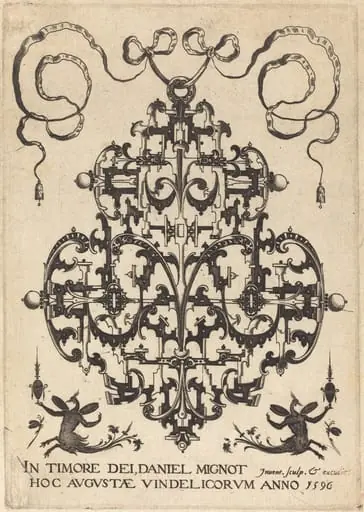 Title Page: Large Pendant, Two Winged Imaginary Figures at Bottom
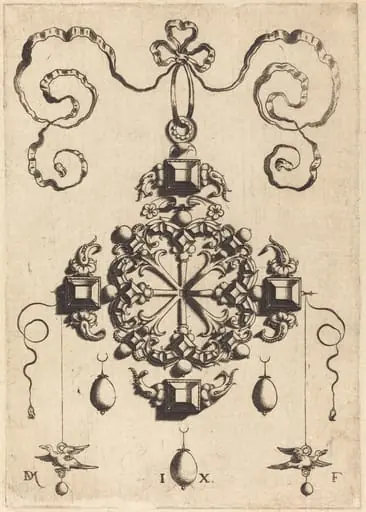 Large Pendant in the Form of a Wheel
 Large Pendant, Two Fantasy Creatures with Long Tails at Bottom
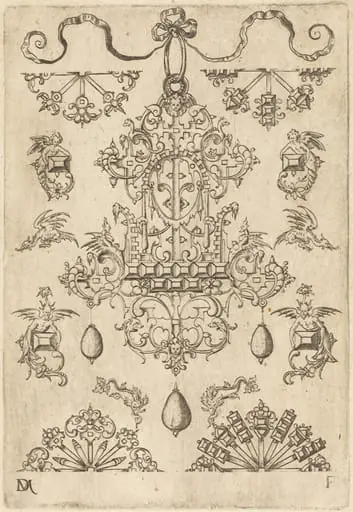 Large Pendant Surrounded by Ten Different Studs