Artwork
Large Pendant Surrounded by Ten Different Studs
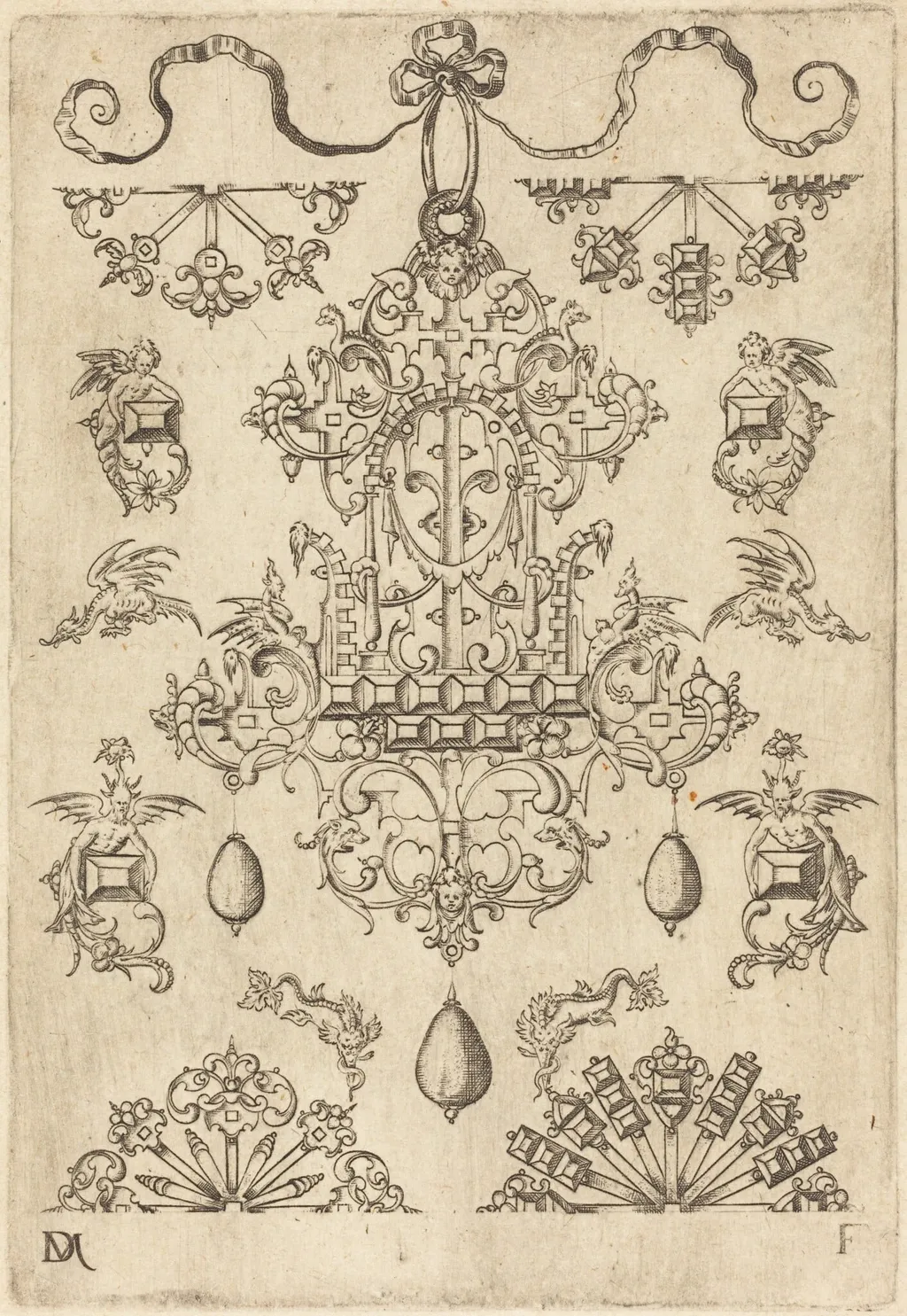
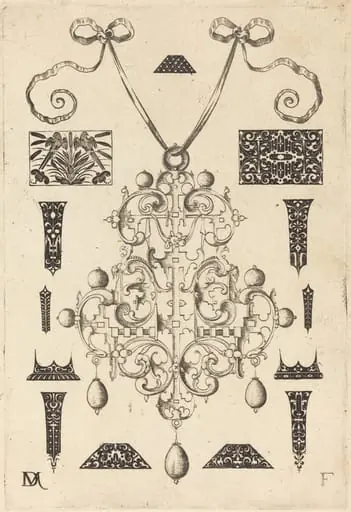
Large Pendant Surrounded by Ten Different Studs is an ink print by the Renaissance artist Daniel Mignot. It dates from 1584 and is held in the collection of the National Gallery of Art.
About this work
Overview
Created in 1584 by Daniel Mignot, this engraving features a central ornate pendant surrounded by ten distinct decorative elements.
Created in 1584 by Daniel Mignot, this engraving features a central ornate pendant surrounded by ten distinct decorative elements. Rendered in fine black lines on a pale ground, the composition emphasizes intricate linework and rhythmic detail. The work belongs to the tradition of decorative printmaking, where precision and complexity served as demonstrations of technical mastery rather than narrative expression.
Subject & Meaning
The central pendant, likely inspired by chandelier forms, functions as a visual anchor, while the ten surrounding motifs—ranging from heraldic shields to feather-like forms and crowns—suggest symbolic variety rather than a unified story. These elements may reflect contemporary tastes in ornamentation, possibly intended for use in textile, metalwork, or architectural design, where such patterns were adapted for decorative application.
Technique & Style
Executed as a fine-line engraving, the piece relies on controlled incisions to build texture and form. The artist employs dense, interwoven strokes to render surface detail, with each surrounding motif exhibiting unique patterning yet harmonizing through consistent line weight and spacing. The absence of tone or shading underscores the reliance on linear precision, characteristic of late 16th-century Northern European printmaking.
History & Provenance
The work originates from a period when engraved pattern books were widely circulated among artisans and craftsmen. While no early ownership records are documented, its format aligns with prints produced for design reference rather than fine art collection. It likely circulated in workshops or among goldsmiths and embroiderers seeking motifs for luxury objects.
Context
In the late 1500s, decorative arts across Europe saw a surge in interest in elaborate, repeatable ornament. Mignot’s engraving reflects this trend, drawing from Renaissance and Mannerist sources that valued complexity and virtuosity in surface design. Such prints were tools for artisans, bridging the gap between artistic imagination and applied craft in an era before mass production.
Legacy
Though not widely exhibited today, the engraving exemplifies a category of works that sustained craft traditions across centuries. Its structured yet varied compositions influenced pattern books used in Europe well into the 17th century. As a record of design sensibilities, it offers insight into how aesthetic ideals were transmitted through reproductive prints before the rise of industrial design.
Artist & collection


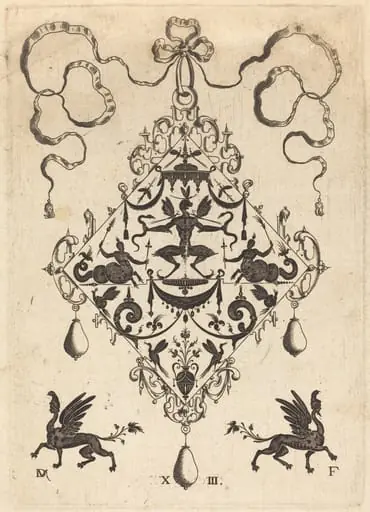 Large Pendant, Winged Fantasy Creature Holding Two Snakes
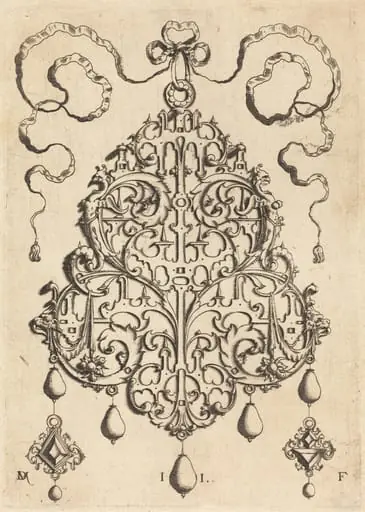 Large Strapwork Pendant with Two Hangers as Earrings at Left and Right
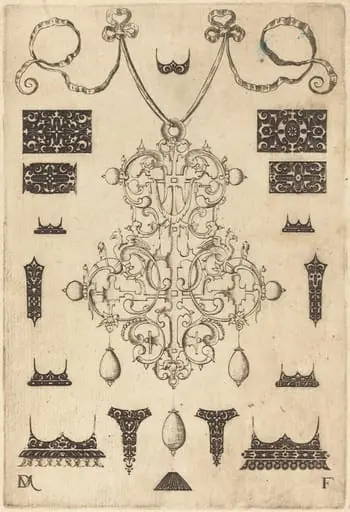 Large Pendant with Three Drops Below, Surrounded by Fifteen Different Studs
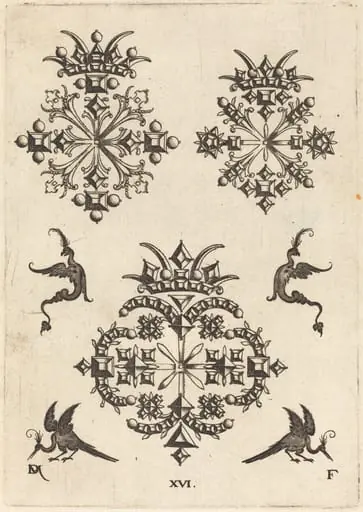 Three Brooches with Fantasy Birds at Left, Right, and Bottom
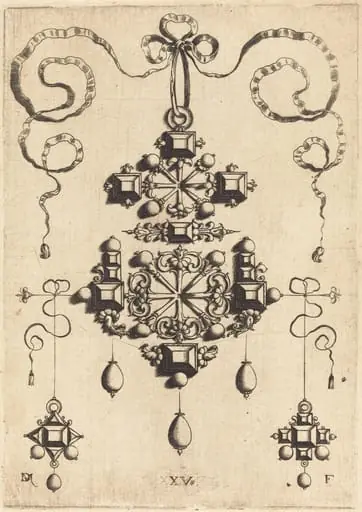 Pendant with Two Double Crosses, Surrounded by Four Diamond-Shaped Stones, Five Table-Stones, and Thirteen Pearls
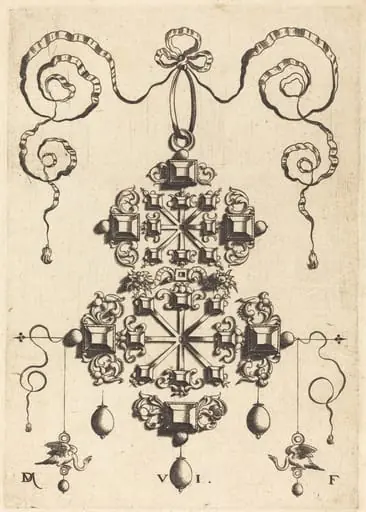 Large Pendant with Two Double Crosses, Surrounded by Six Large and Sixteen Small Table-Stones
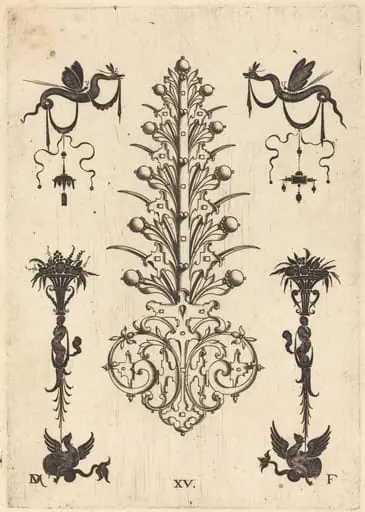 Hyacinth-Shaped Brooch with Winged Snakes at Top and Winged Animals at Bottom
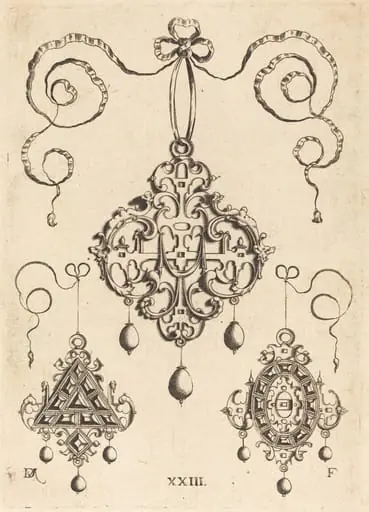 Three Strapwork Pendants, The Lower Ones Triangular and Oval
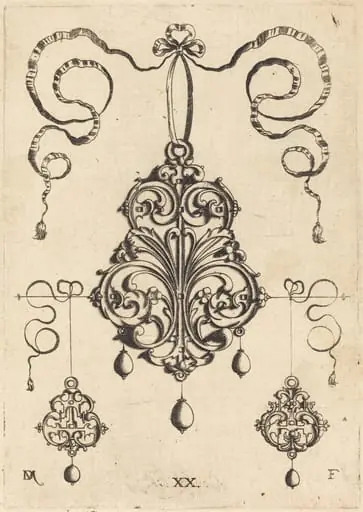 One Large and Two Smaller Strapwork Pendants
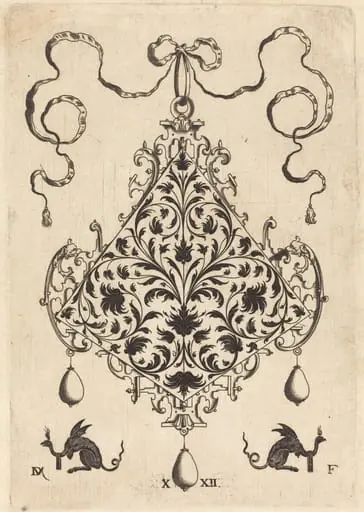 Large Pendant, Ornamental Foliage Design
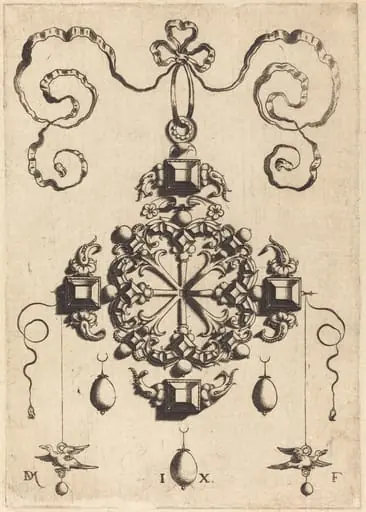 Large Pendant in the Form of a Wheel
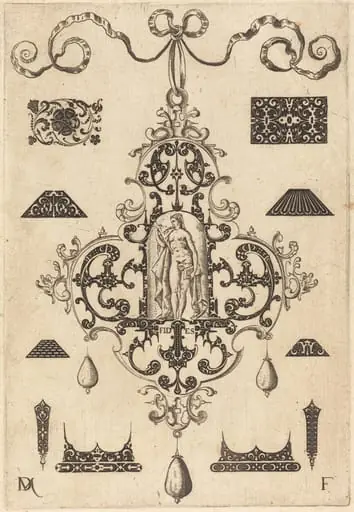 Large Pendant, Faith Standing at Centre
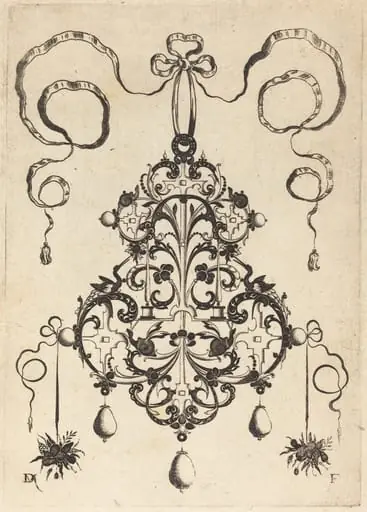 Large Pendant, Lower Left and Right Two Bunches of Grass and Fruit
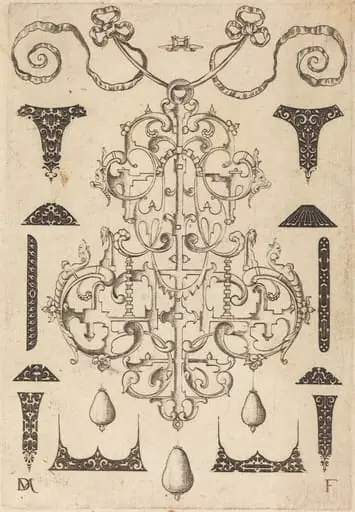 Large Pendant, Surrounded by Twelve Small Studs
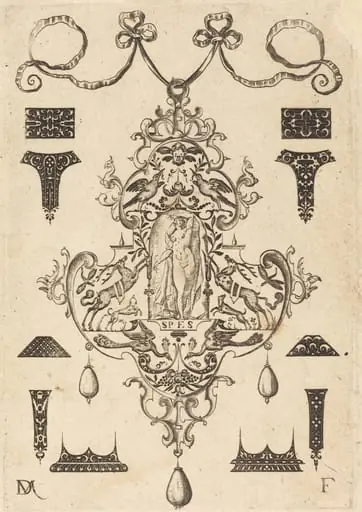 Large Pendant, Hope Standing at Centre
 Large Pendant, Surrounded by Thirteen Studs