Artwork
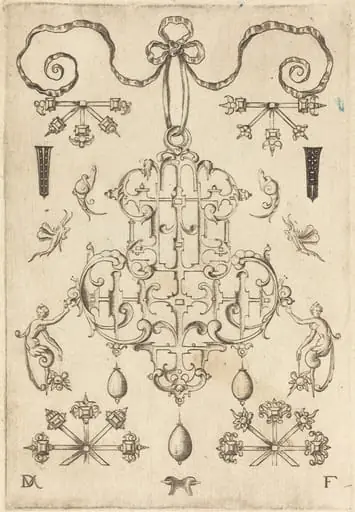
Title Page: Large Pendant, Two Winged Imaginary Figures at Bottom
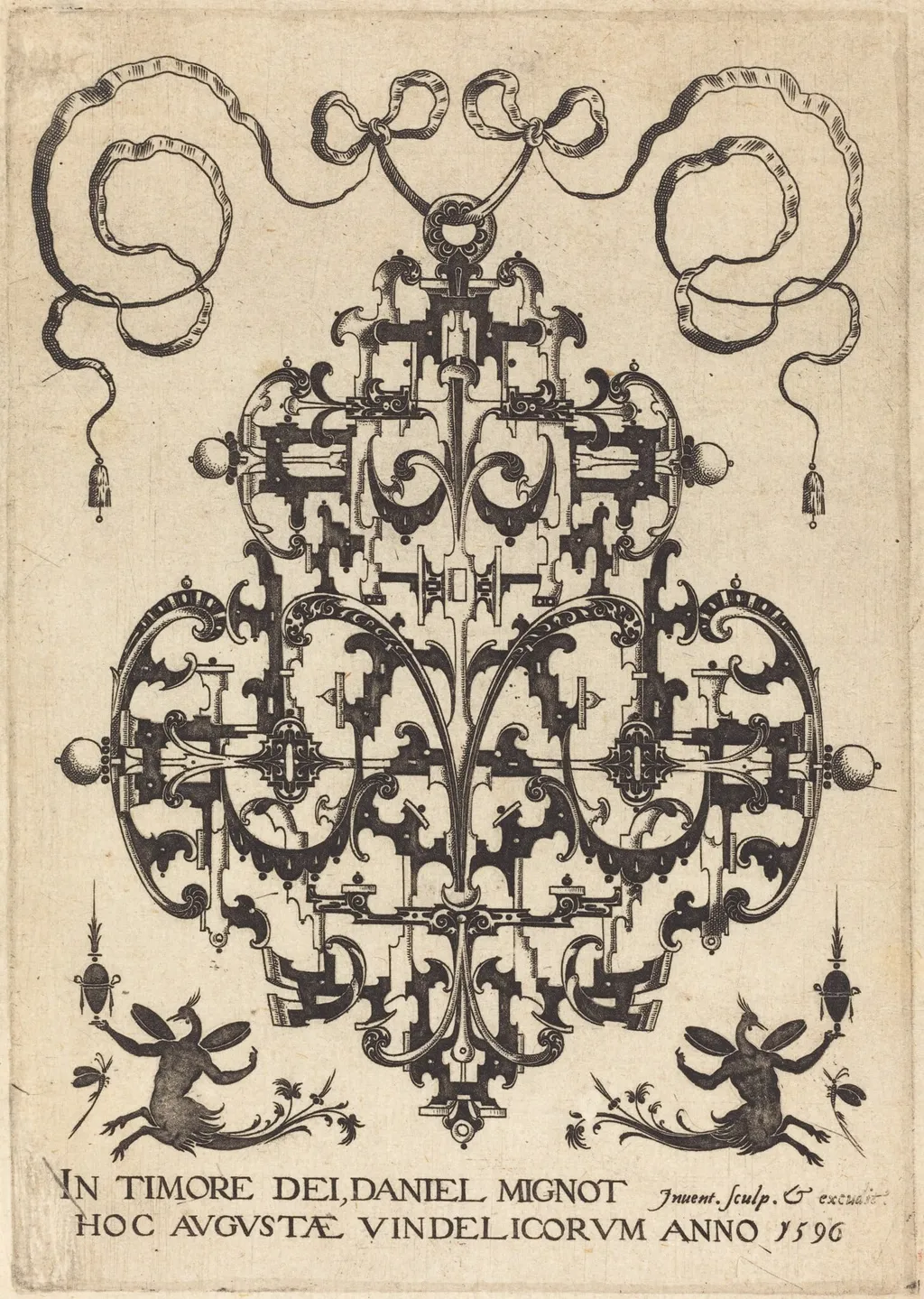
Title Page: Large Pendant, Two Winged Imaginary Figures at Bottom is an ink print by the Renaissance artist Daniel Mignot. It dates from 1596 and is held in the collection of the National Gallery of Art.
About this work
The tiny text at the bottom names the artist and year—1596—so this is an old design meant to show off craftsmanship.
This print shows a fancy metal pendant hanging in the center, surrounded by swirling, symmetrical lines. The pendant has small loops, bells, and ornate shapes that look like they’d dangle or jingle. At the bottom, two strange winged creatures with leafy tails face each other, almost like guardians.
The tiny text at the bottom names the artist and year—1596—so this is an old design meant to show off craftsmanship. The lines and shadows create depth, making the metal look almost three-dimensional.
If you like this kind of detailed metalwork, look up engraving to see how artists carved these lines.
Overview
This 1596 engraving by Daniel Mignot depicts a detailed metal pendant as its central subject. The composition is framed by intricate, symmetrical swirls that draw the eye toward the pendant’s elaborate form. At the base, two fantastical winged beings with foliage-like tails face inward, suggesting a protective or ceremonial role. The artist’s fine lines and controlled shading simulate the reflective surfaces of metal, giving the object a tangible, three-dimensional presence despite its flat medium.
Subject & Meaning
The pendant appears to be a ceremonial or aristocratic adornment, richly adorned with loops, bells, and ornamental motifs that imply movement and sound. The winged figures below, with their leafy tails and symmetrical posture, function as symbolic guardians, possibly evoking themes of protection, nature, or divine presence. Their hybrid forms blend human, animal, and botanical elements, common in late Renaissance iconography to convey mystery or otherworldly authority.
Technique & Style
Mignot employed fine-line engraving to render texture and depth with precision. The metal surfaces are modeled through cross-hatching and delicate stippling, creating the illusion of light catching curved edges and recessed details. The swirling borders and repetitive patterns reflect Mannerist tendencies, emphasizing complexity over naturalism. The small inscription at the base confirms authorship and date, a standard practice among printmakers of the period to assert craftsmanship and ownership.
History & Provenance
Created in 1596, the print likely served as a design template or decorative specimen for metalworkers, jewelers, or collectors interested in ornamental arts. While no specific original owner is documented, its detailed rendering suggests it was produced for an audience familiar with elite material culture. Such engravings circulated among artisans as visual references, preserving design ideas beyond the physical object.
Context
In late 16th-century Europe, engraved prints were vital for disseminating decorative motifs across regions and crafts. Mignot’s work aligns with a broader trend of illustrating luxury objects—jewelry, armor, and ecclesiastical items—to inspire craftsmanship. The fusion of naturalistic detail with mythological creatures reflects the period’s fascination with hybrid forms, influenced by classical antiquity and emerging scientific curiosity about the natural world.
Legacy
Though not widely known today, this engraving exemplifies the role of printmaking in preserving and transmitting ornamental design during the Renaissance. It contributes to the historical record of how decorative arts were conceptualized and shared before industrial reproduction. Its survival offers insight into the visual language of craftsmanship and the symbolic systems embedded in personal adornment of the era.
Artist & collection


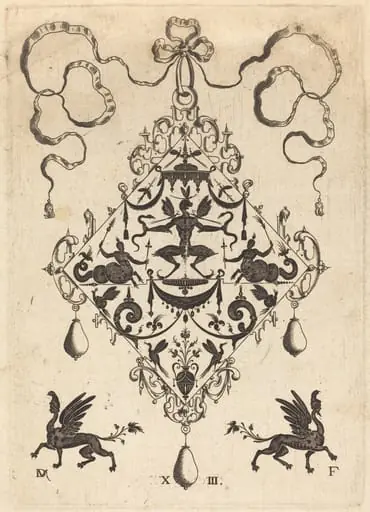 Large Pendant, Winged Fantasy Creature Holding Two Snakes
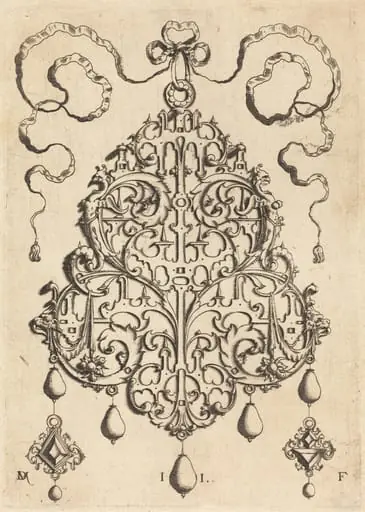 Large Strapwork Pendant with Two Hangers as Earrings at Left and Right
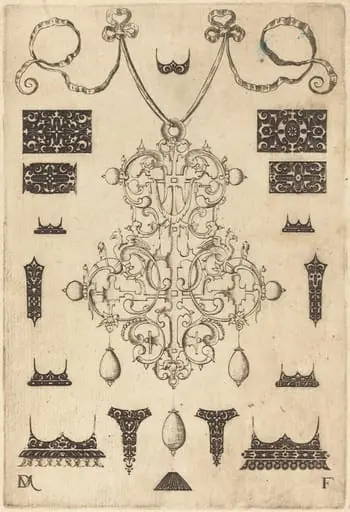 Large Pendant with Three Drops Below, Surrounded by Fifteen Different Studs
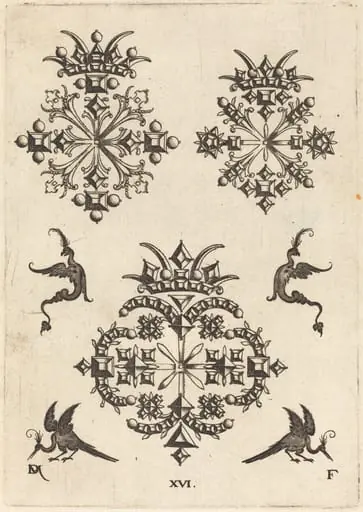 Three Brooches with Fantasy Birds at Left, Right, and Bottom
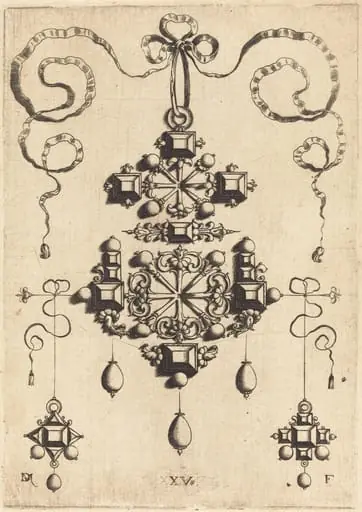 Pendant with Two Double Crosses, Surrounded by Four Diamond-Shaped Stones, Five Table-Stones, and Thirteen Pearls
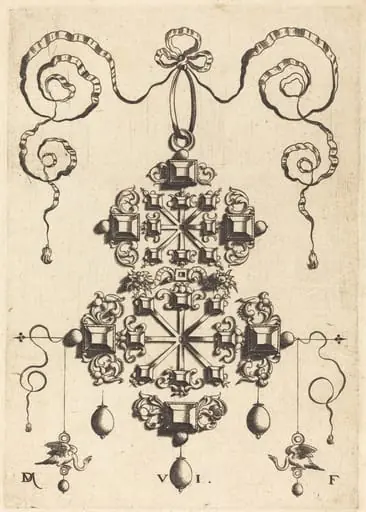 Large Pendant with Two Double Crosses, Surrounded by Six Large and Sixteen Small Table-Stones
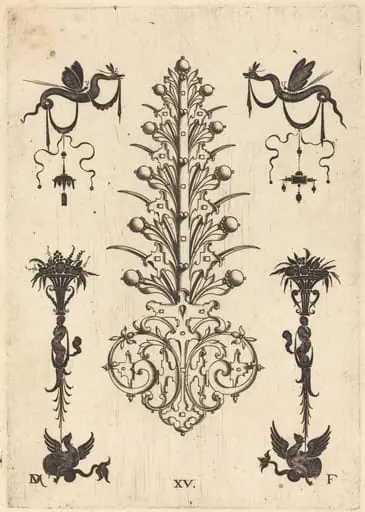 Hyacinth-Shaped Brooch with Winged Snakes at Top and Winged Animals at Bottom
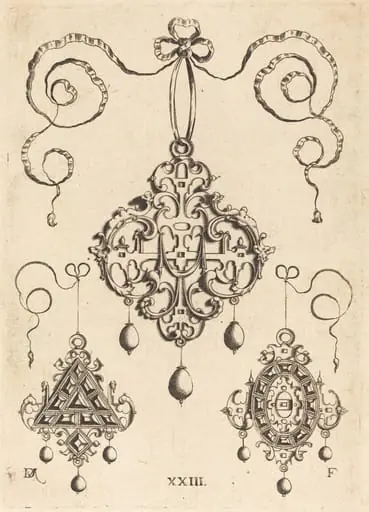 Three Strapwork Pendants, The Lower Ones Triangular and Oval
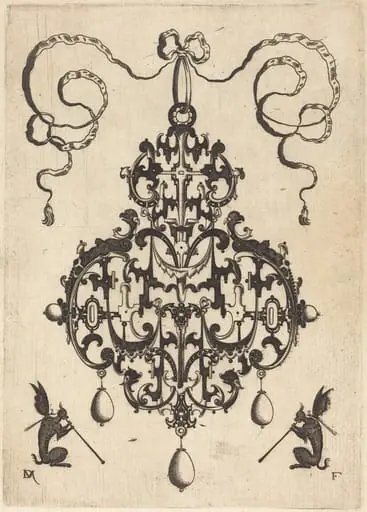 Large Pendant, Two Winged Fantasy Creatures with Trumpets at Bottom
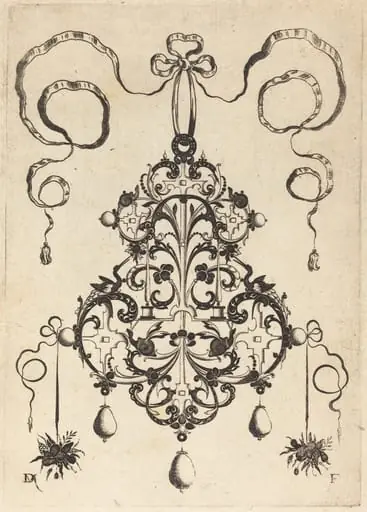 Large Pendant, Lower Left and Right Two Bunches of Grass and Fruit
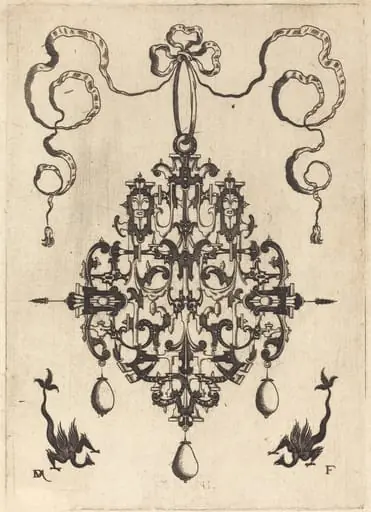 Large Pendant, Two Fantasy Creatures with Long Tails at Bottom
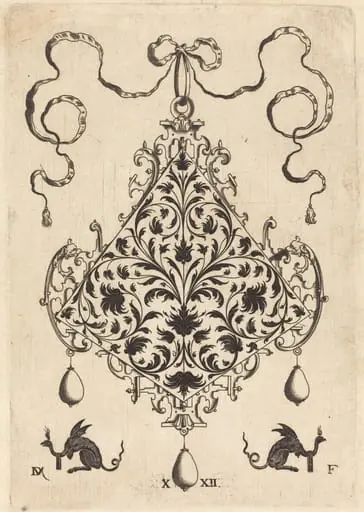 Large Pendant, Ornamental Foliage Design
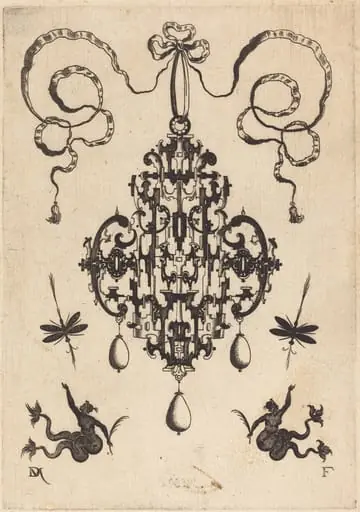 Large Pendant, Lower Left and Right Two Creatures of the Sea
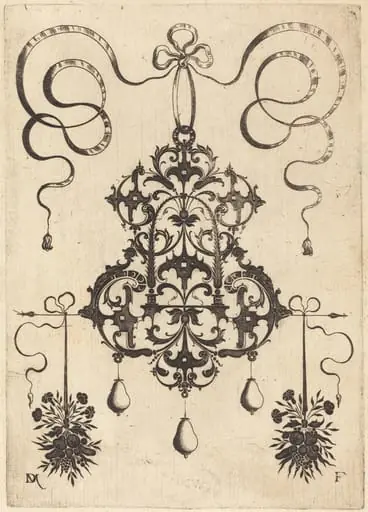 Large Pendant, Lower Left and Right Two Bunches of Grass, Flowers, and Fruit
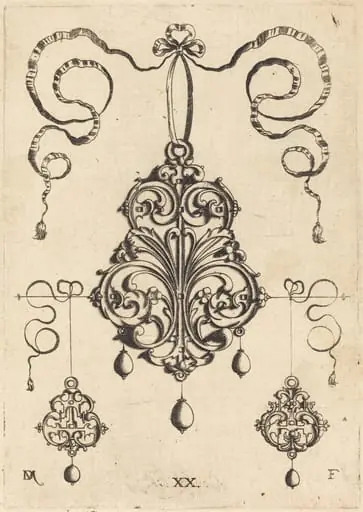 One Large and Two Smaller Strapwork Pendants
 Large Pendant with Three Drops Below
 Strapwork Pendant with Two Square Tablestonesas Earrings at Left and Right