Artwork
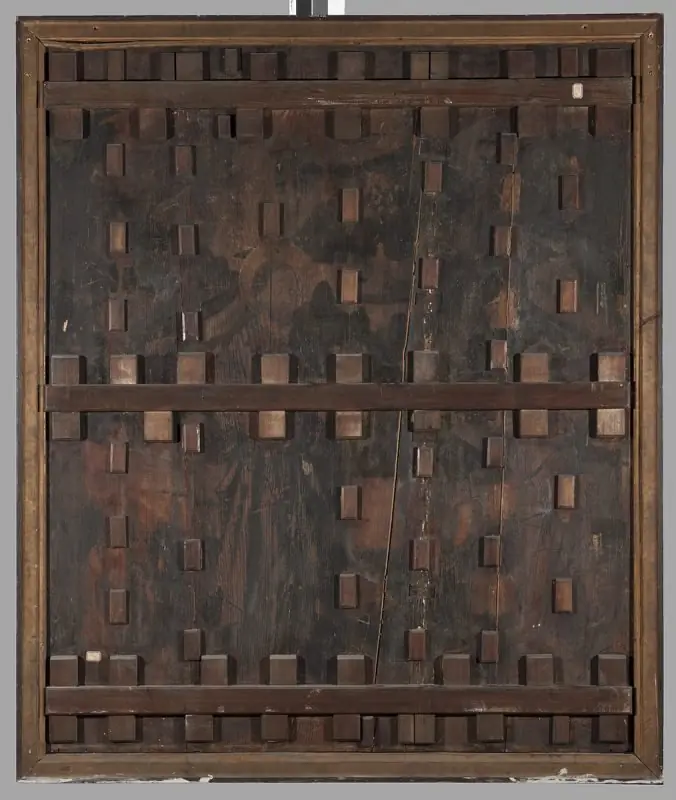
Legnica polyptych - right wing external - lower panel - obverse: Resurrection of Christ; reverse: Last judgement
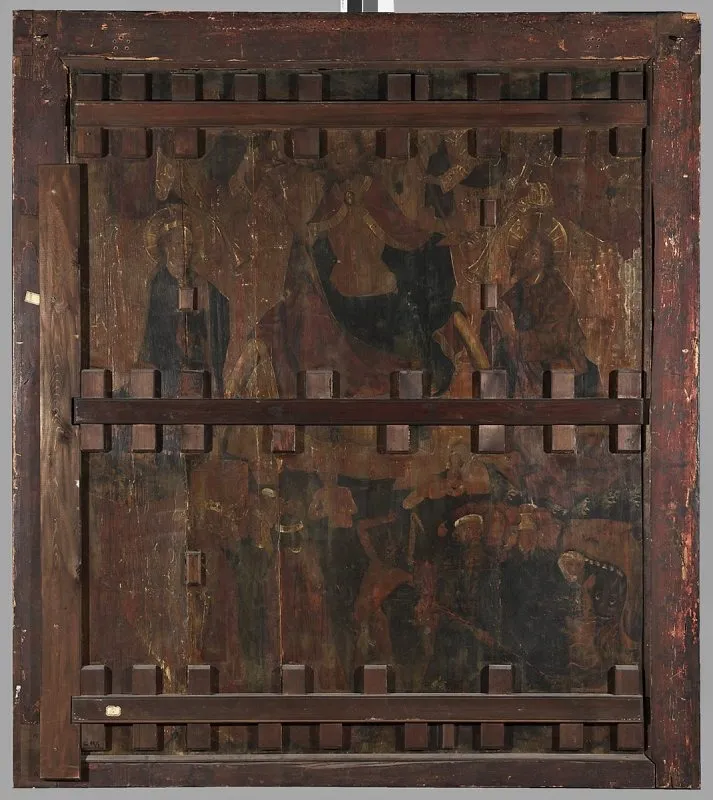
Legnica polyptych - right wing external - lower panel - obverse: Resurrection of Christ; reverse: Last judgement is a tempera painting by the Northern Renaissance artist Mikołaj Obilman. It dates from 1466 and is held in the collection of the National Museum in Warsaw.
About this work
Overview
The right external wing of the Legnica polyptych, lower panel, presents a double‑sided tempera composition by Mikołaj Obilman, dated to 1466. The front side depicts the Resurrection of Christ, while the reverse shows a Last Judgement scene. Both images are painted on a wooden panel that resembles an old door, and the work is presently conserved in the National Museum in Warsaw.
Subject & Meaning
The Resurrection panel illustrates the risen Christ surrounded by figures in dark robes, some kneeling, one elevated as if hovering, emphasizing triumph over death. The reverse Last Judgement portrays a darker atmosphere with anguished, shadowy figures reaching upward, reflecting the medieval preoccupation with salvation and divine reckoning.
Technique & Style
Executed in egg tempera, the painting displays the characteristic fine brushwork and luminous color layers typical of mid‑15th‑century Central European art. The medium’s quick drying time required meticulous planning, resulting in crisp outlines and a slightly flattened spatial perspective, while the aging surface shows fading and cracking that reveal the original palette beneath.
History & Provenance
Created in 1466, the panel formed part of a larger polyptych originally commissioned for a church in Legnica. Over centuries it changed hands, eventually entering the collection of the National Museum in Warsaw, where it has been displayed as part of the museum’s medieval Polish painting holdings.
Context
Obilman’s work belongs to the late Gothic tradition in Silesia, where polyptychs served both liturgical and didactic functions. The dual imagery—Resurrection on one side, Last Judgement on the other—allowed the panel to convey complementary theological messages depending on the liturgical calendar and the viewer’s position.
Artist & collection
Artist
This late-medieval painter created the Legnica polyptych, a five-panel altarpiece from 1466.

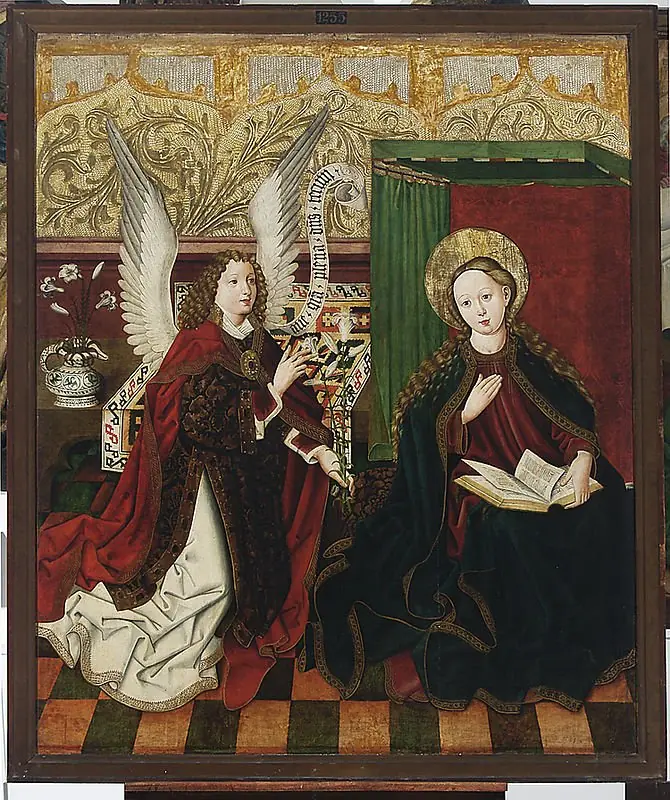 Legnica polyptych - left wing internal - upper panel - obverse: Annunciation; reverse: St Lawrence, St Vincent the Levite. St John the Baptist
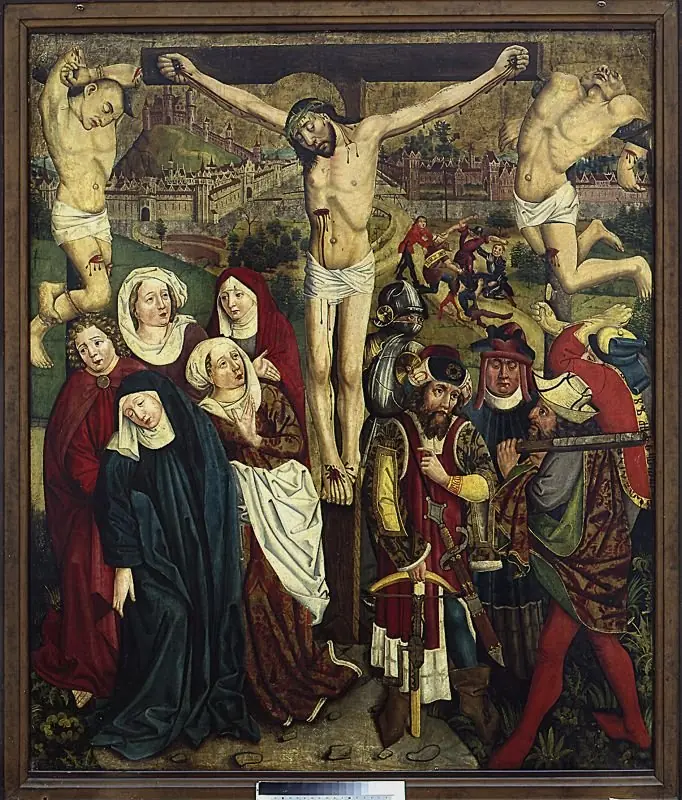 Legnica polyptych
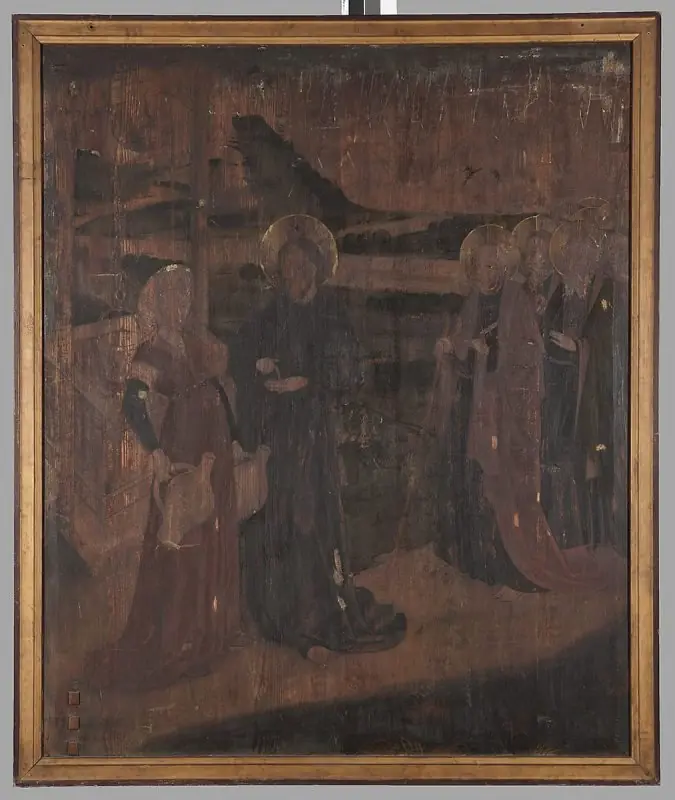 Legnica polyptych - right wing external - upper panel - obverse: St Barbara, St Catherine, St Dorothy; reverse: Christ and the Samaritan
 Legnica polyptych - left wing external - upper panel - obverse: St Henry, St Nicholas, St Stephen; reverse: temptation of Christ
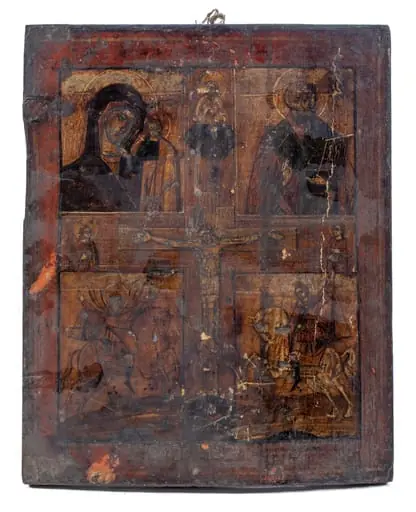 Răstignirea
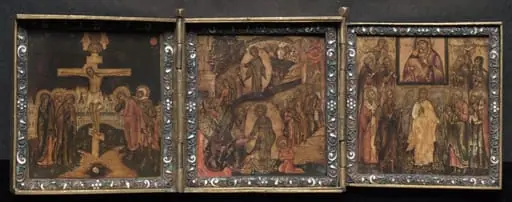 Portable Triptych Icon
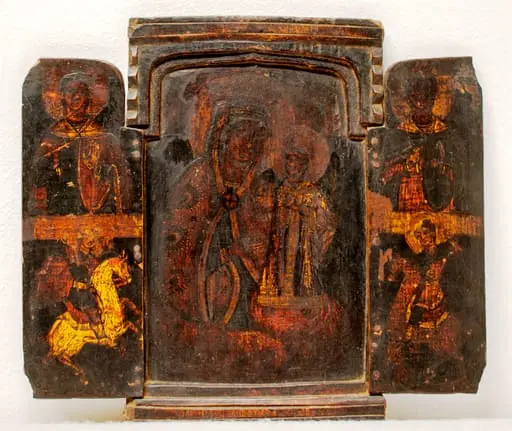 Pe panoul central este reprezentată Maica Domnului Hodighitria(Călăuzitoarea). Pruncul stă în picioare, amândoi fiind înveșmântați în straie împărătești. Maica ține Pruncul cu mâna stângă, cu dreapta arată către El. Voleul stâng, jumătatea inferioară - Sfântul Gheorghe călare pe cal alb. Înveșmântat în costum românesc de oștean medieval, mantie roșie. Calul cu picioarele din față ridicate, harnașament de culoare roșie. Deasupra e posibil să fie tot sfântul Gheorghe, în stânga ținând crucea, cu dreapta face gestul păcii, al liniștii.(prin analogie cu 34530). Simetric, pe latura dreaptă a tripticului se află jos, Sf. Dumitru, călare pe cal roșu, în poziție asemănătoare cu a SF. Gheorghe, iar sus probabil tot el, în altă ipostază iconografică(analogie) . Veșmintele au culorile inversate(tunica roșie -dreapta, albastru-stânga, mantie roșu -stânga, albastru - dreapta), la fel la sfinții războinici, probabil în legătură cu reprezentarea populară a timpului. Inițial, tripticul se închidea, dovadă inscripția care se continuă pe cele două uși. Ulterior a fost fixat cu cuie de fier, iar prinderea se făcea cu o sfoară legată de două cuie bătute pe cant.
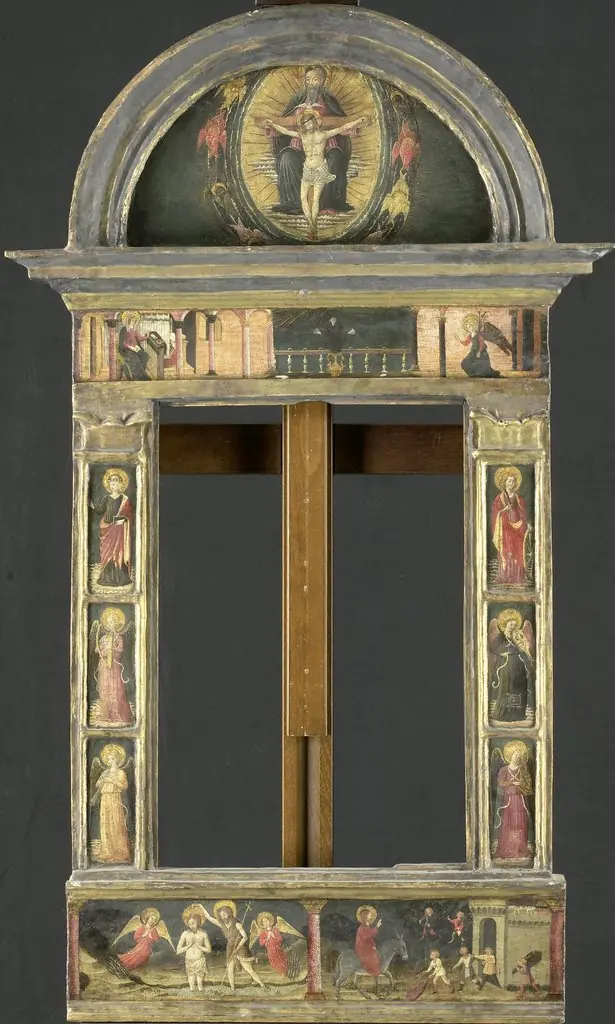 Frame painted with the annunciation, the baptism of Christ, the entry into Jerusalem, the Saints Cecilia and Catharina, and 4 angels making music
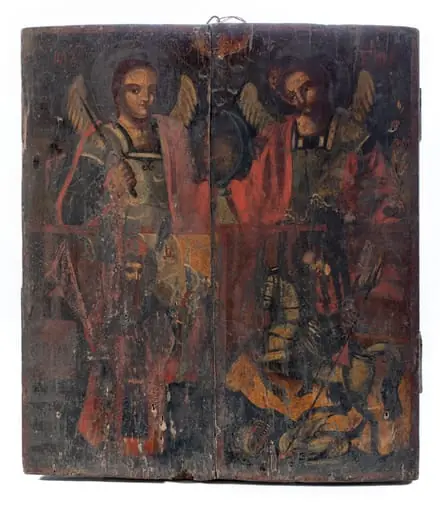 Sfinții Mihail și Gavriil
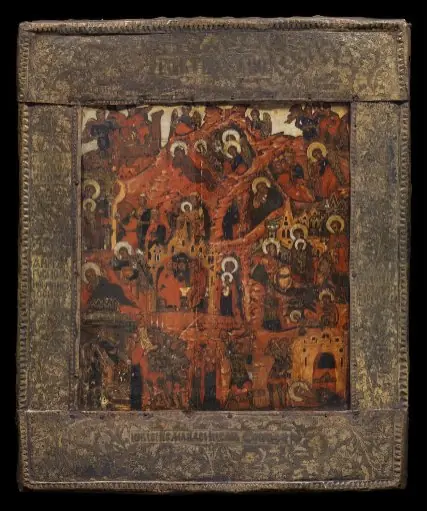 The Nativity of Jesus Christ
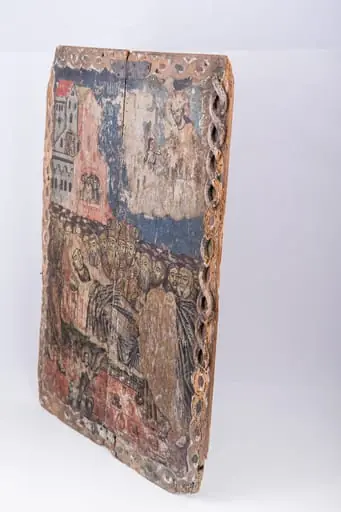 Trupul adormit al Maicii Domnului este susținut pe brațe de o mulțime de credincioși, preoți, arhierei, mitropoliți, ucenici, sfinți părinți. Mulțimea de oameni este sugerată printr-o mare de capete. Trăsăturile Chipului Maicii Domnului sunt pictate cu măiestrie. În registrul inferior, pe o pardoseală roz este un înger ocrotitor. În registrul superior, în dreapta sunt elemente de arhitectură, la ferestre fiind iarăși și iarăși personaje privind cu tristețe și îndurerare. Toate chipurile din icoană arată tristețea și durerea despărțirii de Maica Domnului mult-iubită. În stânga, Dumnezeu-Tatăl o ia de mână pe Maica Domnului, ridicând-o la Cer, și cuprinzând-o în brațele părintești. Maica Domnului este asemenea unei fetițe, ca în icoana cu Intrarea Maicii Domnului în biserică. Cromatica este armonioasă, delicată și rafinată: roșu sângeriu, roz, albastru cobalt, gri, alb, bej, brun, negru. Inscripția din româno-chirilică se traduce Adormirea Maicii Domnului IC XC Iisus Hristos. Icoana este încadrată de un chenar decorativ geometrizant reprezentat de un lanț ondulatoriu.
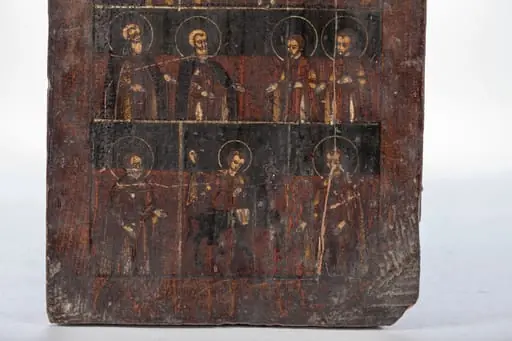 Scene biblice pe trei registre