Artwork
Les Bretonneries
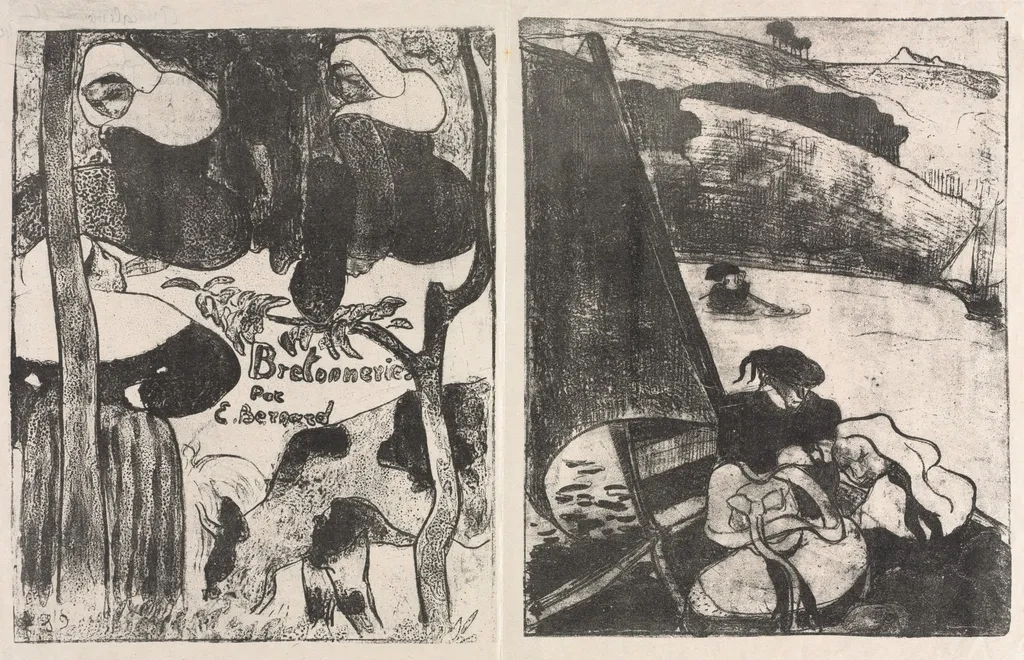
Les Bretonneries is a print by the Impressionist artist Émile Bernard. It dates from 1889 and is held in the collection of the Cleveland Museum of Art.
About this work
Overview
Les Bretonneries, a 1889 print by French Post-Impressionist Émile Bernard, juxtaposes two contrasting scenes in a single composition, characterized by bold lines and simple shapes.
Subject & Meaning
The print presents a stark dichotomy: a dark, foreboding forest with a solitary figure on the left, and a vibrant, populated landscape with a village and boats on the right. This juxtaposition may symbolize the contrast between solitude and community, or the interplay of light and darkness.
Technique & Style
Executed in Bernard's distinctive Cloisonnist and Synthetist style, the work features bold, expressive lines and simplified forms, reminiscent of sketches. This approach was hallmark of his most prolific period (1886-1897).
History & Provenance
Created during Bernard's association with influential artists like Van Gogh and Gauguin, the print bears the artist's signature 'E. Bernard' and the title 'Les Bretonneries', suggesting a locale in Brittany, France.
Context
Les Bretonneries reflects Bernard's contribution to late 19th-century Post-Impressionist movements, specifically Cloisonnism and Synthetism, which emphasized flat, two-dimensional forms and emotional intensity.
Legacy
As a work from Bernard's pivotal period, Les Bretonneries contributes to the broader legacy of Post-Impressionism, though its specific impact is more nuanced compared to works by his more renowned contemporaries.
Artist & collection
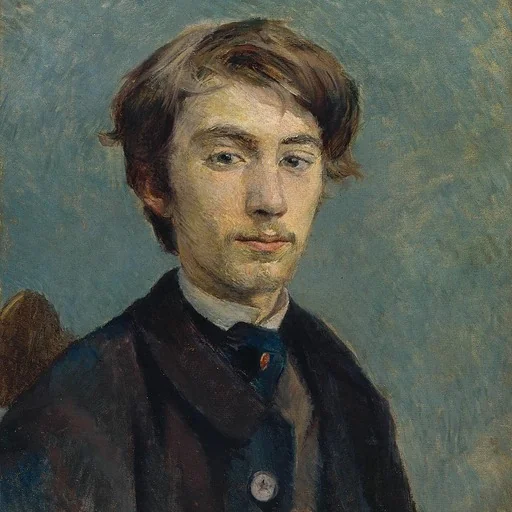
Artist
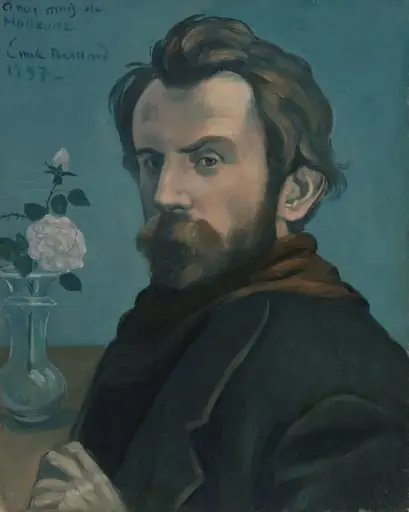
Émile Henri Bernard (French pronunciation: ; 28 April 1868 – 16 April 1941) was a French Post-Impressionist painter and writer, who had artistic friendships with Vincent van Gogh, Paul Gauguin and Eugène Boch, and at a later time, Paul…

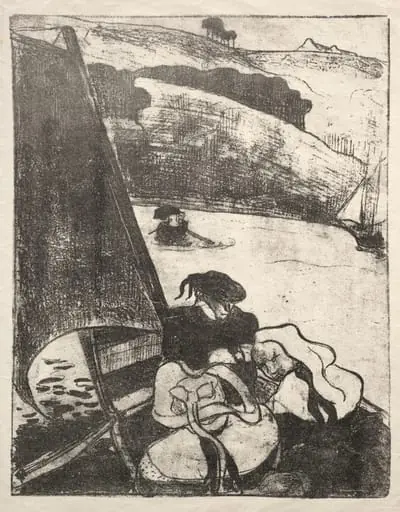 Les Bretonneries: The Return from the Pilgrimage (Le Retour du Pardon)
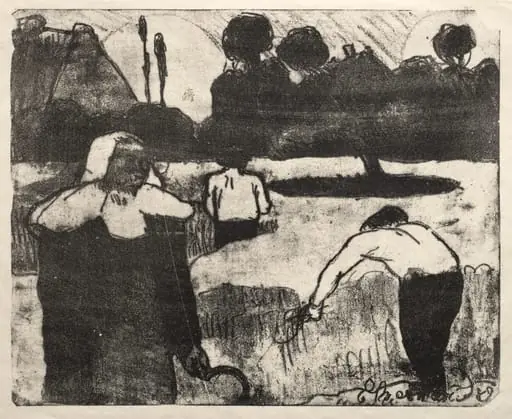 Les Bretonneries: The Harvesters (Les Moissonneurs)
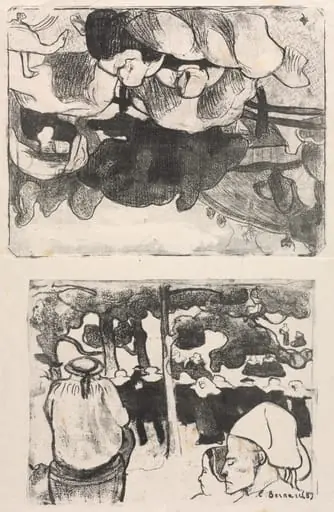 Les Bretonneries: Breton Women Making Haystacks (Bretonnes Faisant les Foins) and Wedding in Brittany (La Noce en Bretange)
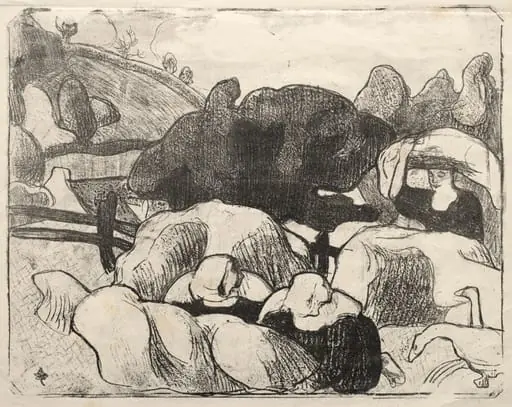 Les Bretonneries: Breton Women Making Haystacks (Bretonnes Faisant les Foins)
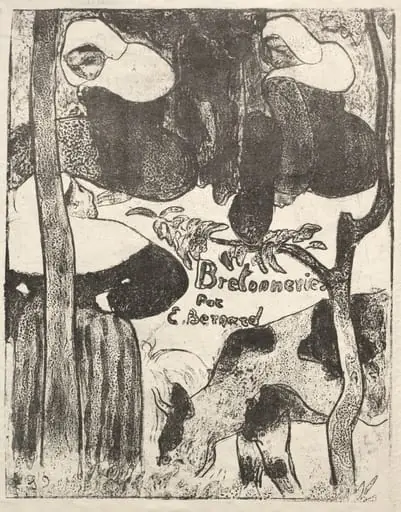 Les Bretonneries: Title Page (Page de Titre)
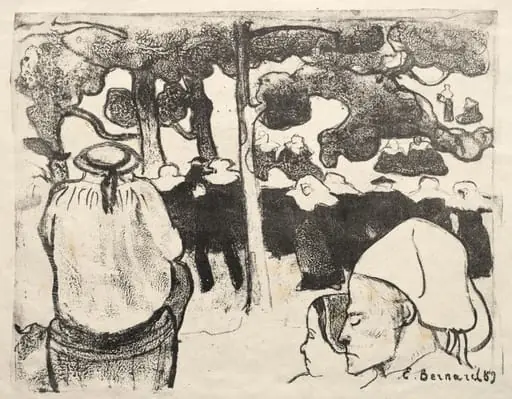 Les Bretonneries: Wedding in Brittany (La Noce en Bretange)
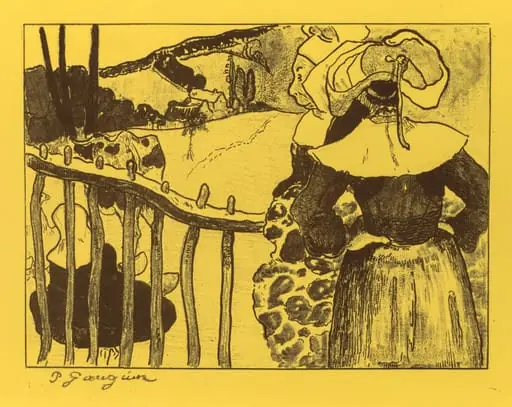 Volpini Suite: Breton Women by a Gate (Bretonnes à la Barrière)