Artwork
The Nymphs
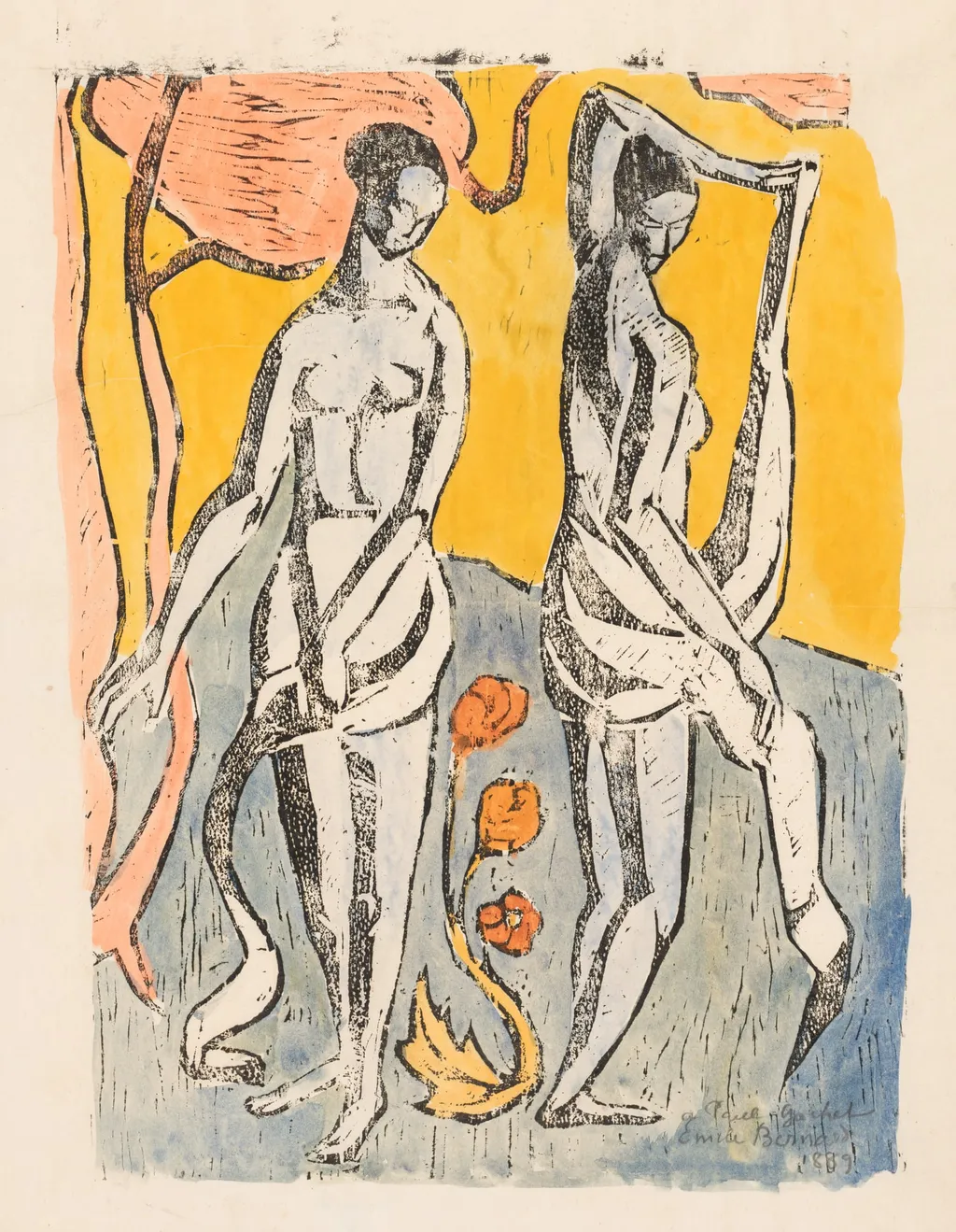
The Nymphs is a print by the Impressionist artist Émile Bernard. It dates from 1890 and is held in the collection of the Cleveland Museum of Art. Created in 1889 when the artist was just twenty‑two, this hand‑colored woodcut presents three elongated female figures in a forest clearing.
About this work
Overview
Created in 1889 when the artist was just twenty‑two, this hand‑colored woodcut presents three elongated female figures in a forest clearing. The figures, rendered with a pale palette, appear to sway like reeds, their bodies stretched and weightless. Only three impressions of the print are known to exist, making it a rare example of the artist’s early print work.
Subject & Meaning
The scene depicts three nymph‑like women dancing amid trees, an image that evokes mythological themes of nature and femininity. Their elongated forms and ethereal posture suggest a timeless, idealised beauty, aligning the work with ancient representations of divine or semi‑divine beings in Greek and Egyptian art.
Technique & Style
The artist carved the composition into a wood block and then applied bright, flat pigments by hand to each print, a process that emphasizes strong, simplified shapes. The resulting figures possess a linear grace and a sense of weightlessness reminiscent of Egyptian wall paintings, while the overall aesthetic reflects a modern reinterpretation of classical motifs.
History & Provenance
During his teenage years the artist collaborated with Paul Gauguin and maintained an active correspondence with Vincent van Gogh. In a letter dated late 1889, van Gogh noted the young painter’s turn toward “elegant, modern figures in the manner of ancient Greek and Egyptian art.” This observation situates the print within a pivotal moment of stylistic development.
Own this work as a print
Artist & collection
Artist
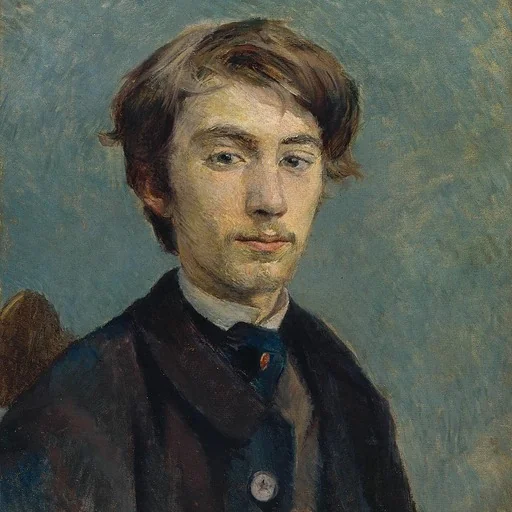
Émile Henri Bernard (French pronunciation: ; 28 April 1868 – 16 April 1941) was a French Post-Impressionist painter and writer, who had artistic friendships with Vincent van Gogh, Paul Gauguin and Eugène Boch, and at a later time, Paul…

 Untitled
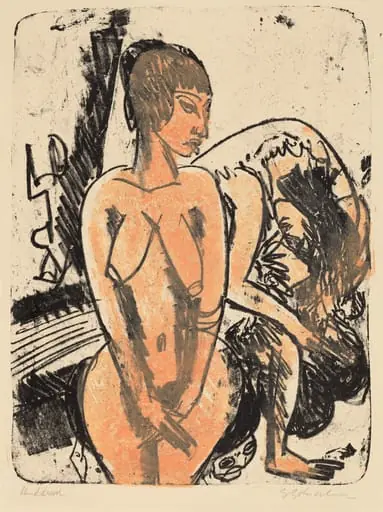 Two Women (Zwei Frauen)
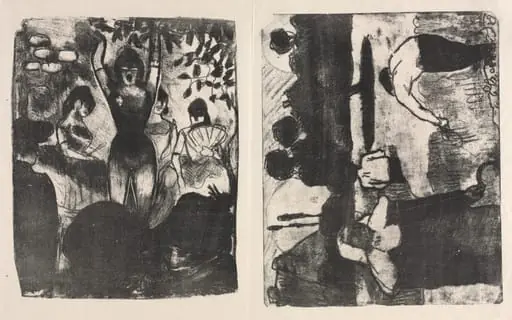 Singer at the Café-Concert and The Harvesters (Les Moissonneurs)
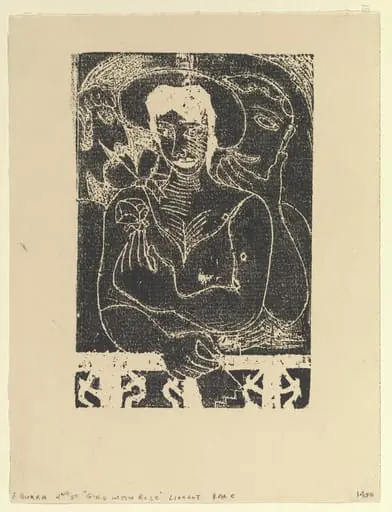 Untitled
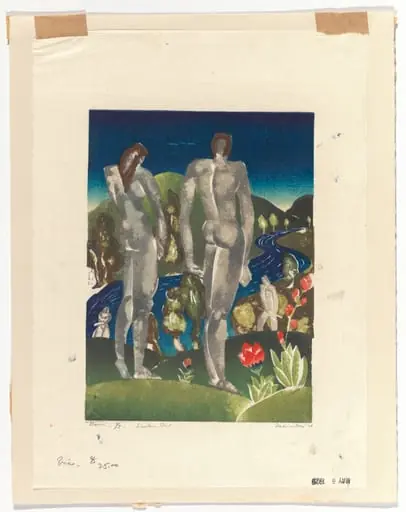 Untitled
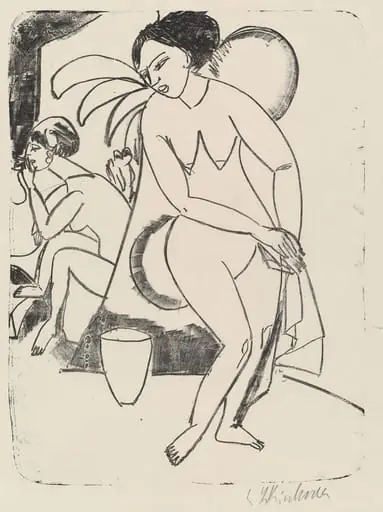 Naked Girls in the Studio (Nackte Mädchen im Atelier)
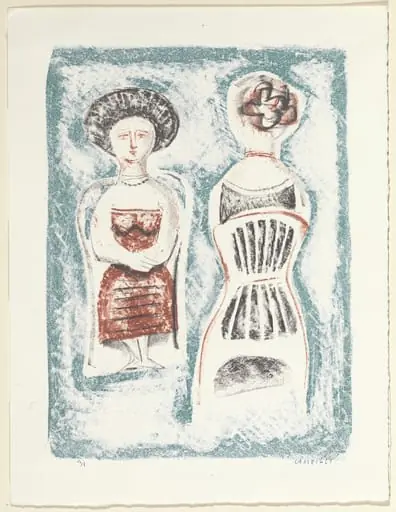 Untitled
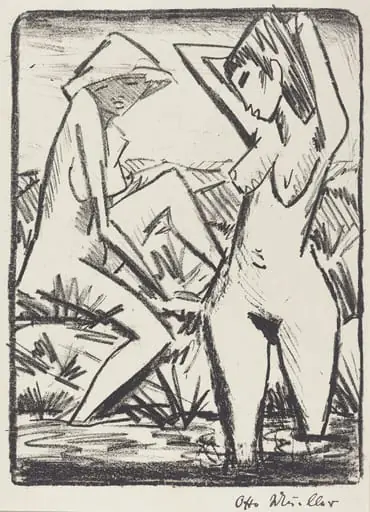 Standing Girl in Water and the Other Sitting on Shore (Im Wasser stehendes und am Ufer sitzendes Madchen mit Hut)
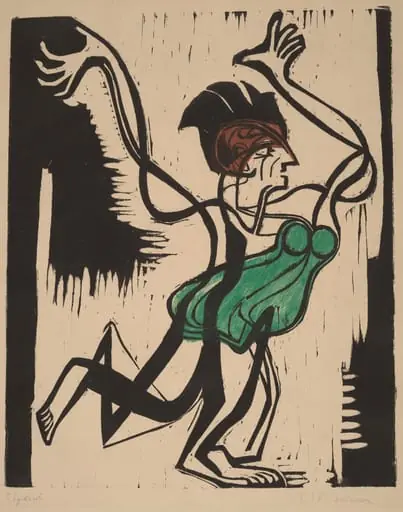 Palucca
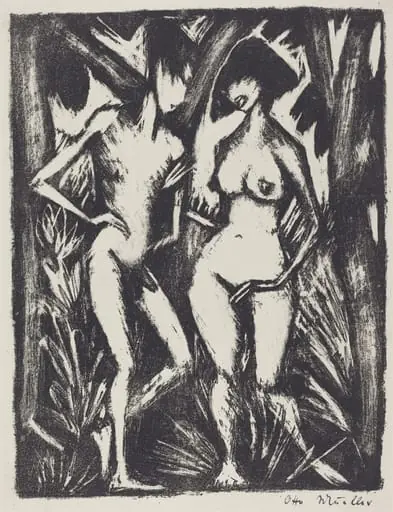 Adam and Eve (Adam und Eva)
 Untitled
 English Step Dancers