Artwork
Icoana reproduce un tipar specific Țării Bârsei, sec XIX. Sfântul Haralambie în veșminte de episcop, binecuvintează cu dreapta, în stânga având o Evanghelie. Părul și barba lungi, cărunte. Veșminte arhierești, sacos roșu, omoforul mare verde cu decor alb, pe cap mitră. Ciuma legată în lanț, antropomorfizată, cu coarne și coasa morții în mână. este culcată la picioarele lui. Sfântul este încadrat de un portal semicircular decorat cu motivre geometrice. Cîmpul albastru ultramarin în jumătatea superioară, două flori mari roșii pe fond. În jumătatea inferioară relief ondulat, benzi de culoare orange. Culorile intense, paleta cromatica variată. Rama lată, laturile petrecute, imbinare cu cuie de lemn, canelată, este specifică meșterului.
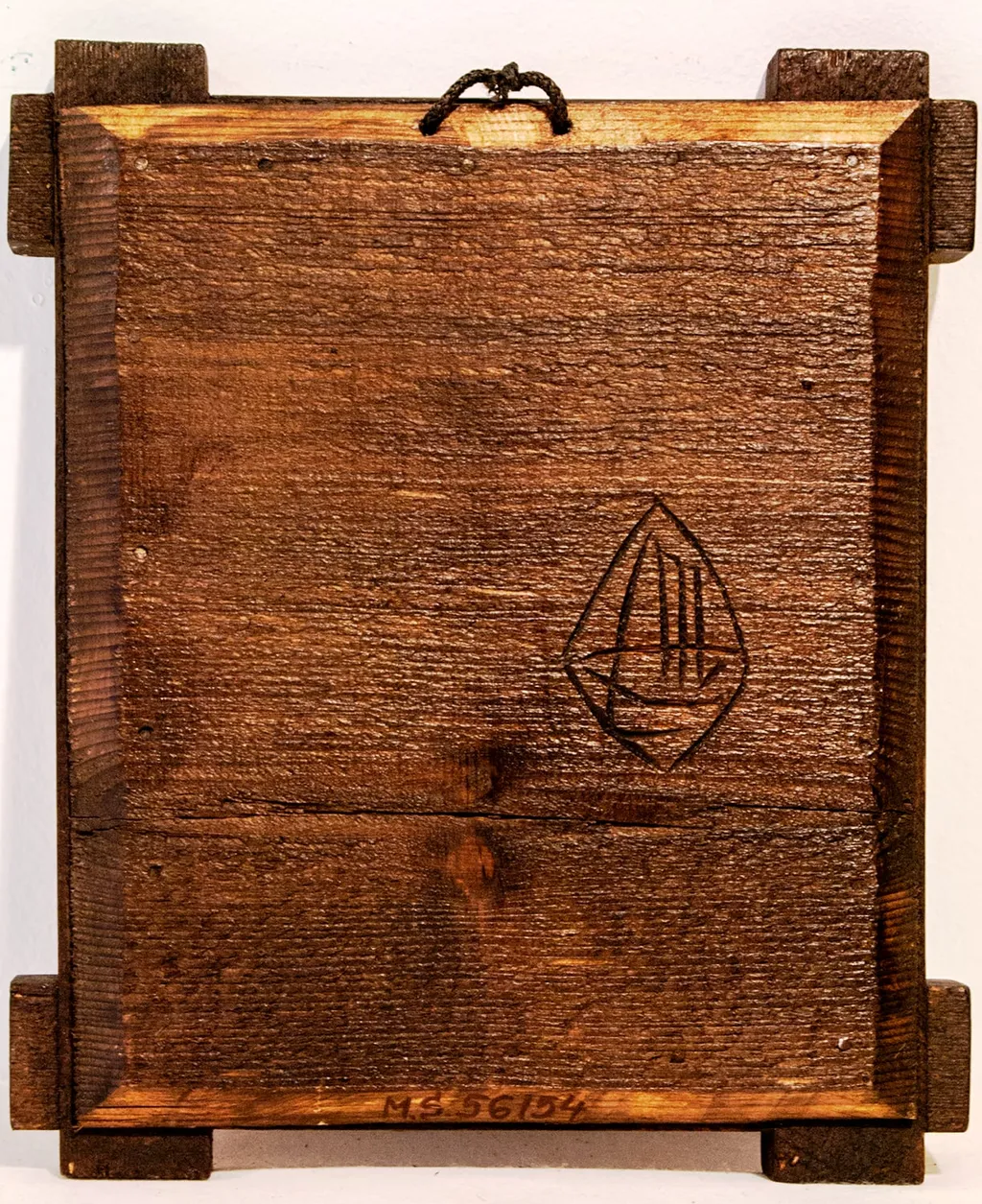
Icoana reproduce un tipar specific Țării Bârsei, sec XIX. Sfântul Haralambie în veșminte de episcop, binecuvintează cu dreapta, în stânga având o Evanghelie. Părul și barba lungi, cărunte. Veșminte arhierești, sacos roșu, omoforul mare verde cu decor alb, pe cap mitră. Ciuma legată în lanț, antropomorfizată, cu coarne și coasa morții în mână. este culcată la picioarele lui. Sfântul este încadrat de un portal semicircular decorat cu motivre geometrice. Cîmpul albastru ultramarin în jumătatea superioară, două flori mari roșii pe fond. În jumătatea inferioară relief ondulat, benzi de culoare orange. Culorile intense, paleta cromatica variată. Rama lată, laturile petrecute, imbinare cu cuie de lemn, canelată, este specifică meșterului. is a drawing by Moldoveanu Vasile. It is held in the collection of the "Dimitrie Gusti" National Village Museum. The panel presents a nineteenth‑century Bârsei‑region iconographic type, depicting Saint Haralambios in episcopal vestments.
About this work
Overview
The panel presents a nineteenth‑century Bârsei‑region iconographic type, depicting Saint Haralambios in episcopal vestments. He raises his right hand in blessing while holding a Gospel in his left. At his feet lies an anthropomorphic figure of the Plague, chained, horned and wielding a scythe, symbolising death. The composition is framed by a semicircular portal with geometric ornamentation.
Subject & Meaning
Saint Haralambios, shown with long white hair and beard, wears a red chasuble, a large green omophorion edged in white, and a mitre, emphasizing his ecclesiastical authority. The chained plague figure at his feet serves as a protective talisman, illustrating the saint’s intercessory power over disease, a common theme in folk devotional art of the area.
Technique & Style
Executed on a dark, weathered wooden panel, the image employs flat, vivid pigments—ultramarine blue in the upper field, intense reds for floral motifs, and orange bands in the undulating lower relief. The frame is a broad, ribbed wooden border secured with wooden pegs and a fluted edge, characteristic of the local workshop’s carpentry.
Context
The work reflects the nineteenth‑century religious culture of the Bârsei region, where saints were invoked against epidemics. Its iconography aligns with local folk traditions that blended formal ecclesiastical imagery with protective symbols, illustrating the syncretic visual language of rural Transylvanian spirituality.
Artist & collection
Artist
Vasile Moldoveanu made religious drawings in the traditional Romanian icon style.
Museum
"Dimitrie Gusti" National Village Museum
Continue through works from the same source collection.
 "Înceaga
 Icoana îi reprezintă pe Arhanghelii Mihail și Gavriil 3/4 pe un suport de lemn dispus în ax orizontal. Ambii arhangheli sunt înveșmântați identic, cu tunici bleumarin închise la gât și mantii lungi, roșii. Fețele copilărești, ușor disproporționate, cu o expresie veselă. Mihail are părul castaniu blond, scurt, redat pictural Gavriil îl are strâns în coadă pe spate.Sunt ușor întorși unul spre altul, susținând cu câte o mână globul cruciger, în cealaltă având unul sabia de foc ridicată, celălalt o ramură de crin alb. Aureolele de culoare mai deschisă, sunt mărginite de un chenar alb îngust. Fond întunecat. Inscripția prescurtată scrisă cu litere albe(sus). Icoana este lucrată de un zugrav experimentat, dar se observă stângăcii și disproporții Stilul este influențat de pictura apuseană și cea pe sticlă. Rama profilată, fixată în cuie de lemn.
 Maniera naivă. Sfântul este redat 3/4, din ușor semiprofil, binecuvântînd cu un gest stângaci cu mâna dreaptă, în stânga ținând cartea sfântă.Este redat cu capul descoperit, părul și barba cărunte, trăsăturile feței expresive, ușor stângace, cu atenție acordată unor detalii(ex. albul ochilor) Înveșmântat simplu, cu sacos roșu peste stiharul bleumarin, epitrahil verde cu cruci negre. În jurul capului are aureolă trasată cu un instrument!. Fondul sugerează cerul albastru separat cu o linie închisă de o porțiune roșie cu elemente vegetale?, porțiunea de jos sugerând pământul. Scrisul este dezordonat, studiat parcă. În stânga se află inscripționat anul, iar în dreapta io inscripție cu litere chirilice care ar putea aminti despre "GORGE AL BOINII DIN BROȘTENI?)(posibil comanditarul) Chenar dintr-o linie albă, subțire. Icoana a fost restaurată.
 Sfântul Mare Ierarh Grigorie Cuvântătorul de Dumnezeu, sau Sfântul Grigorie Teologul sau de Nazianz. Este unul din cei Trei Sfinți Ierarhi, alături de Sfântul Vasile cel Mare și Sfântul Ioan Gură-de-Aur. Sfântul Grigorie are Sfânta Liturghie a Darurilor înainte Sfințite, care se săvârșește în timpul Postului Mare. Este îmbrăcat în veșminte liturgice arhierești, sacos roșu vermillon, epitrahil verde, nuanță de spanac-avocado, cu patru cruci. Poartă mithră și aureolă. Ține în mâna stângă Sfânta Evanghelie deschisă și binecuvintează cu mâna dreaptă. Fondul este albastru ceruleum cu stele albe. Icoana este de Țara Oltului. Cromatica este armonioasă: roșu vermillon, verde spanac-avocado, albastru ceruleum, nergu, alb. Inscripția din româno-chirilică se traduce Sf Grigorie.
 În cazul fraților Grecu există indicii că lucrau deseori fără tipar, desenul fiind executat liber. Sfinții Împărați Constantin și Elena, de o parte și de alta a crucii pe care a fost răstignit Iisus, cruce găsită de Împărăteasa Elena la Ierusalim. Crucea(culoare roșie, punctată cu alb), axul de simetrie al compoziției, are brațele trilobate, iar la întretăierea brațelor, ochiul lui Dumnezeu. Cei doi sfinți 1/1, tineri, conform erminiilor, au coroane pe cap și sceptru(împăratul Constantin), mama sa o ramură verde în mâna liberă. Veșmintele în culorile complementare, roșu(semnificând puterea, forța), și verde(blândețe, comtemplație, bucurie) elegant drapate cu alb. Crucea de Câmpul icoanei, albastru ultramarin, decorat cu motive astrale (steluțe albe). Partea inferioară -alternanță de benzi ocru și brun roșcat, ca niște valuri de pământ. Chenar pe trei laturi, benzi oblice în culori alternante(galben și verde), marcate de linii albe, care dau impresia de mișcare. Rama profilată, culoare roșcată . Este decorată cu căte trei șiruri de linii vălurite pe fiecare latură.Foiță de aur la aureole, veșminte, chenare, triunghiul central, sceptru și ramură.
 Icoană cu tema. Fecioara și pruncul Isus, ținut în mâna dreaptă; sus un chenar cu flori. Cromatică: fond albastru; culori: negru; alb; verde; galben.
 Icoateri
 Icoaior,
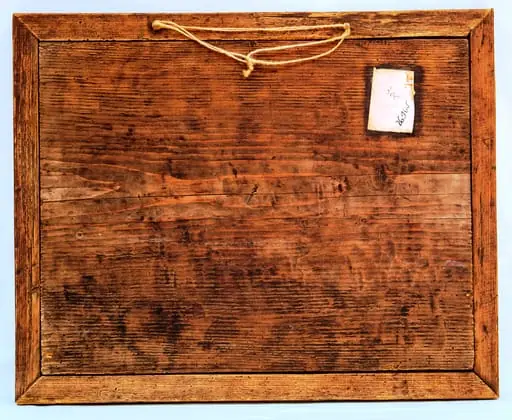
 Icoana este pictată în oglindă, pe un suport de sticlă de formă dreptunghiulară în ax orizontal. Tema iconografică este incertă, cazul fiind întâlnit la zugravii de factură populară, care nu aveau solide cunoștințe teologice sau combinau uneori, după bunul plac sau cererea comanditarilor, diverse teme iconografice. Această dispunere mai este întâlnită la icoane provenind din Bucovina, compoziția fiind delimitată simetric de o floare dispusă vertical. Pe un fond violent de culoare albastru, punctat cu steluțe din linii negre sunt redate 3/4 două personaje sfinte.Sfânta din dreapta, cu maforion de culoare roșie, stola verde, în mână cu un rotulus desfășurat pe care este mimată o inscripție cursivă, în stânga ținând o ramură poate fi Fecioara Maria, dar, în alte icoane, în acceași manieră este redată Cuvioasa Paraschiva. În partea stângă, cu părul lung, negru, ondulat, lăsat pe umeri, figură feminină, coroană împărătească pe cap, în mâna stângă cu un potir, în dreapta cu o sabie, poate fi vorba despre Arhanghelul Mihail(în scena Buneivestiri apare arhanghelul Gavriil). Veșmintele, cu o croială împărătească, multicolore(roșu, verde, roz, albastru cu tiv galben, într-o combinație stridentă). Desen stângaci, naiv. Suprafața veșmintelor abundent marcată de linii continue și ondulate. În colțul din stânga sus, un desen discret, sub formă de roza vânturilor. Icoana este crăpată(trei fragmente).
 Icoana îi redă 1/1 pe sfinții Nicolae și pe arhidiaconul Ștefan, în picioare, ușor semiprofil. Asocierea celor doi sfinți nu are o motivație iconografică, probabil a fost dorința comanditarului. Sfântul Nicoale este reprezentat în veșminte arhierești, fără mitră pe cap(ipostaza de vară), binecuvântând cu mâna dreaptă, în stânga ținând Evanghelia închisă. Are părul și barba cărunte, ondulate, fruntea înaltă, trăsăturile fine. Înveșmântat cu sacos auriu tivit cu galon cu șir de perle și pietre scumpe, mânecuțe și galon la gât . Epitrahil alb, cu cruci drepte și motiv scalariform în partea de jos.Omoforul mare, de culoare roșie și bedernița romboidală atârnată de mâna stângă. Aureole trasate cu o linie albă îngustă. În pandant, arhidiaconul Ștefan, primul dintre martiri, ușor întors către sfântul Nicoale, cădelnițând cu o mână, cu cealaltă ținând la piept o biserică având trei turle înalte. Redat tânăr, fără barbă, în veșminte diaconești:stihar lung, bogat ornamentat cu motive florale mari, pe fond alb-albăstrui. Fondul icoanei auriu pal, cu irizări. Median, pe latura de sus, soarele?(sau mandorla de raze a Duhului Sfânt) Paleta cromatică dominată de nuanțele de auriu, restul culorilor(verde, cafeniu, negru, alb, fiind în armonie cu acest fond. Desenul este fin, proporțiile bizantine respectate, compoziția echilibrată, armonioasă. Inscripția în partea de sus, cu chirilice cu caractere specifice Munteniei.
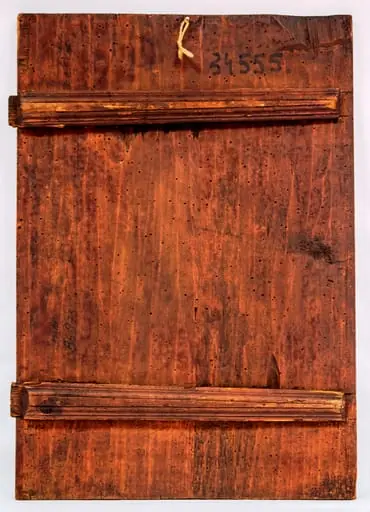
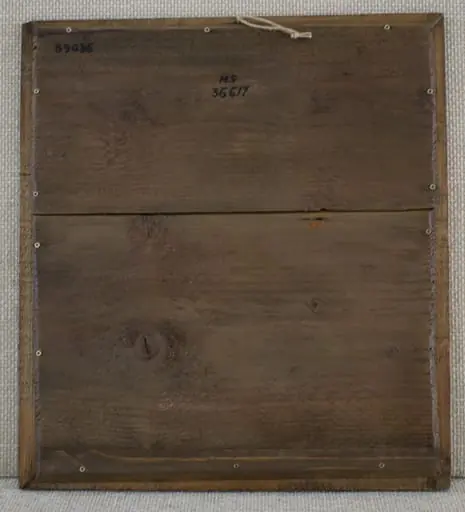 Icoana este pictată "în oglindă", pe suport de sticlă de formă dreptunghiulară în ax vertical. Sfânta Cuvioasă Paraschiva(care se prăznuiește pe 14 octombrie) este redată așezată pe tron, cu coroană împărătească pe cap. Plasată central, cu doi îngeri în spatele tronului, sfânta este înveșmântată cu un maforion roșu cu intadosul albastru și galon galben. Cămașă multicoloră, albastru, verde, roșu, galben, cafeniu, la mijloc cu o cingătoare galbenă) Pe cap poartă o coroană mare, deschisă. În mâna dreaptă ține o cruce, iar cu stânga binecuvintează cu un gest stângaci.Chipul este ușor diform, arcadele ochilor umbrite, nasul mare, bărbia accentuată, ochii înguști, asimetrici. Tronul, de factură barocă, are spătarul în formă de aripă, cu brațele masive, cu un chenar îngust, aurit, cu volute în partea de jos și câte o cruce pe laturile de sus. Sfânta este așezată pe o pernuță lungă. În spatele tronului doi îngeri cu chipuri copilărești, veșminte lungi, nimburi aurite. os este completată cu linii orizontale pe fond bej. Câmpul este albastru(1/2 superior) cu inscripția cu negru, 1/3 inferior - cafeniu deschis, benzi orizontale. Desen încărcat, paleta cromatică petriță, culorile intense. Stratul pictural este exfoliat pe unele locuri. Rama închisă la culoare, este realizată din lemn de brad, profilată pe o porțiune mică la interior, Porțiunea mai lată este decorată cu "pieptenele", transversal. Dosul este realizat din scânduri subțiri de brad, dispuse orizonal și fixate în cuie. Țăranii considerau că sfânta Paraschiva apără de grindină și de dureri de cap.
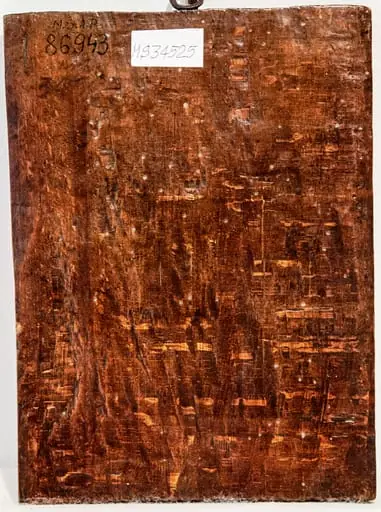
 Cei trei sfinți redați în picioare, central sfântul Ioan, lateral Sfântul Nicolae Kocianov și Pantelimon, ușor întorși către acesta. Sfântul Nicolae Kocianov, desculț , cu un veșmânt alb în jurul brâului. Pleșuv, cu mustață și barbă lungi, albe, în mâna stângă ține o cruce rusească, cu dreapta arată către sf. Ioan. Trăsăturile feței și ale corpului accentuate cu linii fine, albe. Sfântul mucenic Ioan mai tânăr, cu mustață și barbă scurtă și rară, privirea îndreptată înainte. În stânga crucea rusească, dreapta lăsată în jos. Mucenicul Pantelimon, semiprofil, tânăr, fără barbă și mustață, părul lung și drept lăsat pe umeri. Cruce în dreapta. Sfântul Ioan și Pantelimon sunt înveșmântați cu chiton și himation în aceleași culori, dar inversate, nuanțe de verde și auriu cu borduri decorate. Aureole trasate cu linie dublă de culoare roșie, în interiorul raze incizate În partea superioară a icoanei, depășind linia chenarului, este reprezentat Iisus pe nori, cu nimb cruciger, în mâna stângă ținând Evanghelia, cu dreapta binecuvântând. Pe chenarul lateral lat cu motive vegetale în formă de vrej cu flori, de asemenea incizate în stratul de foiță, sunt poziționați simetric doi sfinți desenați în miniatură, Sfântul Mucenic Flor și Sfântul Mucenic Lavr (?).Fond 2/3 superior, - foiță de aur, decorat cu puncte și flori circulare obținute prin ștanțare1/3 inferior verde-brun, cu elemente decorative geometrice repetitive. Cromatica armonioasă, bazată pe valorarea dată de foița metalică.