Artwork
Barcha de Castor e Poluce
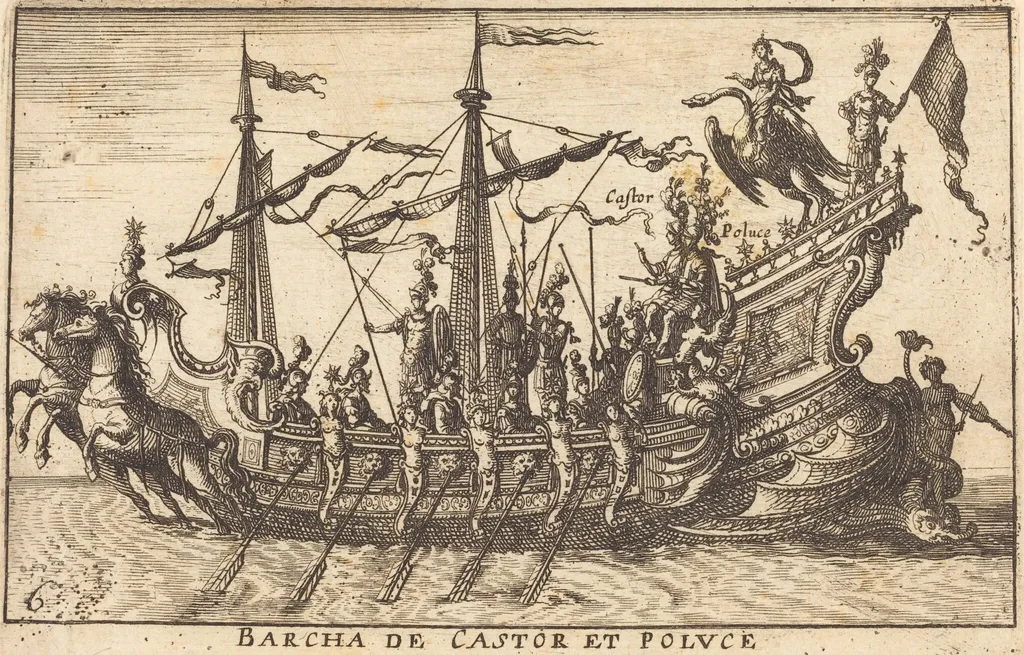
Barcha de Castor e Poluce is an ink print by the Baroque artist Balthasar Moncornet. It dates from 1634 and is held in the collection of the National Gallery of Art.
About this work
Overview
The composition is framed by turbulent seas and swirling clouds, giving the scene a dynamic, theatrical quality.
Balthasar Moncornet’s 1634 print, titled *Barcha de Castor e Poluce*, is an etching executed on laid paper. The work presents a bustling maritime tableau in which two large vessels, named Castor and Poluce, sail side by side, their decks teeming with figures in elaborate dress, mounted horses, and fluttering standards. The composition is framed by turbulent seas and swirling clouds, giving the scene a dynamic, theatrical quality.
Subject & Meaning
The twin ships bear the names of the mythological brothers Castor and Pollux, figures traditionally associated with camaraderie and protective strength. By placing these legendary twins at the helm of heavily populated vessels, Moncornet alludes to themes of unity and collective power, suggesting that the convoy’s grandeur and martial display are under the auspices of the protective twin deities.
Technique & Style
Moncornet employed traditional copper‑plate etching, a process that allowed him to render intricate details such as individual faces, armor, and the intricate rigging of the ships. The use of laid paper, with its faint ribbed texture, enhances the contrast between the densely packed foreground and the atmospheric background, while the fine line work conveys both the chaos of the crowd and the controlled composition of the scene.
History & Provenance
Created during Moncornet’s productive period in Paris, the print reflects his broader reputation as a portraitist of notable 17th‑century personalities and a designer of tapestries. While the original plate’s whereabouts are unknown, surviving impressions have circulated in European collections since the mid‑1600s, attesting to the work’s continued circulation among collectors of French printmaking.
Context
The early 1630s in France saw a flourishing of print culture, with artists like Moncornet responding to both courtly patronage and the public’s appetite for narrative imagery. The depiction of mythic twins aboard opulent ships aligns with contemporary interests in classical allegory, naval power, and the display of wealth through elaborate ceremonial processions.
Artist & collection
Artist
Balthasar Moncornet (1600, Rouen – 1668, Paris) was a French painter, engraver, and tapissier revered for his depictions of around 45 different prominent figures of the 17th century.

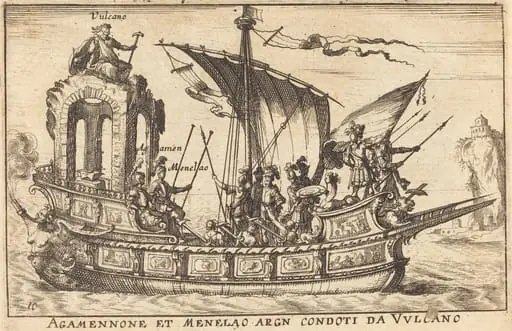 Agamennone et Menelao argn condoti da Vulcano
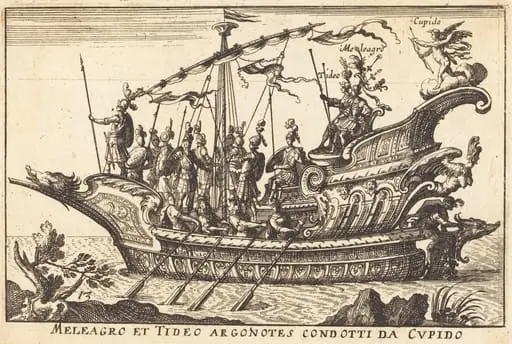 Meleagro et Tideo Argonotes condotti da Cupido
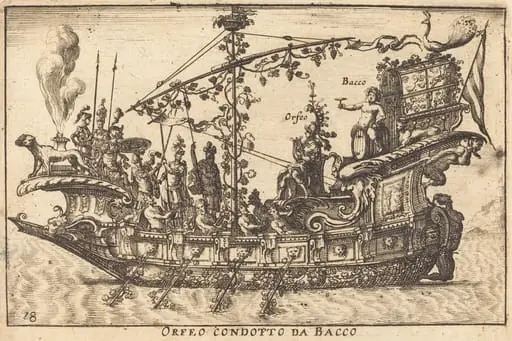 Orfeo condotto da Bacco
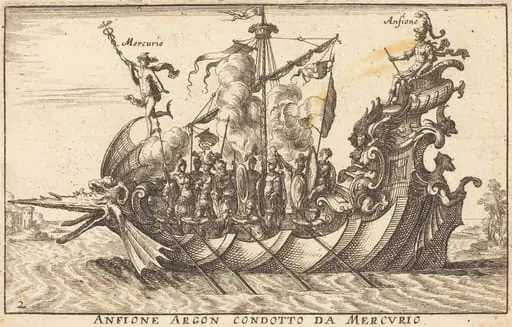 Anfione Argon condotto da Mercurio
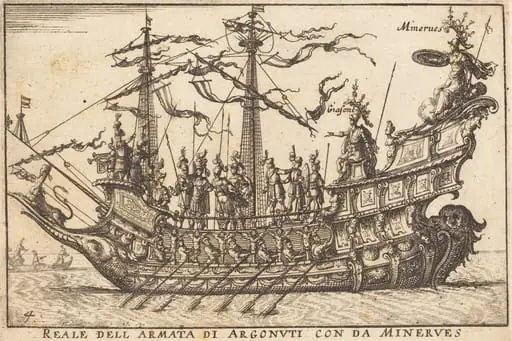 Reale dell'Armata di Argonuti con da Minerves
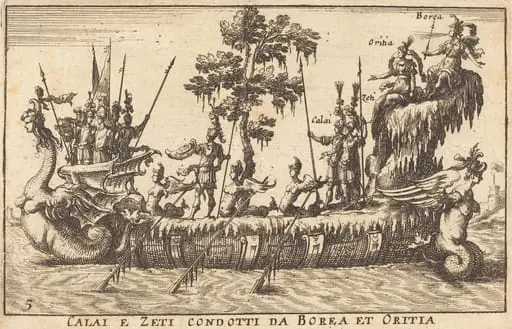 Calai e Zeti condotti da Borea et Oritia
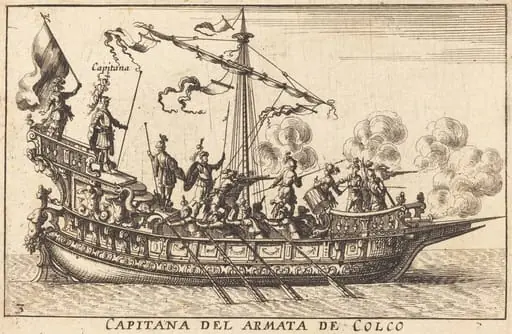 Capitana del Armata de Colco
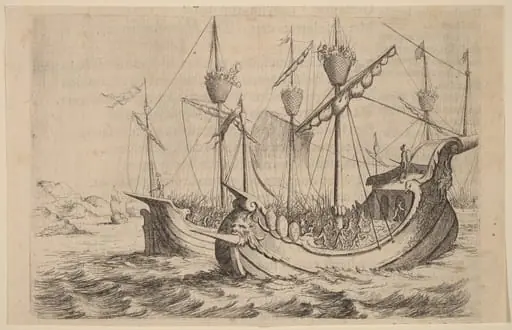 Hannibal's Navy Battling the Rhodians
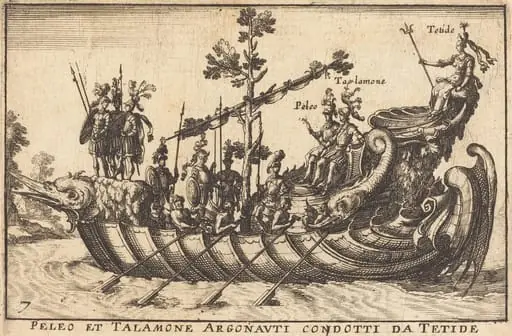 Peleo et Talamone Argonauti condotti da Tetide
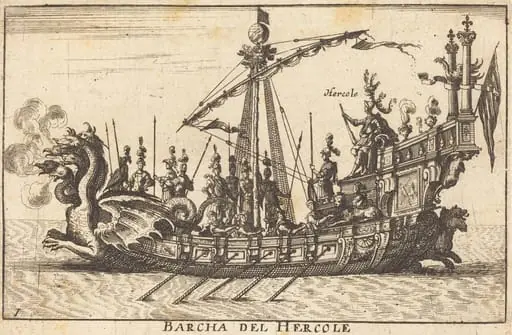 Barcha del Hercole
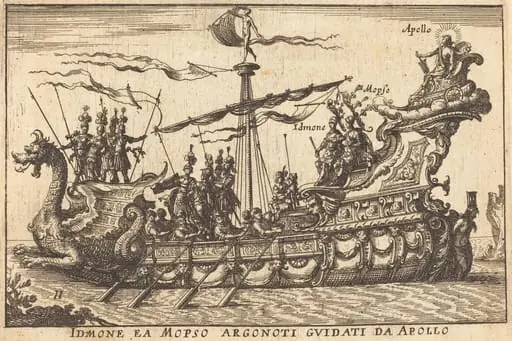 Idinone ea Mopso Argonoti guidati da Apollo