Artwork
Lamartine's palace at Hammana
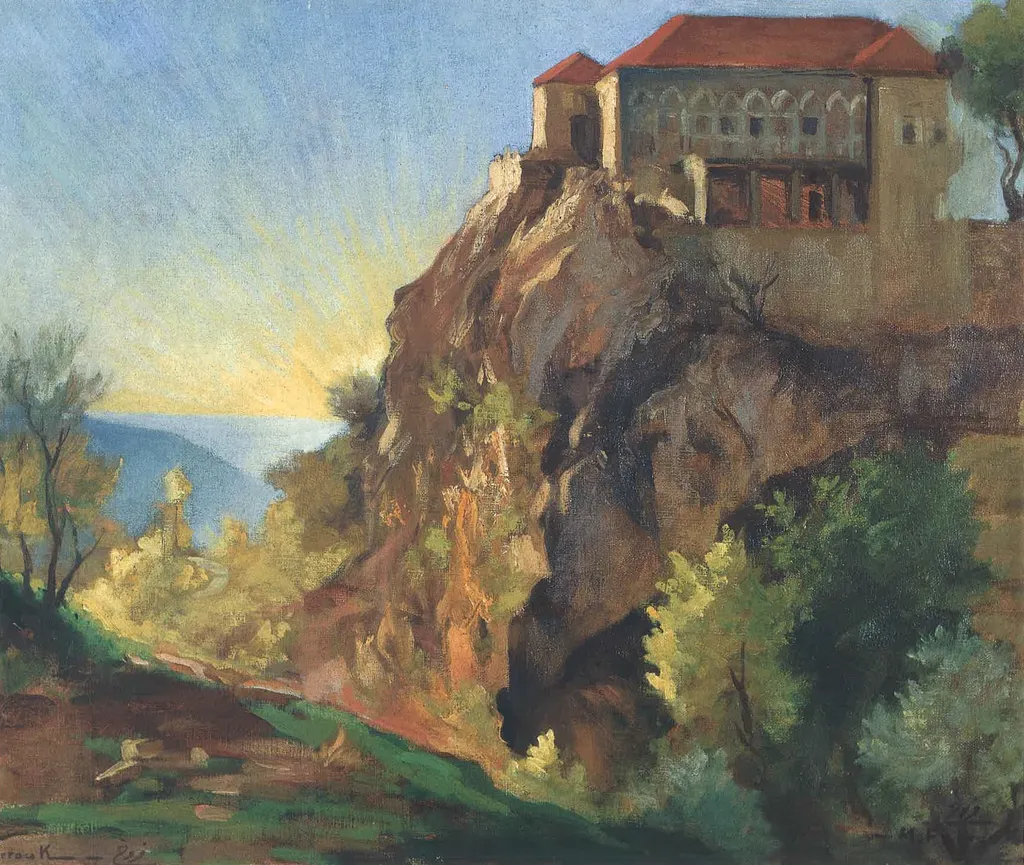
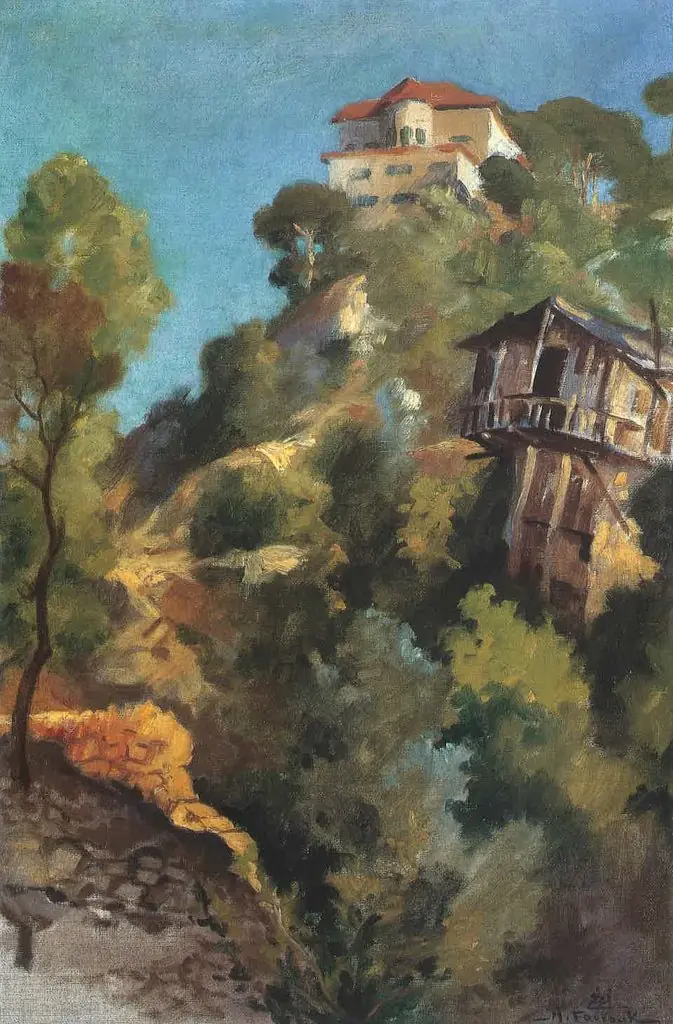
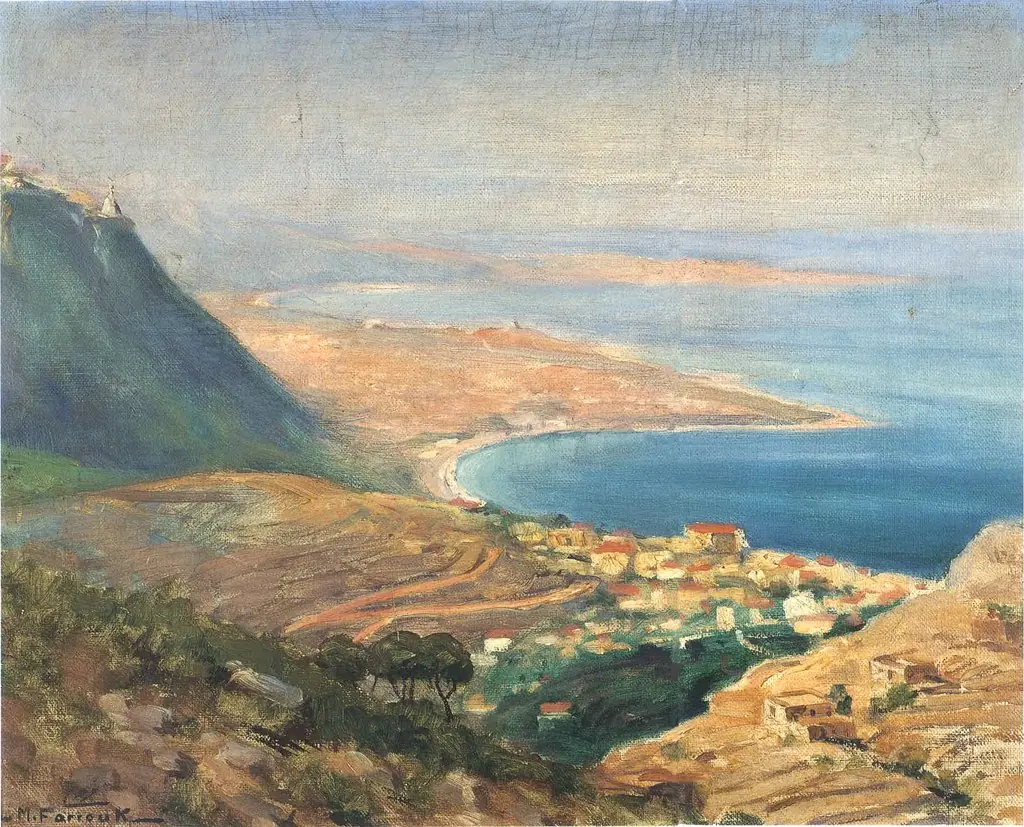
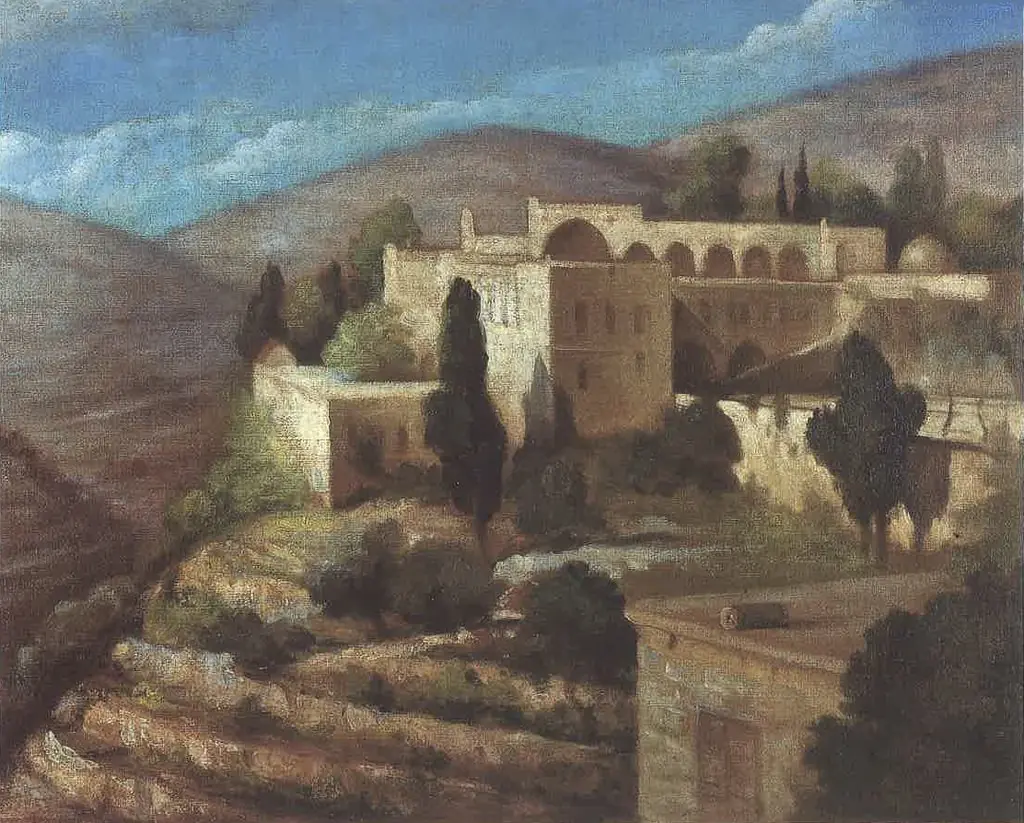
Lamartine's palace at Hammana is an oil painting by Moustafa Farroukh. It dates from 1939 and is held in the collection of the Sursock Museum.
About this work
Overview
Lamartine’s palace at Hammana is a landscape painting executed in oil on canvas by Lebanese artist Moustafa Farroukh around 1939. It depicts a hillside palace set amidst trees under a vibrant sunset sky.
Subject & Meaning
The painting focuses on a palace with a distinctive red roof, situated on a hill surrounded by foliage. The scene is bathed in the warm hues of a sunset, contrasting with the deepening blue of the sky. The subject may allude to the historic connection between the location and French writer Alphonse de Lamartine, though the primary emphasis is on capturing the serene Lebanese countryside.
Technique & Style
Farroukh utilized oil paint to achieve a rich, textured quality. The employment of chiaroscuro creates depth and emphasizes the contrast between illuminated and shadowed areas, enhancing the overall visual impact.
History & Provenance
Created circa 1939, the painting is now part of the Sursock Museum’s collection. It represents one of over two thousand works by Farroukh, a prolific artist and author who extensively documented the Lebanese landscape.
Context
This work reflects Farroukh’s dedication to portraying the Lebanese countryside, aligning with his broader artistic mission to capture the country’s natural beauty. The choice of subject may also hint at cultural exchange influences, given the Lamartine reference.
Legacy
As part of Farroukh’s extensive oeuvre, *Lamartine’s palace at Hammana* contributes to the artist’s legacy as a leading figure in 20th-century Lebanese art, known for his voluminous output and literary contributions alongside his painting.
Artist & collection
Artist
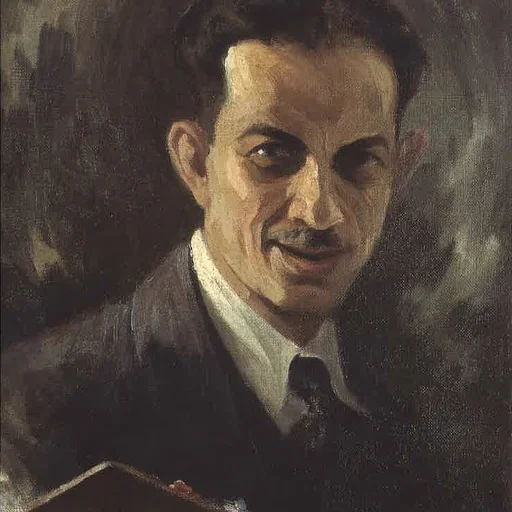
Moustafa Farroukh (Arabic: مصطفى فروخ; 1901 – 1957) was one of Lebanon's most prominent painters of the 20th century.

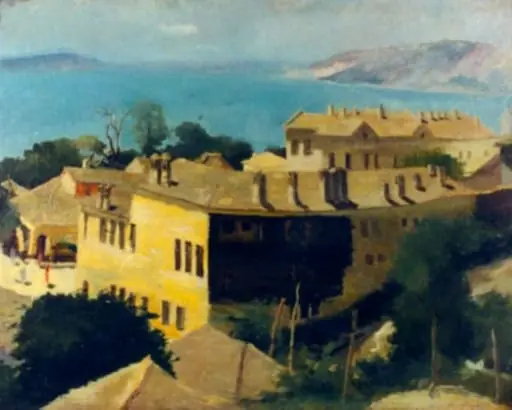 Peisaj din Balcic
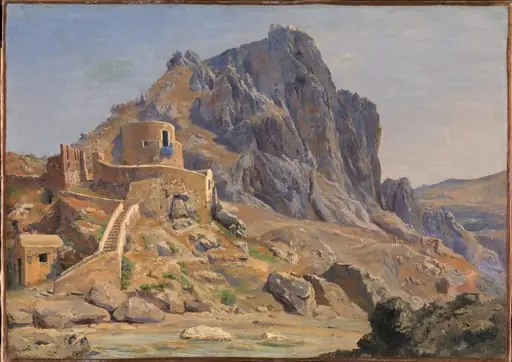 View of Marina Piccola, Capri: Morning Light
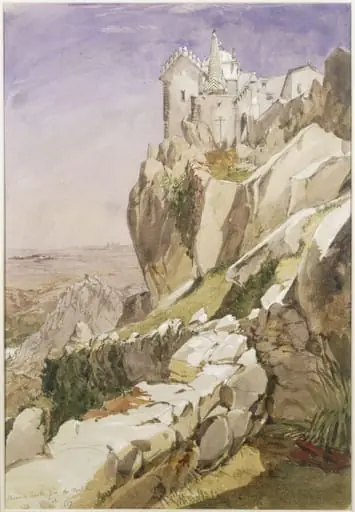 Moorish Castle from the Penha
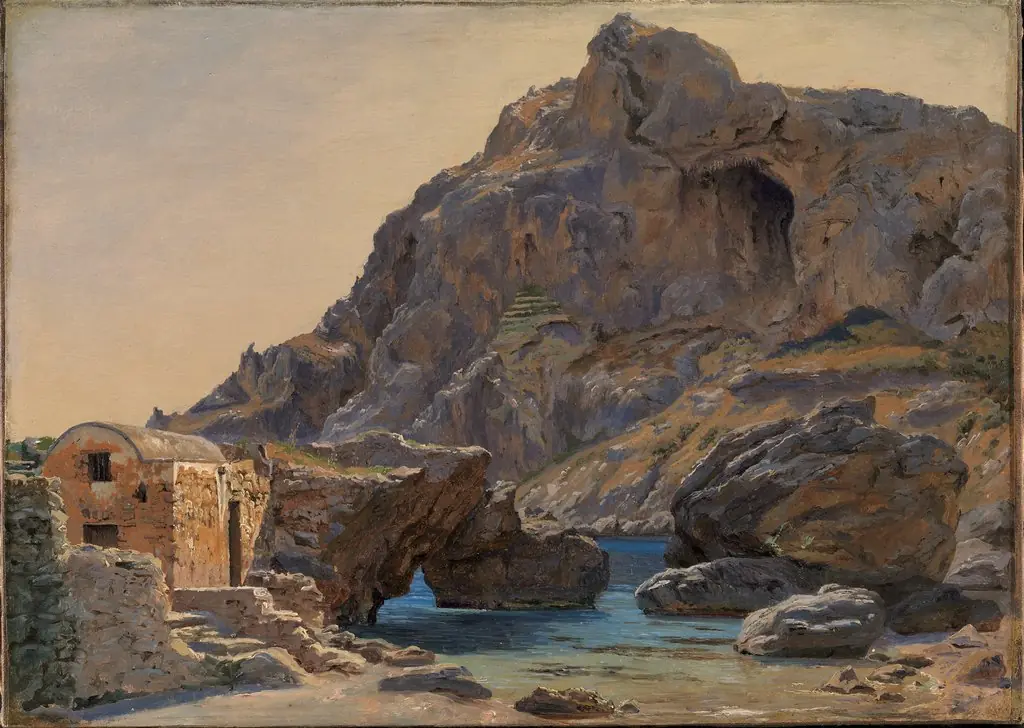 View of Marina Piccola, Capri: Afternoon Light
 View of Marina Piccola, Capri: Afternoon Light
 Jounieh's Bey
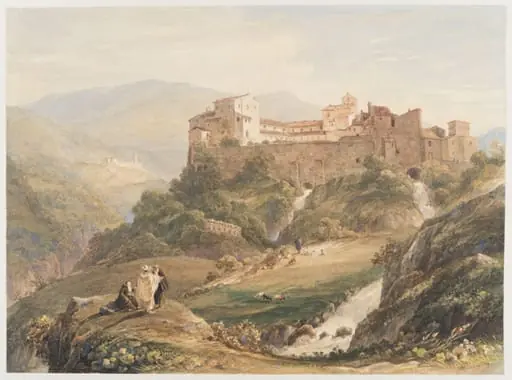 Italian landscape
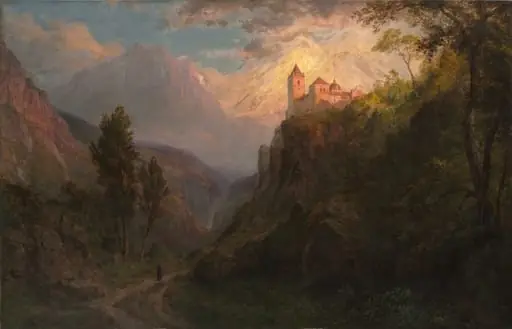 The Monastery of San Pedro (Our Lady of the Snows)
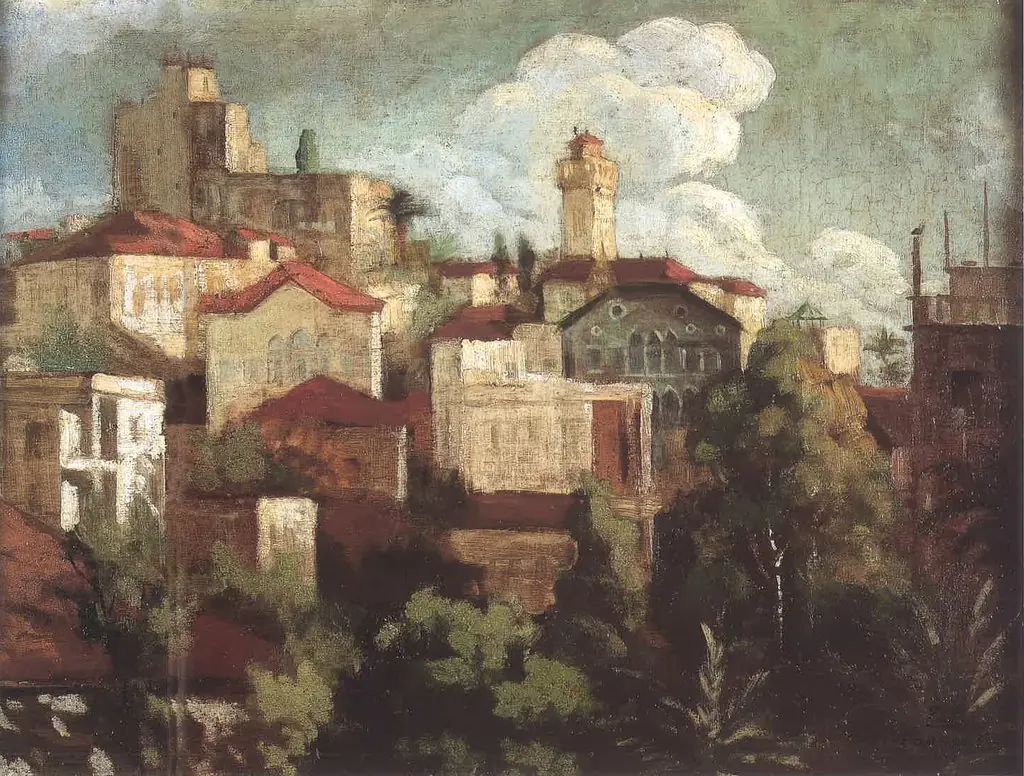 View From Beirut
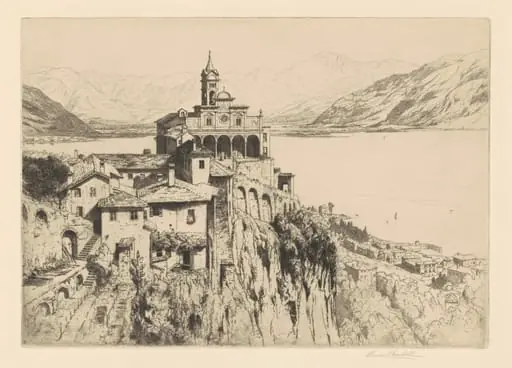 Santa Maria del Sasso, Locarno
 Konstantinopolis, Eski-Saray matela
 Beiteddine Palace