Artwork
The Market Place, Wells
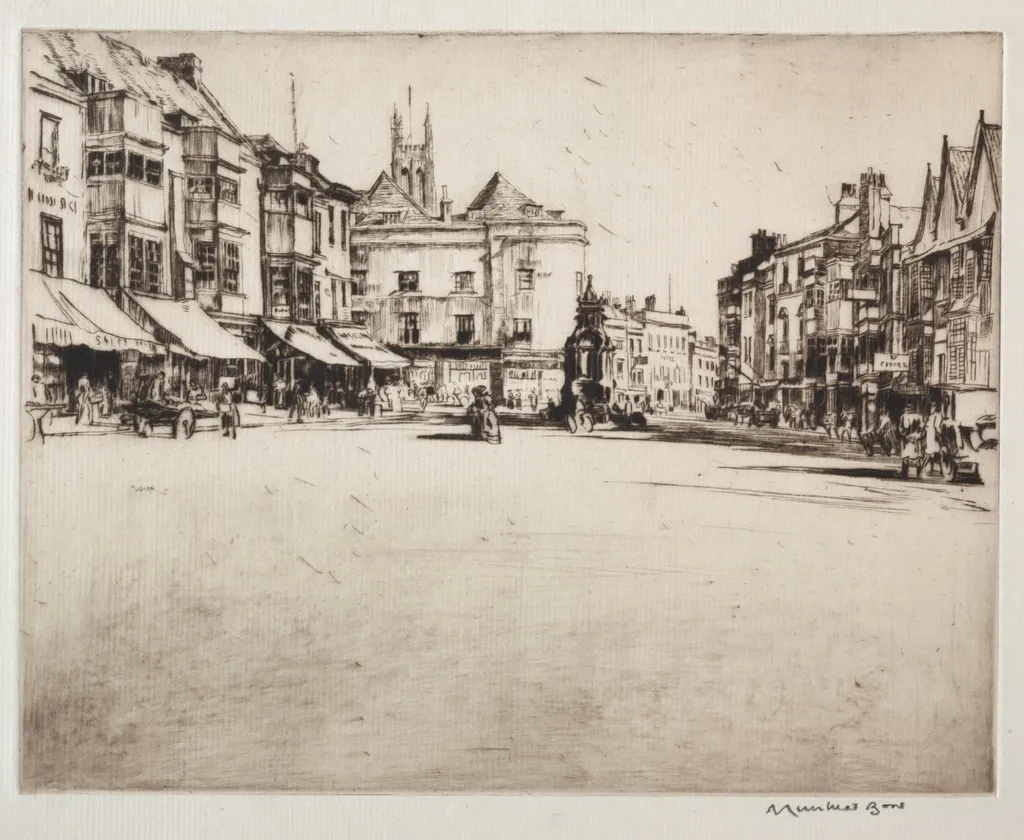
The Market Place, Wells is a print by Muirhead Bone. It dates from 1924 and is held in the collection of the Cleveland Museum of Art.
About this work
Overview
Bone was a leading figure in the Etching Revival, a movement that revived intaglio printmaking in the late 19th and early 20th centuries.
Created around 1924, *The Market Place, Wells* is an etching by Scottish artist Muirhead Bone, reflecting his focus on architectural precision and urban environments. Bone was a leading figure in the Etching Revival, a movement that revived intaglio printmaking in the late 19th and early 20th centuries. This work captures a public square in the historic English city of Wells, rendered with careful line work and tonal variation characteristic of his mature style.
Subject & Meaning
The print depicts the bustling market square of Wells, with its surrounding medieval and early modern buildings framing an open, activity-filled space. While no specific figures are emphasized, the arrangement of structures and implied movement suggests daily commerce and civic life. The composition avoids romanticism, instead presenting the town as a lived-in, functional space shaped by time and use.
Technique & Style
Bone employed fine-line etching to render the textures of stone facades, sloping roofs, and the vertical rise of the church steeple. He used controlled hatching and cross-hatching to model light and shadow, enhancing the three-dimensionality of the architecture. The absence of color emphasizes tonal contrast, allowing structural clarity to dominate—the hallmark of his approach to urban subjects.
History & Provenance
The print was made during a period when Bone’s architectural prints were widely collected, before the market for fine prints declined after 1929. It likely circulated through print dealers and private collections in Britain, reflecting contemporary interest in topographical accuracy. No record of its early ownership is publicly documented, but it remains representative of Bone’s output during his most active years.
Context
In the 1920s, British artists increasingly turned to urban and industrial scenes as subjects, moving away from pastoral idealism. Bone’s work aligned with this trend, documenting towns like Wells as they retained historic forms amid modern life. His prints were valued for their documentary quality, offering a visual record of England’s architectural heritage during a time of rapid change.
Legacy
Muirhead Bone’s etchings, including *The Market Place, Wells*, contributed to the preservation of architectural detail through printmaking. Though the Etching Revival waned after the 1930s, his methodical approach influenced later generations of topographical artists. The work endures as a measured record of a specific English town, valued for its clarity and restraint rather than dramatic effect.
Artist & collection
Artist
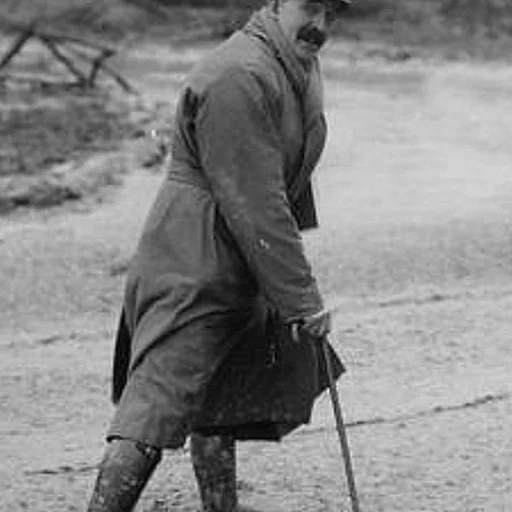
Sir Muirhead Bone (23 March 1876 – 21 October 1953) was a Scottish etcher and watercolourist who became known for his depiction of industrial and architectural subjects and his work as a war artist in both the First and Second World Wars.

 Little Market Place, Tours
 House Where Whistler Died
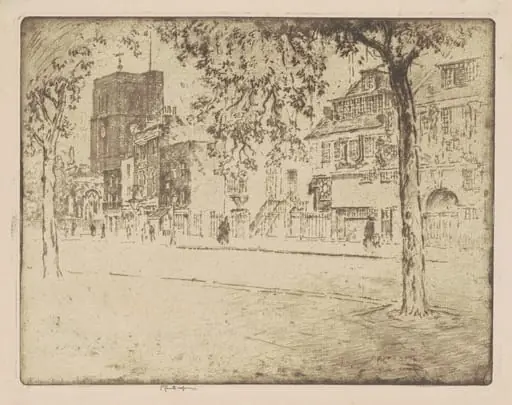 House Where Whistler Died
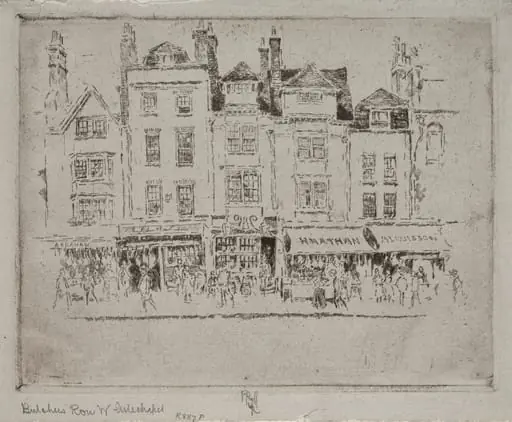 Butcher's Row, Whitechapel
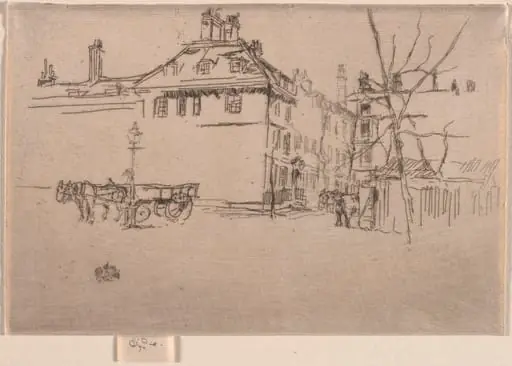 Temple
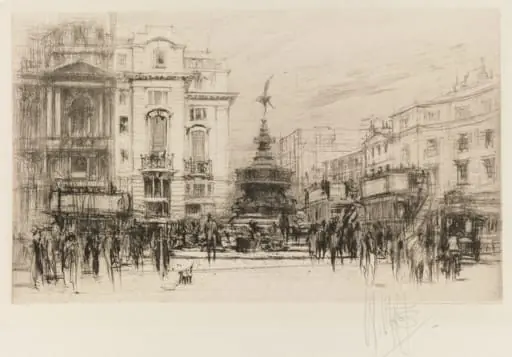 London Set: Piccadilly Circus (with Criterion Theatre)
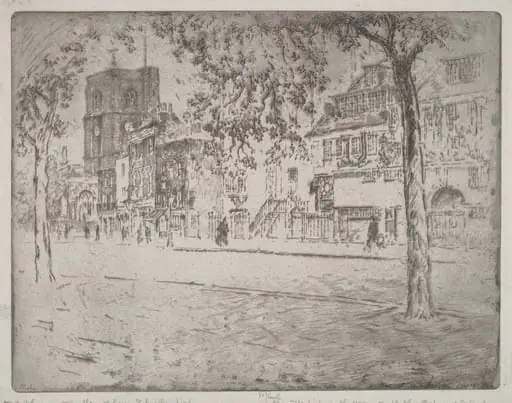 House Where Whistler Died
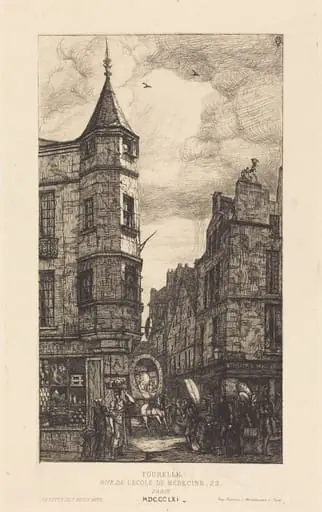 Tourelle, Rue de l'École de Médecine, 22, Paris
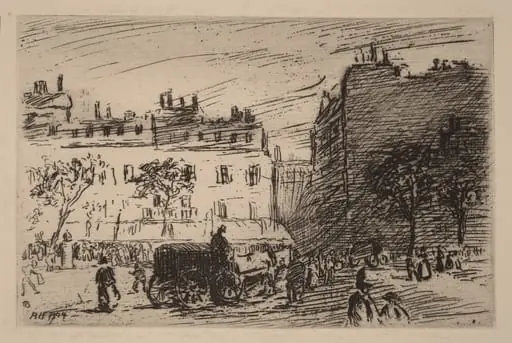 Paris Street Scene
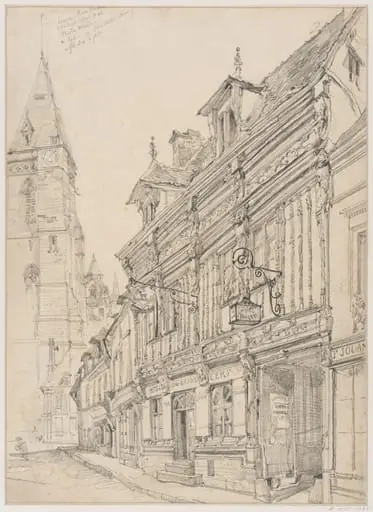 Hôtel du Grand Cerf, Les Andelys
 Clothes Exchange, No. 1
 Fish Shop, Chelsea