Artwork
Birth of Pharez and Zara
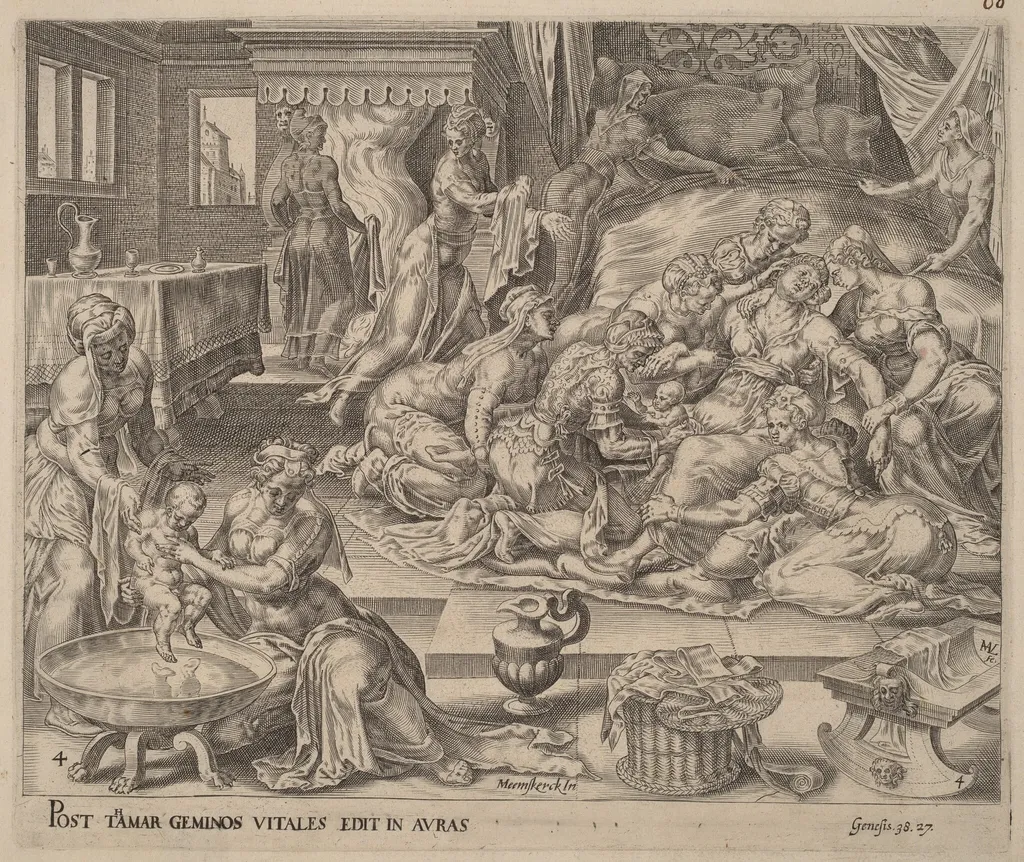
Birth of Pharez and Zara is an ink print by the Renaissance artist Herman Jansz Muller. It dates from 1566 and is held in the collection of the National Gallery of Art.
About this work
Overview
Created around 1566 by Herman Jansz Muller, this engraving depicts the biblical birth of Pharez and Zara, sons of Judah and Tamar.
Created around 1566 by Herman Jansz Muller, this engraving depicts the biblical birth of Pharez and Zara, sons of Judah and Tamar. Unlike serene religious imagery of the time, the scene is densely packed with figures and motion. The composition overwhelms the viewer with a tangle of limbs, animals, and gestures, emphasizing turmoil rather than divine order. The medium—engraving—allows for fine, intricate lines that heighten the sense of chaos and urgency.
Subject & Meaning
The scene illustrates Genesis 38, where Tamar gives birth to twins amid a dramatic confrontation over lineage. Muller interprets the moment not as a quiet miracle but as a violent, crowded event. A winged figure above, holding a scroll, may represent divine intervention or fate. The surrounding figures—some reaching, some fleeing—suggest confusion and moral tension, reflecting the story’s themes of deception, judgment, and unexpected inheritance.
Technique & Style
Muller employs fine, cross-hatched lines typical of Northern Renaissance engraving to model form and suggest depth. The dense network of strokes creates a swirling, almost claustrophobic space, guiding the eye through layers of overlapping bodies and animals. Movement is conveyed through diagonal lines and contorted postures, while the absence of clear spatial boundaries amplifies the sense of disorder. The technique prioritizes narrative intensity over anatomical precision.
History & Provenance
The print was produced in the Netherlands during a period of religious upheaval and renewed interest in biblical narratives. Muller, active in Haarlem, was known for reproductive engravings after other artists. This work likely circulated among educated patrons familiar with scripture, serving as both devotional imagery and a display of technical skill. No early ownership records are documented, but its survival suggests it was valued for its dramatic execution.
Context
In mid-16th century Northern Europe, biblical scenes were frequently rendered with emotional intensity, reflecting Reformation-era emphasis on personal faith and moral complexity. Muller’s chaotic composition diverges from the calm idealism of Italian religious art, instead aligning with Northern traditions that favored psychological realism and narrative drama. The inclusion of animals and chaotic crowds mirrors contemporary prints depicting apocalyptic or tumultuous biblical moments.
Legacy
Though not widely reproduced or studied today, the engraving exemplifies the Northern European tendency to dramatize sacred stories through visual complexity. Its emphasis on movement and emotional overload influenced later printmakers exploring biblical narratives with psychological depth. The work remains a rare example of how engraving could convey narrative chaos, offering insight into how 16th-century audiences might have imagined moments of divine intervention as deeply human and turbulent.
Artist & collection


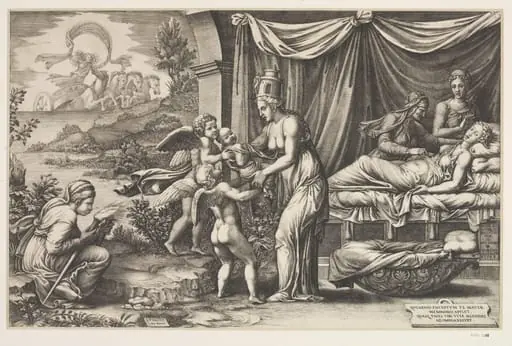 Birth of Memnon
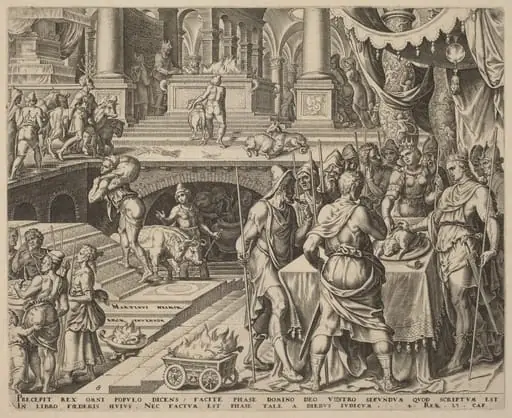 Josiah Celebrating Passover
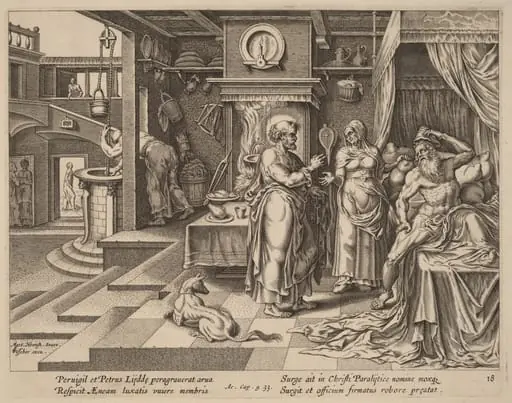 The Healing of Eneas by Saint Peter
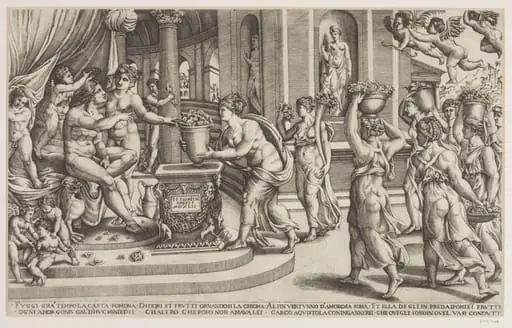 Marriage of Vertumnus and Pomona
 The Vestal Virgin Tuccia
 Pharaoh and the Plague of Frogs
 The Rich Man on His Death Bed
 The Prodigal Son Squandering His Inheritance on Harlots
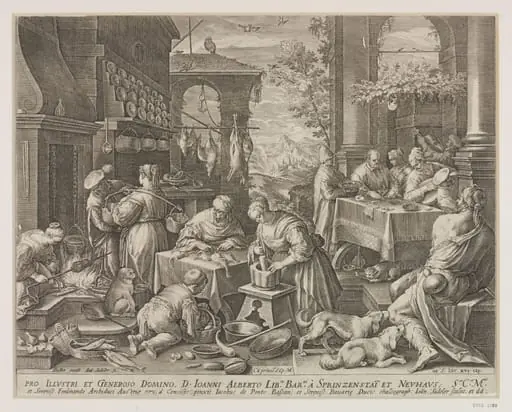 The Rich Man and Lazarus
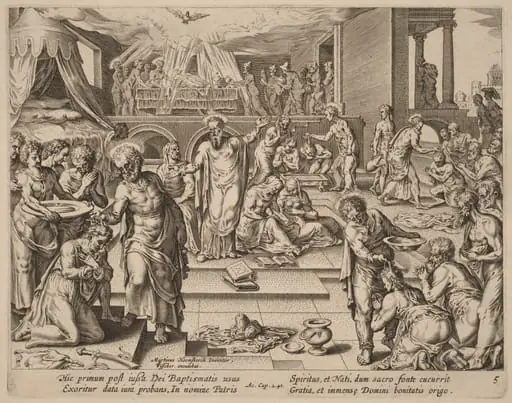 Many are Baptized
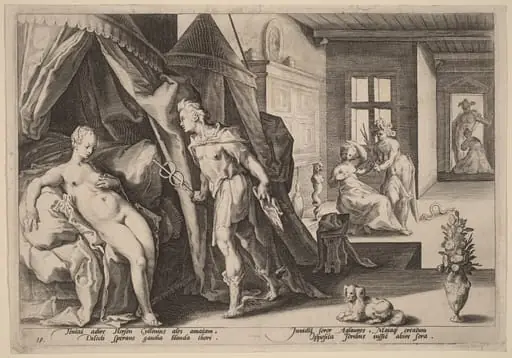 Mercury Entering Herse's Room after Changing Agraulos to Stone
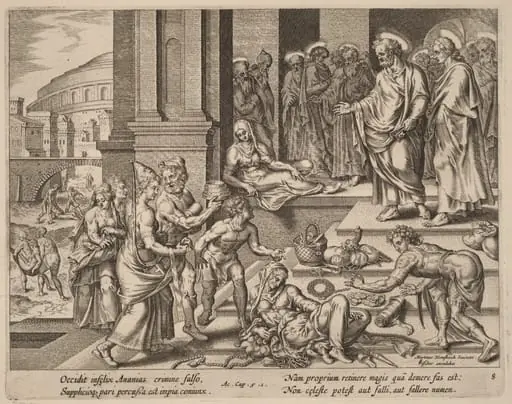 The Deaths of Ananias and Sapphira