Artwork
Christ Tells His Disciples of the Last Judgment
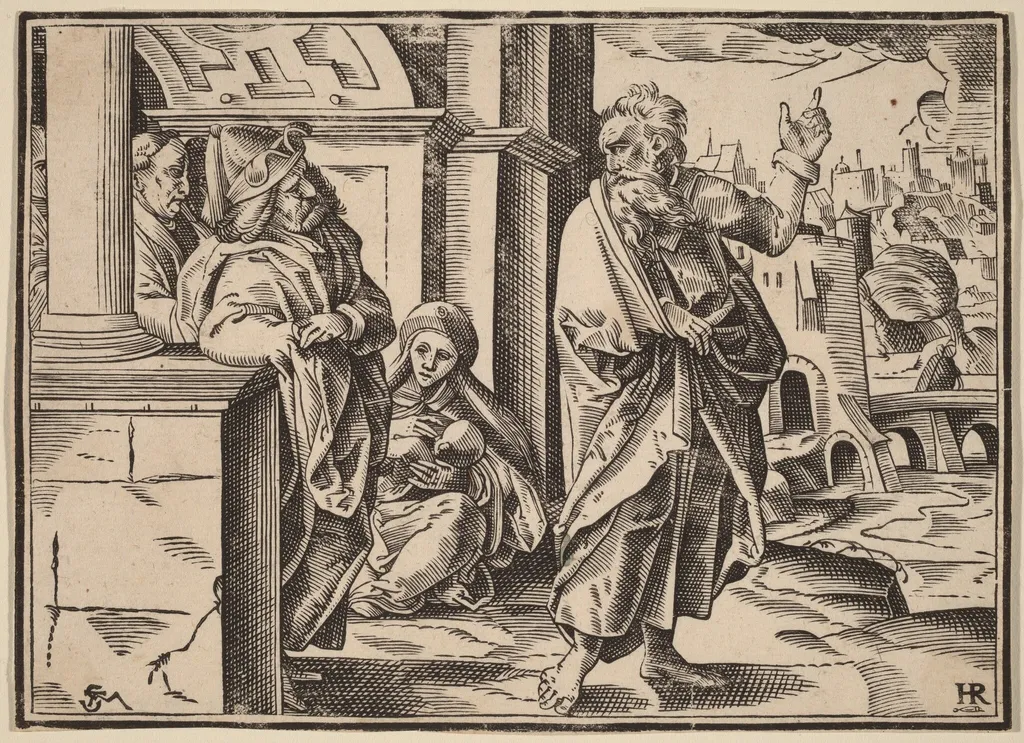
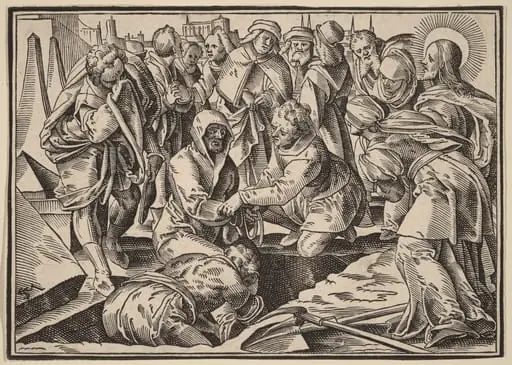
Christ Tells His Disciples of the Last Judgment is an ink print by the Renaissance artist Christoph Murer. It dates from 1630 and is held in the collection of the National Gallery of Art.
About this work
Overview
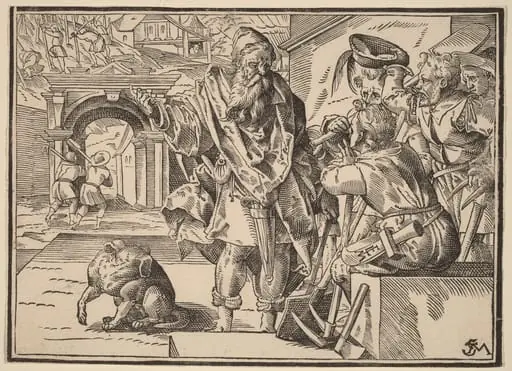
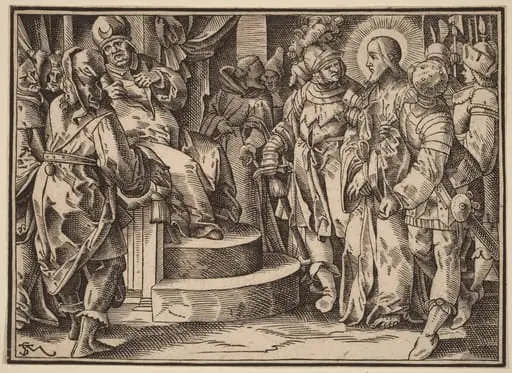
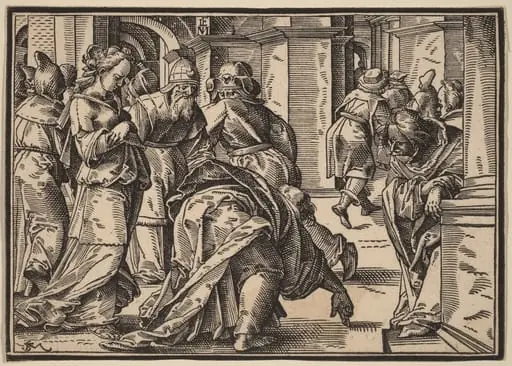
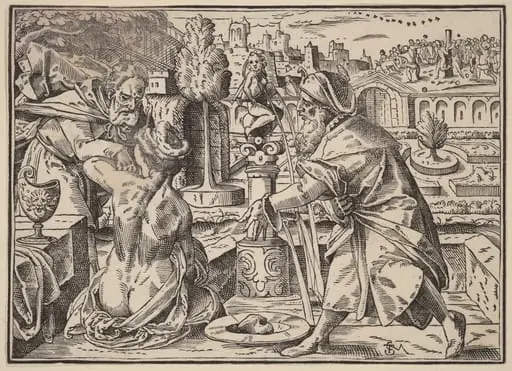
Christ Tells His Disciples of the Last Judgment is a 1630 woodcut print by the German artist Christoph Murer. Executed on laid paper, the image presents a compact, interior scene rendered entirely in black ink. The work belongs to the Protestant visual tradition of the early seventeenth century, where didactic narratives were often circulated as affordable prints.
Subject & Meaning
The arrangement suggests a warning about forthcoming judgment, with the pointing gesture indicating the imminence of a divine revelation.
The composition depicts a small group gathered in a dimly lit chamber. A woman cradles an infant while two men stand behind her with concerned expressions. To the right, an elderly figure points toward a distant cityscape, and another man leans forward to glimpse the view. The arrangement suggests a warning about forthcoming judgment, with the pointing gesture indicating the imminence of a divine revelation.
Technique & Style
Murer employed the woodcut method, carving the design into a single block of wood and printing it onto laid paper. The medium allows for bold, high‑contrast lines; Murer exploits this by using sharp, angular strokes to convey tension and movement. The limited tonal range emphasizes chiaroscuro, creating a sense of depth despite the flatness inherent in the printmaking process.
Context
Printed during the Thirty Years' War, the image reflects contemporary anxieties about moral collapse and eschatological expectation. Protestant communities frequently used such prints for private devotion and instruction, distributing them widely because the woodcut could be reproduced relatively cheaply compared with painted works. The cityscape in the background may allude to contemporary urban centers threatened by war and plague.
Artist & collection


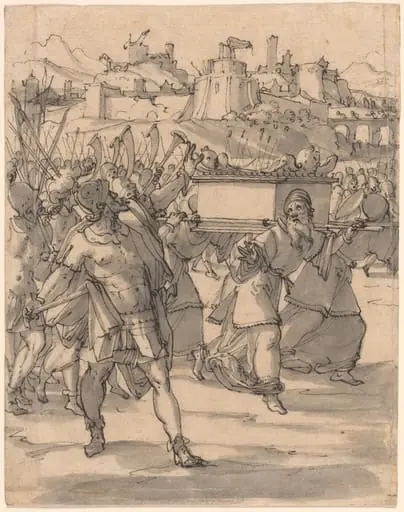 Joshua and the Israelites before the Walls of Jericho
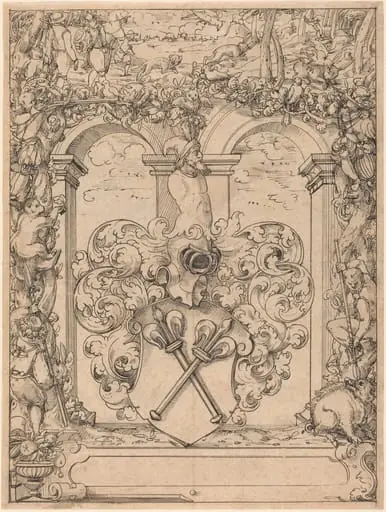 Design for a Window (Hunting Scene)
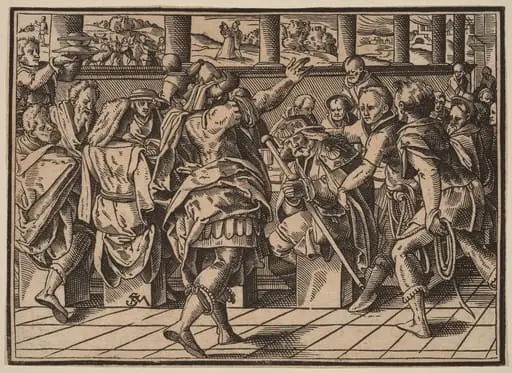 The Martyrdom of Saint James (?)
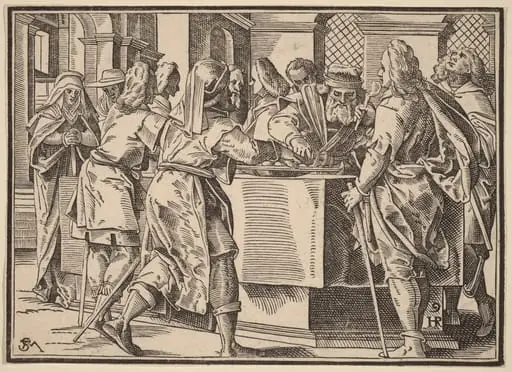 Christ Tells His Disciples of the Last Judgment
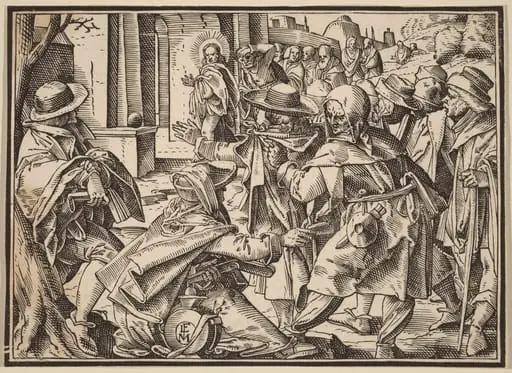 Christ Tells His Disciples of the Last Judgment
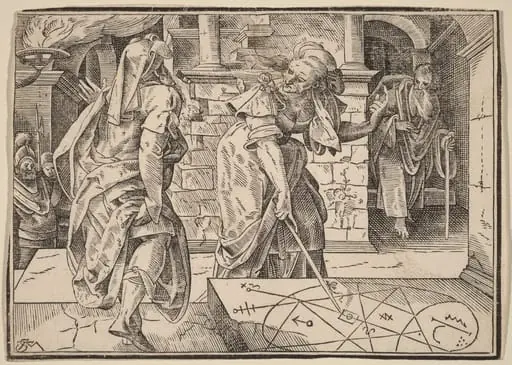 Christ Tells His Disciples of the Last Judgment
 The Four Horsemen of the Apocalypse
 Christ Tells His Disciples of the Last Judgment