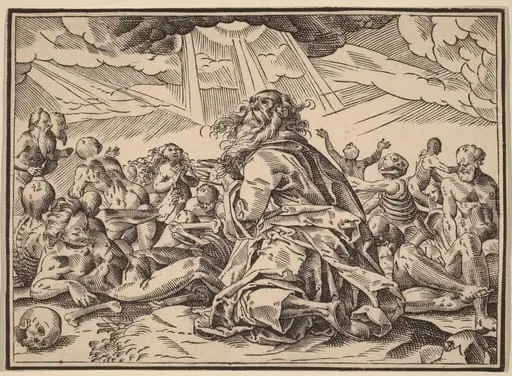
Artwork
The Four Horsemen of the Apocalypse
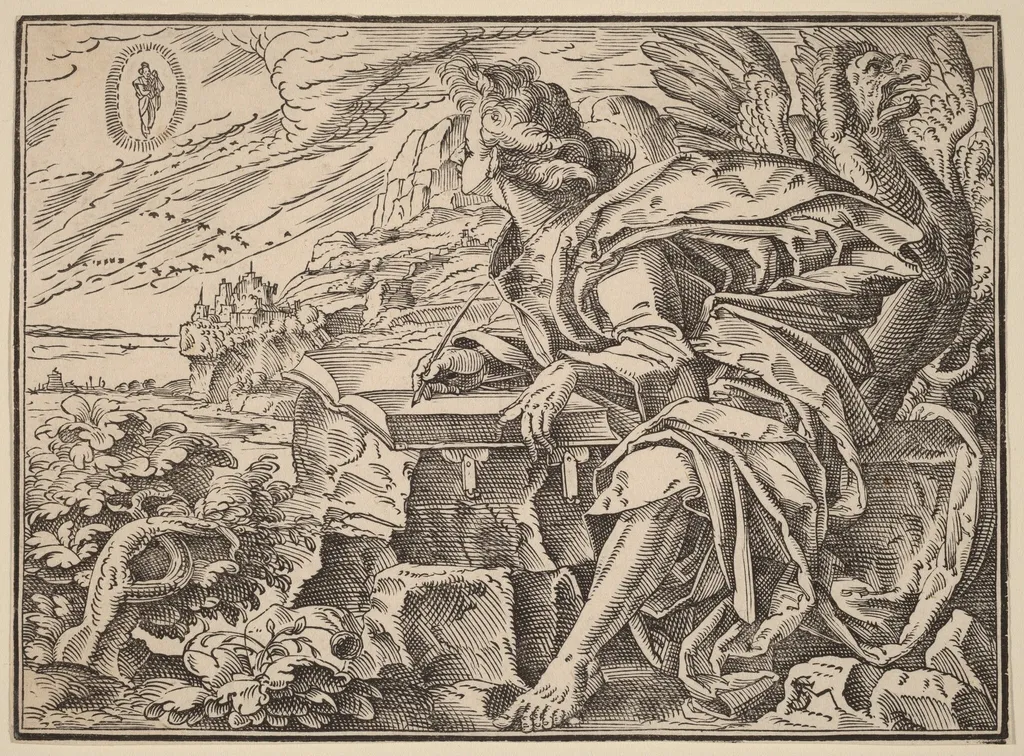
The Four Horsemen of the Apocalypse is an ink print by the Renaissance artist Christoph Murer. It dates from 1630 and is held in the collection of the National Gallery of Art.
About this work
Overview
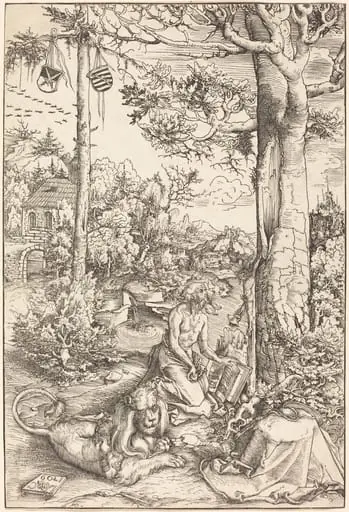
Created in 1630 by Christoph Murer, this woodcut on laid paper presents a contemplative scene distinct from traditional apocalyptic imagery.
Created in 1630 by Christoph Murer, this woodcut on laid paper presents a contemplative scene distinct from traditional apocalyptic imagery. Rather than depicting riders or divine judgment, it shows a solitary figure in a quiet landscape, engaged in writing. The work belongs to a print tradition that used symbolic imagery to convey theological themes, though here the violence of the Apocalypse is implied rather than shown.
Subject & Meaning
The central figure, robed and barefoot, holds a quill and a small box, suggesting he is recording divine revelation. The serene backdrop—castle, water, clouds—contrasts with the title’s apocalyptic reference, implying inner spiritual reckoning over external catastrophe. The oval frame at the top left may represent a celestial observer, reinforcing the idea of divine oversight as the figure documents fate.
Technique & Style
Murer employed fine, controlled lines typical of early 17th-century German woodcutting, rendering foliage, rock textures, and cloud formations with meticulous detail. The composition balances intimate foreground elements with a distant, atmospheric landscape, using tonal contrast to guide the viewer’s eye. The paper’s laid texture enhances the print’s tactile quality, grounding the ethereal subject in physical medium.
History & Provenance
The print was produced during a period of religious and political instability in the Holy Roman Empire, when illustrated theological texts were widely circulated. Murer, a physician and engraver based in Zurich, often combined scholarly and devotional themes in his work. This piece likely served as an illustration for a religious publication, though its original context remains undocumented.
Context
While Albrecht Dürer’s earlier Apocalypse series depicted dramatic visions, Murer’s approach reflects a shift toward introspective, text-centered spirituality. The emphasis on writing and quiet observation aligns with Protestant values of personal scripture engagement. The absence of overt violence signals a move away from sensationalism toward moral reflection in post-Reformation visual culture.
Legacy
Murer’s woodcut stands as a quiet counterpoint to more violent apocalyptic imagery of its time. It exemplifies how religious themes were adapted for private contemplation rather than public spectacle. Though not widely reproduced, it remains a significant example of early modern printmaking that prioritized symbolism and subtlety over spectacle.
Artist & collection


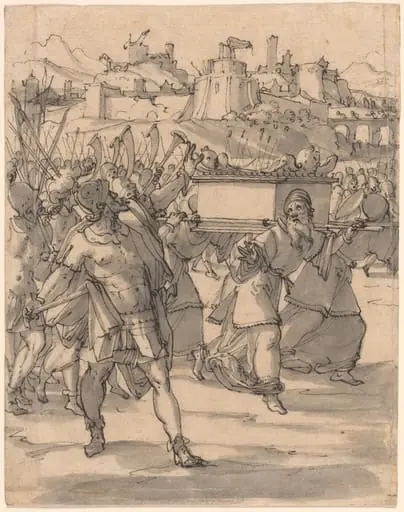 Joshua and the Israelites before the Walls of Jericho
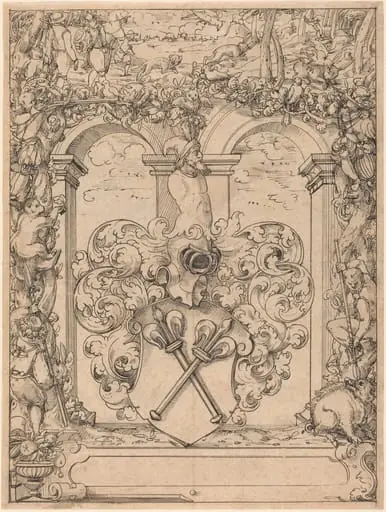 Design for a Window (Hunting Scene)
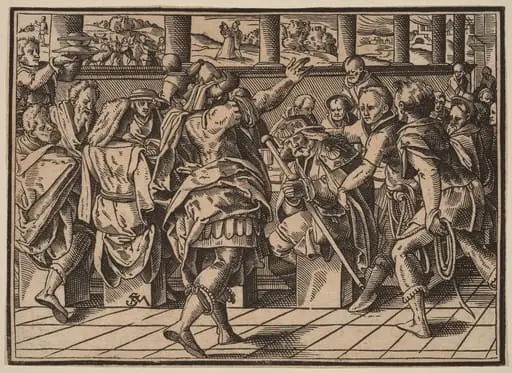 The Martyrdom of Saint James (?)
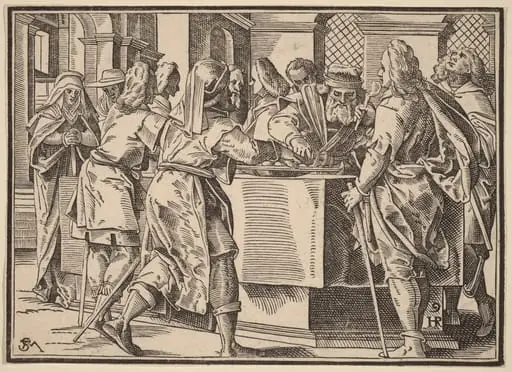 Christ Tells His Disciples of the Last Judgment
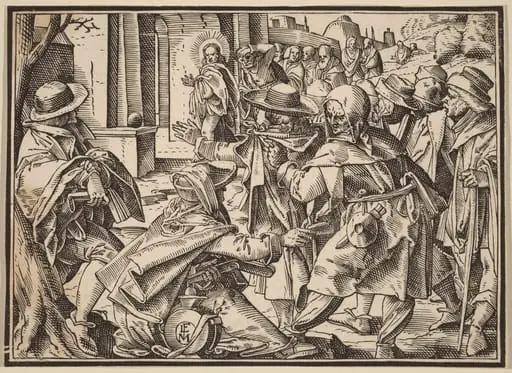 Christ Tells His Disciples of the Last Judgment
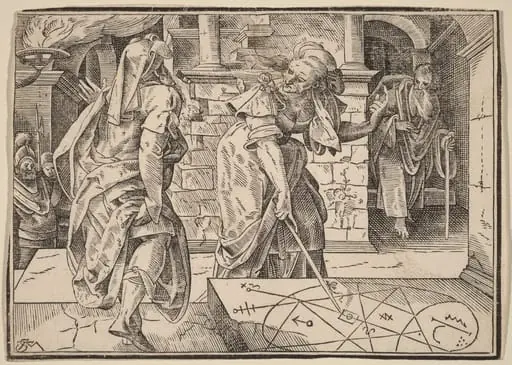 Christ Tells His Disciples of the Last Judgment
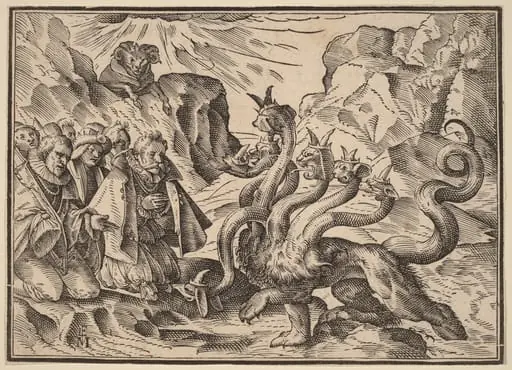 The Four Horsemen of the Apocalypse
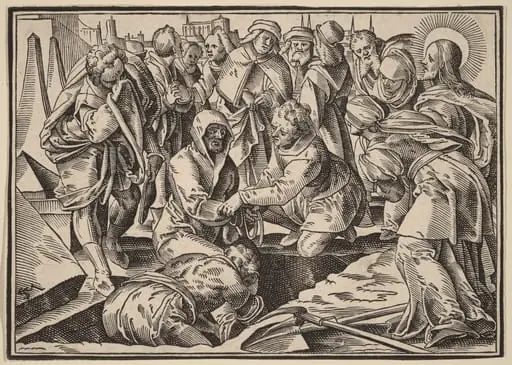 Christ Tells His Disciples of the Last Judgment