Artwork
The Martyrdom of Saint James (?)
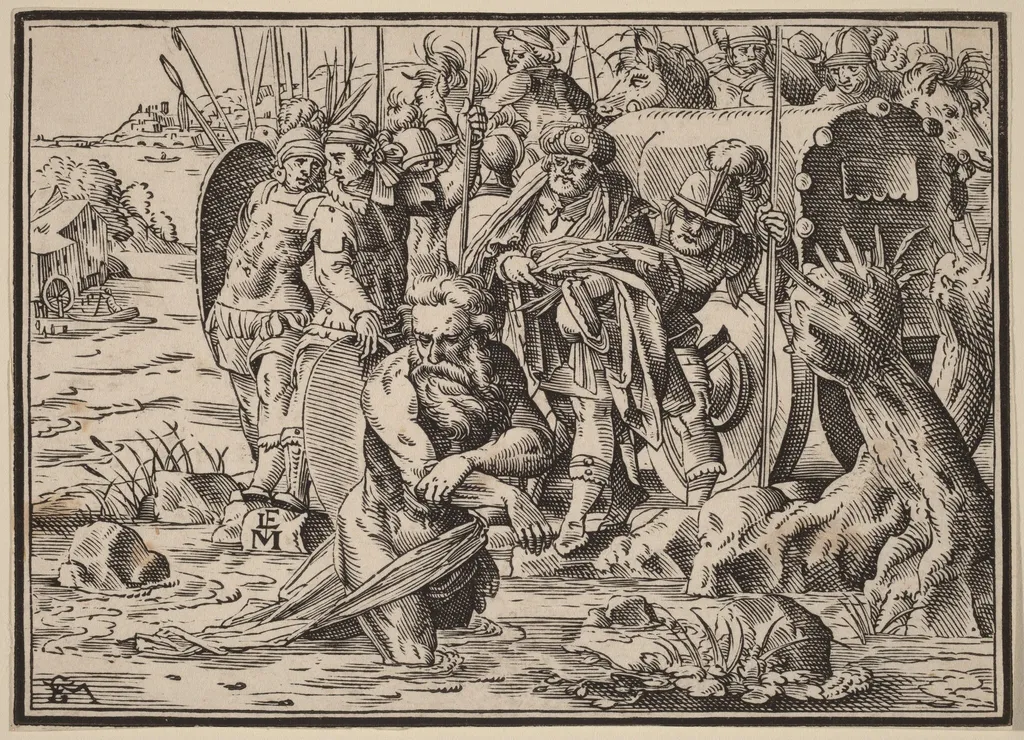
The Martyrdom of Saint James (?) is an ink print by the Renaissance artist Christoph Murer. It dates from 1630 and is held in the collection of the National Gallery of Art.
About this work
Overview
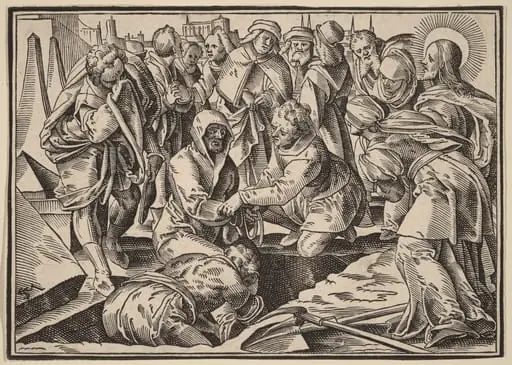
Christoph Murer’s woodcut, dated 1630, presents a narrative of Saint James’s martyrdom. Executed on laid paper, the print captures a tense moment where the saint, seated and bowed in prayer, is surrounded by a mixed crowd of onlookers, some bearing swords and shields, against a distant cityscape.
Subject & Meaning
The central figure, identified as Saint James, is portrayed in a state of surrender, his hands clasped in prayer as he faces imminent death. The surrounding figures—both armed and civilian—underscore the conflict between faith and persecution, a common theme in Counter‑Reformation imagery.
Technique & Style
Murer employs the woodcut medium’s characteristic bold lines to delineate figures and architecture, creating a stark contrast between foreground and background. The texture of the laid paper adds a subtle grain, enhancing the sense of depth while retaining the flatness inherent to printmaking.
History & Provenance
Produced in the early seventeenth century, the print reflects the period’s demand for devotional images that could be widely disseminated. While specific ownership records are scarce, the work is catalogued among Murer’s religious series, which were circulated among German-speaking patrons.
Context
The early 1630s saw heightened religious tensions across Europe, and prints like this served both as visual sermons and as tools for reinforcing Catholic narratives of martyrdom. Saint James, a patron of pilgrims, was a fitting subject for a work intended to inspire piety.
Artist & collection


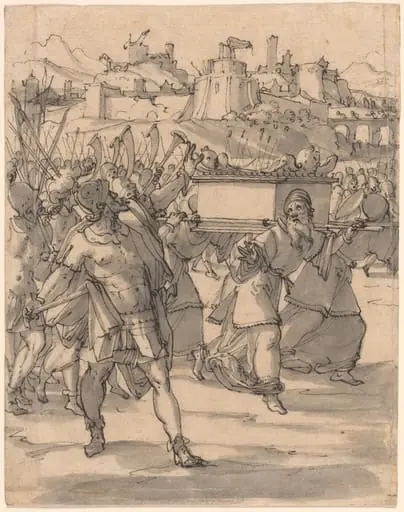 Joshua and the Israelites before the Walls of Jericho
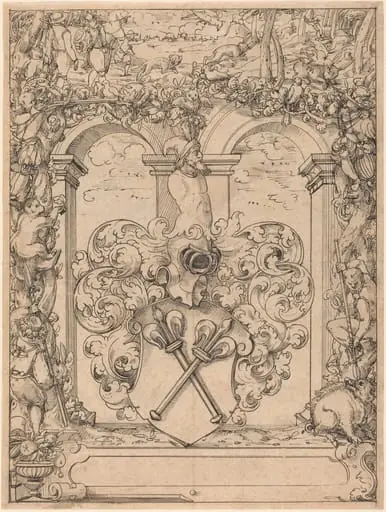 Design for a Window (Hunting Scene)
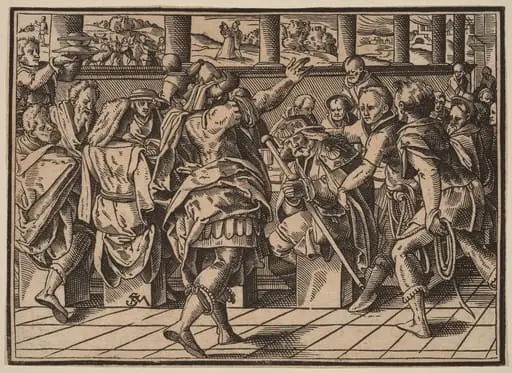 The Martyrdom of Saint James (?)
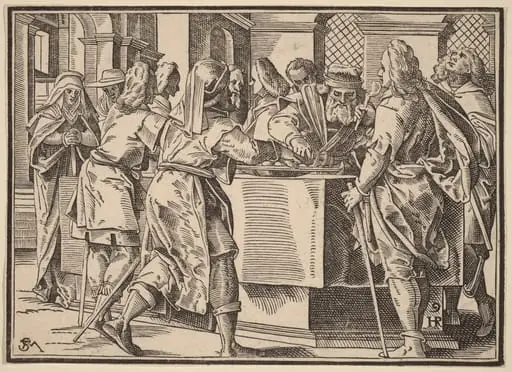 Christ Tells His Disciples of the Last Judgment
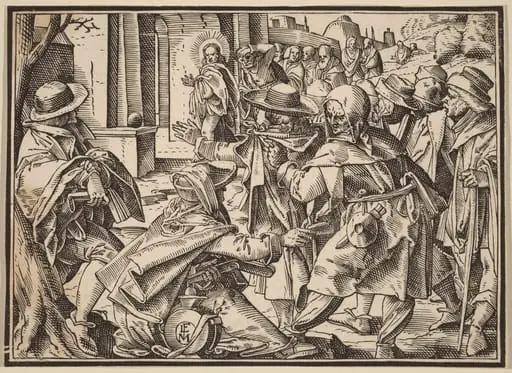 Christ Tells His Disciples of the Last Judgment
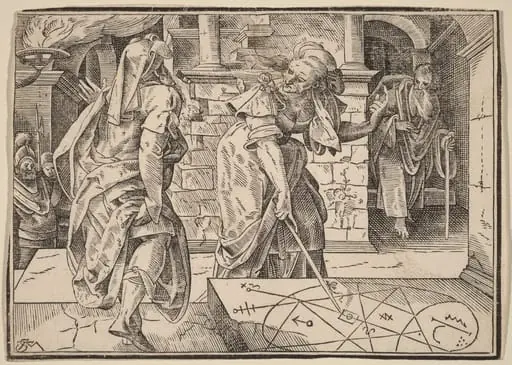 Christ Tells His Disciples of the Last Judgment
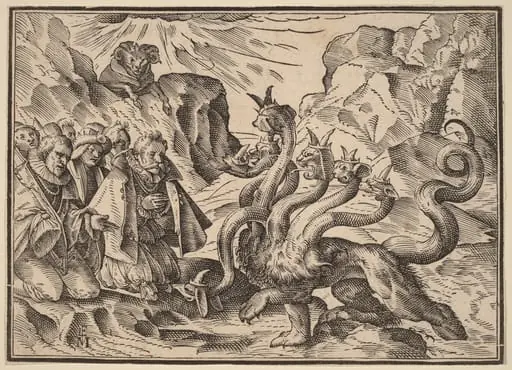 The Four Horsemen of the Apocalypse
 Christ Tells His Disciples of the Last Judgment
 Christ Tells His Disciples of the Last Judgment
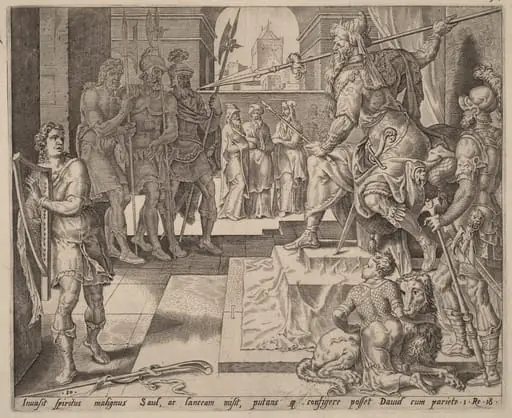 David before Saul
 Christ Tells His Disciples of the Last Judgment
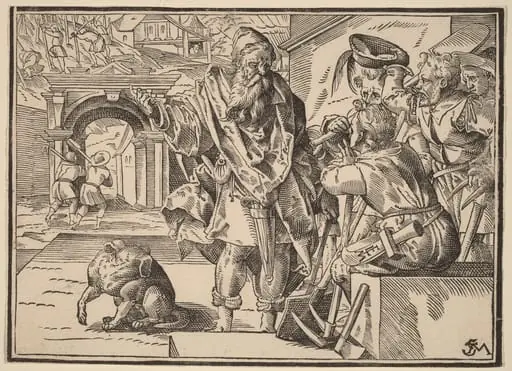 Christ Tells His Disciples of the Last Judgment
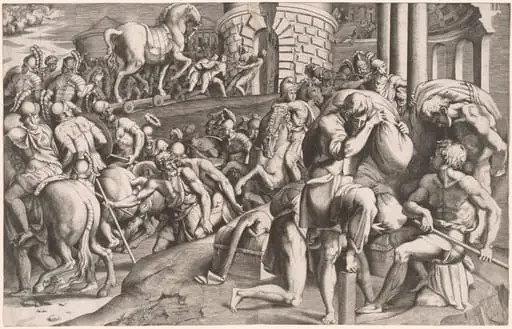 The Trojans Hauling the Wooden Horse into Troy
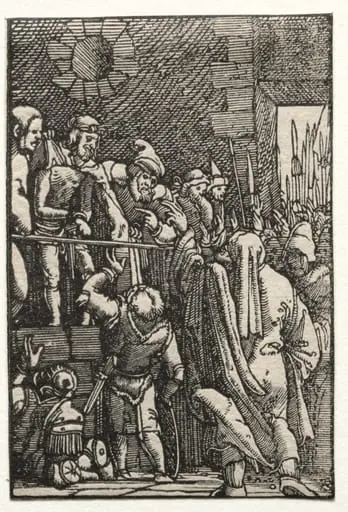 The Fall and Redemption of Man: Ecce Homo
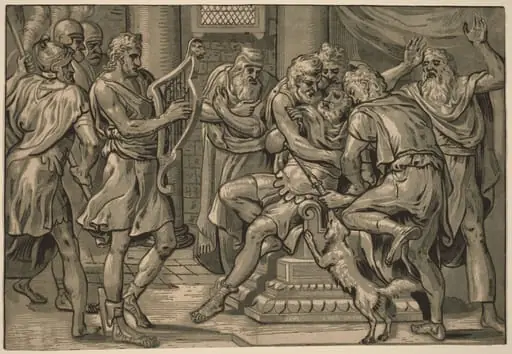 David Playing the Harp before Saul
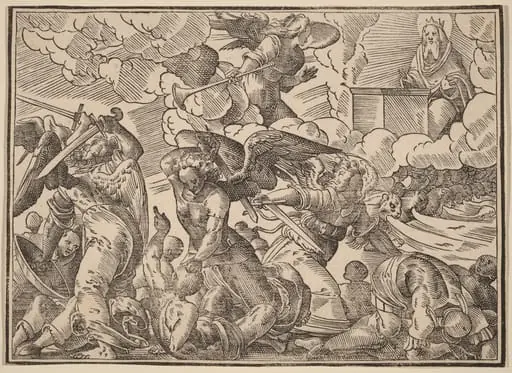 The Four Horsemen of the Apocalypse
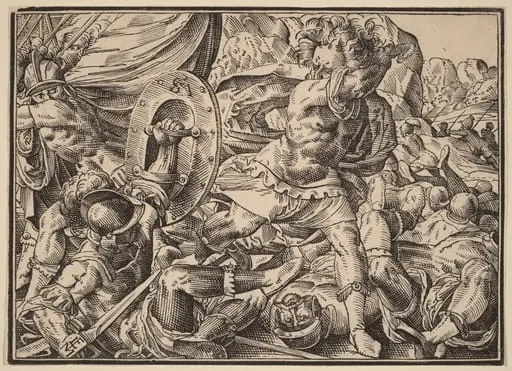 Christ Tells His Disciples of the Last Judgment