Artwork
The old procuress conveys the young man’s message of love to Mansur’s wife, from a Tuti-nama (Tales of a Parrot: Seventeenth Night
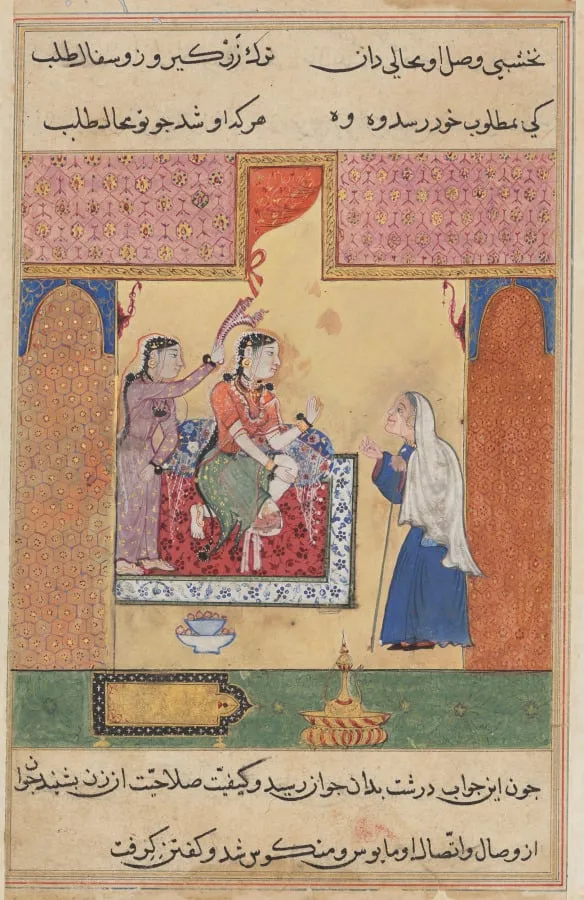
The old procuress conveys the young man’s message of love to Mansur’s wife, from a Tuti-nama (Tales of a Parrot: Seventeenth Night is an unspecified painting by the Mughal Painting artist Sravana. It dates from 1560 and is held in the collection of the Cleveland Museum of Art.
About this work
You see a woman in a red dress sitting on a patterned carpet, listening as an old woman delivers a love note from a young man outside the frame.
You see a woman in a red dress sitting on a patterned carpet, listening as an old woman delivers a love note from a young man outside the frame.
This painting comes from a book of parrot tales told in the court of Emperor Akbar. The story warns against deceit—here, the wife rejects the messenger, staying loyal to her absent husband. The bright colors and flat figures feel like a comic strip, but the tiny details—embroidery, jewelry—show real care.
To see more art like this, look up Mughal India, court of Akbar (reigned 1556–1605).
Overview
The painting illustrates a scene from a seventeenth‑night episode of the Tuti‑nama, a collection of parrot tales associated with Emperor Akbar’s court. An elderly procuress delivers a love note from a young admirer to the wife of the merchant Mansur, who is absent on a journey. The woman, seated on an arabesque‑patterned carpet, declines the proposal and dismisses the messenger.
Subject & Meaning
The narrative centers on the merchant’s wife, whose refusal underscores fidelity to her missing husband and serves as a moral warning against deceitful desire. The young man’s obsession and the intermediary’s role highlight themes of unrequited love and the virtue of loyalty, reflecting the didactic purpose of the Tuti‑nama’s storytelling tradition.
Technique & Style
Executed in vivid pigments, the composition employs flat, linear figures reminiscent of early comic art, yet the rendering of textiles, jewelry, and intricate carpet patterns reveals meticulous attention to detail. The use of bright reds and contrasting hues enhances visual impact, while the stylized perspective and decorative borders align with Mughal court painting conventions of the late 16th century.
Context
Created during the reign of Emperor Akbar (1556–1605), the work belongs to a broader corpus of Mughal illustrations that adapted Persian literary sources for Indian audiences. The Tuti‑nama, a collection of moralizing parrot stories, was popular in the imperial atelier, where artists blended Persian miniaturist techniques with local aesthetic preferences.
History & Provenance
The painting originates from a manuscript of the Tuti‑nama held in the imperial library of Akbar’s court. Subsequent copies circulated among regional patrons, and the piece entered modern collections through 19th‑century acquisitions of Mughal manuscripts by European collectors, where it has been studied as an example of narrative miniature art.
Artist & collection

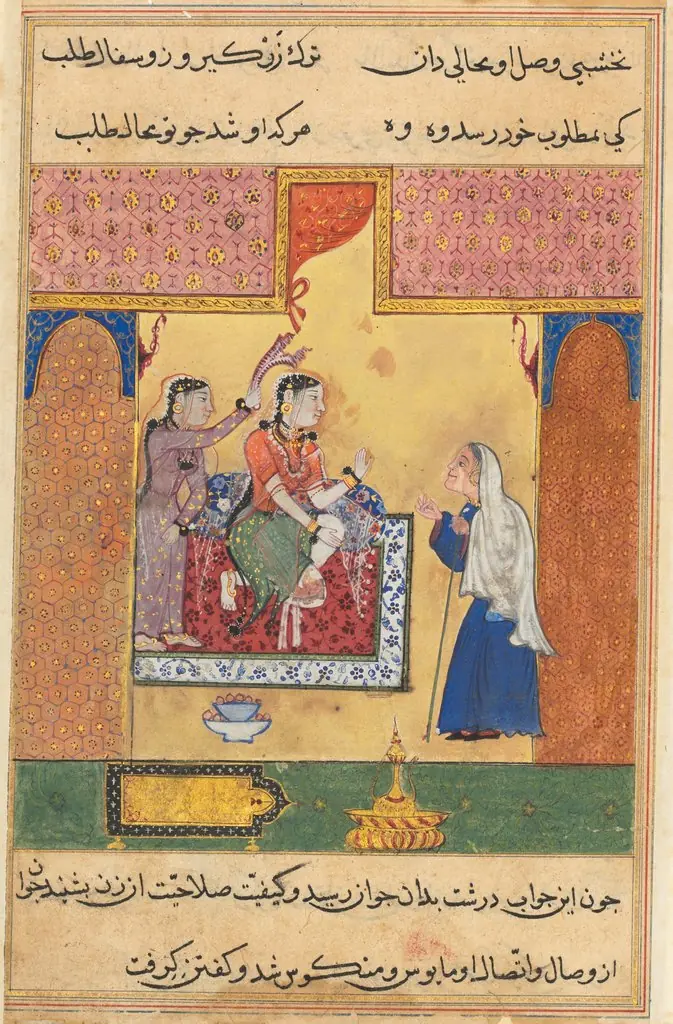 The old procuress conveys the young man’s message of love to Mansur’s wife, from a Tuti-nama (Tales of a Parrot: Seventeenth Night
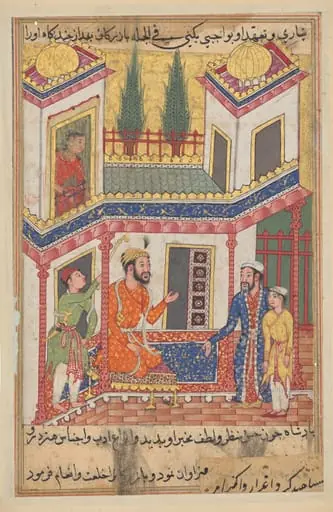 The merchant returns bringing a young slave who is really the son of the princess of Rum, now married to the king, from a Tuti-nama (Tales of a Parrot): Fiftieth Night
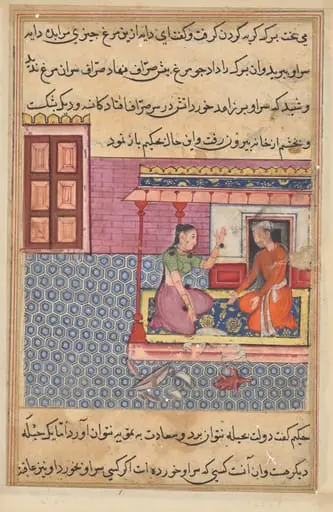 The pious man’s wife offers the seven-colored bird as food to her lover, but not finding its head, he breaks the pot and bowl in anger, from a Tuti-nama (Tales of a Parrot): Fifty-second Night
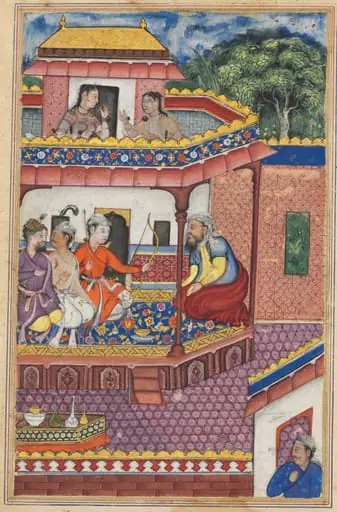 The three young men present themselves as suitors for the hand of Zuhra, the daughter of the merchant of Kabul, from a Tuti-nama (Tales of a Parrot): Thirty-fourth Night
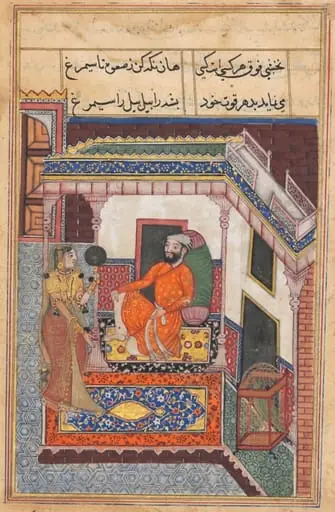 The parrot laughs on hearing the Raja of Ujjain’s wife admire her beauty in a mirror, from a Tuti-nama (Tales of a Parrot: Forty-sixth Night
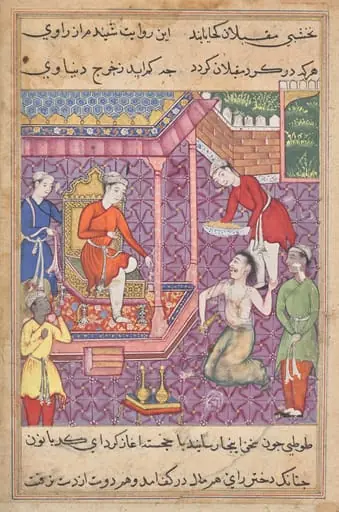 The magician disguised as a Brahman returns to claim his “daughter-in-law,” from a Tuti-nama (Tales of a Parrot): Thirty-fifth Night
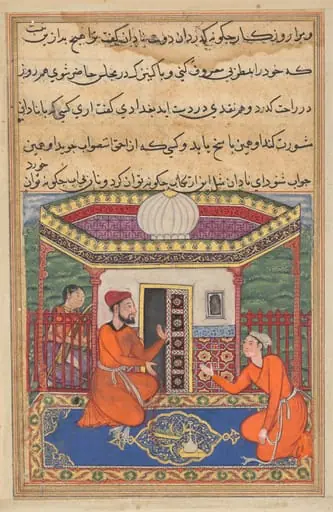 The young man of Baghdad solicits advice from a friend as his slave girl, who is adept at music, awaits, from a Tuti-nama (Tales of a Parrot): Forty-eighth Night
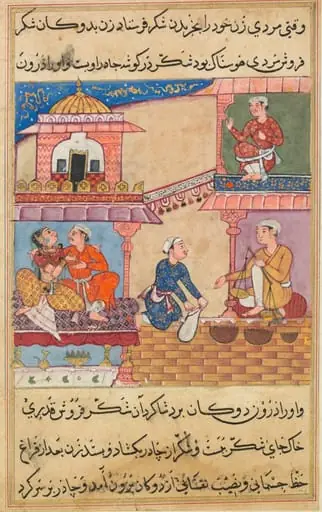 The merchant’s clerk replaces the sugar purchased by the philandering wife with gravel, from a Tuti-nama (Tales of a Parrot): Eighth Night
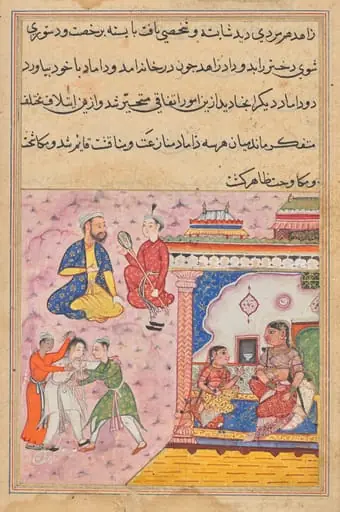 Three suitors fight amongst themselves for the hand of the devotee’s daughter, from a Tuti-nama (Tales of a Parrot): Twentieth Night
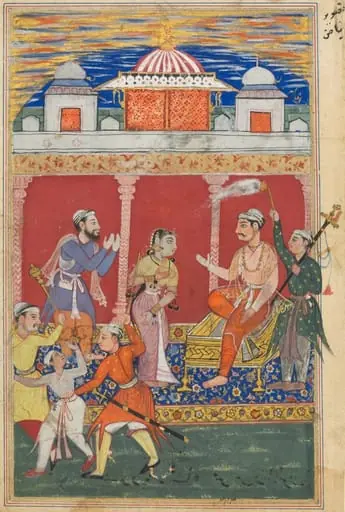 The prince’s ordeal continues, he is ordered away to be executed for the fifth time, from a Tuti-nama (Tales of a Parrot): Eighth Night
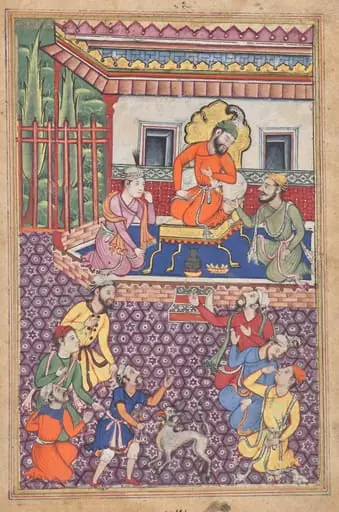 The court of the Raja of Ujjain, from a Tuti-nama (Tales of a Parrot): Forty-sixth Night
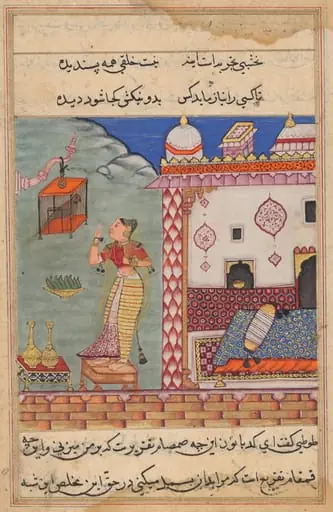 The Parrot Addresses Khujasta at the Beginning of the Twenty-seventh Night, form a Tuti-nama (Tales of a Parrot)
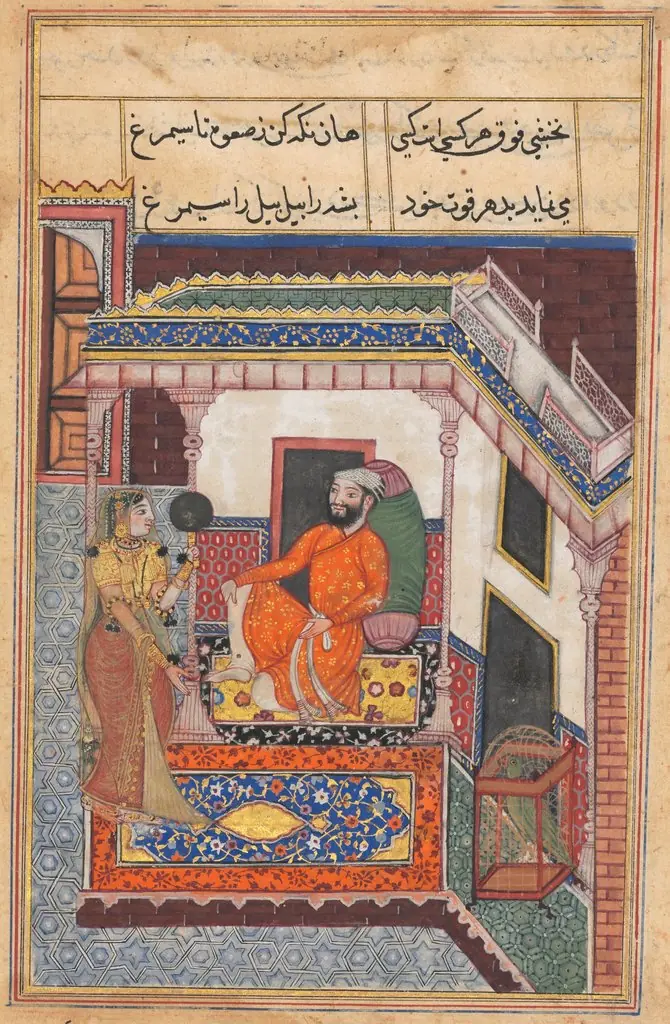 The parrot laughs on hearing the Raja of Ujjain’s wife admire her beauty in a mirror, from a Tuti-nama (Tales of a Parrot: Forty-sixth Night
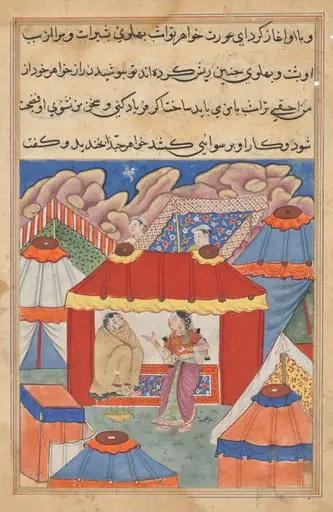 Habbaza’s sister, who is sent to console her, discovers the disguised Arab in her place, from a Tuti-nama (Tales of a Parrot): Twenty-fourth Night