Artwork
Madonna and Child
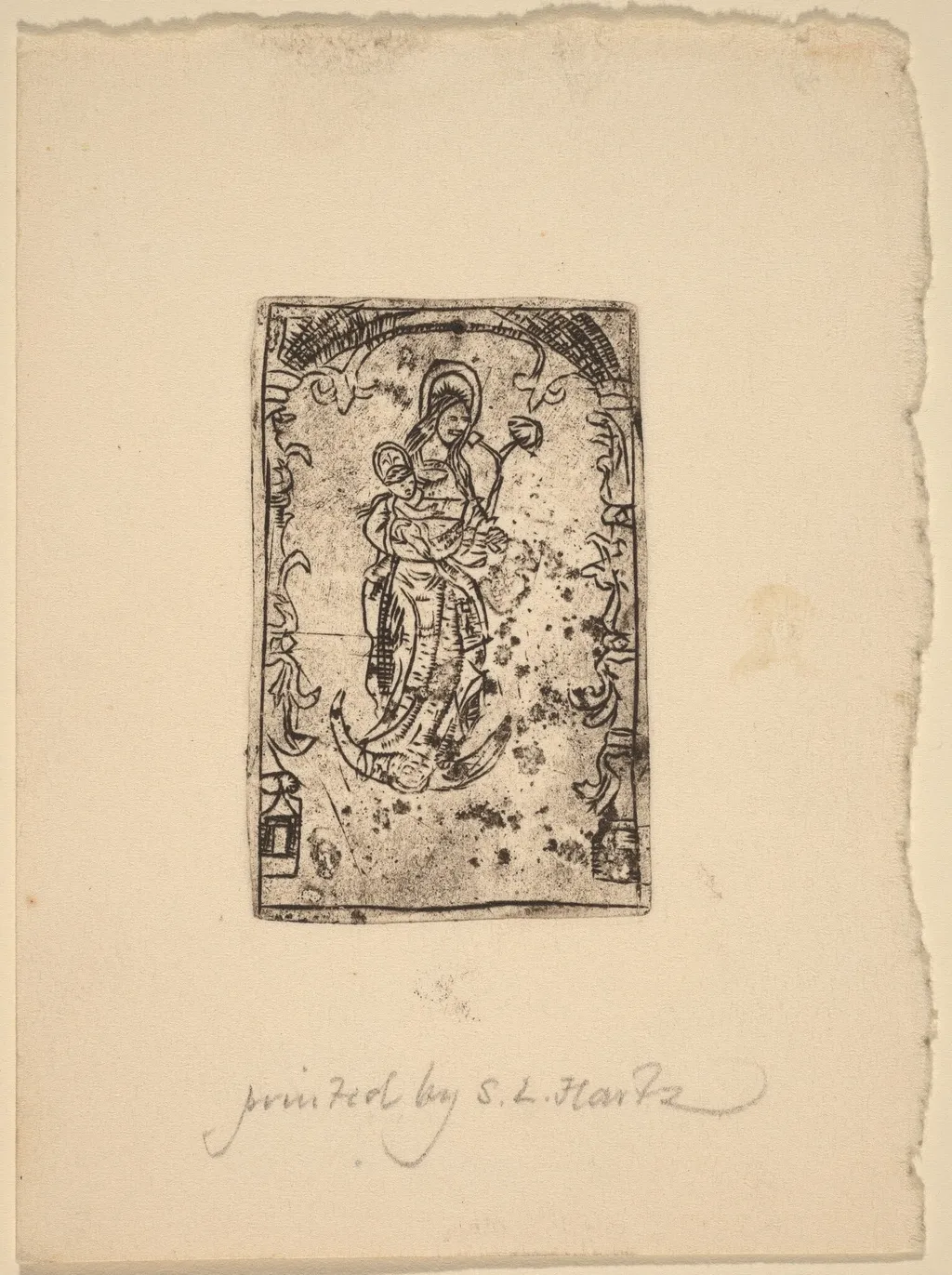
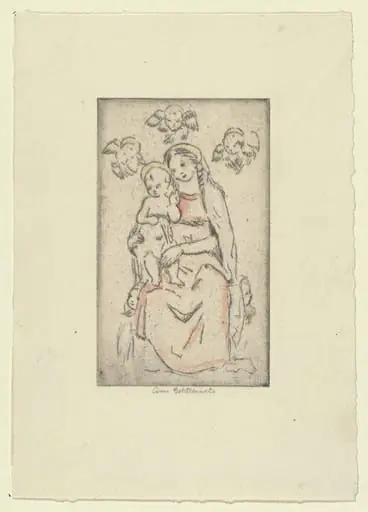
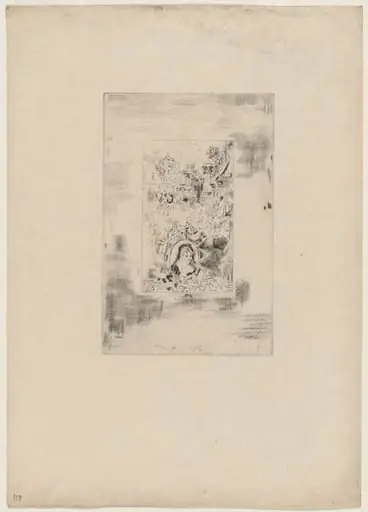
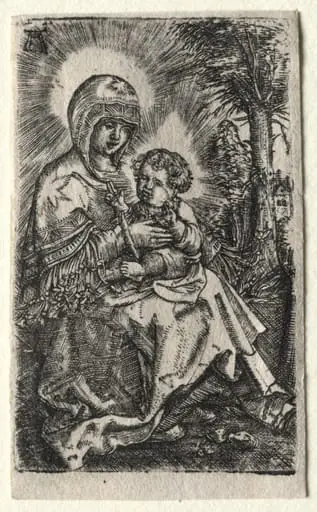
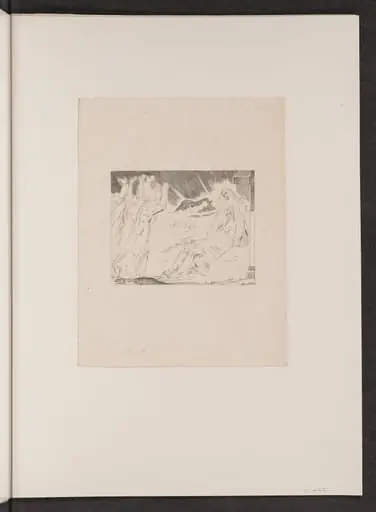
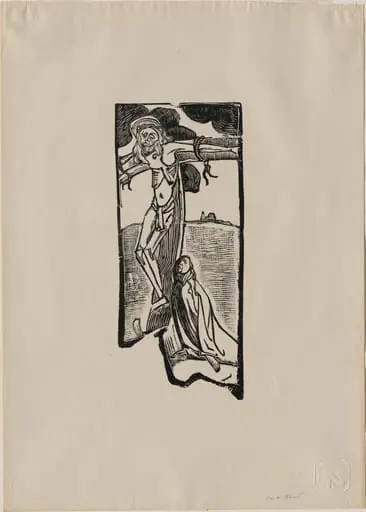
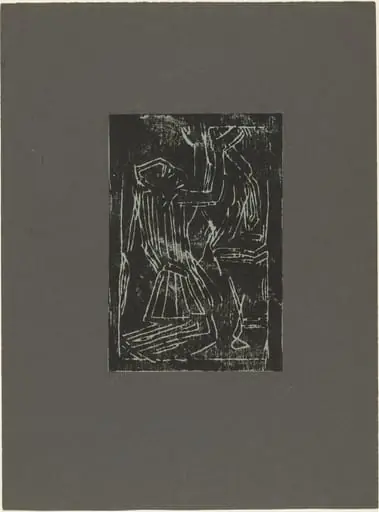
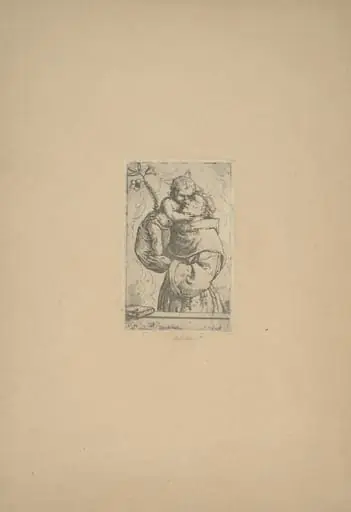
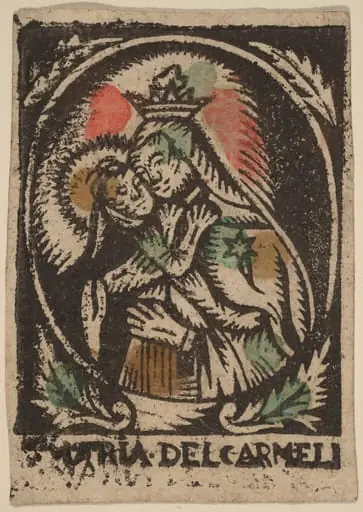
Madonna and Child is an ink print by the Renaissance artist Netherlandish 15th Century. It dates from 1401 and is held in the collection of the National Gallery of Art. This small engraving depicts the Virgin Mary with the infant Jesus, rendered in fine linear detail.
About this work
Overview
The impression, likely from a late 18th-century restrike, exhibits muted tones and subtle fading, characteristic of aged ink on paper.
This small engraving depicts the Virgin Mary with the infant Jesus, rendered in fine linear detail. The impression, likely from a late 18th-century restrike, exhibits muted tones and subtle fading, characteristic of aged ink on paper. The composition is intimate, with both figures gazing upward, their expressions serene. Background texture is built from dense, swirling lines and micro-dots, creating a softly chaotic field that frames the central figures without distracting from them.
Subject & Meaning
The Virgin and Child are portrayed in a quiet, contemplative moment, emphasizing spiritual stillness over theatricality. Mary’s modest attire and head covering reflect traditional iconography of humility and devotion. The child, loosely swaddled, appears vulnerable yet composed. Their upward gaze suggests reverence or anticipation, aligning with devotional themes common in Christian imagery, where the divine is approached with quiet awe rather than grandeur.
Technique & Style
The image is produced through engraving, a method involving incised lines on a metal plate inked and pressed onto paper. Fine, controlled strokes model form and shadow, particularly on the folds of Mary’s robe and the baby’s cloth. The background’s dense stippling and swirling lines demonstrate mastery of tonal gradation without color, relying entirely on line density and direction to suggest depth and texture.
History & Provenance
Though the original plate date is uncertain, this impression was likely pulled in the late 1700s, long after the engraving’s initial creation. Restrikes like this were common as demand persisted for religious imagery, even when the original artist’s hand was no longer involved. The print’s faded state suggests repeated impressions from a worn plate, typical of later reproductions circulated for private devotion or educational use.
Context
In the 18th century, engraved religious prints remained widely distributed across Europe, especially among laypeople without access to painted altarpieces. This work reflects a tradition of devotional imagery adapted for domestic use, where simplicity and clarity were valued over ornate detail. The technique allowed for multiple copies, making sacred subjects accessible beyond ecclesiastical settings.
Legacy
As a product of reproductive printmaking, this engraving exemplifies how religious iconography was preserved and disseminated through mechanical means. Though unsigned and unattributed, it contributes to a broader understanding of how devotional imagery evolved in the pre-industrial era—relying on craftsmanship, repetition, and quiet symbolism to sustain spiritual practice across generations.
Artist & collection

Artist
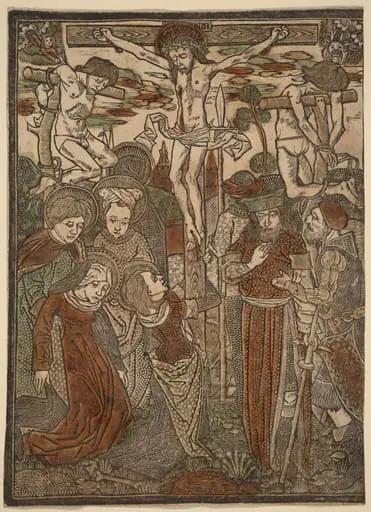
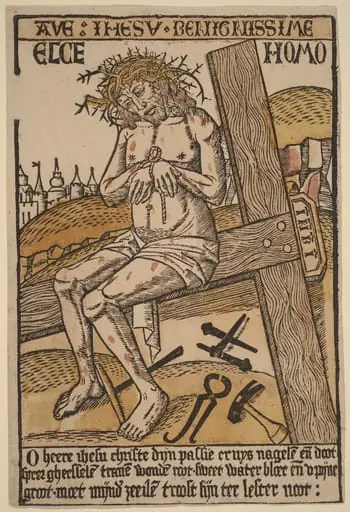
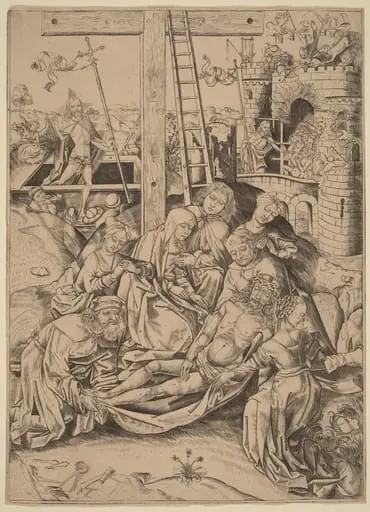
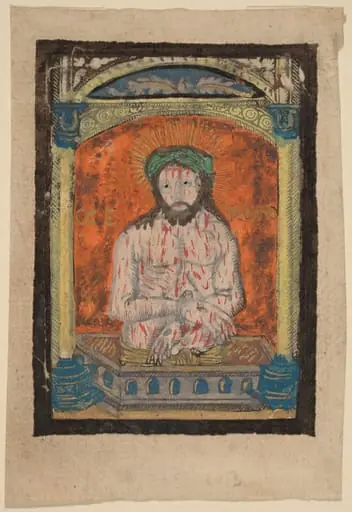
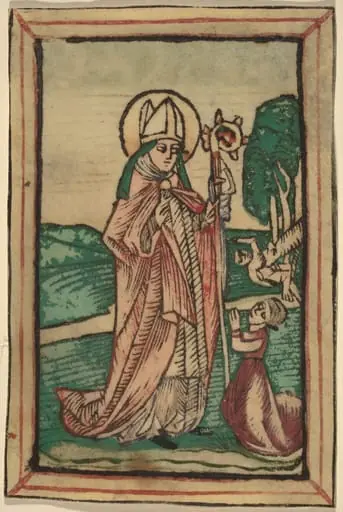
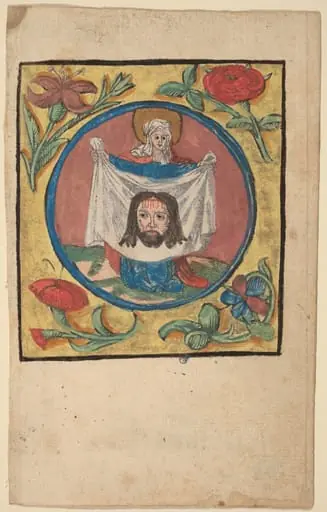
These prints show Christ’s suffering in bold, hand-colored images from 15th-century Northern Europe.