Artwork
Christ
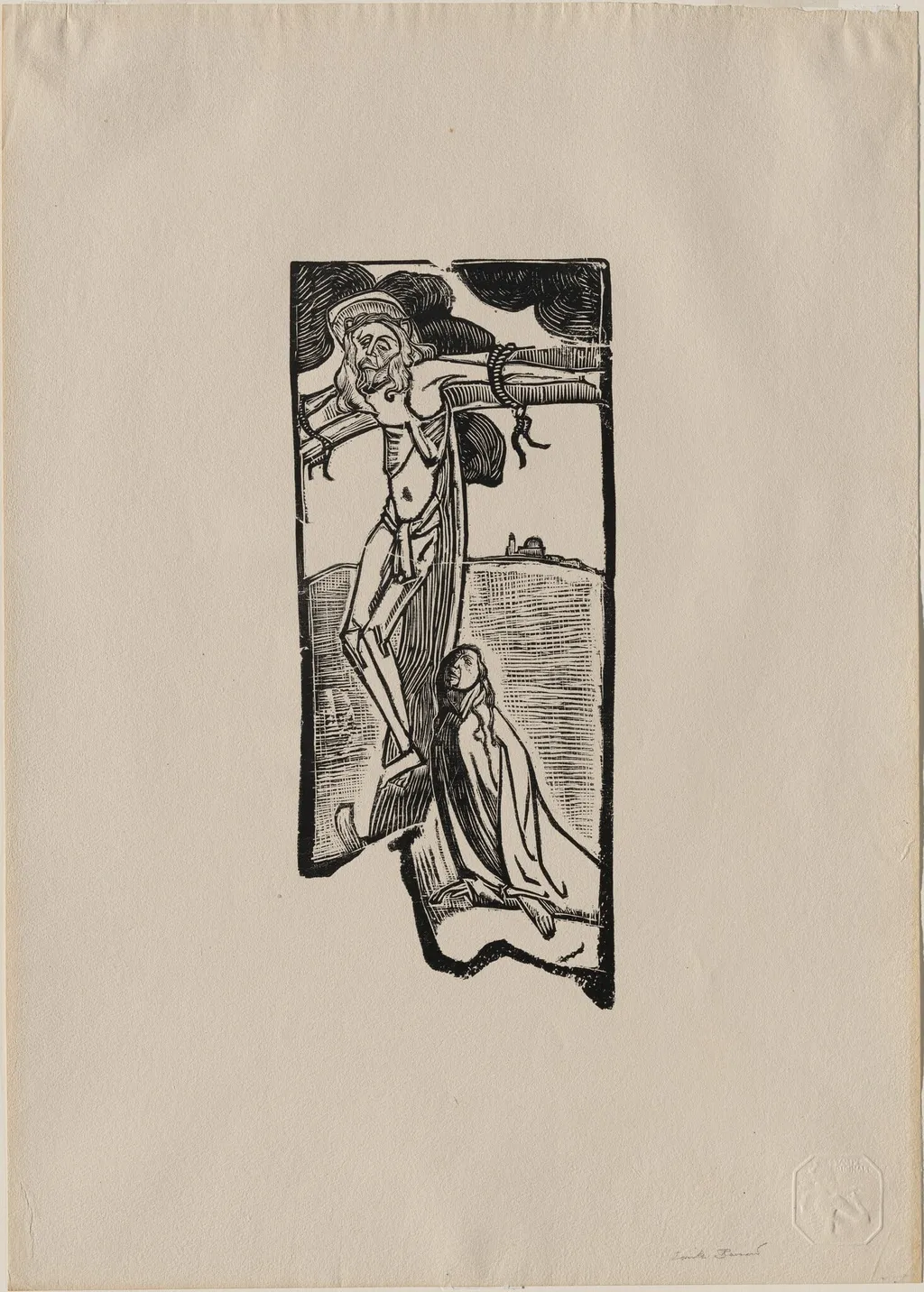
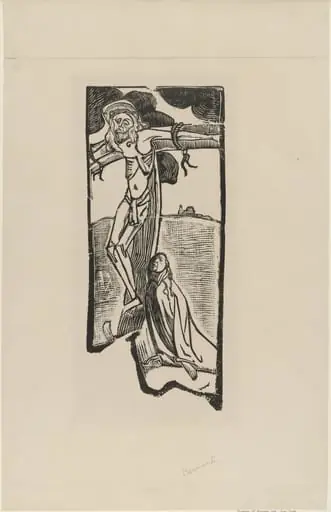
Christ is an ink print by the Impressionist artist Émile Bernard. It dates from 1892 and is held in the collection of the National Gallery of Art.
About this work
Overview
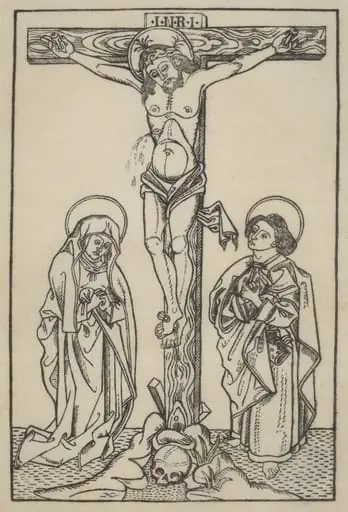
Émile Henri Bernard’s print titled *Christ* was produced in 1892. Executed as a black woodcut on laid cream paper, the work presents a stark, monochrome image that aligns with the artist’s interest in simplified forms and symbolic content. It belongs to the religious genre, portraying a crucifixion scene with a single figure identified as Christ.
Subject & Meaning
The composition centers on a crucified male figure, rendered with long hair, a beard, and a modest loincloth, his arms outstretched on the cross. Beneath the cross, a kneeling woman in a long robe bows her head, suggesting mourning or devotion. The minimal setting focuses attention on the spiritual narrative of sacrifice and reverence.
Technique & Style
Bernard employed a woodcut process, carving bold, simplified outlines that translate into stark black ink on the cream‑toned paper. The use of flat, unmodulated areas of black reflects the influence of Cloisonnism’s strong contours and Synthetism’s emphasis on decorative flatness, creating an elegant, graphic quality that eschews detail for symbolic clarity.
Context
Created during the late‑19th‑century Post‑Impressionist period, the print situates Bernard among contemporaries such as Vincent van Gogh and Paul Gauguin, who were exploring new visual languages beyond Impressionism. His affiliation with Cloisonnism and Synthetism marks a shift toward abstraction and the reduction of form, positioning *Christ* within a broader movement toward modernist experimentation in printmaking.
Artist & collection
Artist
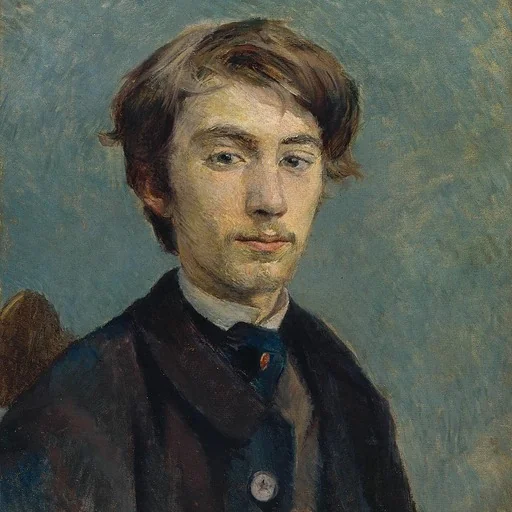
Émile Henri Bernard (French pronunciation: ; 28 April 1868 – 16 April 1941) was a French Post-Impressionist painter and writer, who had artistic friendships with Vincent van Gogh, Paul Gauguin and Eugène Boch, and at a later time, Paul…

 Untitled
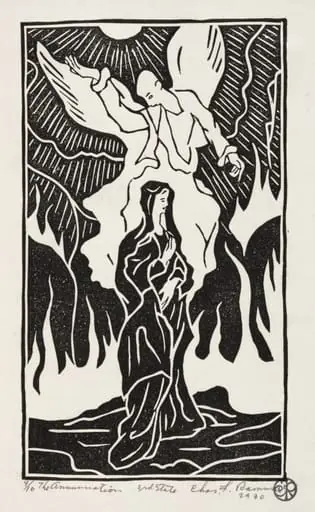 The Annunciation, Christmas Card for 1929
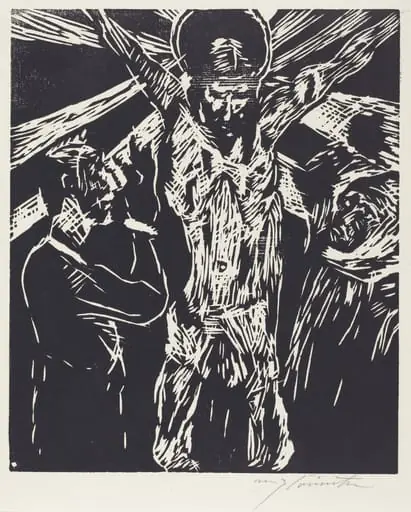 Christus am Kreuz (The Crucifixion)
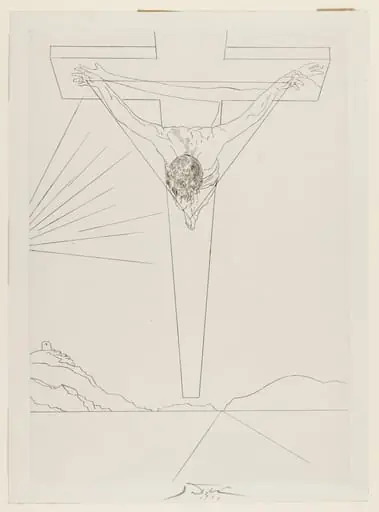 Untitled
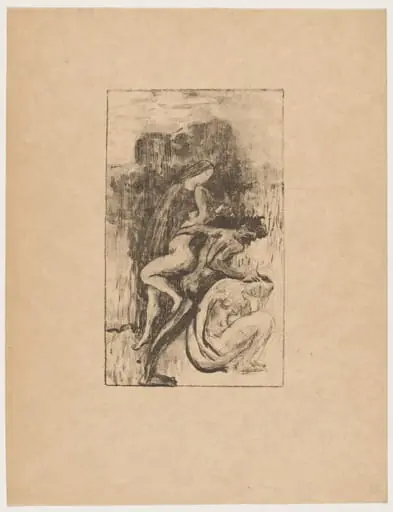 Fin de rêve
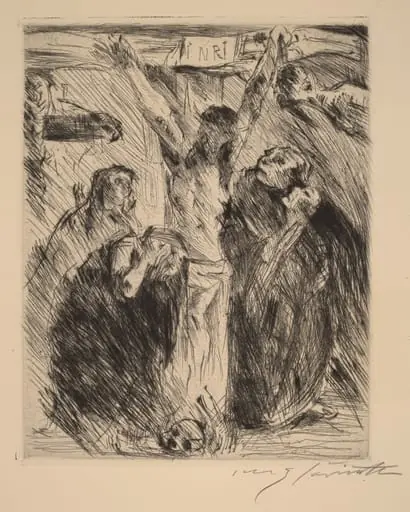 Kreuzigung, nach dem Altarbild in Tölz (Crucifixion, after the Altarpiece at Tölz)
 Untitled
 Small Flowers of Saint Francis
 Untitled
 Job's Sons and Daughters Overwhelmed by Satan
 Christ on the Cross
 Untitled