Artwork
The Man of Sorrows and His Mother
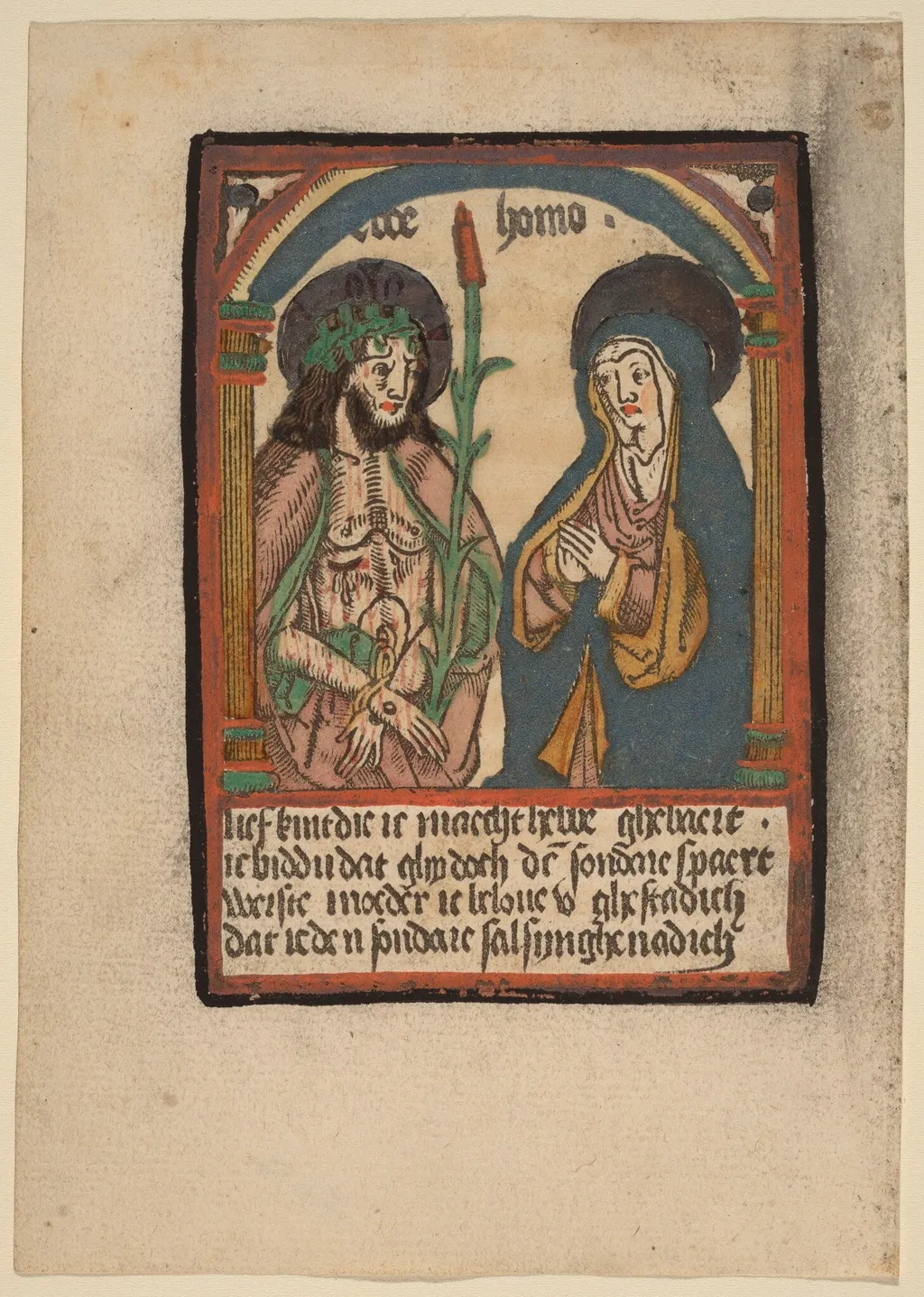
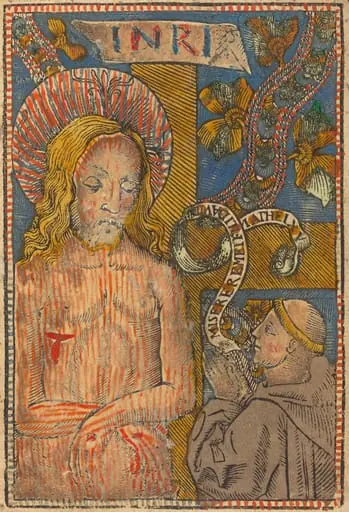
The Man of Sorrows and His Mother is an ink print by the Renaissance artist Netherlandish 15th Century. It is held in the collection of the National Gallery of Art.
About this work
Overview
The work is a hand‑colored woodcut on laid paper, depicting two standing figures beneath a blue arch adorned with gold stars and Latin inscriptions.
The work is a hand‑colored woodcut on laid paper, depicting two standing figures beneath a blue arch adorned with gold stars and Latin inscriptions. The left figure bears a crown of thorns and clutches a tall green plant, his flesh partially translucent to reveal skeletal structure. The right figure, cloaked in a dark hood, holds a small object in his hands. The composition is framed by decorative borders and vivid pigments.
Subject & Meaning
The left figure represents the suffering Christ, the exposed bones emphasizing mortality and the physical toll of the Passion. The crown of thorns and the green plant, likely a reed or staff, reinforce themes of sacrifice and redemption. The right figure is traditionally identified as the Virgin Mary, her somber attire and modest gesture suggesting maternal sorrow and intercession. Together they form a devotional pair intended to evoke contemplation of grief and faith.
Technique & Style
Created by carving a design into a wooden block, the image was printed on laid paper and subsequently hand‑colored with a palette that includes rose, blue, lilac, vermilion, mustard yellow, white, brown, and silver. The translucency of the flesh, achieved through delicate line work, allows the skeletal outline to emerge, a characteristic feature of late medieval devotional prints. The use of metallic silver adds a luminous quality to the background arch.
History & Provenance
The print belongs to the tradition of early modern religious woodcuts produced for private devotion and liturgical use. While the specific printer and date are not recorded, the combination of hand‑coloring and elaborate border motifs aligns with production practices of the 16th‑century Central European workshops that catered to a market for portable, illustrated piety.
Context
Such images were commonly displayed in homes or chapels to remind believers of Christ’s suffering and the Virgin’s compassion. The inclusion of Latin text above and below the arch would have provided scriptural or liturgical references, reinforcing the work’s role as a visual aid for meditation within the broader devotional culture of the period.
Artist & collection

Artist
These prints show Christ’s suffering in bold, hand-colored images from 15th-century Northern Europe.

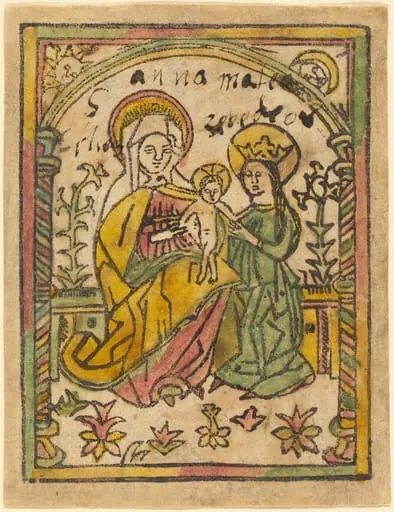 Saint Anne with the Madonna and Child
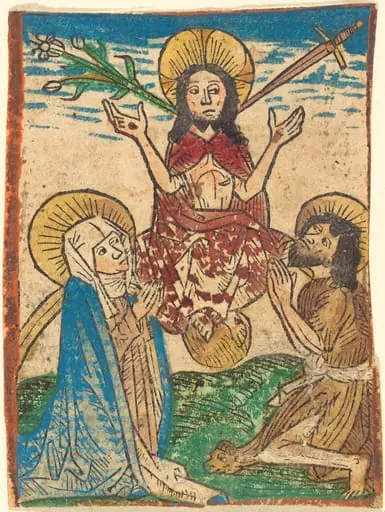 Last Judgment
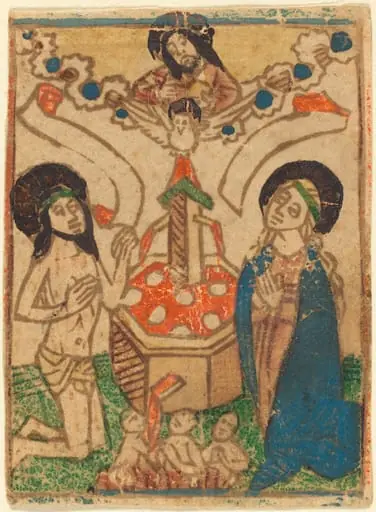 Allegory of the Eucharist
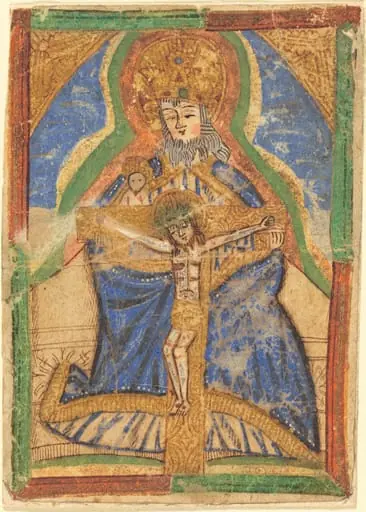 The Trinity
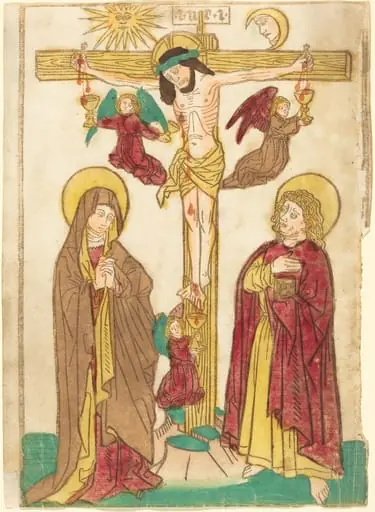 Christ on the Cross with Angels
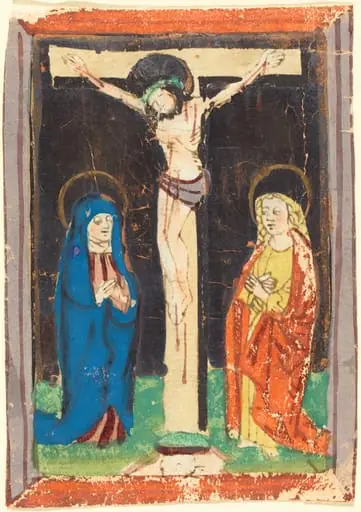 Christ on the Cross
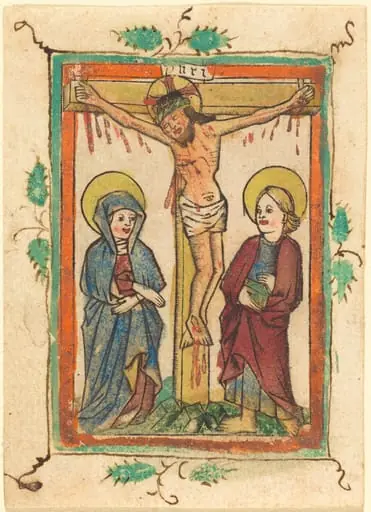 The Crucifixion
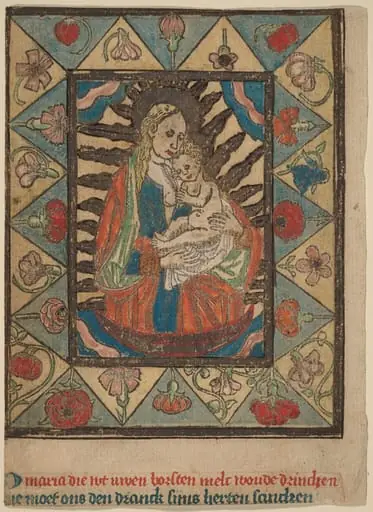 The Madonna and Child
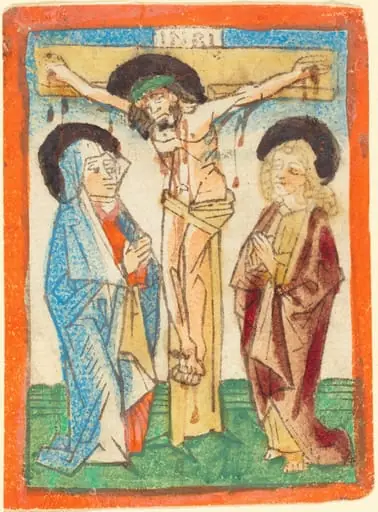 Christ on the Cross
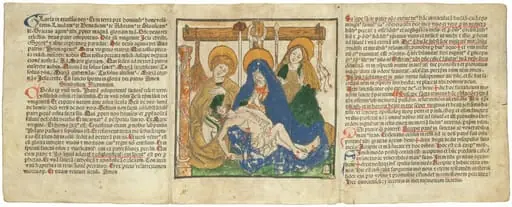 A Canon Table with a Lamentation (formerly known as the "Traveling Altar")
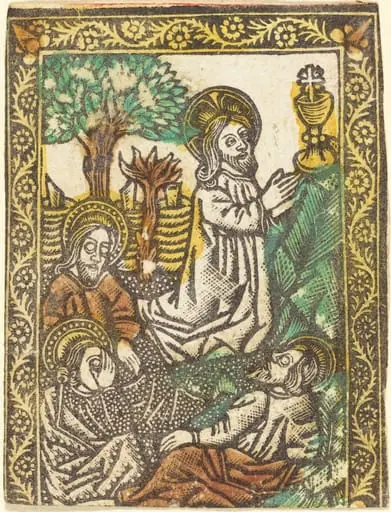 Christ on the Mount of Olives
 The Man of Sorrows with a Franciscan