Artwork
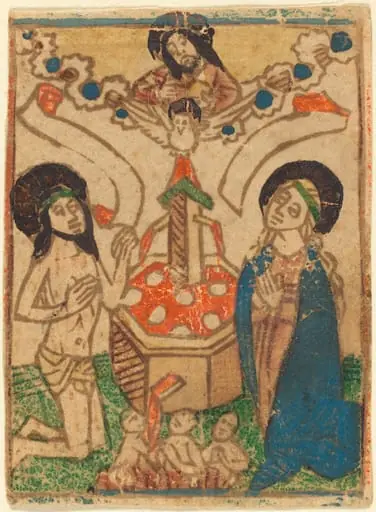
The Trinity
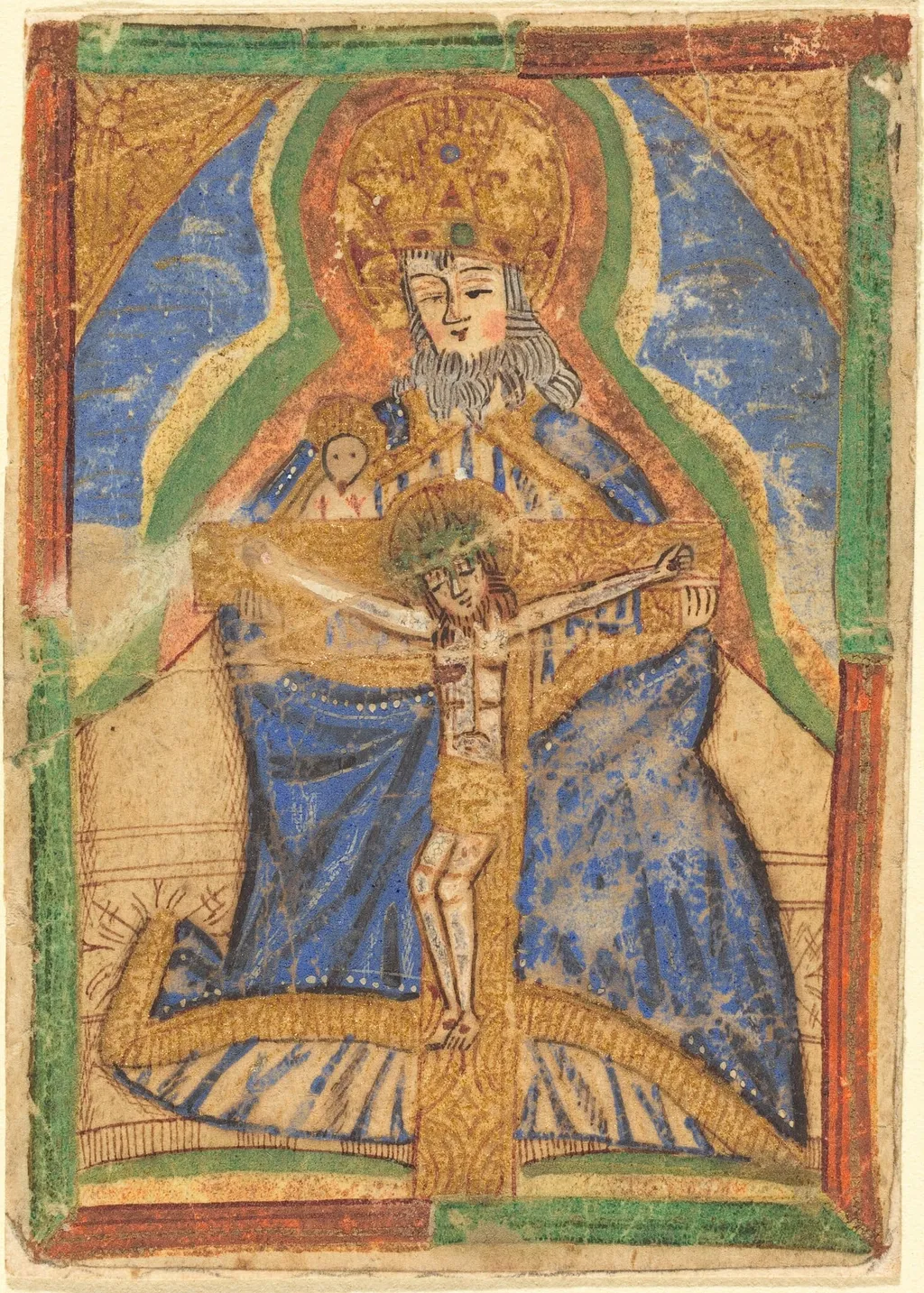
The Trinity is an ink print by the Renaissance artist German 15th Century. It dates from 1500 and is held in the collection of the National Gallery of Art.
About this work
Overview
Bright pigments—blue, orange, yellow, green, white, black, gold and silver—highlight the composition, though the overall surface shows signs of age and wear.
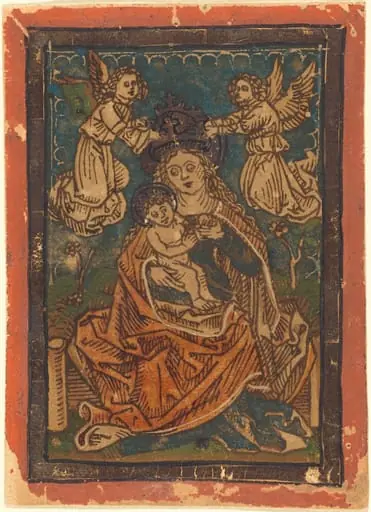
The Trinity is a hand‑colored woodcut print that presents a central, haloed figure cradling a smaller child‑like figure, with a kneeling figure positioned below. Bright pigments—blue, orange, yellow, green, white, black, gold and silver—highlight the composition, though the overall surface shows signs of age and wear. A simple ornamental border frames the scene, emphasizing its devotional character.
Subject & Meaning
The central figure, likely representing the divine, holds a youthful figure that can be interpreted as the Christ Child, while the kneeling attendant suggests worship or supplication. The arrangement reflects traditional Christian iconography of the Holy Trinity, conveying themes of divine protection, intercession, and the relationship between the divine and the faithful.
Technique & Style
Executed as a woodcut, the image was carved in relief on a wooden block, inked, and pressed onto paper before being hand‑colored with vivid pigments, including metallic gold and silver. The style is characterized by flat, bold outlines and simplified forms, typical of early printmaking, which lends the work a graphic clarity and a timeless, schematic quality.
History & Provenance
The print’s precise origin and creator are not documented in the supplied data, but its use of multiple colors and the subject matter align it with devotional prints popular in Europe from the late medieval period through the early modern era. Its current location and ownership remain unspecified, indicating that further archival research would be needed to trace its provenance.
Artist & collection

Artist
This 15th-century German artist carved vivid religious scenes into metal and wood, then hand-painted them in bright, symbolic colors.

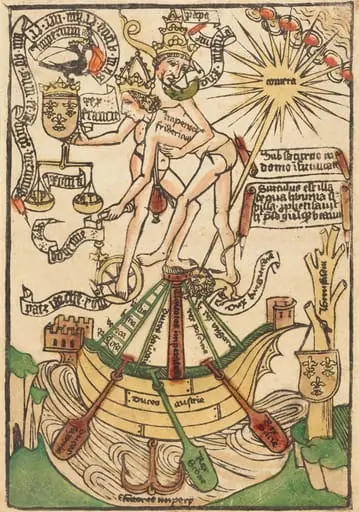 Allegory of the Meeting of Pope Paul II and Emperor Frederick III
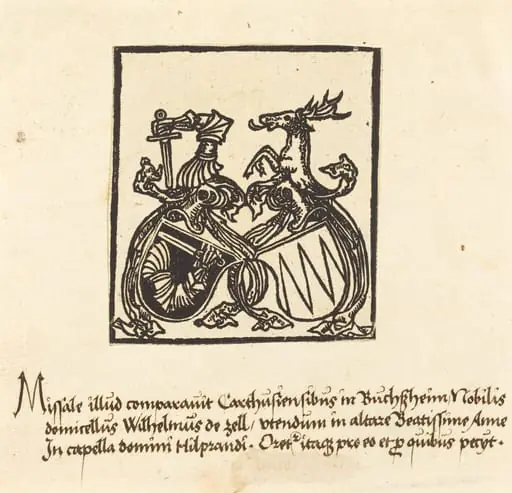 Bookplate of Wilhelm von Zell
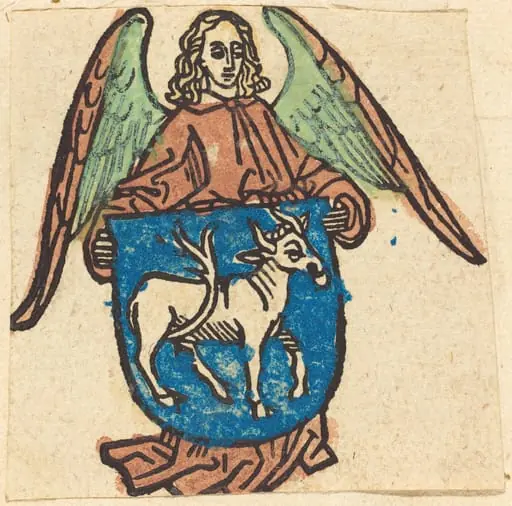 Bookplate of Hilprand Brandenburg of Bibrach
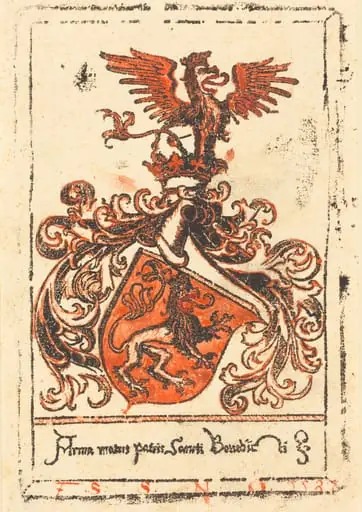 Bookplate of the Abbey of Ottobeuren
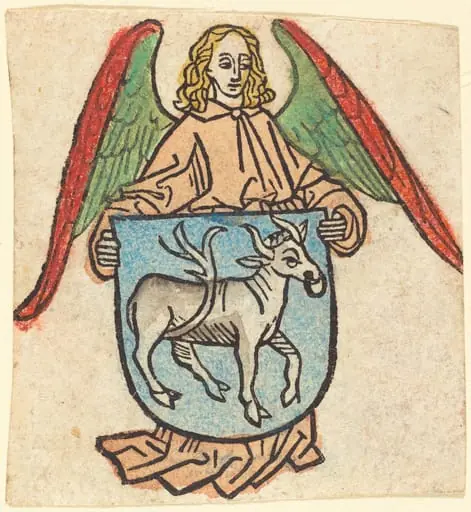 Bookplate of Hilprand Brandenburg of Bibrach
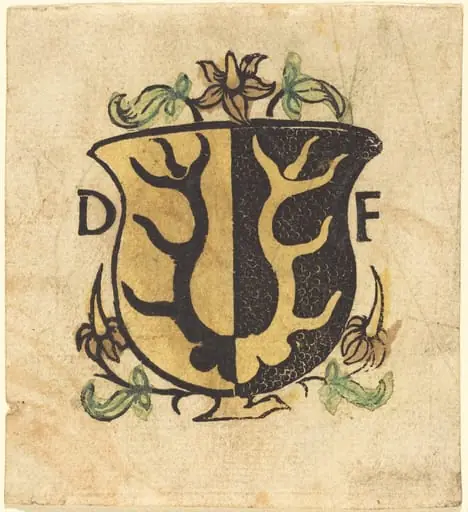 Bookplate of Dominicus Frauenfelder
![Studies for Six Figures (sheet from a model book) [recto], by German 15th Century](https://artifactworldgallery.com/img/german-15th-century--studies-for-six-figures-sheet-from-a-model-book-recto--4837429e0755bc3f-w320.webp) Studies for Six Figures (sheet from a model book) [recto]
Studies for Six Figures (sheet from a model book) [recto]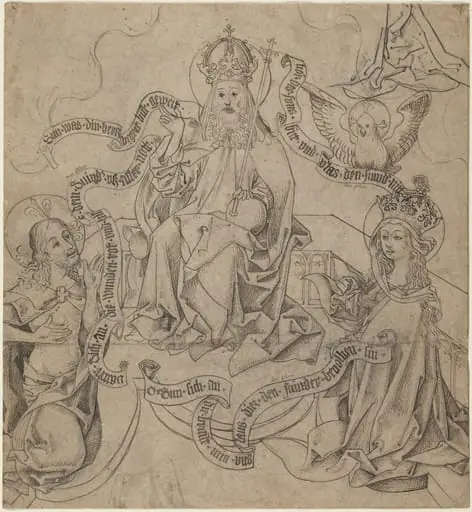 Christ and Mary Interceding with God the Father
![The Crucifixion [verso], by French 12th Century](https://artifactworldgallery.com/img/french-12th-century--the-crucifixion-verso--cef697082a2df4f0-w320.webp)