Artwork
A Canon Table with a Lamentation (formerly known as the "Traveling Altar")
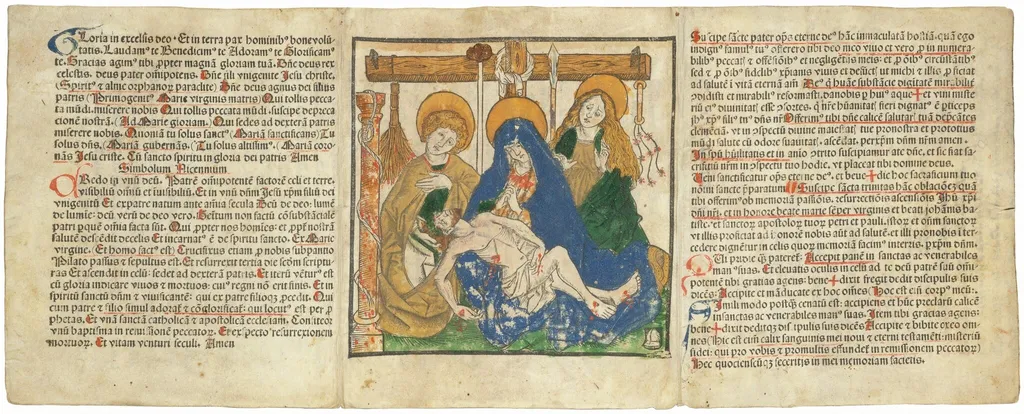
A Canon Table with a Lamentation (formerly known as the "Traveling Altar") is an ink print by the Renaissance artist Lienhart Ysenhut. It dates from 1490 and is held in the collection of the National Gallery of Art.
About this work
Overview
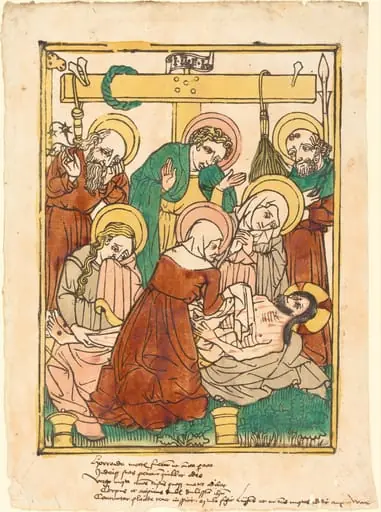
A Canon Table with a Lamentation is a 15th-century woodcut print on parchment, attributed to Lienhart Ysenhut and dated circa 1490. Originally referred to as the 'Traveling Altar', this artwork combines visual and textual elements within a triptych format.
Subject & Meaning
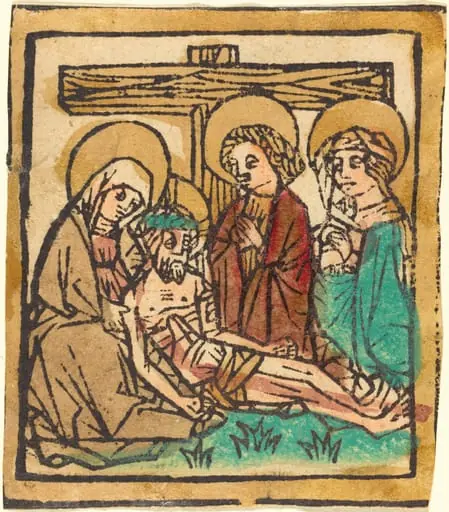
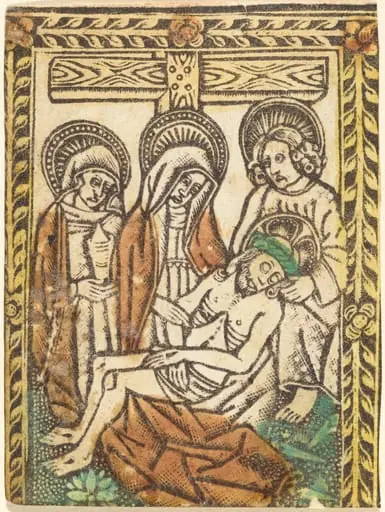
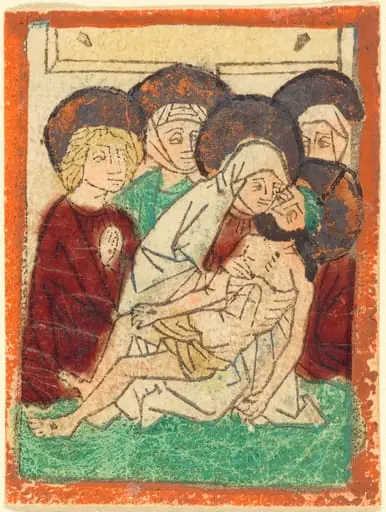
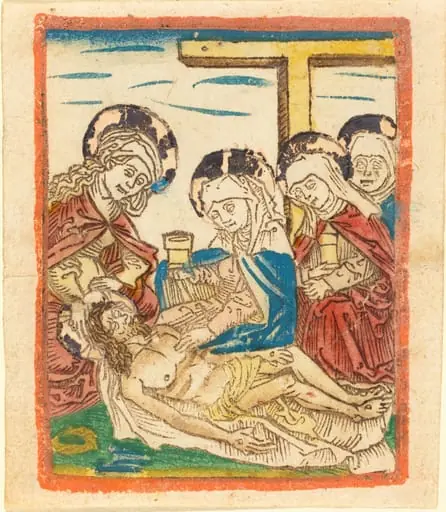
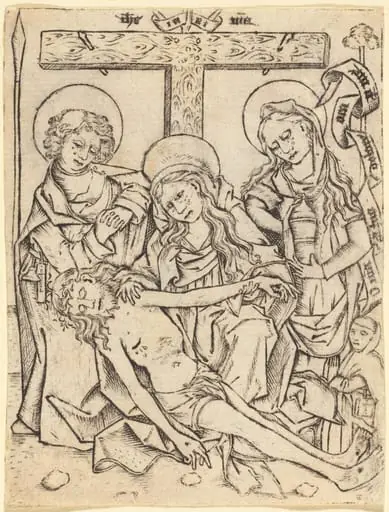
The central image depicts a Lamentation scene with three kneeling figures, dressed in distinctive robes (blue, red and gold, and green), surrounding a cloth-wrapped body. Set within a plain background with minimal landscape elements, the scene conveys a somber, religious narrative.
Technique & Style
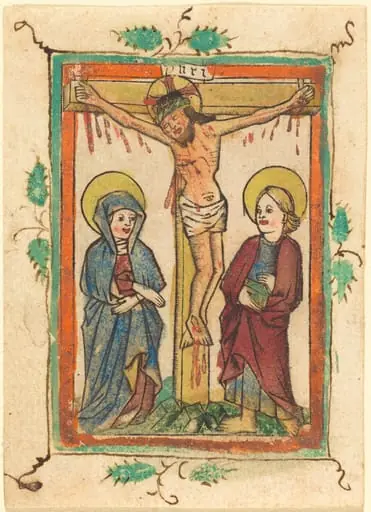
Executed as a woodcut in black, the image features hand coloring with bright, flat areas of color and no shading. The style reflects the characteristic simplicity and two-dimensionality of late medieval woodcut prints.
History & Provenance
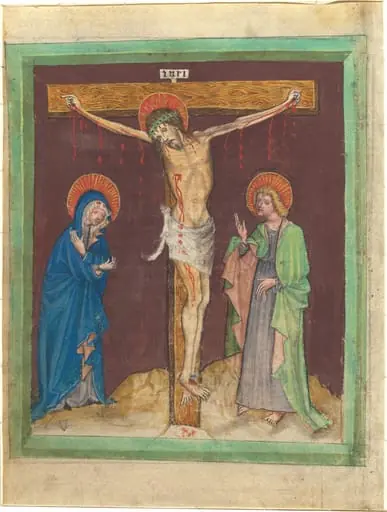
Initially part of a larger book with Latin text in red and black ink, the work was later reconfigured into a triptych with printed text panels. It is now housed in a complex, ornately decorated container system including a slipcase with an embroidered Crucifixion and a protective velvet, silk, and linen box.
Context
Created during the late Gothic period, this work exemplifies the era's devotion to religious themes and the emerging use of woodcuts for disseminating imagery. Its original book context suggests use in personal or portable devotion.
Artist & collection