Artwork
Saint Jerome (?)
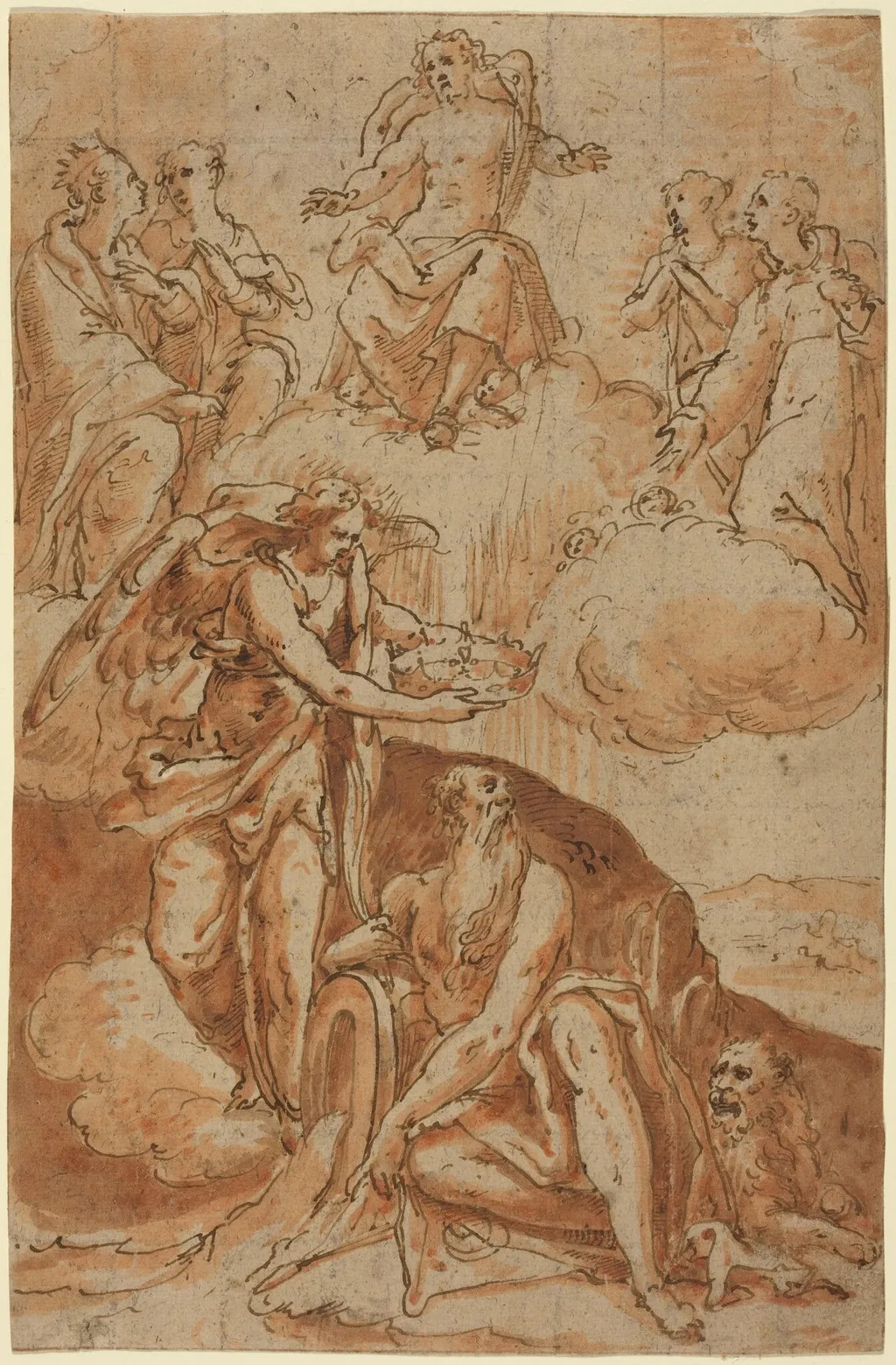
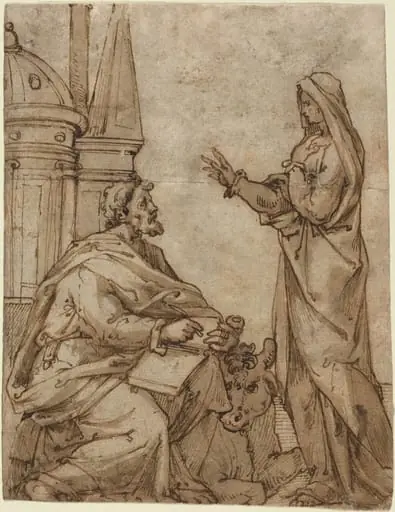
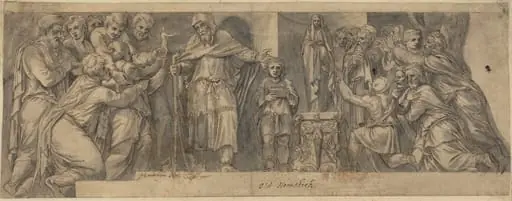
Saint Jerome (?) is an ink drawing by the Renaissance artist Netherlandish 16th Century. It dates from 1501 and is held in the collection of the National Gallery of Art.
About this work
Overview
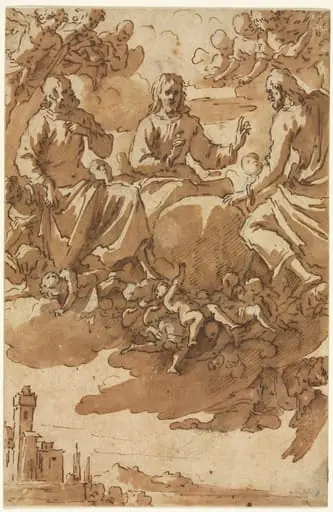
The work, identified as a drawing of Saint Jerome, is executed in pen and brown ink with additional brown and peach washes, all laid on a surface prepared with black chalk. Executed as a quick study, the piece measures only a few inches and presents a loosely rendered group of figures, including a kneeling figure with a bowl, a seated figure accompanied by a lion, and several onlookers in the background.
Subject & Meaning
The composition centers on the traditional iconography of Saint Jerome, recognizable by the presence of a lion, a symbol linked to the saint’s legend. The kneeling figure holding a bowl may refer to Jerome’s ascetic practices, while the surrounding figures appear to observe or react, suggesting a narrative moment that captures the saint’s contemplative solitude amid a communal setting.
Technique & Style
Brown and peach washes add tonal variation without obscuring the underlying line work, while the black chalk underdrawing provides a faint structural grid.
The artist employed a rapid, gestural approach, using uneven pen strokes and cross‑hatching to model form and suggest volume. Brown and peach washes add tonal variation without obscuring the underlying line work, while the black chalk underdrawing provides a faint structural grid. This combination of ink, wash, and chalk creates a sense of immediacy, typical of preparatory sketches rather than finished paintings.
Context
Such sketches were commonly produced as studies for larger compositions or as exercises in figure arrangement and narrative planning. The use of modest materials—pen, ink, wash, and chalk—reflects a practice-oriented setting, likely within an artist’s workshop where ideas were explored quickly before being transferred to a more permanent medium.
Artist & collection

Artist
This artist carved scenes with fine lines, mostly religious and mythological ones.

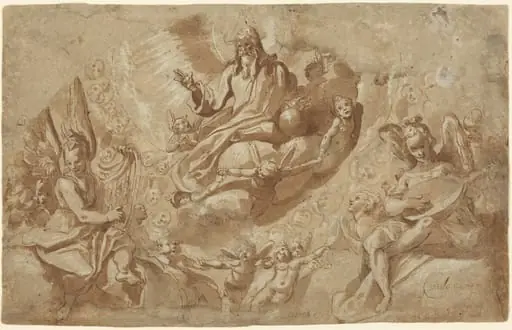 God the Father and Angels on Clouds
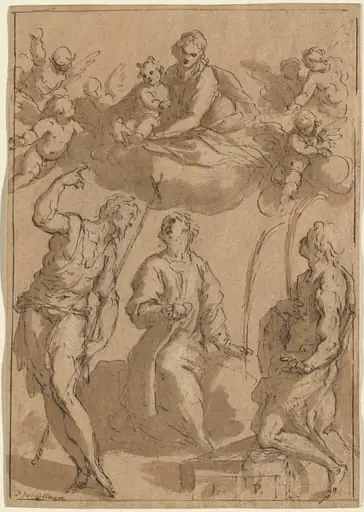 Madonna and Child in Glory with Saints John the Baptist, Stephen, and Lawrence
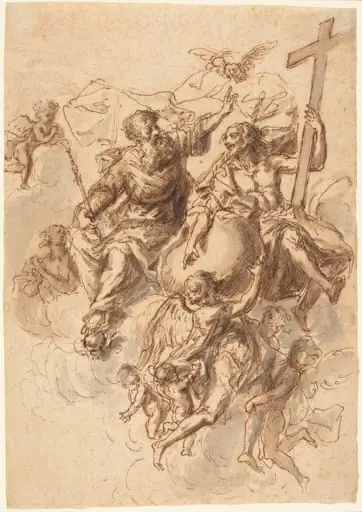 The Trinity Surrounded by Angels
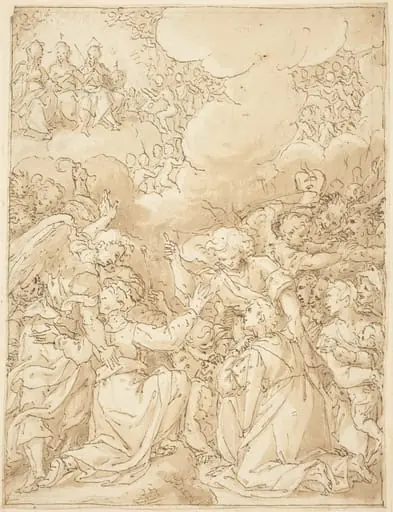 The Last Judgment
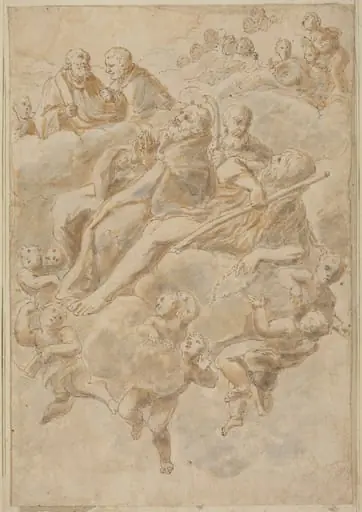 Ecstasy of a Saint
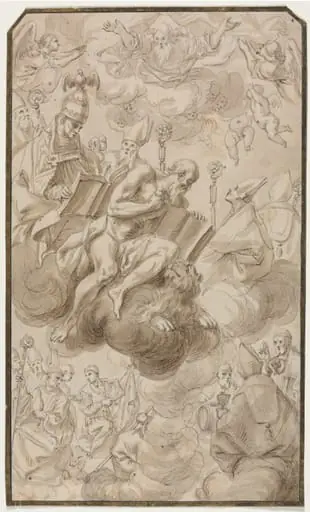 Ascension of Saint Jerome
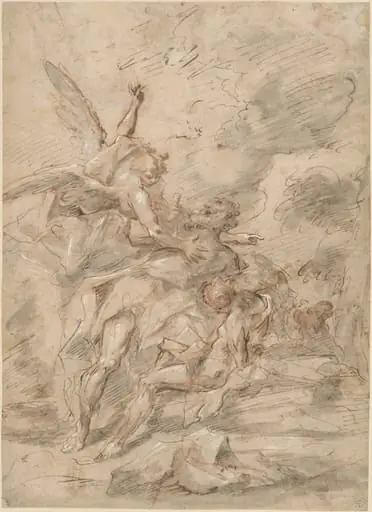 The Sacrifice of Isaac
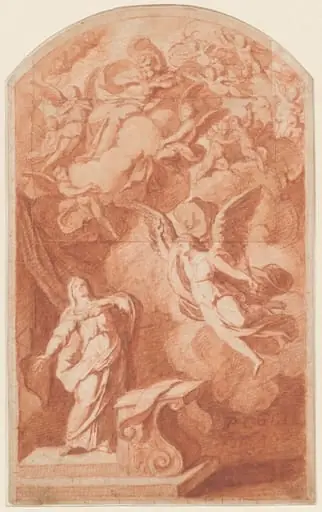 The Annunciation
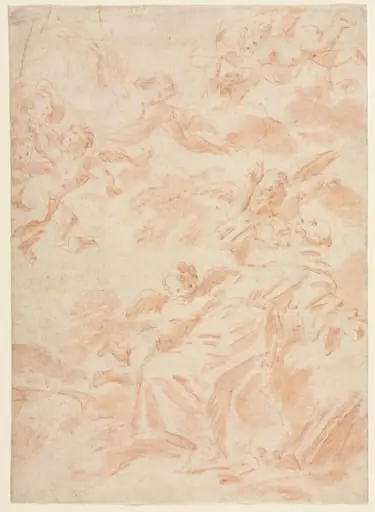 The Stigmatization of Saint Francis
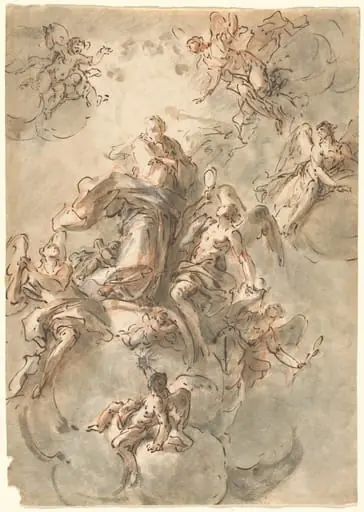 Virgin of the Immaculate Conception
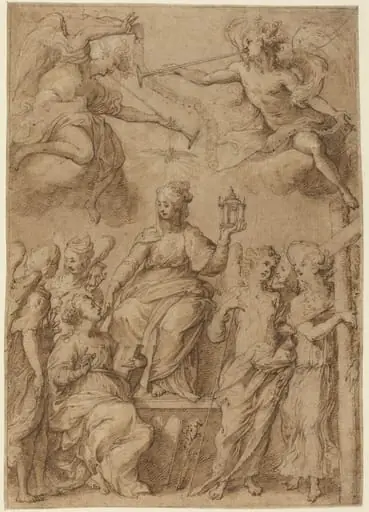 Ecclesia Surrounded by Angels Holding the Instruments of the Passion
 Christ in Glory with Two Saints