Artwork
Untitled
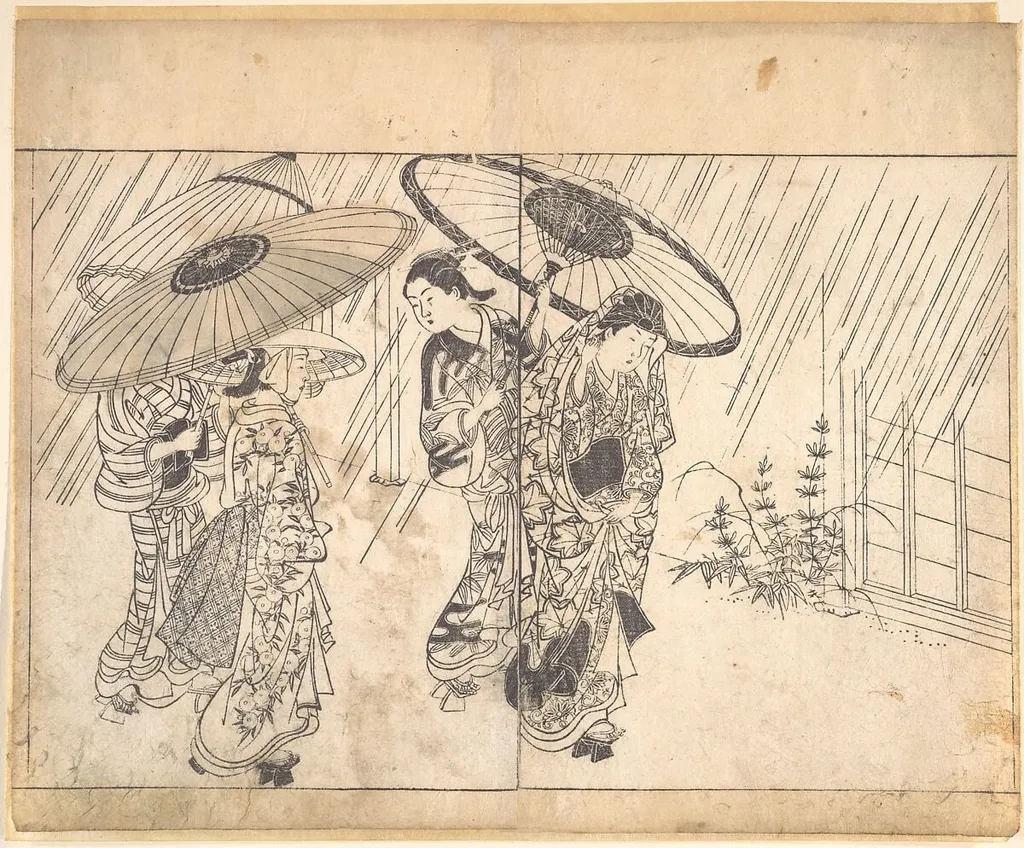
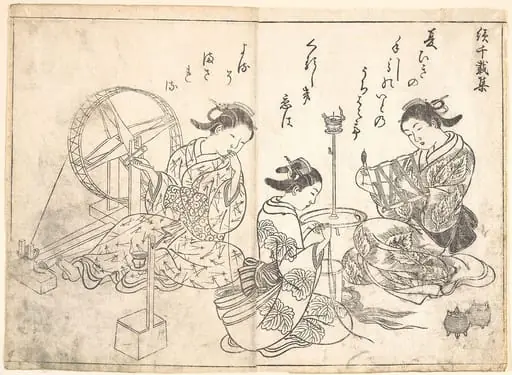
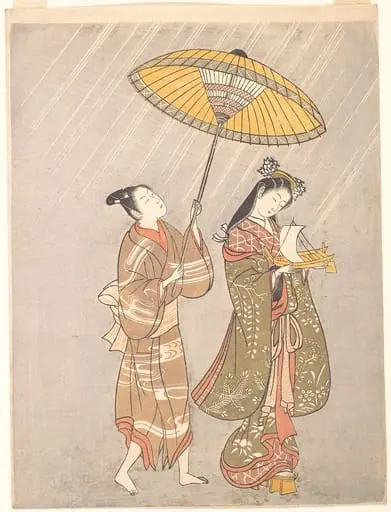
Untitled is an ink print by the Baroque artist Nishikawa Sukenobu. It dates from 1731 and is held in the collection of the Metropolitan Museum of Art.
About this work
Overview
Created in 1731 by Nishikawa Sukenobu, this woodblock print is a quiet depiction of everyday life in Edo-period Japan.
Created in 1731 by Nishikawa Sukenobu, this woodblock print is a quiet depiction of everyday life in Edo-period Japan. Executed in ink and color on paper, it belongs to the ukiyo-e tradition of genre scenes. The work is part of the collection at The Metropolitan Museum of Art, where it reflects the artist’s skill in capturing subtle moments of daily existence through precise, delicate printing techniques.
Subject & Meaning
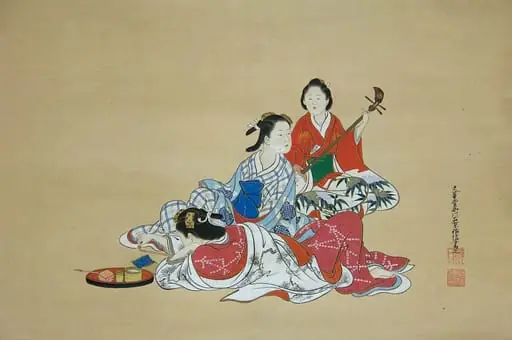
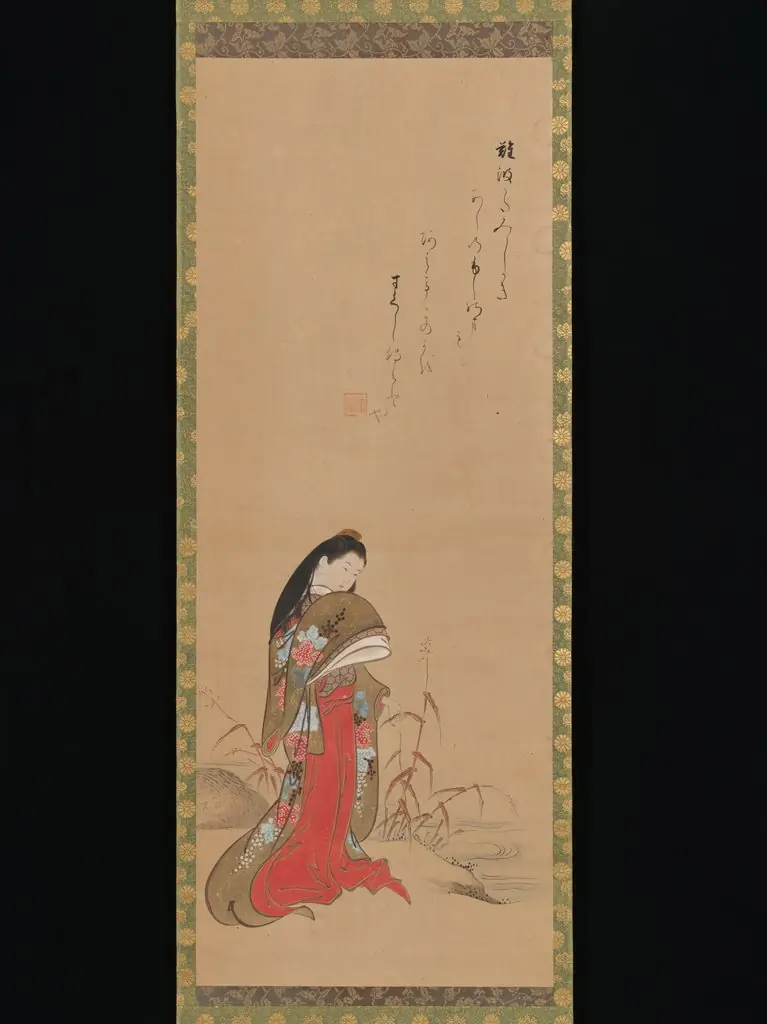
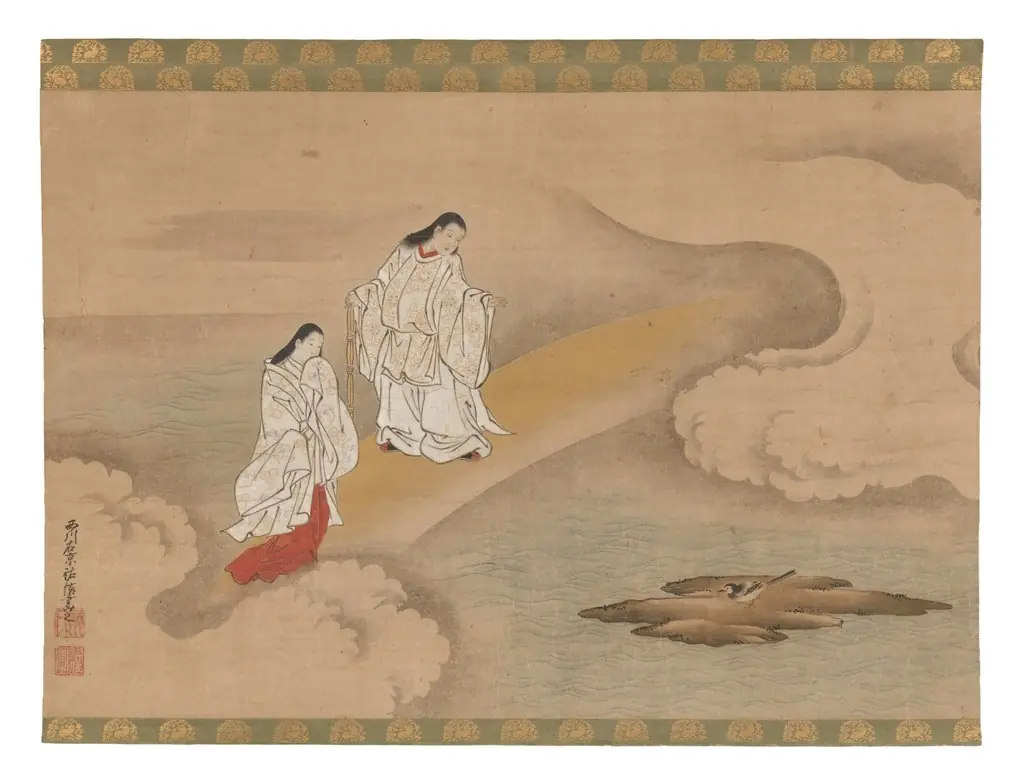
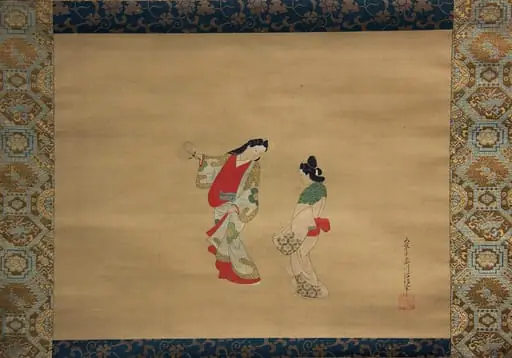
Two women, dressed in elaborately patterned robes, walk together beneath umbrellas as rain falls. One carries a folded fan, suggesting a moment of pause or preparation. The scene conveys no dramatic narrative, instead emphasizing the rhythm of ordinary movement. A small plant near a window hints at an interior space, grounding the figures in a domestic environment, perhaps evoking the quiet solitude of urban life during inclement weather.
Technique & Style
Sukenobu employed fine, controlled lines to suggest texture and depth, particularly in the folds of fabric and the slant of rain. The umbrellas and garments appear light and fluid, achieved through minimal yet deliberate ink washes and selective color application. Cross-hatching and thin contour lines model form without heavy shading, characteristic of early 18th-century ukiyo-e printmaking, where subtlety replaced boldness.
History & Provenance
The print was produced during a period when woodblock prints increasingly depicted scenes of common life, moving beyond portraits of actors and courtesans. Sukenobu, known for his refined compositions, contributed to this shift. The work entered The Metropolitan Museum of Art’s collection through documented acquisitions, preserving its place within the broader canon of Japanese print culture.
Context
In early 1700s Edo, urban culture flourished, and prints like this one catered to a growing middle-class audience seeking relatable imagery. Rain scenes were common in literature and art, symbolizing transience and quiet reflection. Sukenobu’s focus on women in motion aligns with contemporary interest in private, feminine spaces, contrasting with the more public themes of other ukiyo-e artists.
Legacy
This print exemplifies the transition in ukiyo-e from theatrical subjects to intimate, observational scenes. Its restrained palette and attention to atmospheric detail influenced later artists who prioritized mood over spectacle. Though not widely reproduced, it remains a key example of Sukenobu’s contribution to the evolution of narrative printmaking in Japan.
Artist & collection

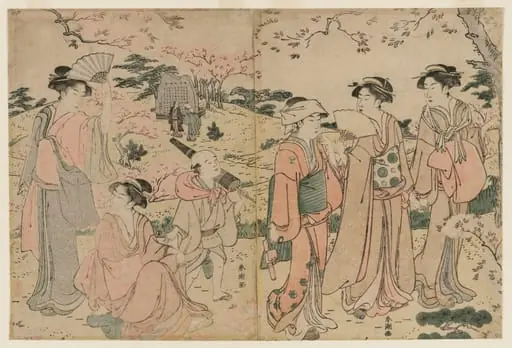 Women Viewing Cherry Blossoms at Asukayama
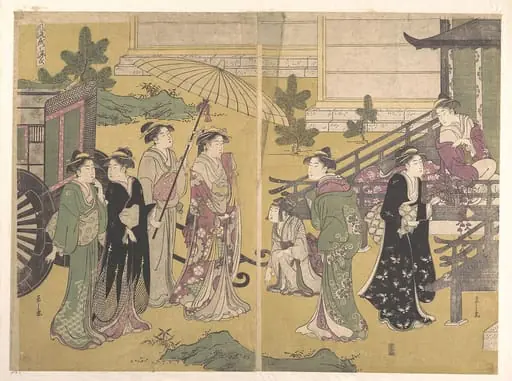 Untitled
 Amagoi Komachi|Komachi Praying for Rain
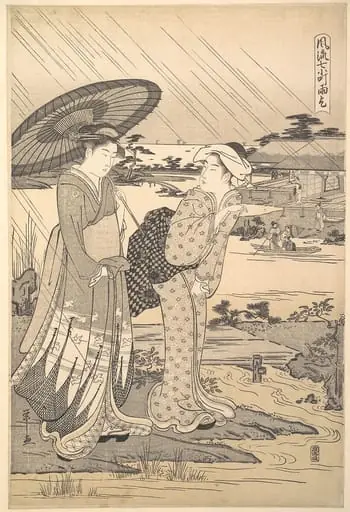 Amagoi|Ono no Komachi Praying for Rain
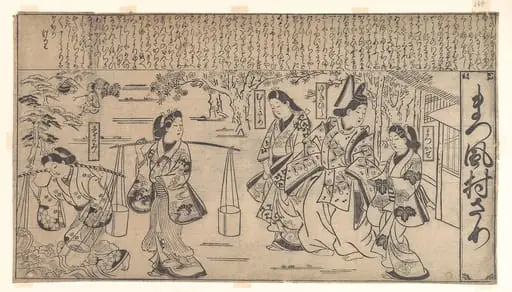 Untitled
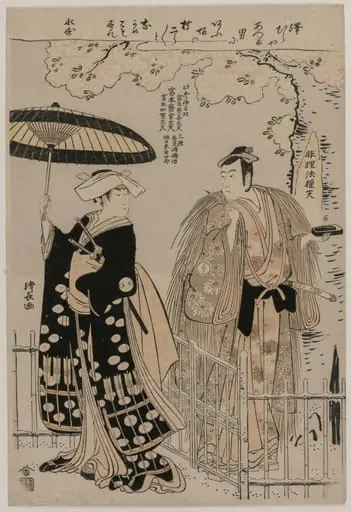 Sawamura Sojuro III and Arashi Murajiro as Kusunoki Masatsura and Koto no Naishi
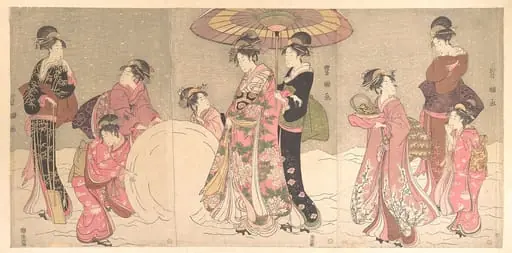 歌川豊国画 雪こかし|Courtesans and Attendants Making a Giant Snowball
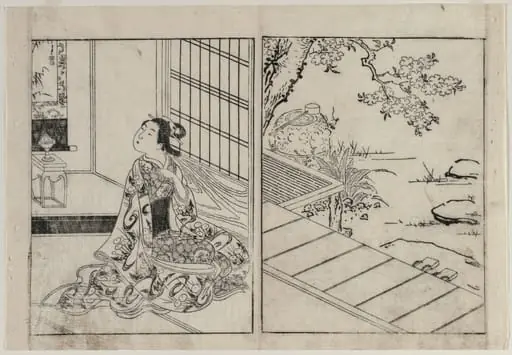 Woman Looking at a Hanging Scroll
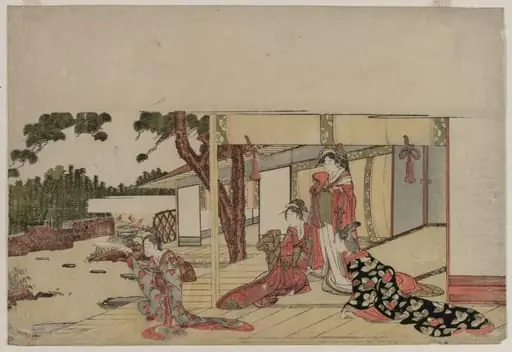 Women on a Veranda
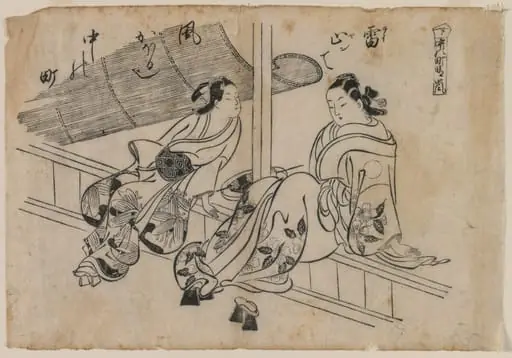 Twilight at Nakanocho
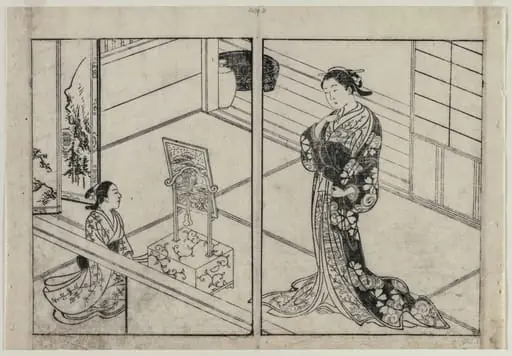 Woman and Child Beside a Mirror Stand
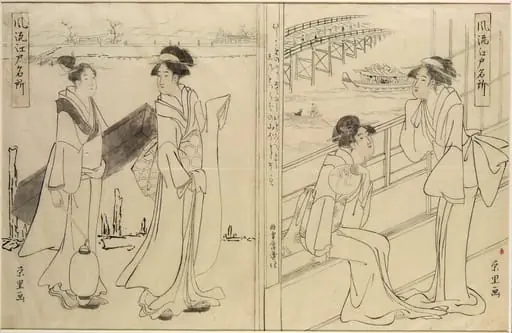 Two pairs of beauties - one at a window, the other taking a walk