Artwork
歌川豊国画 雪こかし|Courtesans and Attendants Making a Giant Snowball
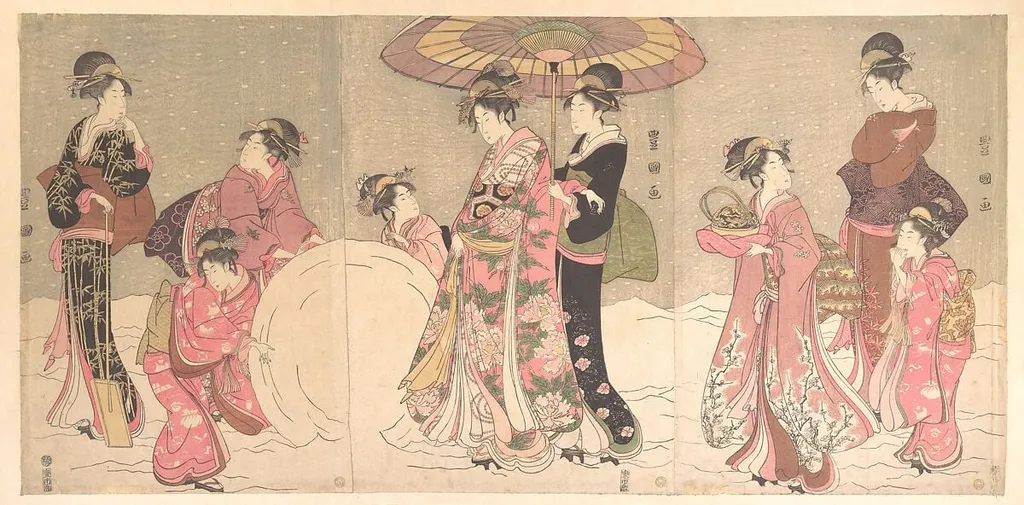
歌川豊国画 雪こかし|Courtesans and Attendants Making a Giant Snowball is an ink print by the Romanticist artist Utagawa Toyokuni I. It dates from 1796 and is held in the collection of the Metropolitan Museum of Art.
About this work
Overview
Executed in ink and color on paper, the work is part of the ukiyo-e tradition of Japanese woodblock printing.
Created around 1796, this triptych by Utagawa Toyokuni I depicts a winter scene of courtesans and their attendants engaged in a playful snowball-making activity. Executed in ink and color on paper, the work is part of the ukiyo-e tradition of Japanese woodblock printing. It is currently held in the collection of The Metropolitan Museum of Art, where it exemplifies the genre’s capacity to capture everyday moments with elegance and wit.
Subject & Meaning
The scene portrays elite courtesans, typically associated with formal entertainment, in an informal, seasonal pastime. Their interaction with snow—rolling a large ball, gathering it in baskets, and a child bending to collect flakes—suggests a rare moment of unguarded leisure. The setting subverts expectations of their public roles, offering a glimpse into private winter recreation, subtly humanizing figures often confined to stylized portrayals.
Technique & Style
Toyokuni employed bold outlines and flat areas of vivid color—pink, green, and black—to define the figures and their ornate garments. Patterns on the robes are rendered with delicate linework, contrasting with the soft, diffuse background of falling snow and distant mountains. The composition balances dynamic movement with rhythmic repetition, using the triptych format to extend the scene spatially while maintaining visual harmony.
History & Provenance
The print was produced during Toyokuni’s peak years in Edo, when demand for ukiyo-e depicting courtesans and urban life was high. It entered The Metropolitan Museum of Art’s collection through documented acquisitions of Japanese prints in the early 20th century. Its preservation reflects its significance as an example of late 18th-century genre printing, though its specific early ownership history remains largely undocumented.
Context
This work emerged during a period when ukiyo-e artists increasingly focused on scenes of daily life beyond theater and brothels. Winter activities, though less common in prints, were valued for their seasonal symbolism and visual contrast. Toyokuni’s depiction aligns with broader trends in Edo-period art that sought to blend social observation with decorative appeal, reflecting urban culture’s fascination with fleeting, intimate moments.
Legacy
Toyokuni’s playful treatment of courtesans in domestic settings influenced later artists in the Utagawa school, who expanded genre scenes into more narrative forms. While not as widely reproduced as his actor prints, this triptych remains a notable example of how everyday winter customs were rendered with dignity and charm. It continues to inform scholarly understanding of gender, leisure, and visual culture in late Edo Japan.
Artist & collection

Artist
Toyokuni was a born showman who made sure the energy of Edo’s kabuki stage never faded on paper.

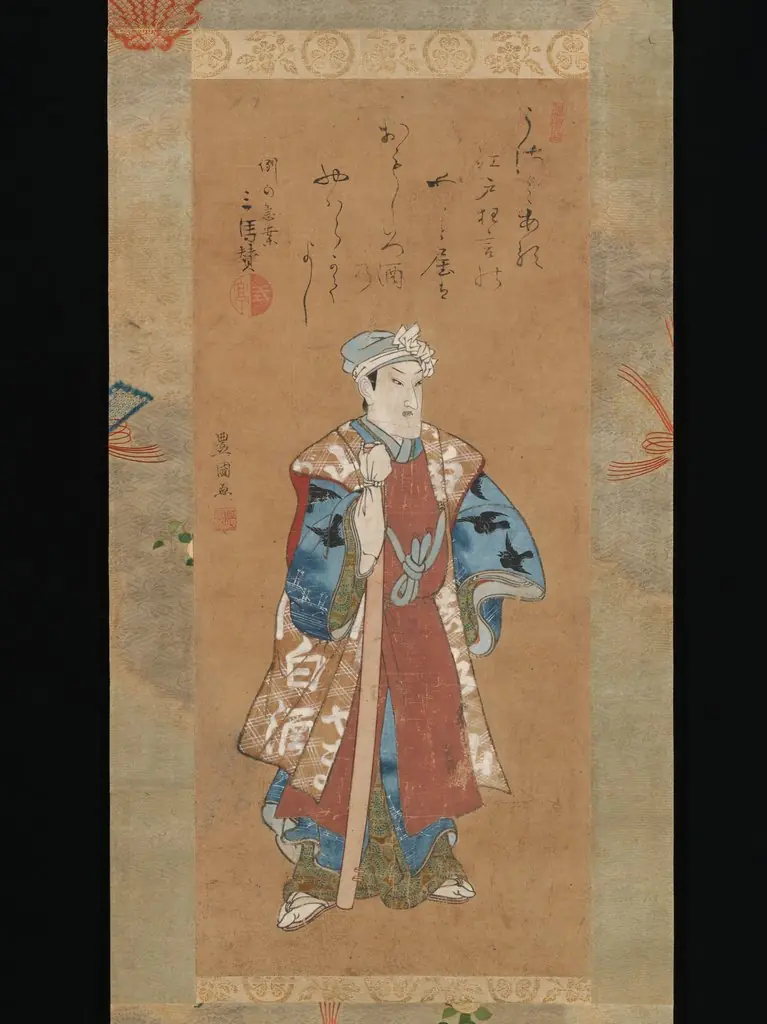 Bandō Mitsugorō II as Shinbei in the Kabuki Play "Sukeroku"
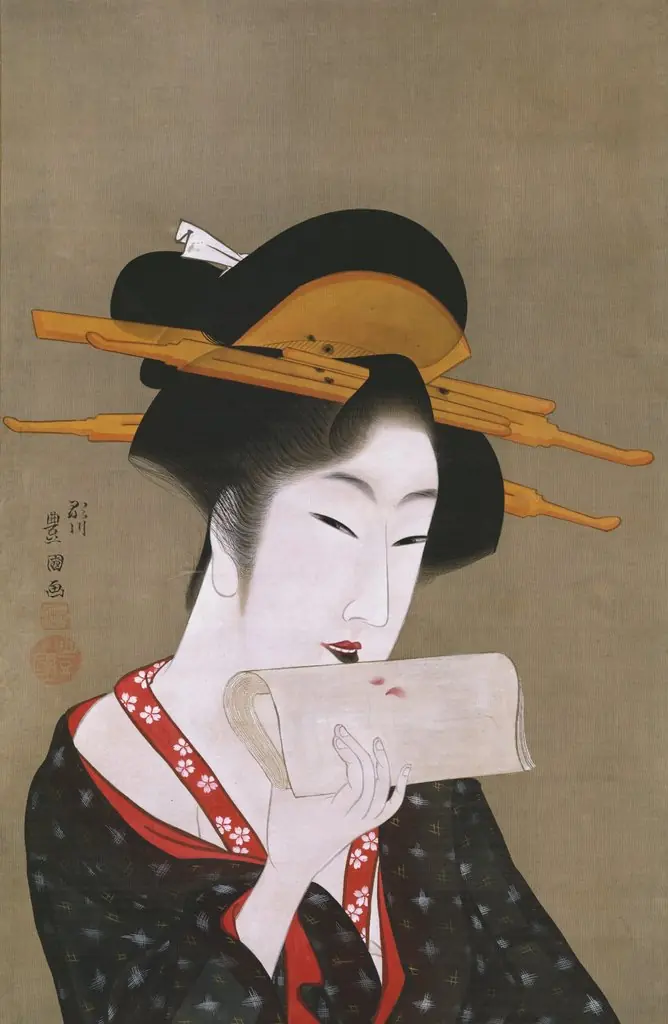 Beauty Blotting Her Lip Rouge
 Portrait of Kinokuniya Bunzaemon
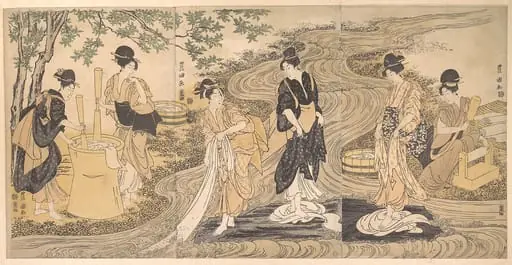 Untitled
 Tokaido Yotsuya Kaidan|Onoe Matsusuke as the Ghost of the Murdered Wife Oiwa, in "A Tale of Horror from the Yotsuya Station on the Tokaido Road"
 Untitled
 Untitled
 娘道成寺図の錦絵|Print of a Kabuki Dancer from the Maiden of the Dōjōji Temple (Musume Dōjōji)
 Untitled
 Untitled
 Untitled
 Untitled
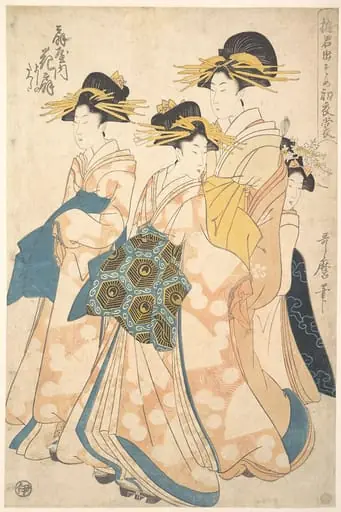 遊君出そめ初衣裳 扇屋内花扇|The Oiran Hanaogi of Ogiya attended by Two Shinzo and Her Kamuro Yoshino
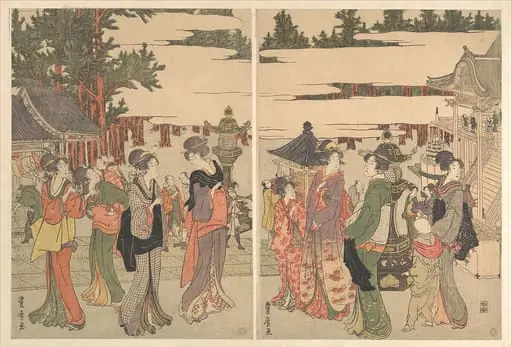 Untitled
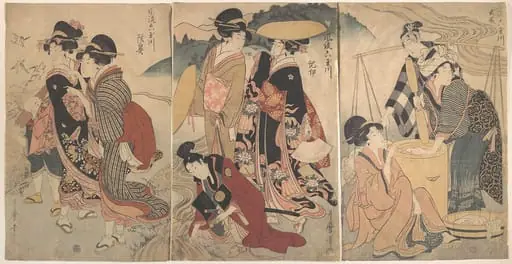 風流六玉川 武蔵 紀伊 陸奥|Women and a Man in the Country; Some pageant(?)
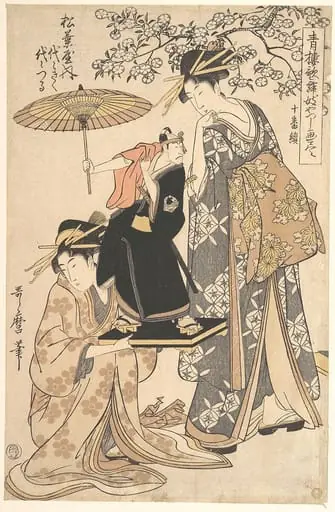 青楼歌舞妓やつし画尽 十番続|The Oiran Yoyogiku of Matsubaya Standing under a Cherry Tree
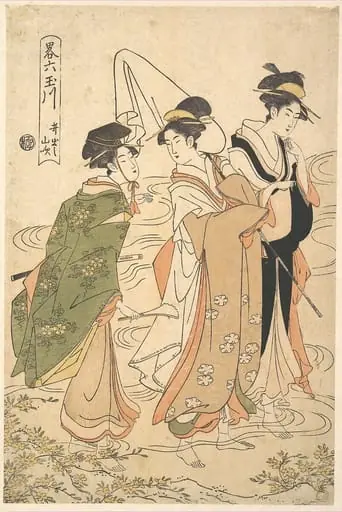 礫川亭永理 (鳥橋斎栄里)画 「畧六玉川 井出の山吹」|Mountain Roses of Ide (Ide no Yamabuki), from the series A Parodic Six Jewel Rivers (Yatsushi Mu-Tamagawa)
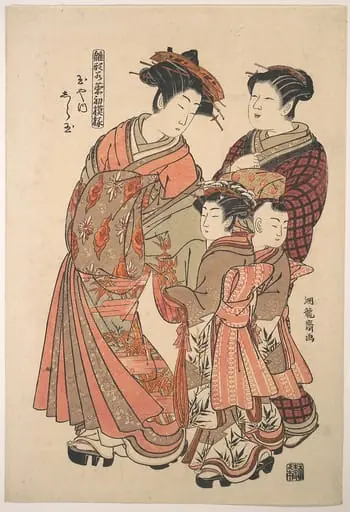 『雛形若菜初模様 玉や内 しら玉』|The Courtesan Shiratama of the Tamaya Brothel, from the series “A Pat-tern Book of the Year’s First Designs, Fresh as Spring Herbs” (“Hinagata wakana hatsu moyō”)
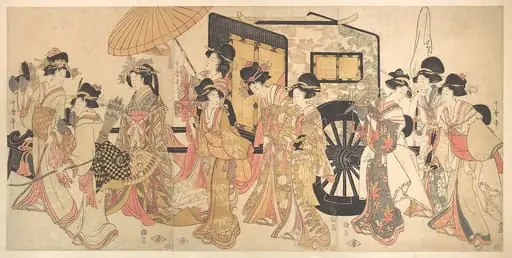 喜多川歌麿画 御所車見立て行列|Courtesans Imitating a Court Procession
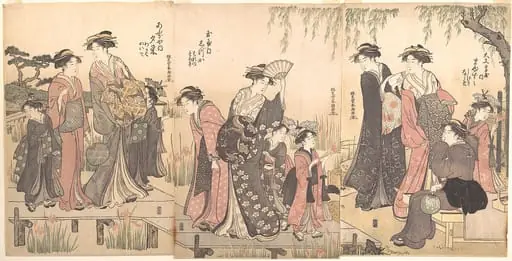 Untitled