Artwork
Untitled
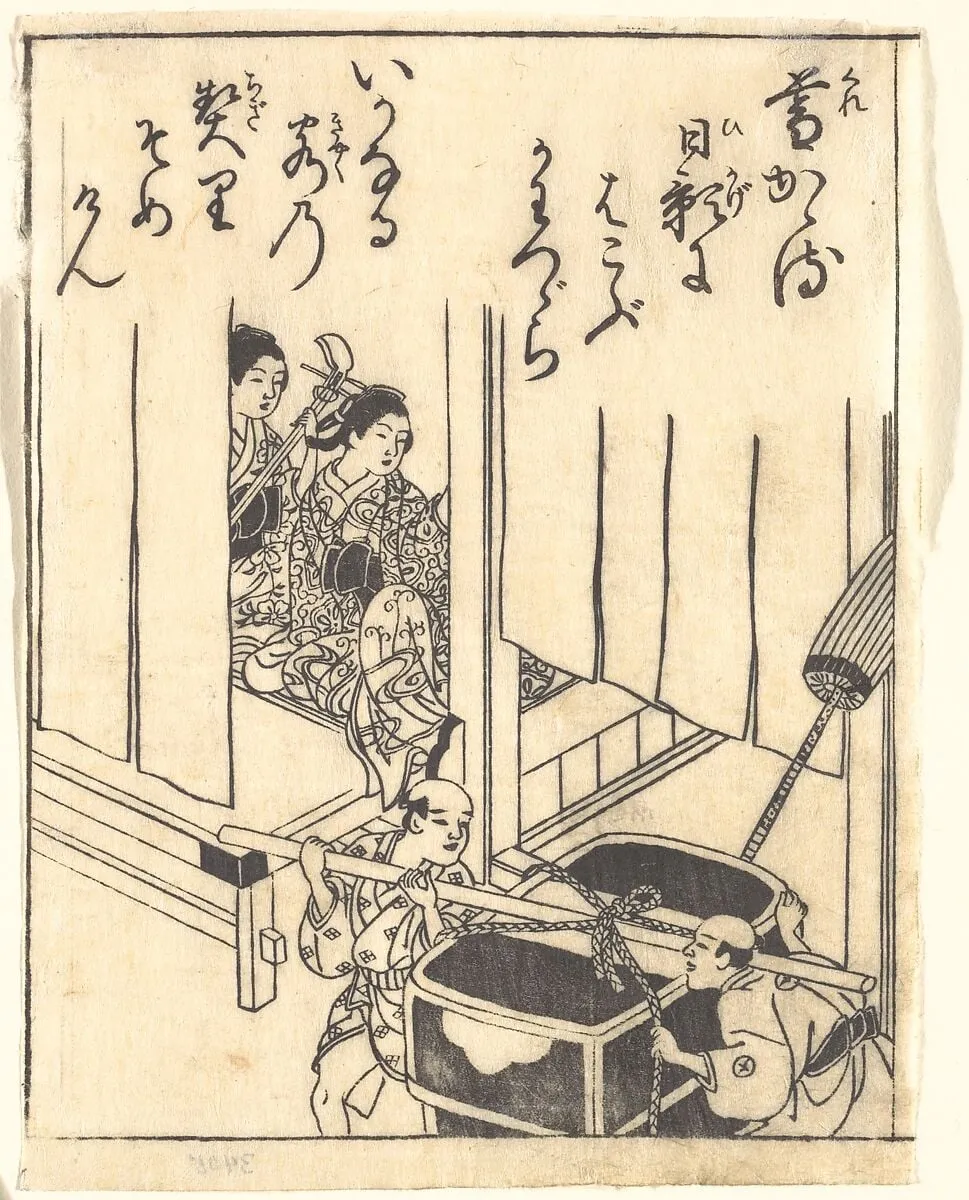
Untitled is an ink print by the Baroque artist Nishikawa Sukenobu. It dates from 1711 and is held in the collection of the Metropolitan Museum of Art.
About this work
Overview
This monochrome woodblock print, dated 1711, is attributed to Nishikawa Sukenobu and executed in ink on paper.
This monochrome woodblock print, dated 1711, is attributed to Nishikawa Sukenobu and executed in ink on paper. It depicts a quiet moment of daily life, rendered without color, emphasizing line and form. The work is part of the collection at The Metropolitan Museum of Art, where it represents early 18th-century Japanese printmaking traditions focused on genre subjects rather than theatrical or mythological themes.
Subject & Meaning
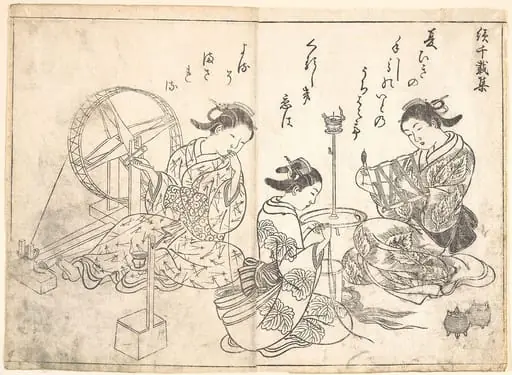
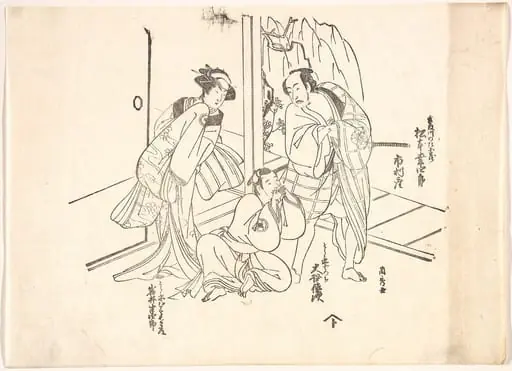
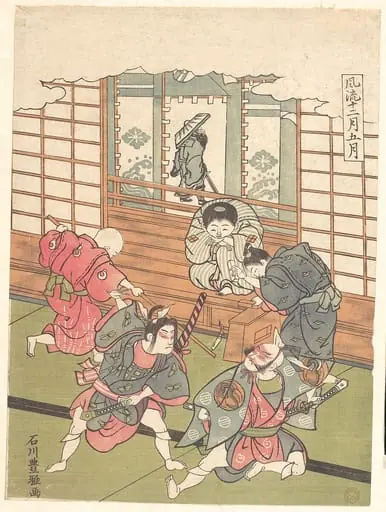
The scene shows three figures engaged in the movement of a large, roped box—two men carrying it, one seated nearby. Their clothing and posture suggest commoners in a domestic or commercial setting. The absence of overt narrative cues invites interpretation of labor, transport, or ritual. The composition avoids drama, instead capturing the rhythm of ordinary activity, characteristic of Sukenobu’s interest in unidealized human behavior.
Technique & Style
Executed in a single ink tone, the print relies on precise, fluid lines to define form and space. Shading is minimal, with contrast achieved through line weight and negative space. The figures and box are rendered with clarity and restraint, avoiding ornamental detail. This economy of means reflects the aesthetic priorities of early ukiyo-e, where clarity and compositional balance took precedence over decorative richness.
History & Provenance
Created in 1711 during the Edo period, the print belongs to Sukenobu’s early output, a time when genre scenes were gaining popularity among urban audiences. It entered The Metropolitan Museum of Art’s collection through documented acquisitions of Japanese prints in the 20th century. Its survival in good condition reflects careful preservation within institutional collections, though its original circulation among private collectors remains undocumented.
Context
Sukenobu worked in Kyoto, a center for refined printmaking distinct from Edo’s more commercial output. His genre scenes responded to growing literacy and interest in everyday life among townspeople. Unlike later ukiyo-e focused on actors or courtesans, this print aligns with a quieter tradition of observing labor and domestic routines, reflecting broader cultural shifts toward secular subject matter in early 18th-century Japan.
Legacy
Though not widely reproduced or celebrated in popular discourse, this work exemplifies the quiet precision of early ukiyo-e. It influenced later artists who sought to depict ordinary life with dignity and restraint. Its presence in a major Western museum underscores its role in shaping international understanding of Japanese printmaking beyond the more flamboyant styles of the 19th century.
Artist & collection

 Untitled
 Untitled
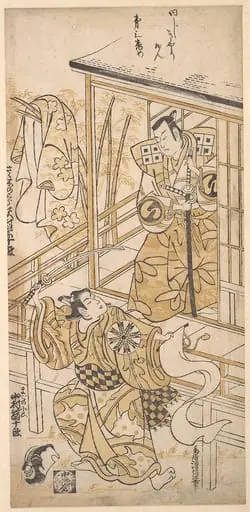 Untitled
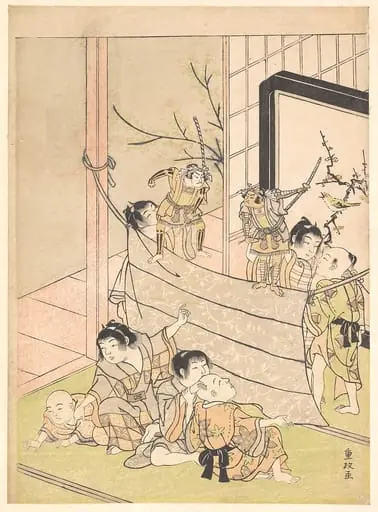 Untitled
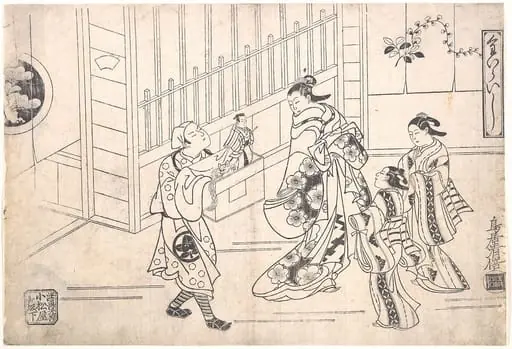 Kairaishi|The Actor Ichimura Takenojo VIII in the Role of a Puppeteer, showing Puppets to a Courtesan
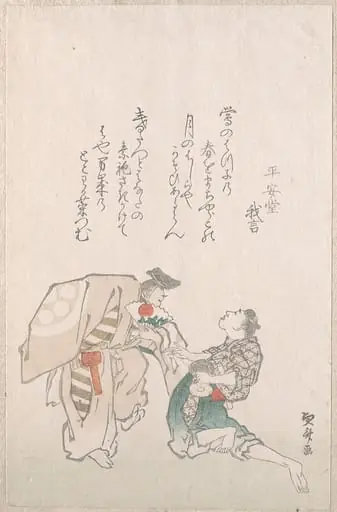 Untitled
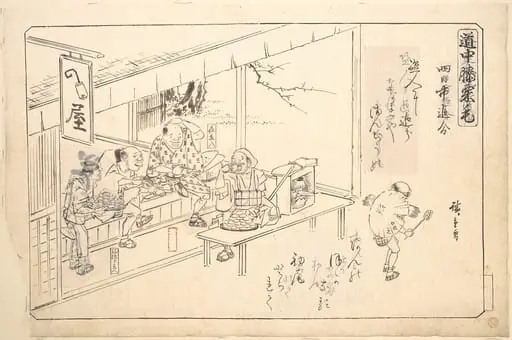 道中膝栗毛 四日市追分|The Branch Road at Yokkaichi
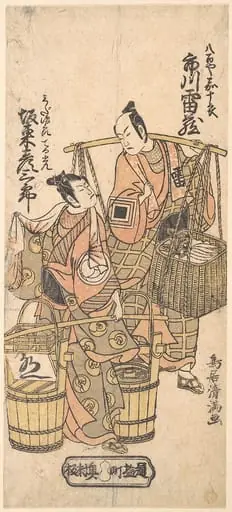 鳥居清満画 初代市川雷藏・二代目坂東彦三郎|Kabuki Actors Ichikawa Raizō I and Bandō Hikosaburō II
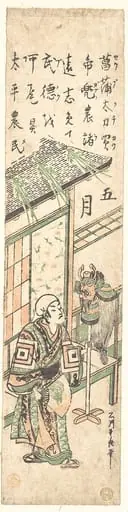 Go Gatsu|The Fifth Month
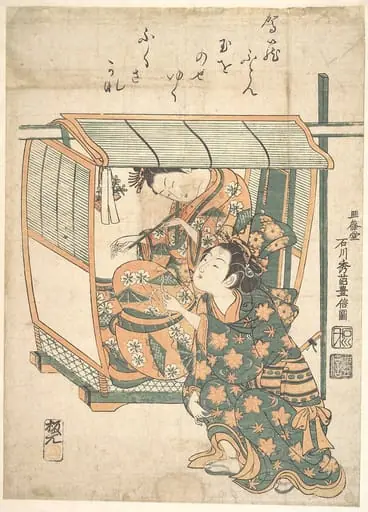 Untitled
 Untitled
 Twilight at Nakanocho