Artwork
"Tocht Schuiten"or Spaarndam Fishing Boats
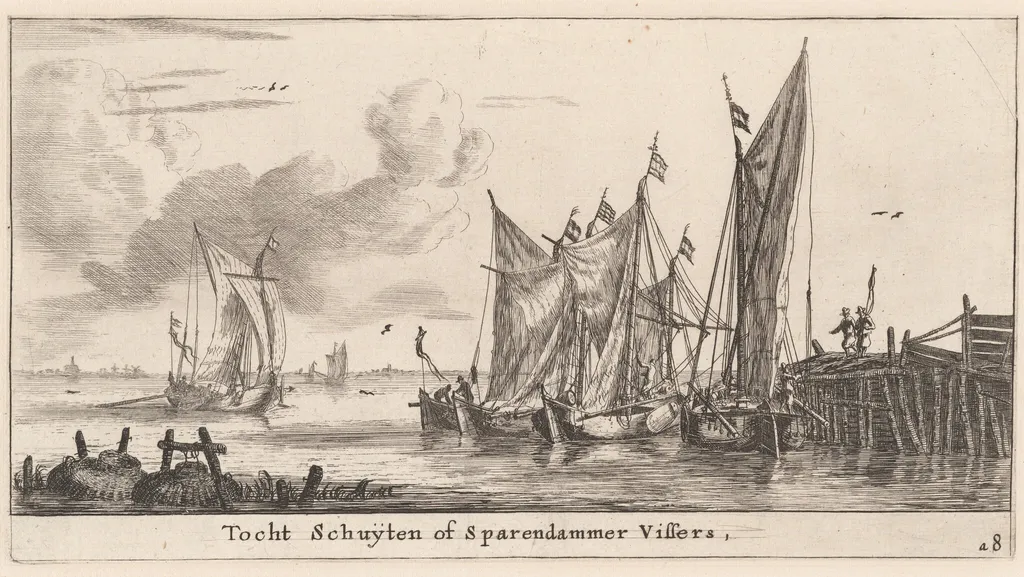
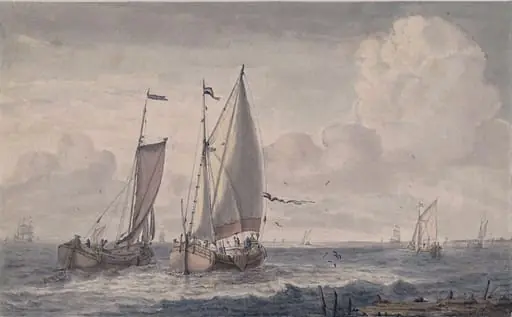
"Tocht Schuiten"or Spaarndam Fishing Boats is an ink print by the Baroque artist Nooms, called Zeeman, Reinier. It dates from 1653 and is held in the collection of the National Gallery of Art. Reinier Nooms, known as Zeeman, created the etching *Tocht Schuiten* (or *Spaarndam Fishing Boats*) circa 1653.
About this work
Overview
Reinier Nooms, known as Zeeman, created the etching *Tocht Schuiten* (or *Spaarndam Fishing Boats*) circa 1653.
Reinier Nooms, known as Zeeman, created the etching *Tocht Schuiten* (or *Spaarndam Fishing Boats*) circa 1653. A Dutch printmaker specializing in maritime scenes, he produced this work as part of a series documenting coastal life in the Netherlands during the mid-seventeenth century. The piece captures a quiet moment of local activity, rendered in fine black-and-white lines on laid paper, reflecting his commitment to precise observation of nautical environments.
Subject & Meaning
The print portrays three fishing vessels near the shore of Spaarndam, a small settlement along the Haarlemmermeer. The boats, with tall sails and small crews, suggest modest, working-level operations rather than commercial fleets. A wooden pier extends into the water, with figures standing nearby, hinting at daily routines. The scene conveys no grand narrative, but rather an intimate record of regional labor and the rhythm of coastal existence.
Technique & Style
Nooms employed etching and drypoint to achieve fine detail and tonal variation. The plate was incised with a sharp needle, allowing for delicate lines that define sails, rigging, and water texture. Drypoint added rich, fuzzy shadows, enhancing the sense of movement in the clouds and choppy waves. The composition is tightly focused, with no extraneous elements, emphasizing the boats’ forms and their relationship to the water and sky.
History & Provenance
Created in the early 1650s, this print was part of a broader project by Nooms to document Dutch maritime activity. It circulated among collectors and fellow artists, contributing to the reputation of Dutch printmaking. While its early ownership is undocumented, it entered institutional collections in the nineteenth century, where it remains as an example of the period’s topographical and nautical print tradition.
Context
In mid-seventeenth-century Holland, coastal communities like Spaarndam were vital to the nation’s economy, supplying fish and supporting inland trade. Nooms’s prints reflect a growing interest in everyday maritime life, distinct from heroic naval battles. His work coincided with the rise of print culture, where detailed images of local scenes appealed to both civic pride and scholarly curiosity about the natural world.
Legacy
Nooms’s etchings influenced later artists interested in accurate depictions of ships and coastal landscapes. His technical precision and restrained composition set a standard for maritime printmaking. Though not widely known today, his works remain referenced in studies of Dutch Golden Age print culture, valued for their documentary clarity and quiet observation of ordinary seafaring life.
Artist & collection

Artist
Reinier Nooms (c. 1623 – 1664), also known as Zeeman or Seeman (Dutch for "sailor"), was a Dutch maritime painter known for his highly detailed paintings and etchings of ships. From the 1650s, Nooms started producing…

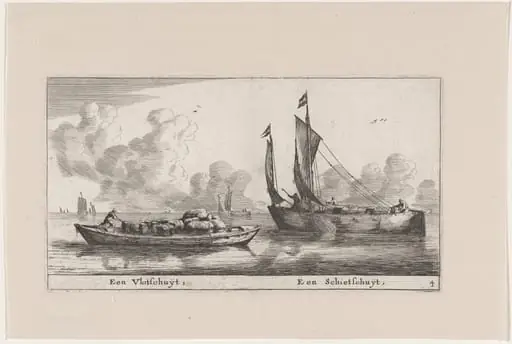 A "Vlotschuit" and a "Schietschuit"
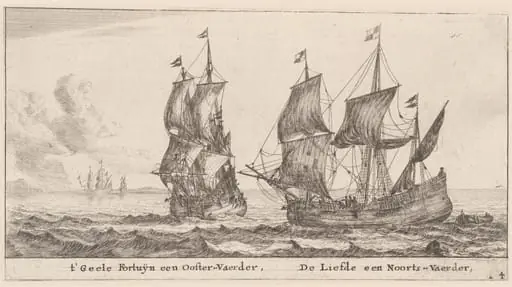 Two Merchant-Men: the "Geele Fortuÿn," Trading in the Baltic, and the "Liefde," Trading in Norway
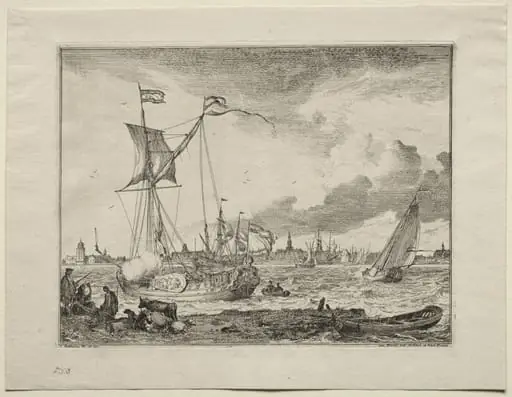 View of Amsterdam with Ships in Foreground
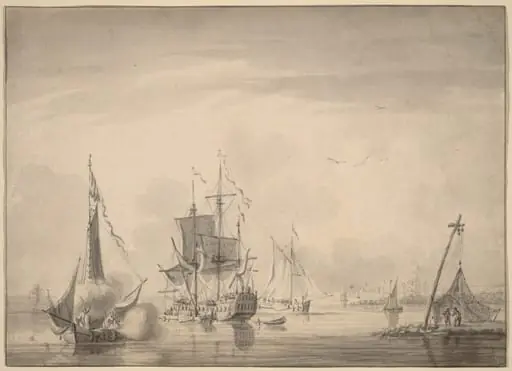 Harbor Scene
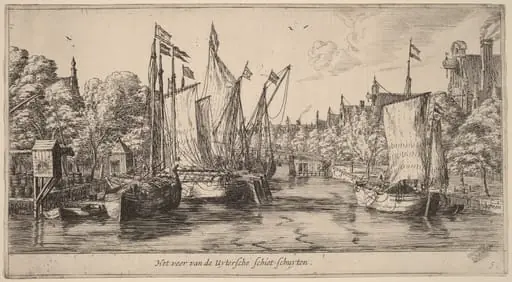 The Ferry to Utrecht (Het veer van der Uytersche schiet-schuyten)
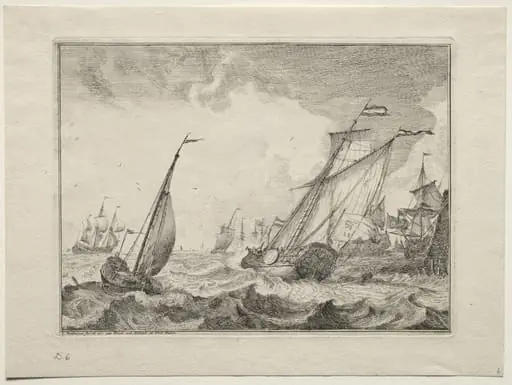 Ships in a Gale
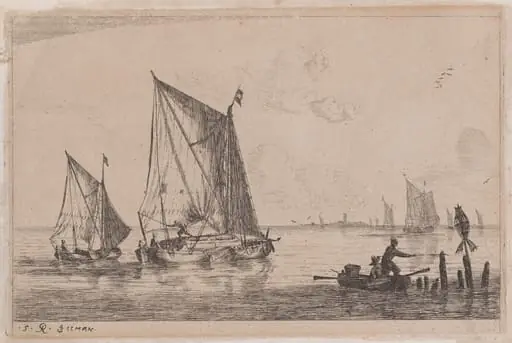 A "Duinopschuit," a Smaller Sailing Boat, and a Rowboat
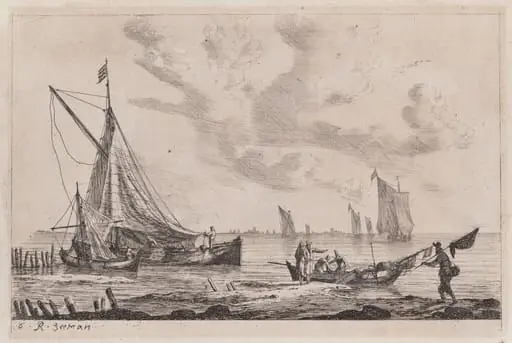 Shore of Inland Waterway with a Ketch, Two Smaller Boats, and Fisherman
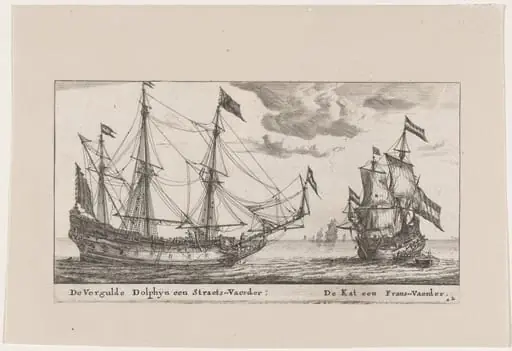 The "Vergulde Dolphyn," a Large Merchant Vessel, and the "Kat," a Flute
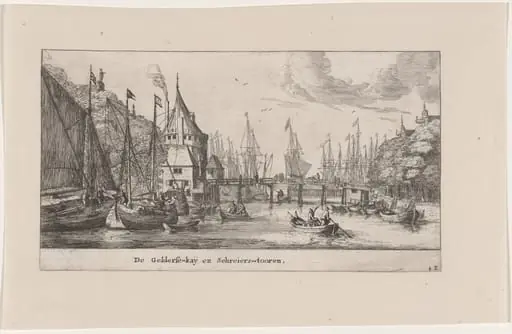 The Gelderse Quay and the Schreiers Tower, Amsterdam
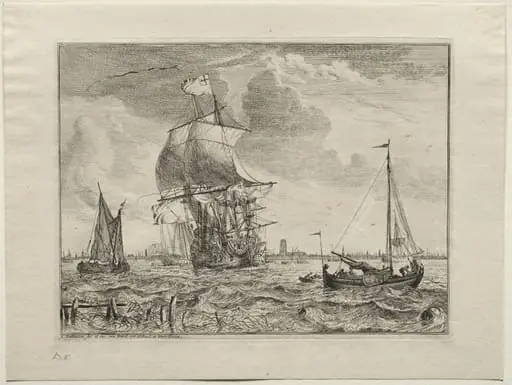 Marine Scene with Amsterdam in the Distance
 Dutch Fishing Boats