Artwork
Ikiyasan Isakiji
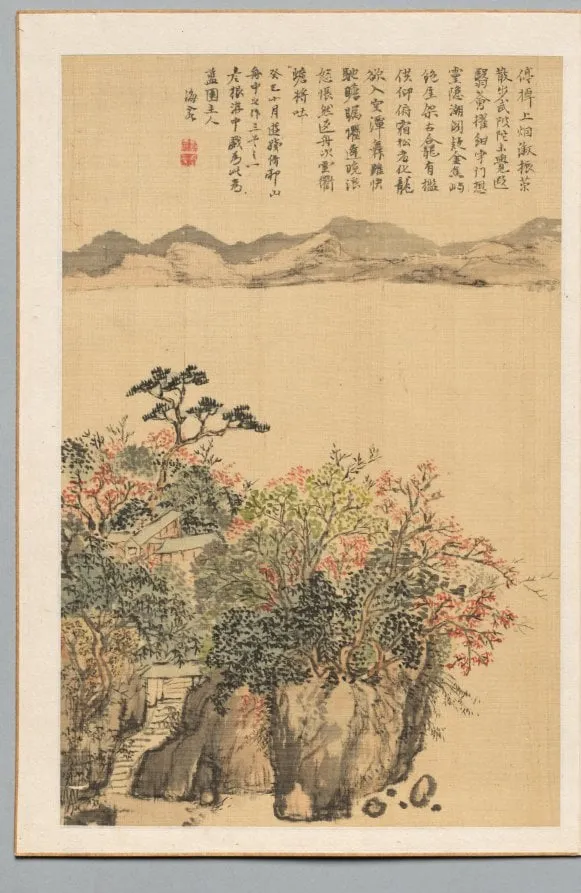
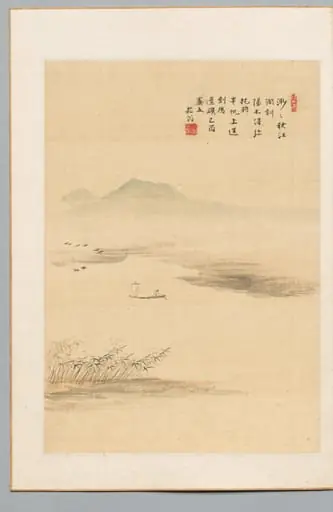
Ikiyasan Isakiji is a work on paper by the Romanticist artist Nukina Sūō. It dates from 1833 and is held in the collection of the Cleveland Museum of Art.
About this work
You see a quiet temple on the shore, drawn in black ink on paper.
The artist wrote a poem right on the painting about seeing this place from a boat. He was a samurai who became famous for his handwriting, not just his brushwork. The temple still stands today by Lake Biwa.
Look up *Japan, Edo period (1615–1868)* to see more scenes like this.
Overview
Born into a samurai family specializing in archery, Kaioku later became recognized as one of the three greatest calligraphers of his time.
The Buddhist temple Ikiyasan Isakiji lies about 12.4 miles (20 km) from Hikone Castle, on the shore of Lake Biwa in central Japan. Nukina Kaioku depicted the temple as seen from a boat while touring Hikone. He also inscribed a poem about the experience, explaining that it was one of three written during the journey. Born into a samurai family specializing in archery, Kaioku later became recognized as one of the three greatest calligraphers of his time.
Did you know?
Nukina Kaioku was from a family that taught archery to regional military rulers, but being physically weak, he concentrated his efforts in calligraphy and studying Confucian philosophy, a system of thought prized by the military class.
Artist & collection
Artist
Nukina Kaioku (貫名 海屋; 1778–1863) was a Japanese painter and calligrapher. He had many pseudonyms, but Kaioku (海屋) and Sūō (菘翁) are the most well-known. He was considered a leader in the field of Japanese calligraphy…

 Colors and Sound of Autumn
 Album of Seasonal Landscapes, Leaf H (previous leaf 8)
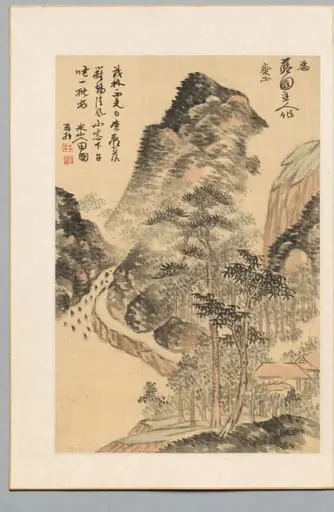 Short Nap on a Long Summer Day
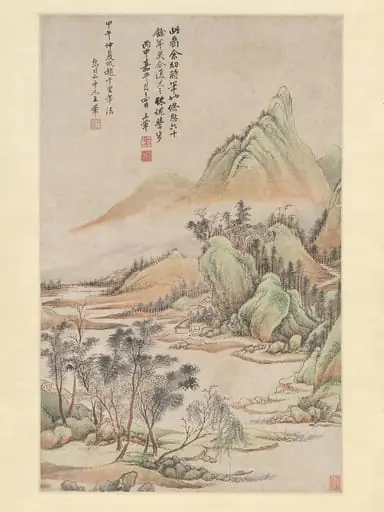 倣趙伯駒山水圖 軸|Landscape in the Style of Zhao Boju (Fang Zhao Boju shanshui)
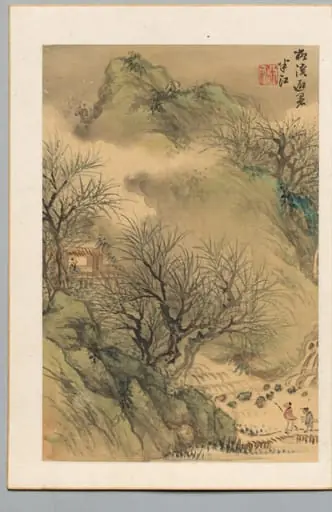 Summer Retreat
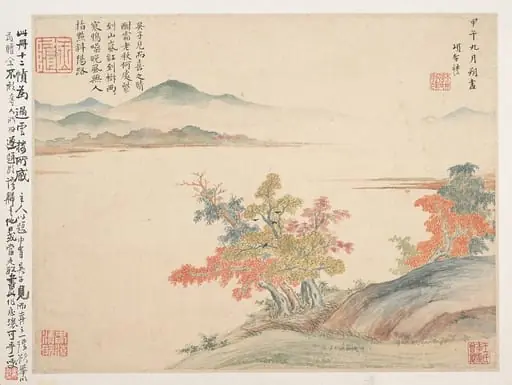 明/清 項聖謨 秋景圖 冊頁|Autumn Landscape, leaf from Album for Zhou Lianggong
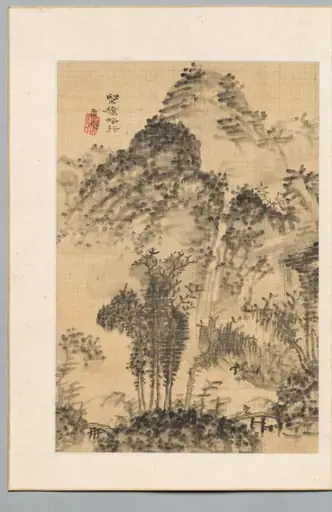 Wild Bridge, Poet's Walk
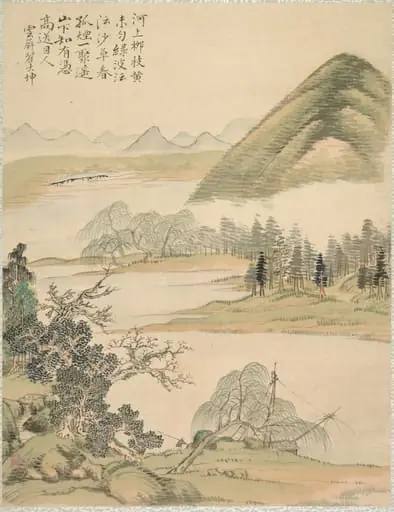 Willow Branches in Spring
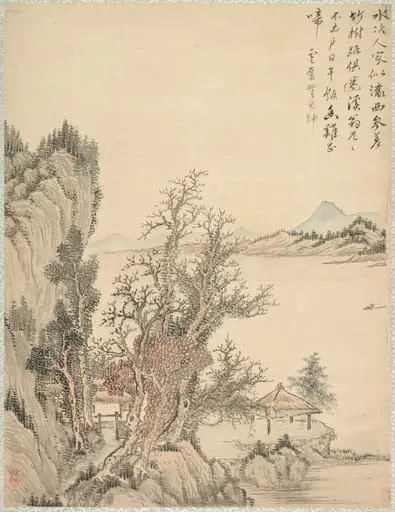 Dwelling by the Shore
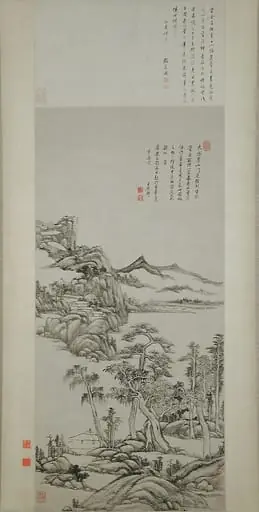 清 王原祁 倣黃公望高克恭山水圖 軸|Landscape in the Styles of Huang Gongwang and Gao Kegong
 Album of Seasonal Landscapes, Leaf A (previous leaf 4)
 Landscape