Artwork
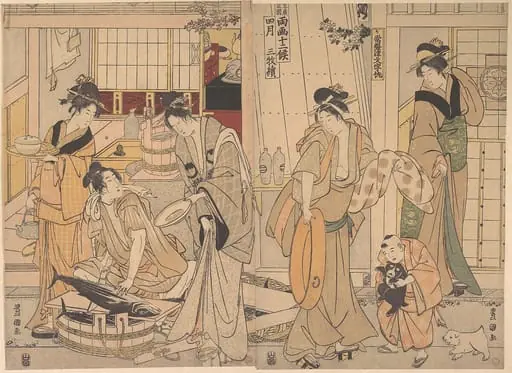
鳥文斎栄之画 「浮世源氏八景 幻 落雁 薄雲 晴嵐」|Spirit Summoner; Wild Geese Returning Home (Maboroshi; Rakugan) (right) and A Thin Veil of Clouds; Clearing Weather (Usugumo; Seiran) (left), from the series Eight Views of The Tale of Genji in the Floating World (Ukiyo Genji hakkei)
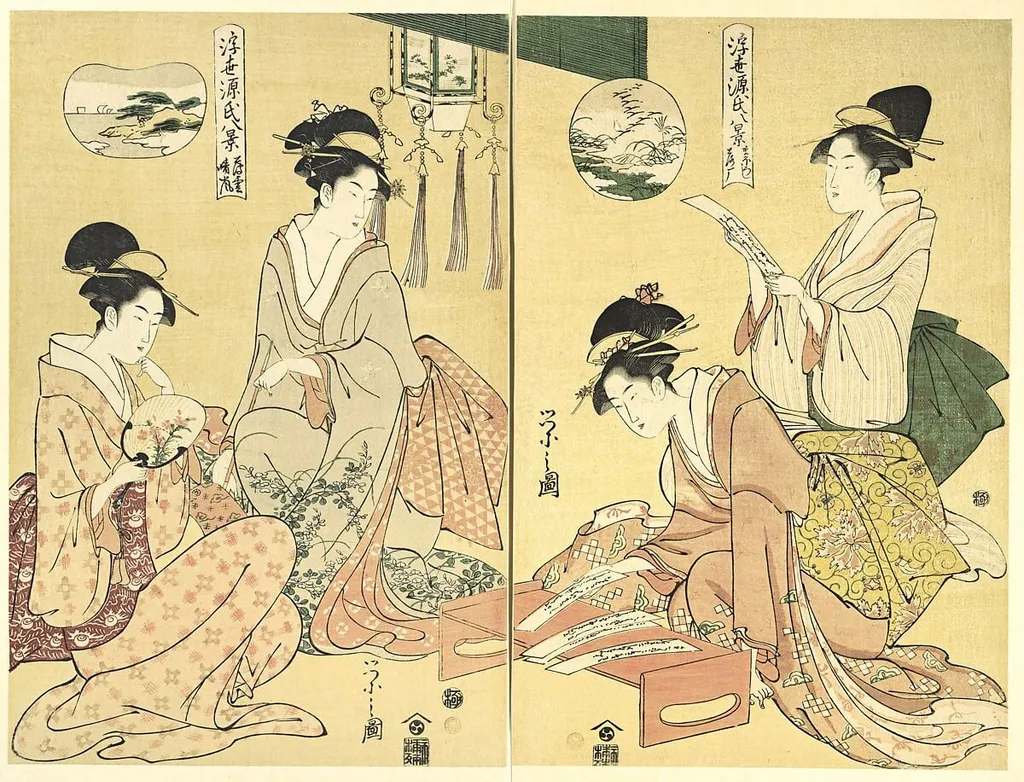
鳥文斎栄之画 「浮世源氏八景 幻 落雁 薄雲 晴嵐」|Spirit Summoner; Wild Geese Returning Home (Maboroshi; Rakugan) (right) and A Thin Veil of Clouds; Clearing Weather (Usugumo; Seiran) (left), from the series Eight Views of The Tale of Genji in the Floating World (Ukiyo Genji hakkei) is an ink print by the Romanticist artist Chôbunsai Eishi. It dates from 1798 and is held in the collection of the Metropolitan Museum of Art.
About this work
Overview
Chōbunsai Eishi’s 1798 diptych, part of the series *Eight Views of The Tale of Genji in the Floating World*, presents two woodblock prints that transpose classic literary scenes into an Edo‑period urban interior. The left panel, titled *A Thin Veil of Clouds; Clearing Weather*, and the right, *Spirit Summoner; Wild Geese Returning Home*, each portray a woman in contemporary dress engaged in quiet, domestic activity, framed by a modest interior and a miniature landscape vignette.
Subject & Meaning
The tiny landscape circles above their heads reinforce the literary allusion, linking personal sentiment to the broader natural world.
Both images draw on episodes from the *Genji* narrative, reimagining the poetic motifs of mist, clouds, and returning geese as symbols of longing and transition. In the left print a woman reads a letter, suggesting communication across distance, while the right figure holds a fan and a potted plant, evoking the seasonal motif of geese returning home. The tiny landscape circles above their heads reinforce the literary allusion, linking personal sentiment to the broader natural world.
Technique & Style
Eishi employed traditional ukiyo‑e woodblock methods, carving separate blocks for line work and each color. Ink and subtle pigments on paper yield a restrained palette of soft blues, muted greens, and delicate pinks. Fine, flowing lines define the women’s kimono patterns and the architectural details, while the miniature landscape inserts are rendered with delicate gradations, creating a sense of depth within the limited space of the prints.
History & Provenance
Born into a samurai family and trained under Kano school painter Miyagawa Chōshun, Eishi left official service to become a leading ukiyo‑e artist, known for bijin‑ga and cityscapes. The diptych was produced in 1798, during the peak of his career, and circulated among literate urban patrons who appreciated the blend of classical literature with contemporary visual culture. Surviving copies are held in several Japanese and Western museum collections.
Context
The series reflects a broader Edo‑period trend of reinterpreting classical Chinese and Japanese poetry through the lens of the floating world (ukiyo). By situating *Genji* motifs within a recognizable domestic setting, Eishi appealed to a readership familiar with both the literary canon and the fashionable interiors of the time, illustrating how elite culture was democratized through popular print media.
Artist & collection

Artist
Chōbunsai Eishi (鳥文斎 栄之; 1756–1829) was a Japanese ukiyo-e artist. His last name was Hosoda (細田). His first name was Tokitomi (時富). His common name was Taminosuke (民之丞) and later Yasaburo (弥三郎). Pupil of Kano Eisen'in…

 Three Gods of Good Fortune Visit the Yoshiwara; or “Scenes of Pleasure at the Height of Spring”
 蜀山人(大田 南畝)賛 雪・月・花図 |Snow, Moon, and Cherry Blossoms (Yoshiwara in Three Seasons)
 Untitled
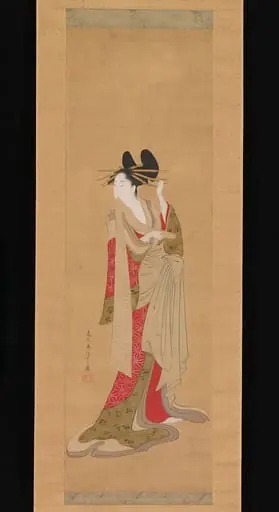 Untitled
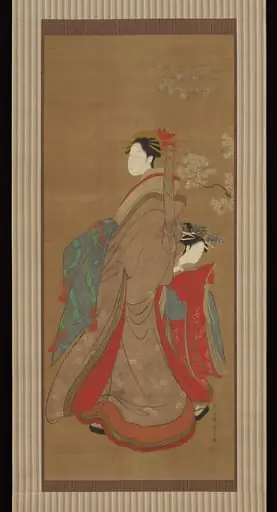 Untitled
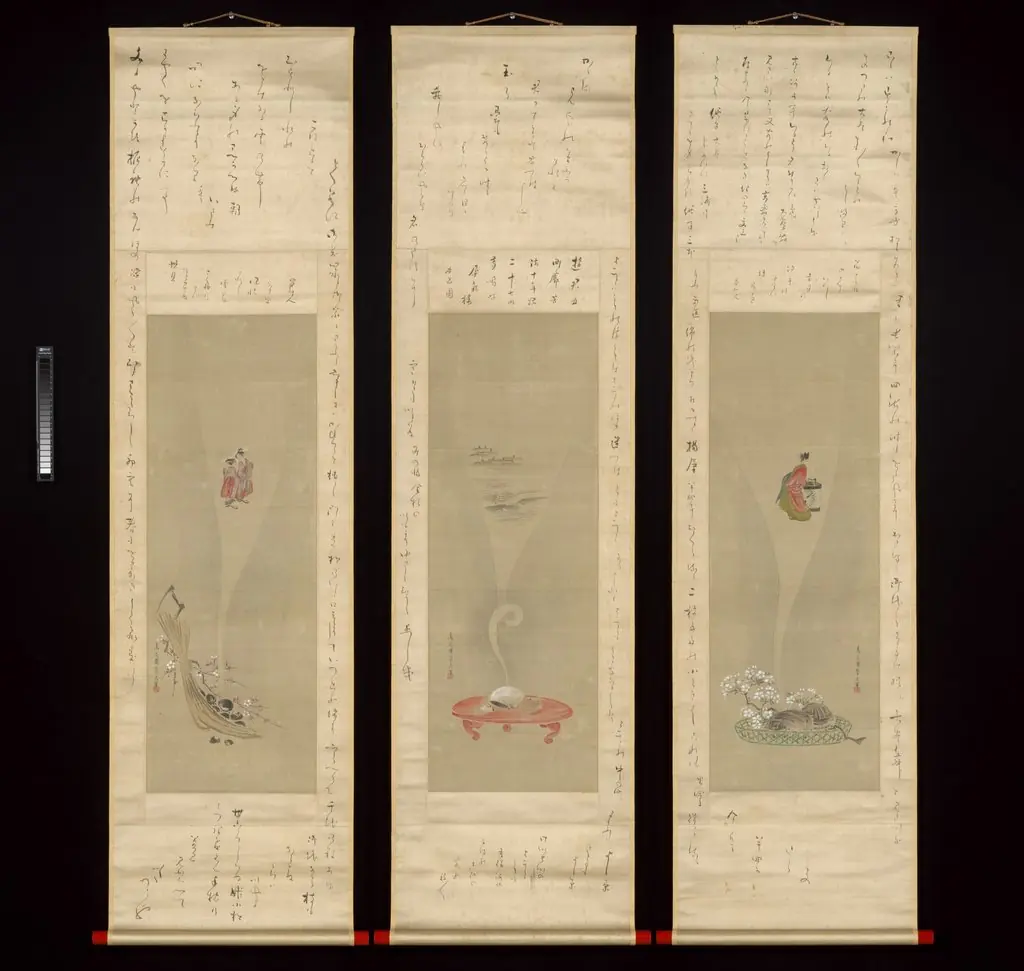 Shellfish and Apparitions of the Yoshiwara Pleasure Quarter
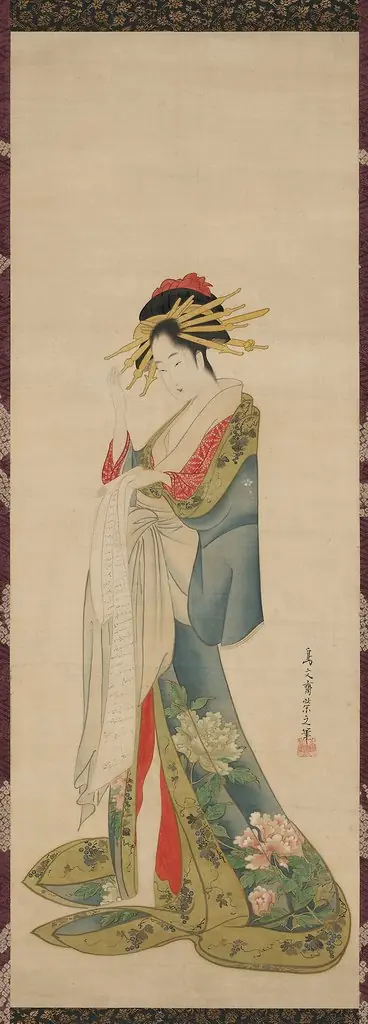 A Courtesan Reading a Letter
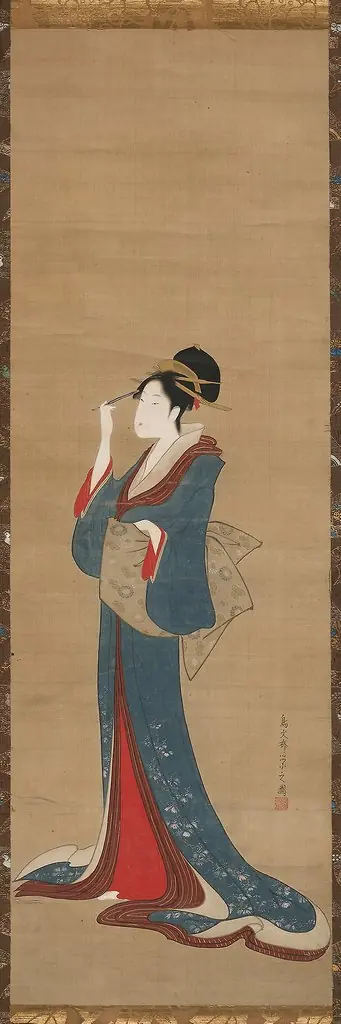 Beauty Replacing Her Hairpin
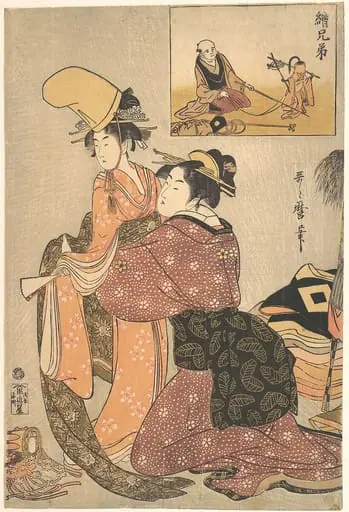 喜多川歌麿画 絵兄弟娘道成寺 見立猿廻し 「絵兄弟」|A Woman Dressing a Girl for a the Kabuki Dance “Musume Dojōji,” with “Brother Picture” (E-kyōdai) of a Monkey Trainer
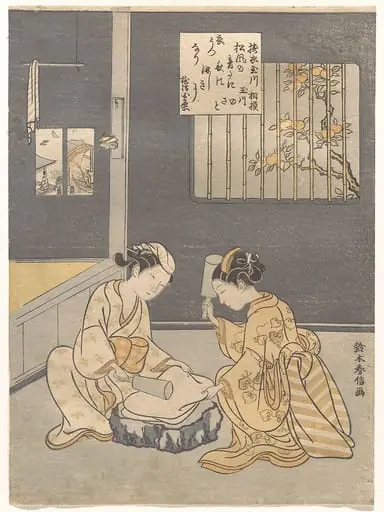 鈴木春信画 六玉川 「壔衣の玉川 摂津の名所」|Kōromō Uchi Tamagawa|The Cloth-Fulling Jewel River, a Famous Place in Settsu Province (Tōi no Tamagawa, Settsu no meisho), from an untitled series of Six Jewel Rivers (Mu Tamagawa)
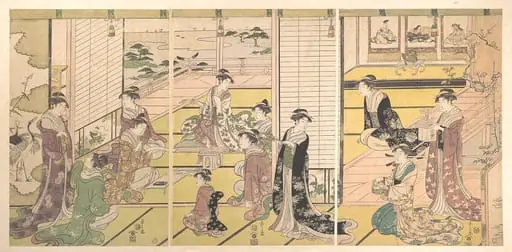 鳥文斎栄之画 和歌三神図|Honoring the Three Gods of Poetry: Women Composing Poems
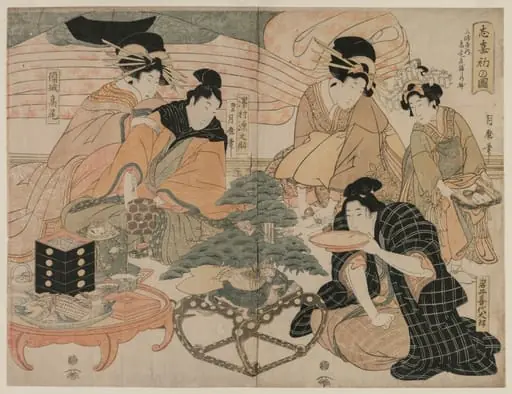 Picture of the First Visit to the Pleasure Quarters
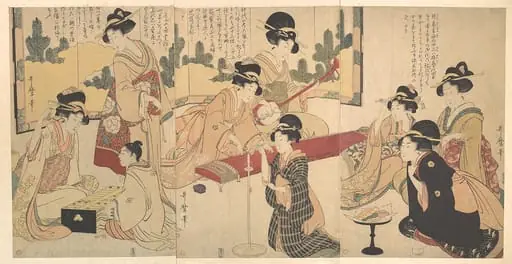 Untitled
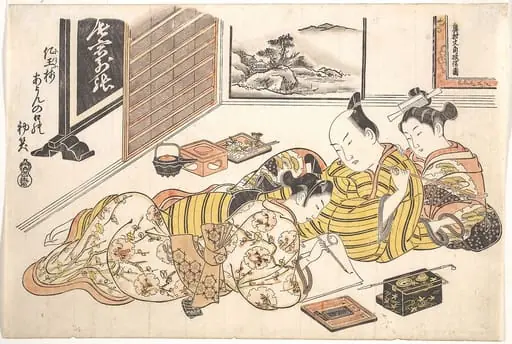 『閨の雛形』 正月|Plate from the Erotic Book Mounds of Dyed Colors: A Pattern Book for the Boudoir (Someiro no yama neya no hinagata), First Month
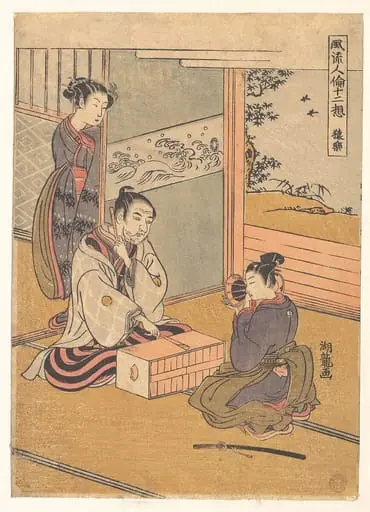 Untitled
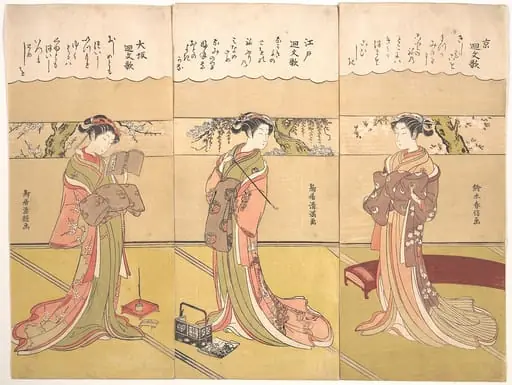 Untitled
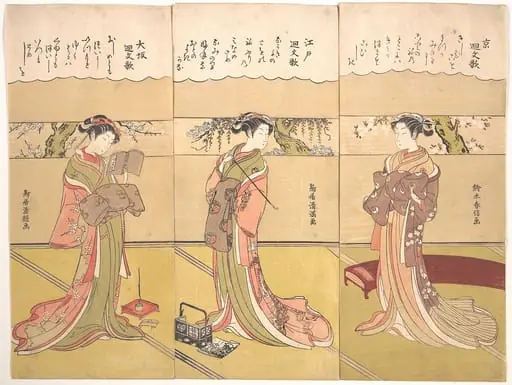 Untitled
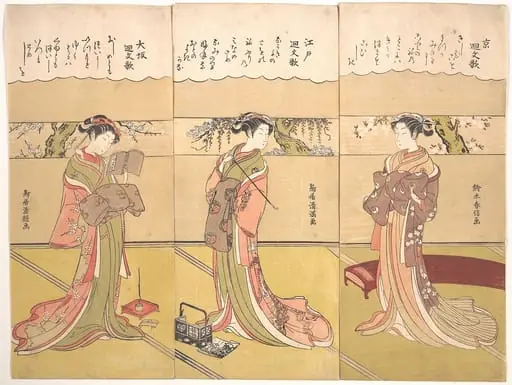 回文歌 京 大阪 江戸|Palindromic Poems (Kaibunka): Kyo
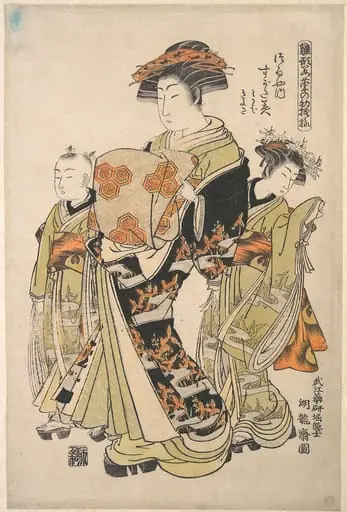 『雛形若菜の初模様 つるや内 すがたみ』|The Courtesan Sugatami of the Tsuruya Brothel, from the series “A Pat-tern Book of the Year’s First Designs, Fresh as Spring Herbs” (“Hinagata wakana no hatsu moyō”)
 Untitled