Artwork
Untitled
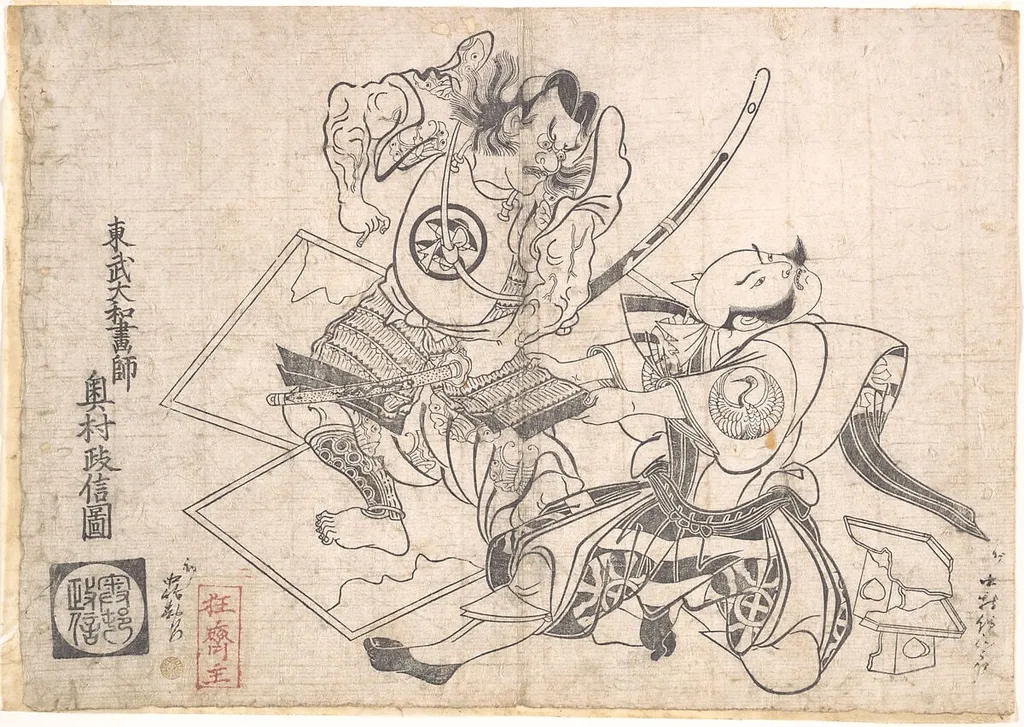
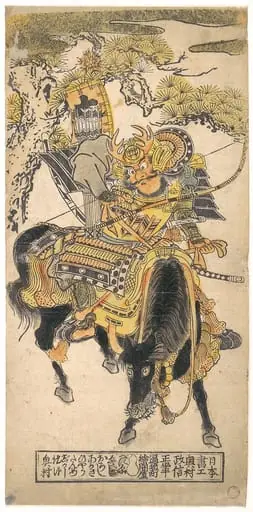
Untitled is an ink print by the Baroque artist Okumura Masanobu. It dates from 1709 and is held in the collection of the Metropolitan Museum of Art.
About this work
Overview
Its format and technique reflect early 18th-century ukiyo-e traditions, though its subject matter diverges from typical scenes of beauty or theater.
Created around 1709, this woodblock print by Okumura Masanobu is part of The Metropolitan Museum of Art’s print collection. Executed in ink and color on paper, it captures a dynamic confrontation between two figures: a mounted warrior and a monstrous opponent. The composition emphasizes motion and tension, relying on minimal background elements to focus attention on the clash. Its format and technique reflect early 18th-century ukiyo-e traditions, though its subject matter diverges from typical scenes of beauty or theater.
Subject & Meaning
The print depicts a supernatural duel, pitting a human warrior on horseback against a demonic entity wielding a circular weapon. The demon’s wild hair and exaggerated features suggest a spirit or oni from Japanese folklore, while the rider’s poised stance implies martial discipline. The scene likely draws from tales of warrior legends or Buddhist parables, where physical combat symbolizes inner struggle. The absence of context invites interpretation, emphasizing the confrontation as a universal emblem of chaos versus order.
Technique & Style
Masanobu employed bold, fluid lines and controlled shading to convey energy and texture. The horse’s musculature and the demon’s flowing hair are rendered with swift, confident strokes, suggesting movement. Cross-hatching and graded ink tones create depth without perspective, typical of early ukiyo-e. Color is applied sparingly, enhancing form rather than ornamentation. The simplicity of the background—just clouds and a distant structure—heightens the drama by isolating the figures in a void of action.
History & Provenance
The print dates to the early 1700s, a period when Masanobu was experimenting with narrative subjects beyond traditional courtesan and actor prints. It entered The Metropolitan Museum of Art’s collection through established acquisitions of Japanese prints in the 20th century. While its original commission or audience is undocumented, its survival in good condition suggests it was valued by collectors. No known series or companion prints have been identified, making this a rare standalone composition.
Context
In early 18th-century Edo, woodblock prints were increasingly used to illustrate popular stories, including ghost tales and warrior legends. Masanobu, though known for bijin-ga and theatrical scenes, occasionally ventured into fantastical themes, reflecting broader public interest in the supernatural. This print aligns with a growing trend of visual storytelling that blended folklore with aesthetic innovation, bridging the gap between folk belief and urban artistic culture.
Legacy
Though not widely reproduced or cited in later ukiyo-e movements, this print stands as an early example of narrative intensity in the medium. Its emphasis on action over decorum influenced later artists who explored mythological and martial subjects. The work’s restrained palette and dynamic composition demonstrate how ukiyo-e could convey drama without elaborate detail, contributing to the evolution of Japanese printmaking beyond its commercial roots.
Artist & collection
Artist
Okumura Masanobu lived in Edo (now Tokyo) when the city was a flashy, fast-growing hub of theater, gossip, and new ideas.

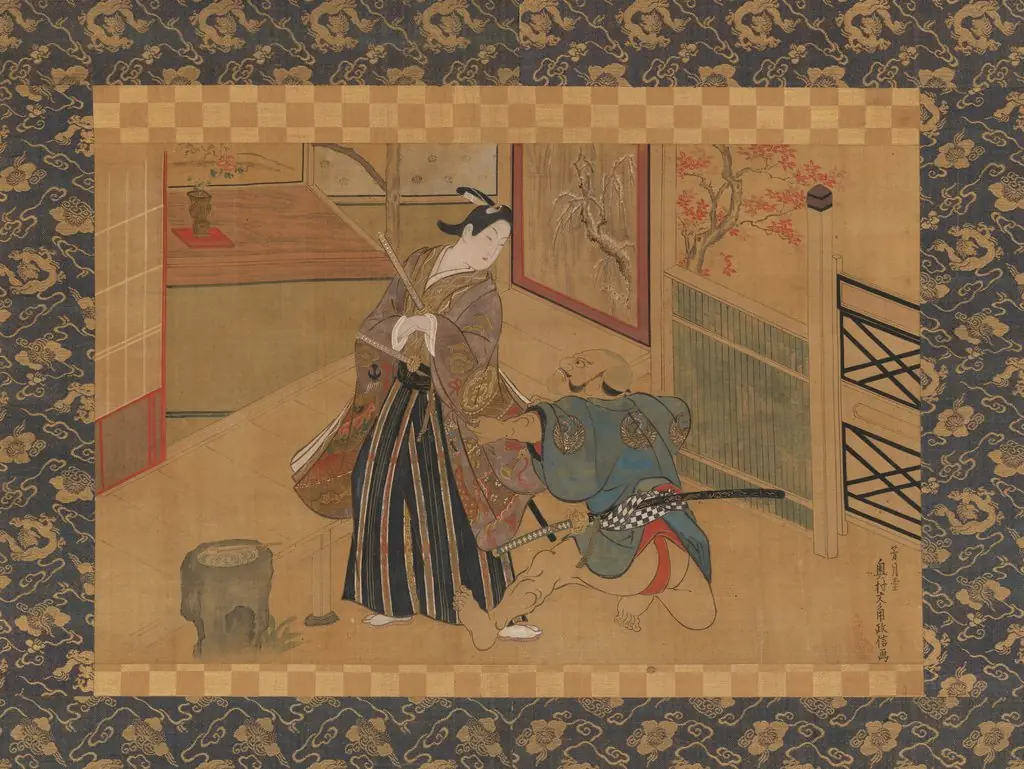 Kabuki Play Kusazuribiki from the Tales of Soga (Soga monogatari)
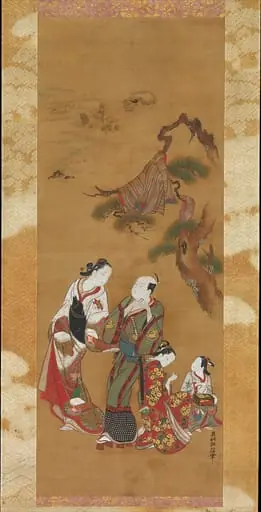 Untitled
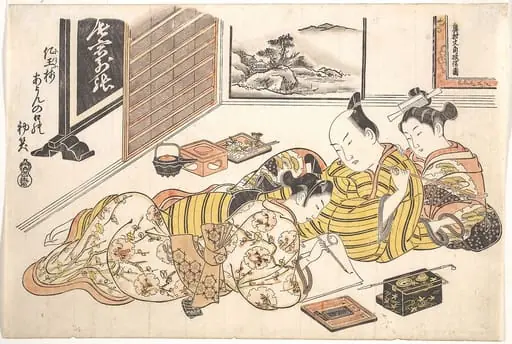 『閨の雛形』 正月|Plate from the Erotic Book Mounds of Dyed Colors: A Pattern Book for the Boudoir (Someiro no yama neya no hinagata), First Month
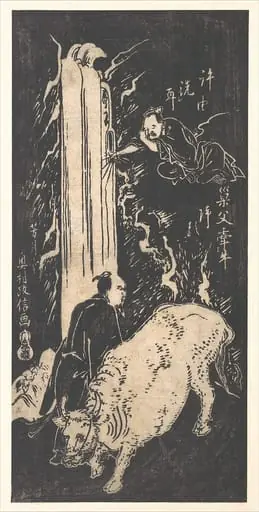 Untitled
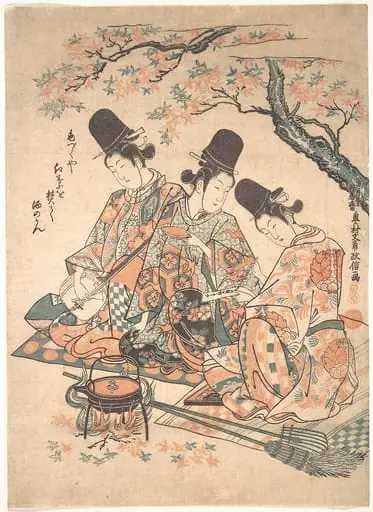 見立『平家物語』 紅葉焚図|Parody of Palace Servants Heating Sake over a Fire of Maple Leaves
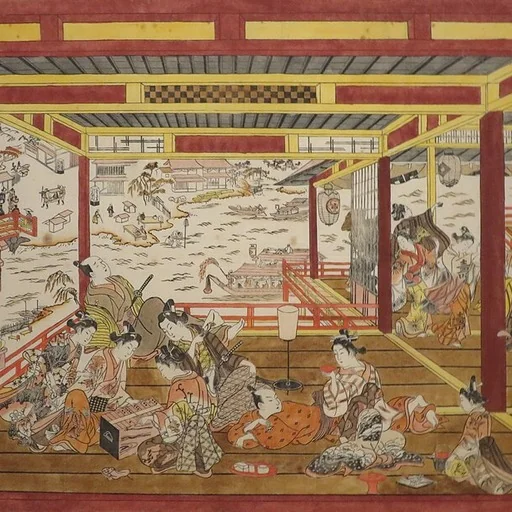
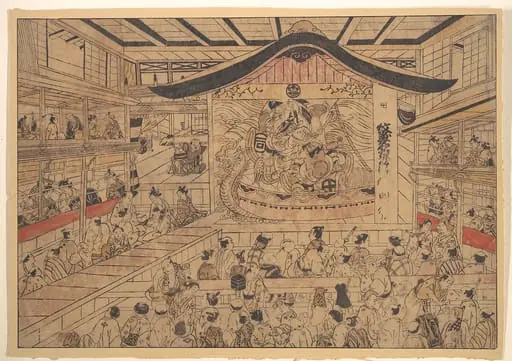 浮絵 「紋尽名古屋曽我」|Perpsective View (uki-e) of a Kabuki Theatre, with a Performance of The Crest Patterns of the Soga Brothers and Nagoya Sanza (Mon-zukushi Nagoya Soga)
 Untitled
 Untitled
 Untitled
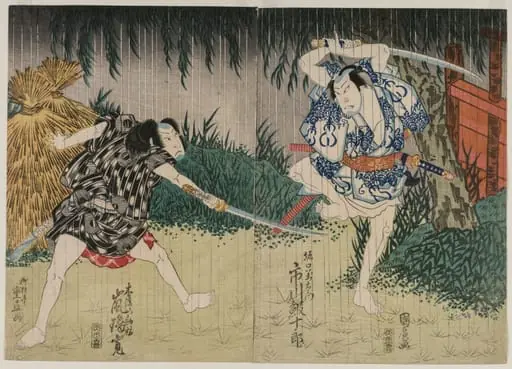 Arashi Rikan II as Kizu Kansuke; Ichikawa Ebijuro II as Horiguchi Manzaemon
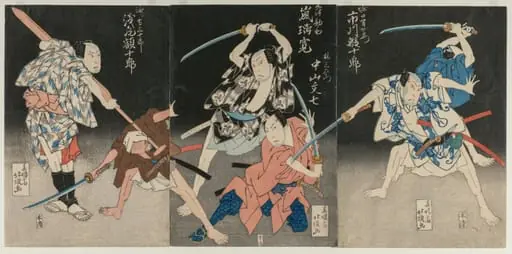 Ichikawa Ebijūrō II as Horiguchi Manzaemon (right), Arashi Rikan II as Kizu Kansuke, Nakayama Bunshichi III as Hayashi Sanzemon (center), and Asao Gakujurō as the Ferryman Sanjūrō (left) from the Kabuki Play "Eight Views of the Kizu River by Boating Song"
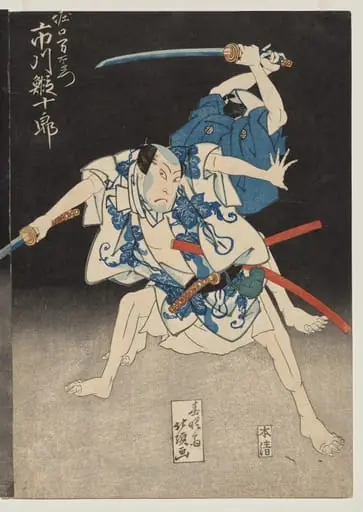 Ichikawa Ebijūrō II as Horiguchi Manzaemon from the Kabuki Play "Eight Views of the Kizu River by Boating Song"
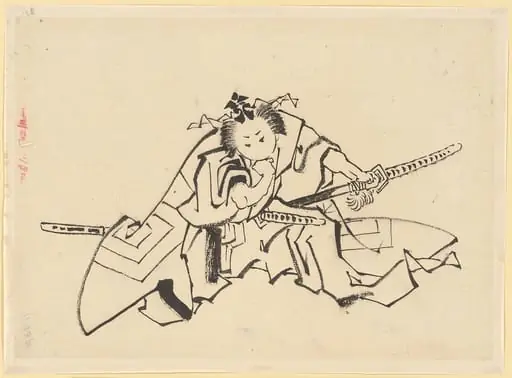 Untitled
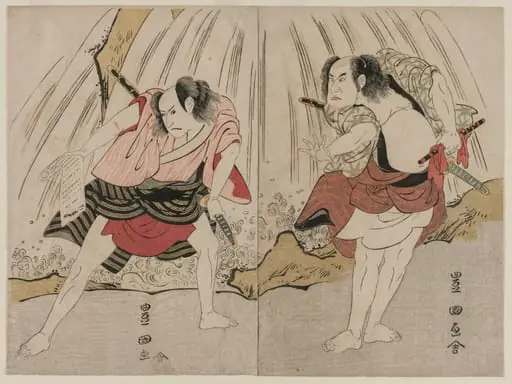 Kataoka Nizaemon VII and Ichikawa Yaozo III in a Confrontation Beside a Waterfall
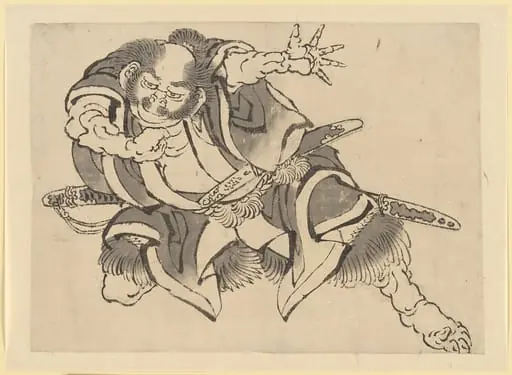 Untitled
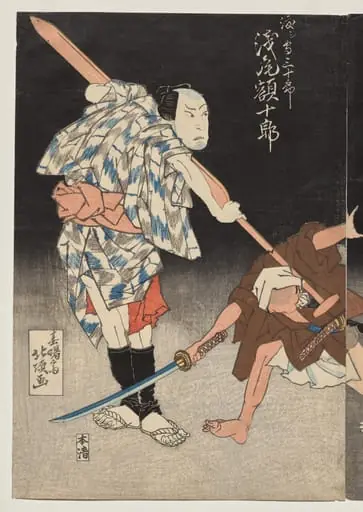 Asao Gakujurō as the Ferryman Sanjūrō from the Kabuki Play "Eight Views of the Kizu River by Boating Song"
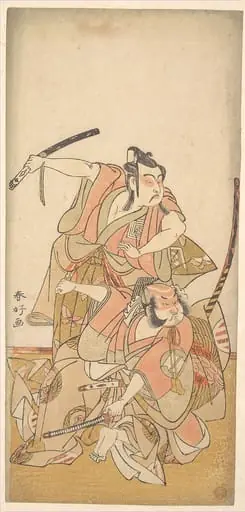 Untitled
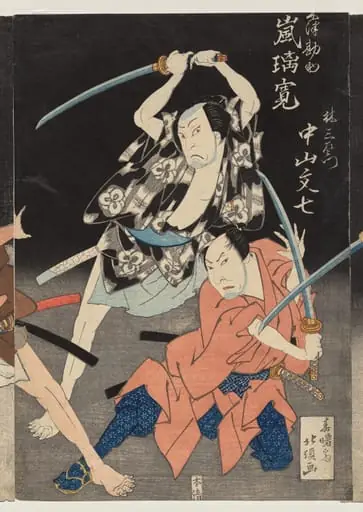 Arashi Rikan II as Kizu Kansuke and Nakayama Bunshichi III as Hayashi Sanzemon from the Kabuki Play "Eight Views of the Kizu River by Boating Song"
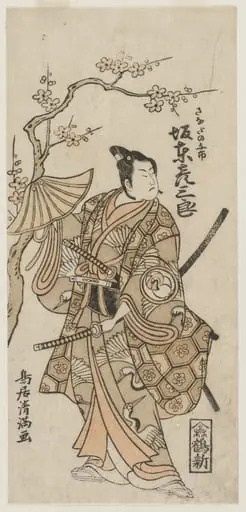 Bando Hikosaburo II as Sanada no Yoichi
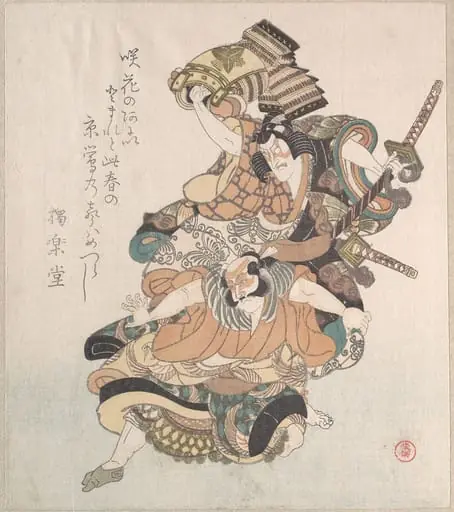 Untitled