Artwork
Piesa de formă relativ cilindrică, cu picior de susținere scund și toartă. Decorul este realizat prin pictare cu motive liber desenate (linii verticale). Cromatică: maro - roșcat (fondul), alb, verde, maro închis (decorul).
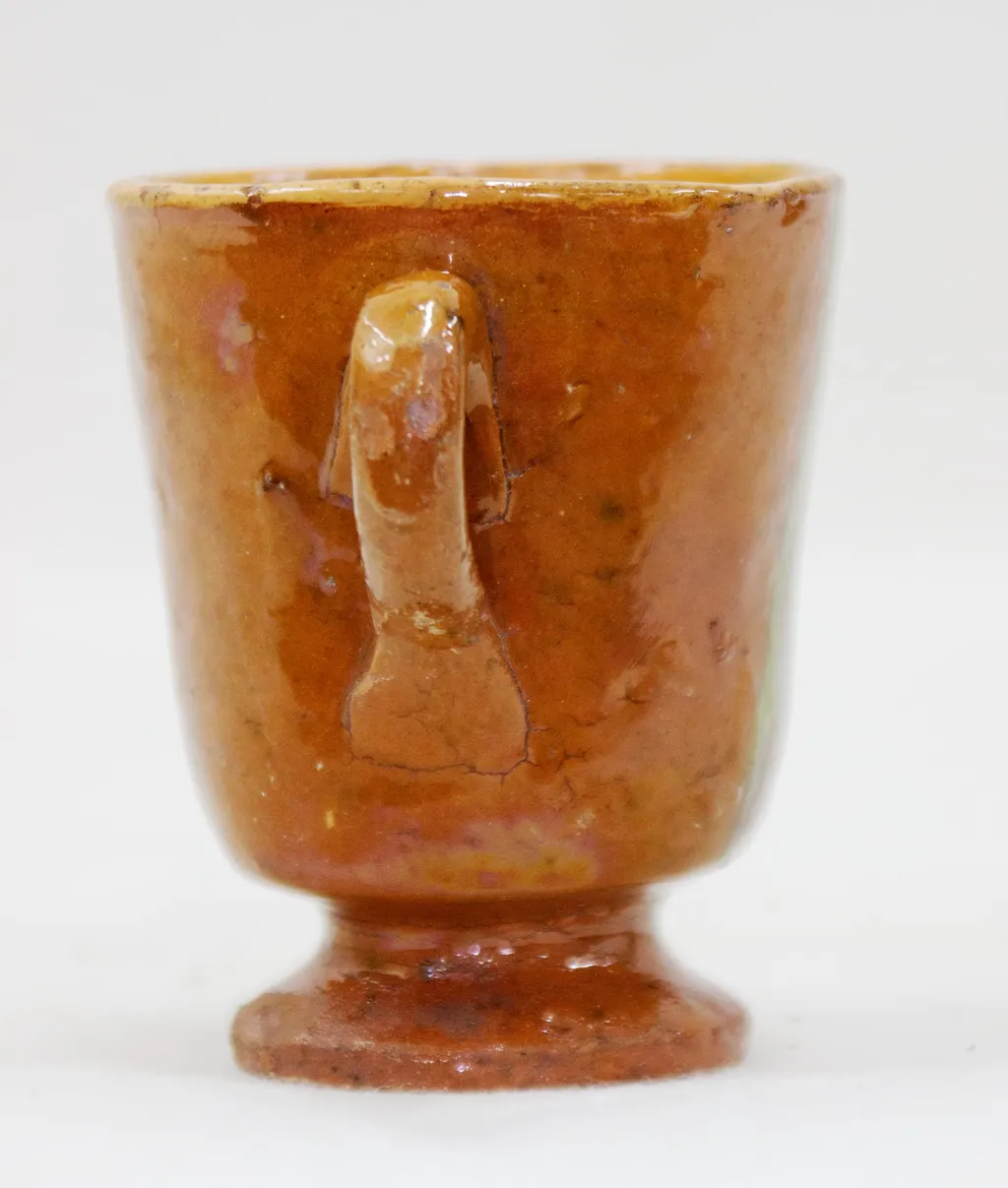
Piesa de formă relativ cilindrică, cu picior de susținere scund și toartă. Decorul este realizat prin pictare cu motive liber desenate (linii verticale). Cromatică: maro - roșcat (fondul), alb, verde, maro închis (decorul). is a photography by olar. It is held in the collection of the "Dimitrie Gusti" National Village Museum. A small, roughly formed clay vessel with a cylindrical body, short base, and thick handle.
About this work
Overview
A small, roughly formed clay vessel with a cylindrical body, short base, and thick handle. Its surface shows signs of hand-building, with uneven walls and a matte, weathered finish. Decoration consists of sparse, freehand brushwork in muted earth tones, suggesting utilitarian rather than ceremonial use. The overall form and execution point to a pre-industrial craft tradition.
Subject & Meaning
No figurative imagery is present; decoration is limited to vertical lines and irregular strokes in white, dark brown, and faint green. These marks may have served as identifiers, symbolic markers, or simply aesthetic choices by the maker. The absence of standardized patterns implies individual or localized expression rather than standardized cultural iconography.
Technique & Style
Hand-modeled from coarse clay, the vessel was fired at low temperatures, resulting in a fragile, porous body. Paint was applied with a simple brush or stick, producing uneven, unaligned lines that lack precision. The palette relies on natural pigments—iron oxides for red-brown, charcoal for dark tones, and possibly plant-based greens—indicating local material use.
History & Provenance
The object’s form and decoration align with Neolithic or early Bronze Age ceramic traditions from Southeastern Europe. Similar vessels have been found in archaeological contexts across the Carpathian Basin. Its unglazed, undecorated nature suggests domestic use, possibly for storage or serving, though no specific excavation record is documented here.
Context
This piece reflects a widespread prehistoric pottery tradition where function preceded ornamentation. Handmade vessels like this were common in early agrarian communities, where pottery was produced locally without wheel or kiln technology. The minimal decoration contrasts with later, more elaborate ceramic styles, highlighting an earlier phase of material culture.
Legacy
Though not part of a major artistic movement, such objects contribute to understanding daily life in early farming societies. They represent the transition from nomadic to settled existence, where pottery became essential for food storage and preparation. Similar examples in ethnographic collections help trace the evolution of ceramic techniques across centuries.
Artist & collection
Artist
These folk potters shaped everyday jugs and bowls, glazing only the top half and painting them with spirals, flowers, and bristle-like sprigs in mustard, green, and brown.
Museum
"Dimitrie Gusti" National Village Museum
Continue through works from the same source collection.
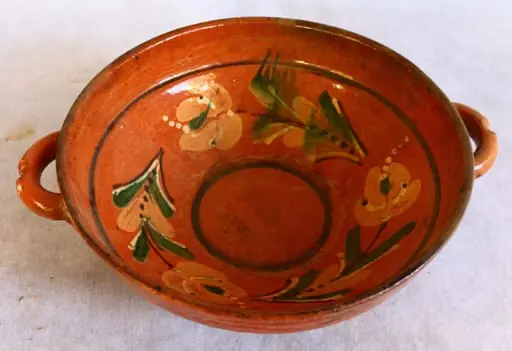 Vas de formă tronconică, cu două toarte laterale („cu urechi”) și una mică la spate. Decor geometric și floral stilizat: între două cercuri concentrice (unul pe fundul vasului, iar cel de-al doilea în partea superioară), trei flori cu frunze stilizate. Cromatică: roșu, negru, verde, alb, galben. Timp de lucru: circa două săptămâni.
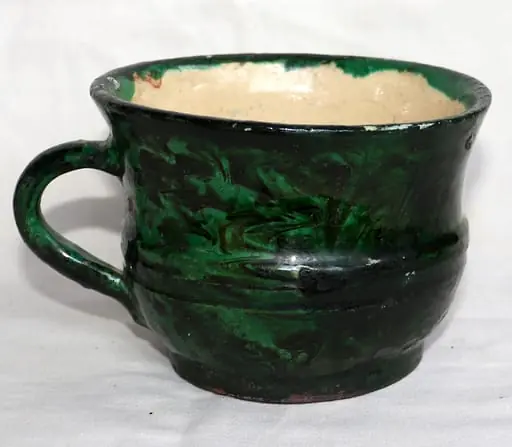 Piesa are o formă cilindrică, fiind lărgită în partea superioară și îngustată către bază. Are toartă situată în zona centrală a suprafeței. Este smălțuită și decorată cu motive geometrice: pe toată suprafața se găsesc forme geometrice (mai ascuțite și mai rotunjite), neregulate, realizate cu pensula; asemenea și toarta. La mijlocul cănii (în partea exterioară) se găsesc două cercuri incizate de jur-împrejur, acestea fiind singurele motive ornamentale ale obiectului. Culorile folosite pentru decorarea ulcelei sunt verde și negru, la interior piesa fiind de culoare bej (crem); fundul nu este smălțuit, culoarea fiind cea cărămizie.
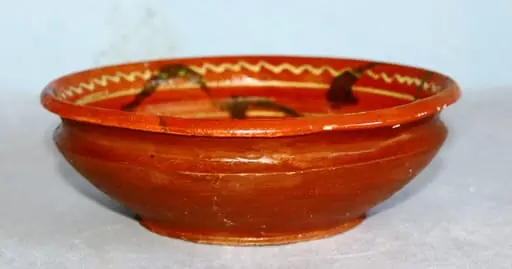 Piesă de formă circulară, adâncită, cu partea superioară concavă la exterior și gaură pentru agățat la spate. În centru, o spirală circulară, înconjurată de patru grupuri de semicercuri cu o bulină în centru. Pe margine: pete elipsoidale între cercuri concentrice și linie șerpuită înspre interior. Stropituri cu verde suprafața interiorului. Cromatică: cărămiziu, alb-gălbui, verde. Timp de lucru: circa două săptămâni.
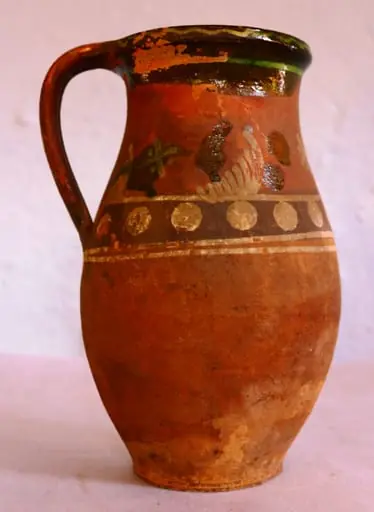 Vas cu corpul bombat, gura largă și o toartă laterală. Central, între două cercuri la bază și unul deasupra, un șir de buline. În partea superioară, patru grupuri de linii curbe, grupate cu o creastă de cocoș. Cruci de punte între brațe. O linie în zig-zag pe gura vasului și una orizontală pe toartă. Cromatică: cărămiziu, brun, alb-gălbui, verde. Timp de lucru: circa două spătămâni.
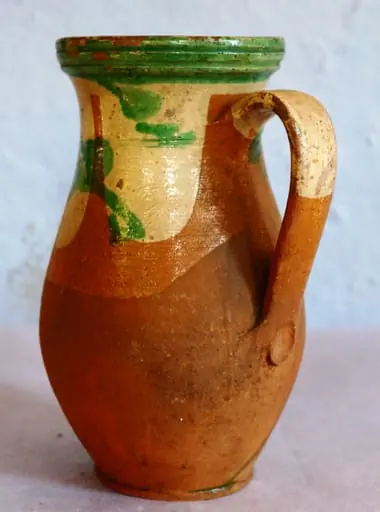 Vas puțin bombat, cu gura largă și toartă laterală. De la gura vasului coboară pete mari ovoidale peste care s-a stropit cu verde. Fondul este cărămiziu în partea inferioară și ocru în partea superioară. Jumătatea de sus a toartei cu alb-gălbui. Cromatică: cărămiziu, ocru, gălbui, verde, alb-gălbui. Timp de lucru: circa două săptămâni.
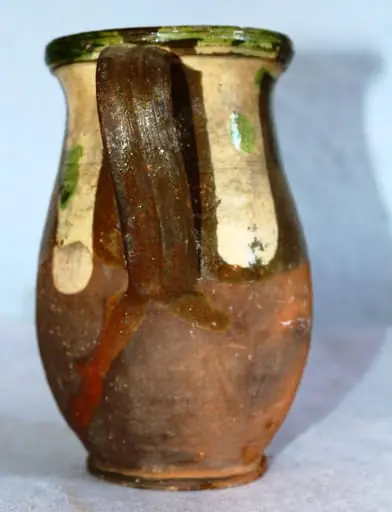 Vas de formă bombată, cu gura largă și toartă laterală. În partea superioară a piesei, pete mari alungite (benzi sau „limbi”) de culoare, realizate prin scurgere, alternând cu fundalul. Peste aceste benzi, pete verzi stropite. Pe buza vasului, la exterior, două cercuri incizate. Cromatică: cărămiziu, alb-gălbui, verde închis. Timp de lucru: circa două săptămâni.
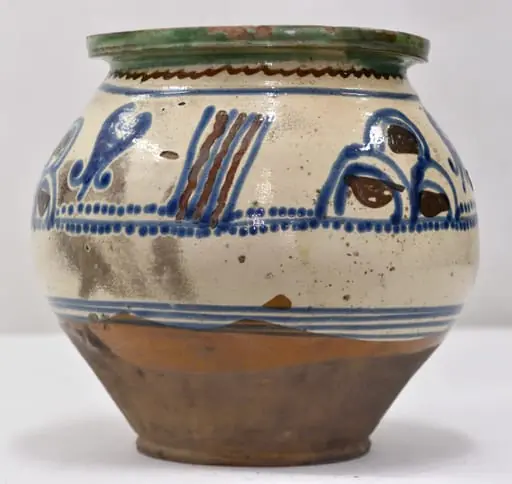 Piesa, al cărei corp este lărgit în partea mediană, are gâtul îngustat și buza evazată. Are atașată o toartă în jumătatea superioară. Este pictată (decorată), conținând motive decorative geometrice și florale: linii verticale, mici linii orizontale, aranjate una deasupra celeilalte, cercuri, de jur-împrejur (între ele fiind creat un registru în care s-a aplicat pictura), flori, fragmente de cerc grupate câte trei, o linie șerpuită în jurul gâtului oalei; toarta este, de asemenea, decorată cu scurte linii orizontale suprapuse. Partea de jos a obiectului este nedecorată. Culorile obiectului, cu excepția suprafeței nedecorate de culoare cărămizie, sunt: alb-crem, maro închis și deschis, verde și albastru.
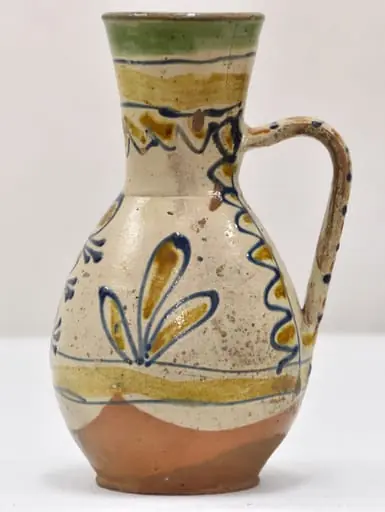 Piesa are o formă relativ cilindrică, fiind îngustată în jumătatea superioară și lărgită (bombată) în cea inferioară. Este dotată cu o toartă laterală. Suprafața exterioară este pictată (decorată), conținând motive decorative geometrice și vegetale: pete de culoare și linii orizontale pe toartă, cercuri de jur-împrejur atât în partea superioară cât și în partea inferioară, semicercuri separate prin câte câte trei liniuțe ramificate - de o parte și de cealaltă a unei linii verticale, două grupuri a câte trei frunze fiecare și linii șerpuite alături de câte o linie verticală (două). Partea de jos a obiectului nu este decorată având culoarea cărămizie. Culorile decorului sunt: alb-crem (fondul), albastru, verde și galben-ocru.
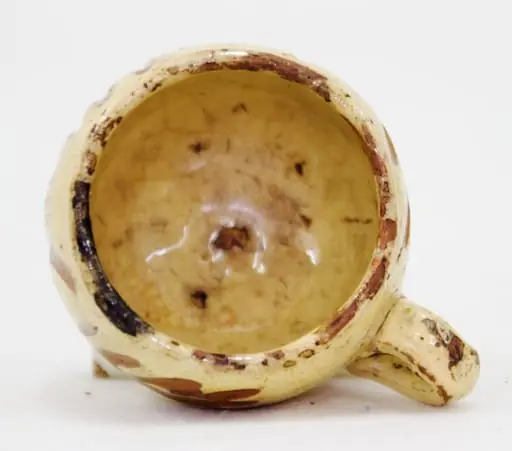 Piesa are o formă relativ cilindrică cu toartă. Are fundul îngustat și buza răsfrântă spre interior. Decorul este realizat prin incizie și pictare cu motive vegetale (crenguțe). Cromatică: galben lămâie (fondul), maro închis (decorul).
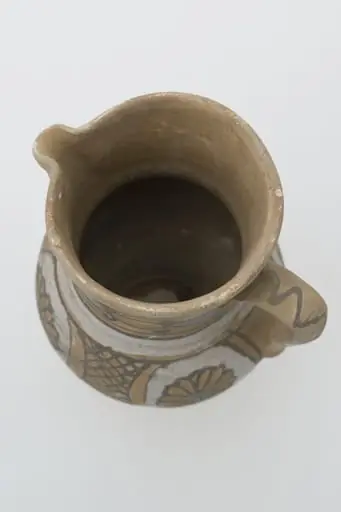 Cană de vin de formă bitronconică cu gâtul lung și buză dreaptă cu cioc. Registrele ornamentale se succed de jos în sus, delimitate de cercuri concentrice, și prezintă pe corpul vasului motive florale și geometrice sub formă de hașură întrerupte de partea de sus de o zonă cerc alb mai gros și mai apoi continuat cu cercuri concentrice ce delimitează de mijloc și de sub buză două cercuri albe groase (angoba). Cromatică: fond: alb; cărămiziu; motive: maro; gri; albastru.
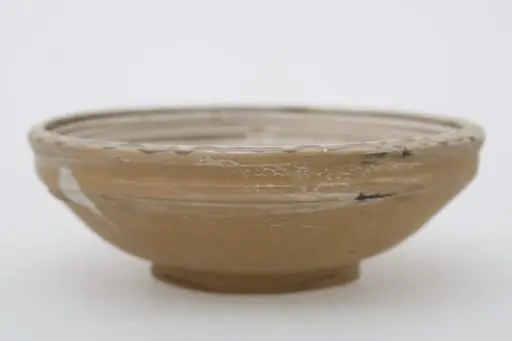 Recipient din lut de uz casnic, nesmălțuit, angobat, de formă tronconică, cu buza dreaptă și înaltă. Pe pereții interiori, vasul este decorat cu motive geometrice și florale: un șir de flori stilizate urmate spre buză de linii concentrice, pictate cu cornul și cu pensula. În centrul vasului este pictată o spirală delimitate de cercuri maro. Buza vasului este ornată cu o linie ondulată. Cromatică: fond: alb; motive: gri; maro închis; maro deschis.
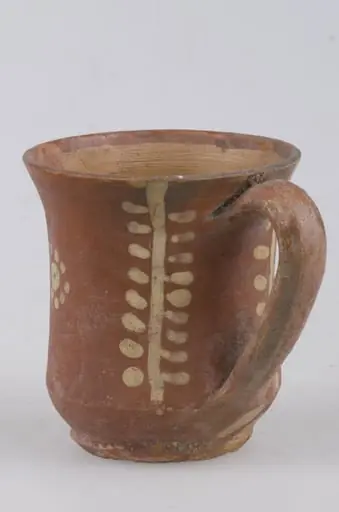 Recipient cilindric cu gura largă, prevăzută cu o toartă laterală care pleacă de sub buză și se termină la nivelul inferior al vasului. Este decorat cu motive florale și vegetale stilizate realizate din linii și puncte. Între trei crenguțe realizate dintr-o linie verticală și două rânduri de linii scurte orizontale paralele, de o parte și de alta a acesteia sunt pictate două flori realizate dintr-un punct central înconjurat de un cerc de puncte de dimensiuni mai mici. Smălțuit pe exterior. Cromatică: fond cărămiziu; motive: alb.
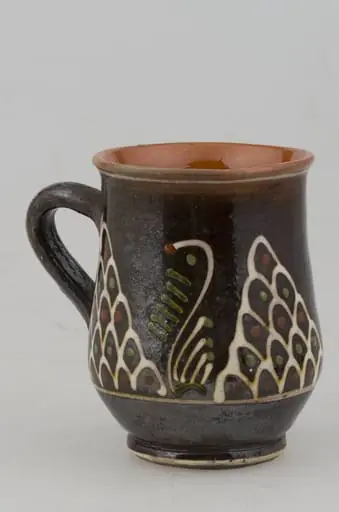 Cană cu corpul ușor bombat și buza evazată. Prezintă o toartă ce pleacă de la aproximativ doi centimetri sub buză până în jumătatea inferioară, pe maximul diametrului corpului. Decorat format din linii curbe, puncte și motive vegetale stilizate. Smălțuită la interior și la exterior. Cromatică: fond: brun; motive: verde; roșu; alb.
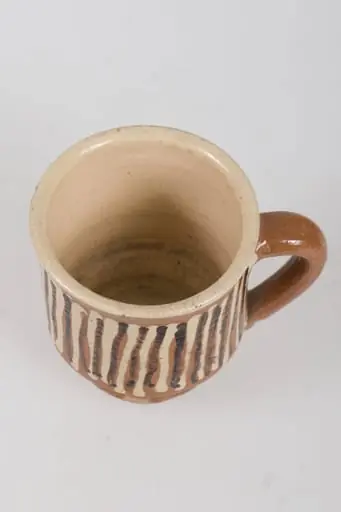 Vas de formă cilindrică cu baza puțin mai îngustă. Prezintă o toartă prinsă de sub gură și până la bază. Angobat cu albeală în interior și exterior. Smălțuit în interior și exterior. Decorul este compus din motive geometrice: dungi paralele albe și negre trase cu cornul pe pereți.
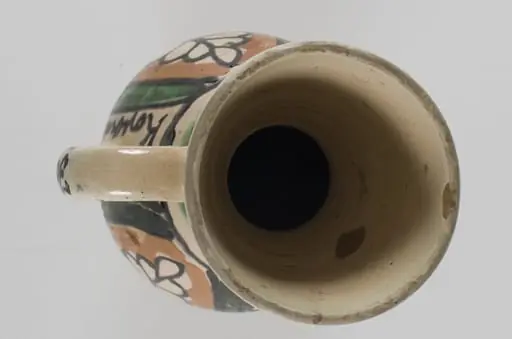 Cană cu gât lung, cu buza evazată și o toartă. Este smălțuită în interior și în exterior. Prezintă decor pe toată suprafața cu motive fitomorfe, motive florale stilizate și motive geometrice: linie, linie ondulată, punct, tablă de șah. Pe toartă scrie ”Jozsa Janos”, iar pe corp, chiar lângă toartă, scrie ”Korond 1974”. Cromatică: fond: alb; motive: bej, maro, verde, negru.
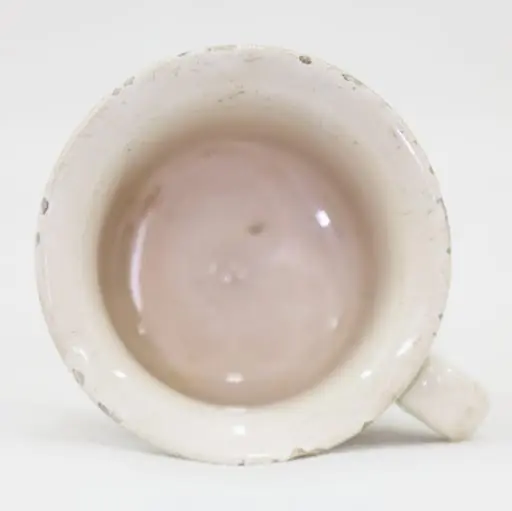 Piesa are o formă relativ cilindrică, cu buza ușor evazată și toartă plină. Sub buză și la bază, câte un cerc concentric. Decorul pictat dispune de motive florale și vegetale (flori și frunze). Cromatică: alb (fondul), verzui (decorul).
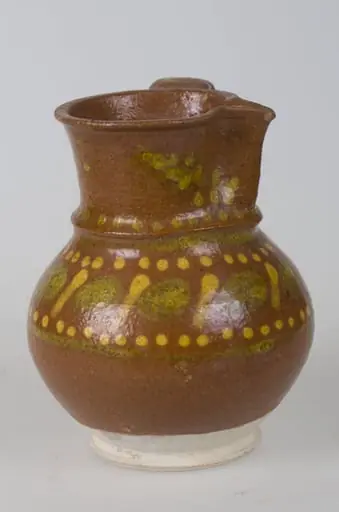 Vas cu corpul de formă cilindrică, cu fundul plat, corpul pântecos, gâtul înalt și gura largă, este prevăzută cu un cioc de scurgere așezat la nouăzeci grade față de toartă. Decorul pictat a fost realizat cu pensula în zona pântecului și a gâtului, format din motive geometrice. Pe pântecul vasului a fost pictat un registru încadrat între două linii de culoare verzuie, între care se află alte două linii realizate din puncte de culoare galbenă. În interiorul liniilor menționate anterior se află registre circulare format din pete de culoare verzuie, separate de linii galbene orizontale înclinate. Pe marginea vasului și pe toartă au fost pictate trei flori de culoare verde, de tipul „spicului de grâu”. Cromatică: alb (fund), maro-roșcat restul suprafeței; motive: galben; verde.
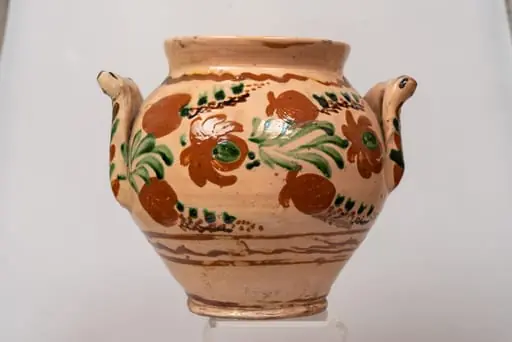 Piesă cu corp sferic, gât îngust, drept și buză mică, ușor evazată, cu două torți de prindere (în bandă, de formă dreptunghiulară), inserate orizontal și diametral opus în zona mediană a corpului, nedepășind în înălțime gura vasului. Torțile sunt decorate cu puncte și cu motivul bradului. Gâtul vasului este marcat de o linie vălurită de culoare maro, sub care, pe corpul vasului, se desfășoară decorul principal constând în motive florale, flancate de șiruri de boboci și motive fitomorfe, caracteristice centrului: frunze alungite, de culoare verde. Sub decorul central apar trei linii concentrice de culoare maro (cea mediană fiind ușor vălurită), pictate cu cornul. Baza vasului este marcată de asemenea de o linie circulară maro. Cromatica: alb, maro, brun, verde. Vasul este smălțuit pe ambele fețe cu smalț transparent.
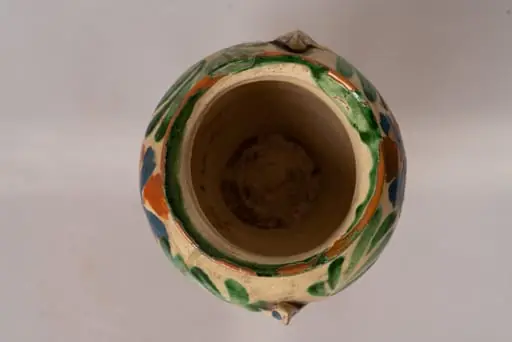 Piesă cu corp discoidal bombat, cu doi butoni triunghiulari aplicați pe corpul vasului în zona mediană și decorați cu puncte pictate. Buza vasului este marcată cu o linie pictată iar gâtul de un șir de puncte de culoare maro și albastru. Corpul vasului este decorat cu motive florale (floare rotundă cu opt petale) și motive fitomorfe, caracteristice centrului: frunze alungite de culoare verde. Sub decorul central apar linii concentrice pictate cu cornul, de culoare verde. Cromatica: alb, verde, maro, albastru. Vasul este smaălțuit transparent pe ambele fețe.