Artwork
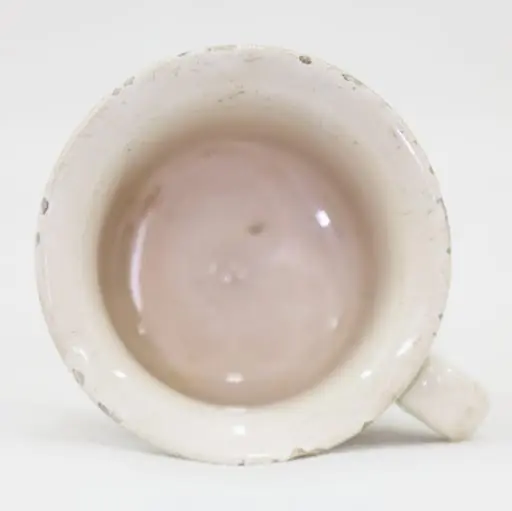
Vas de formă cilindrică cu baza puțin mai îngustă. Prezintă o toartă prinsă de sub gură și până la bază. Angobat cu albeală în interior și exterior. Smălțuit în interior și exterior. Decorul este compus din motive geometrice: dungi paralele albe și negre trase cu cornul pe pereți.
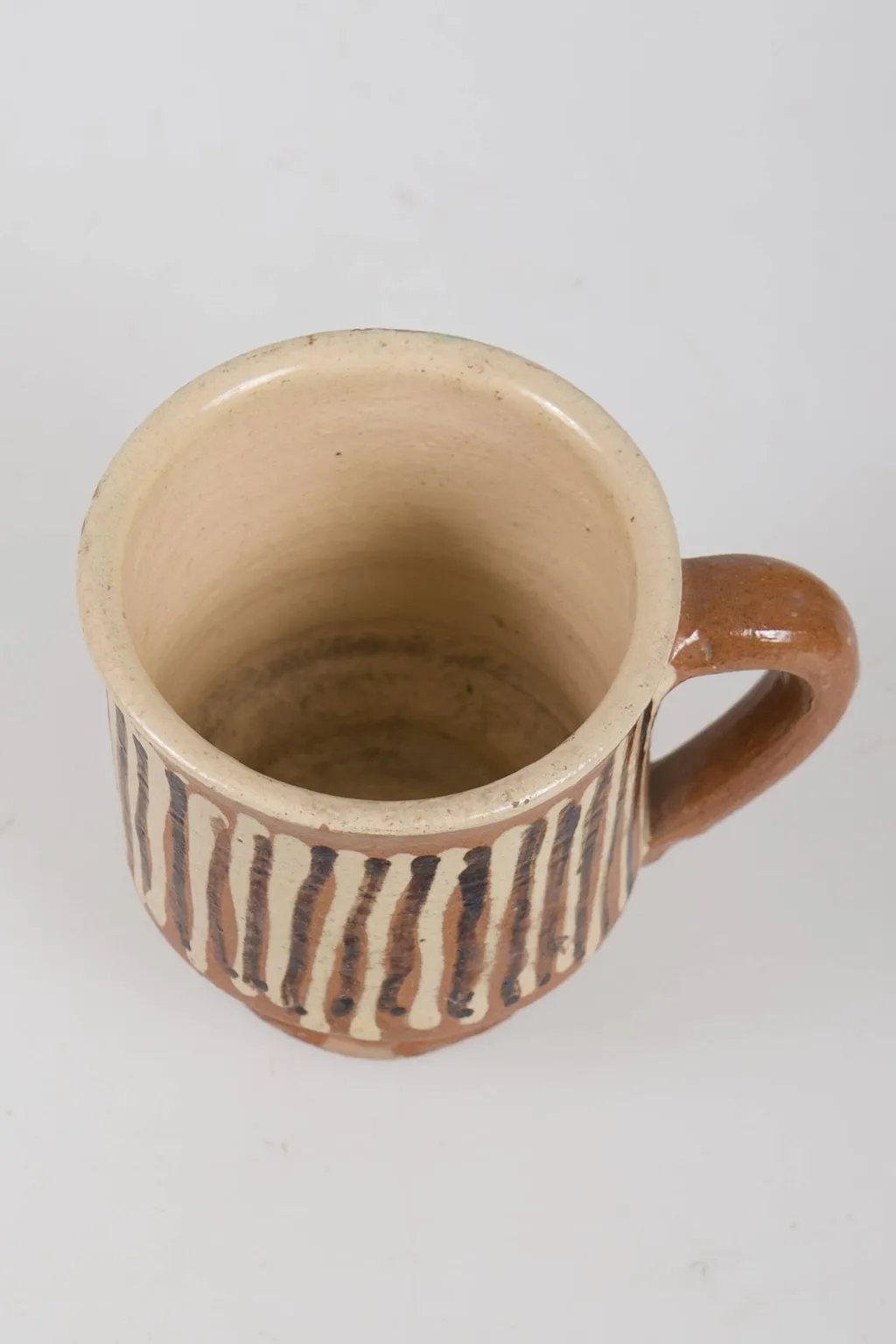
Vas de formă cilindrică cu baza puțin mai îngustă. Prezintă o toartă prinsă de sub gură și până la bază. Angobat cu albeală în interior și exterior. Smălțuit în interior și exterior. Decorul este compus din motive geometrice: dungi paralele albe și negre trase cu cornul pe pereți. is a photography by Toc Gheorghe. It is held in the collection of the ASTRA National Museum Complex. A cylindrical ceramic vessel with a slightly narrowed base, this piece functions as a drinking container.
About this work
Overview
A cylindrical ceramic vessel with a slightly narrowed base, this piece functions as a drinking container. Its interior and exterior surfaces are coated with a white slip and glazed, creating a smooth, reflective finish. A single thick handle extends from beneath the rim to the base, offering a secure grip. The design is minimal, emphasizing form and surface treatment over elaborate ornamentation.
Subject & Meaning
No figural or symbolic imagery is present. The decoration consists solely of alternating vertical bands of white and dark pigment, suggesting a focus on rhythm and balance rather than narrative. The simplicity of the form and pattern implies utilitarian purpose, likely tied to daily use in domestic or communal settings, where aesthetics served functional harmony.
Technique & Style
The stripes were applied with a tool—possibly a bone or wooden implement—while the clay was leather-hard, resulting in slightly irregular, hand-drawn lines.
The stripes were applied with a tool—possibly a bone or wooden implement—while the clay was leather-hard, resulting in slightly irregular, hand-drawn lines. The slip and glaze were applied uniformly inside and out, sealing the surface and enhancing durability. The technique reflects a tradition of controlled, repetitive mark-making common in regional ceramic practices, prioritizing consistency over precision.
History & Provenance
This vessel aligns with pottery traditions from rural Romanian communities, particularly those documented in the Târgu Ocna region. Similar forms and decorative schemes appear in archaeological and ethnographic collections from the 19th and early 20th centuries. The attribution to Toc Gheorghe suggests a connection to a known local artisan or workshop, though specific provenance remains unverified.
Context
Produced in a setting where pottery was made for household use, this piece reflects a broader cultural practice of functional ceramics with restrained decoration. The vertical banding echoes motifs found in other Balkan and Carpathian traditions, where geometric patterns were favored for their ease of execution and visual clarity. Such vessels were often made in small batches, using locally sourced clay and fired in open kilns.
Legacy
This vessel exemplifies a durable, unadorned aesthetic that persisted in rural ceramic production well into the modern era. Its design, though simple, represents a continuity of technique and form passed through generations of makers. While not widely exhibited, it contributes to the understanding of everyday material culture in pre-industrial Romanian communities.
Artist & collection
Artist
Gheorghe Toc made earthenware jugs, bowls, and pitchers with geometric or floral patterns and rich colors like brick red, cream, and green.

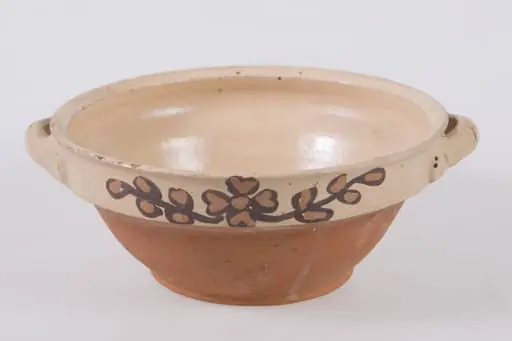 Castron mic de formă tronconică, cu baza marcată printr-un inel proeminent. Buză cu contur rotund în exterior și ascuțit în interior. Decorul floral ce constă dintr-o floare pictată cu cornul în interior, pe fundul vasului. Cromatică: fond: alb-crem; motive: galben; negru; verde.
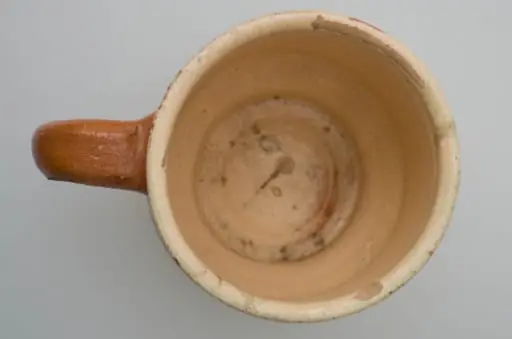 Cană de formă ușor tronconică cu inel răsfrânt în exterior. Prezintă toartă ce pleacă de sub buză și se unește cu corpul spre bază. Smălțuită în interior și exterior. Decor: floare cu patru petale realizată cu cornul din hume naturale; brâu de dungi scurte. Cromatică: fond maro; motive: alb; negru; verde.
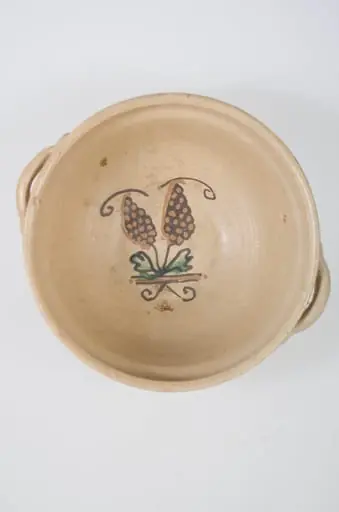 Farfurie de formă tronconică cu buza răsfrântă. Vasul este smălțuit atât la interior cât și la exterior. Decorul este amplasat pe fundul vasului motive florale (buchet) și motive fitomorfe (vrej). Cromatică; fond: alb-crem; motive: galben; negru; verde.
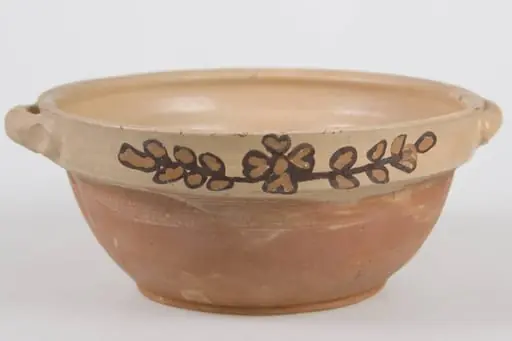 Vas tronconic cu buza răsfrântă. Prezintă două toarte mici fixate diametral opus la nivelul buzei. Decorul este poziționat într-un registru central format din motive florale (buchet) și motive fitomorfe (vrej). Cromatică: fond: crem; motive: maron deschis; maron închis; verde.
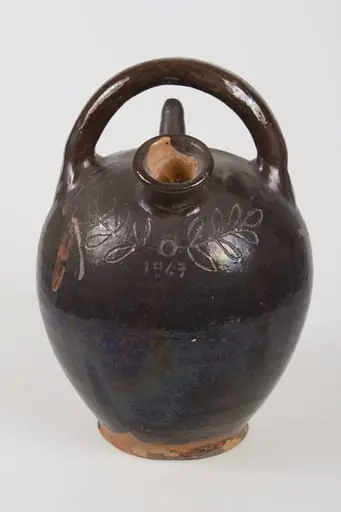 Recipient din lut de formă sferică, prevăzut cu două orificii la partea superioară și toartă. Sub gură, frontal, sunt incizate motive vegetale - o creangă cu frunze și anul ”1967''. La capătul opus, țuțul subțire este încadrat de două flori incizate cu tulpini și frunze. Cromatică: brun închis.
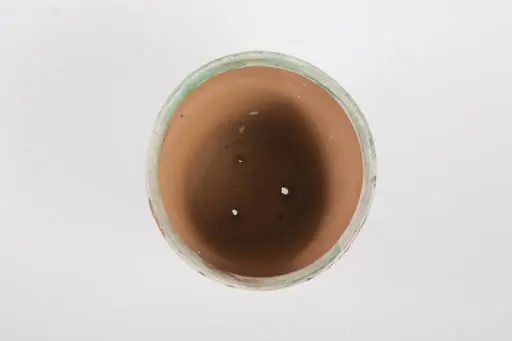 Vas de mici dimensiuni de formă tronconică cu baza mai mică; manșon sub gură lat de 4 cm, decorat cu motive geometrice: șir de romburi înscrise realizate cu cornul. Fund perforat pentru scurgerea apei. Cromatică: fond: cărămiziu; motive: galben; negru.
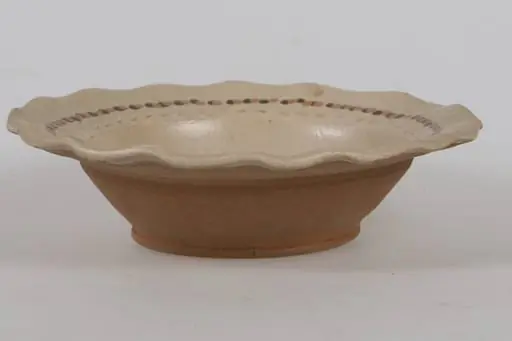 Farfurie de formă tronconică cu baza marcată printr-un inel proeminent perforat pentru atârnare pe perete cu buza lată, mult înclinată în afară și ondulată. Decorată cu un motiv central: floare; brâu alveolat pe buză realizat cu unghia si un alt brâu de puncte realizate cu cornul. Smălțuită la interior și la exterior. Cromatică: fond: bej; motive: maron închis; maron deschis.
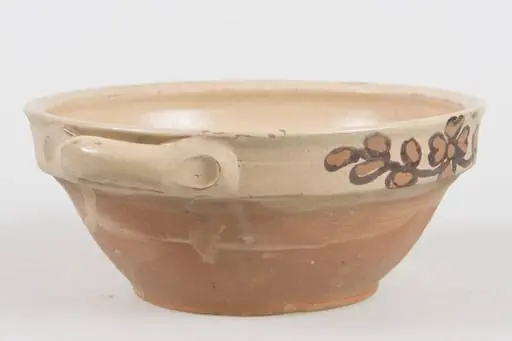 Vas de formă tronconică, cu baza marcată printr-un inel proeminent, buza ușor răsfrântă continuată cu o bandă lată, de care sunt fixate două torți dispuse orizontal ce au la capete impresiuni alveolate, rămase de la lipirea lor prin apăsare cu degetul. Cromatică: fond: crem; motive: verde; maron deschis; maron închis.
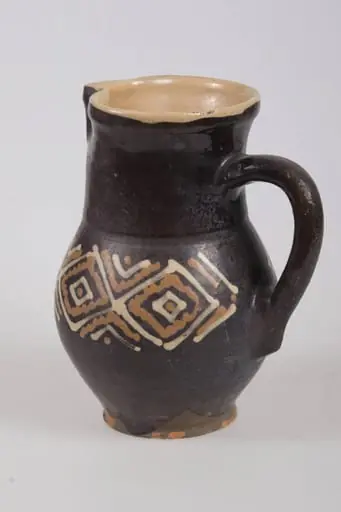 Cană de formă sferoidală cu inel la bază, gât înalt și drept cu gura bilobată. Toarta este fixată de la gât la mijlocul vasului. La capătul inferior al toartei avem un pinten. Gura este dreaptă cu buza ușor răsfrântă. Angobat, smălțuit în interior și în exterior. Decor format din motive geometrice: brâu de romburi colorate realizat cu cornul. Cromatică: fond: maro închis; motive: alb; galben; negru.
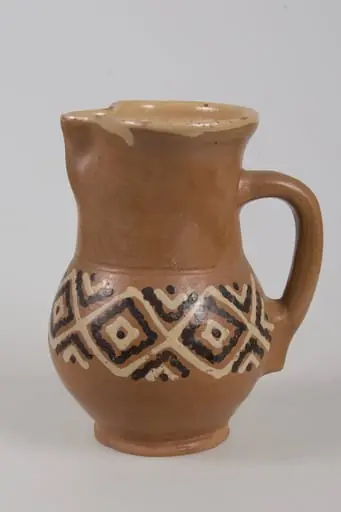 Vas din lut de formă sferoidală cu inel la bază, gât înalt și drept, cu toartă prinsă între gât și mijlocul vasului. Capătul inferior al toartei are un pinten. Angobat in interior cu smalț la exterior și interior. Decor cu motive geometrice: brâu de romburi pictat cu corn in hume naturale; două dungi imprimate cu piaptănul. Prezintă cioc de scurgere. Cromatică: fond: alb-crem în interior; cărămiziu în exterior; motive: alb; negre.
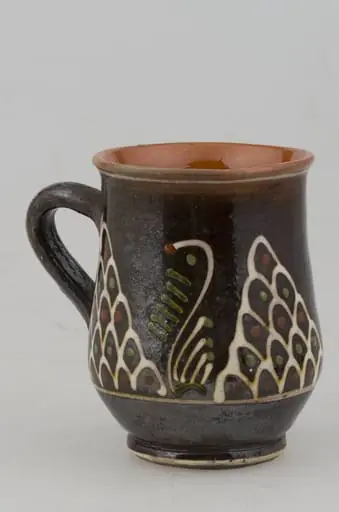 Cană cu corpul ușor bombat și buza evazată. Prezintă o toartă ce pleacă de la aproximativ doi centimetri sub buză până în jumătatea inferioară, pe maximul diametrului corpului. Decorat format din linii curbe, puncte și motive vegetale stilizate. Smălțuită la interior și la exterior. Cromatică: fond: brun; motive: verde; roșu; alb.
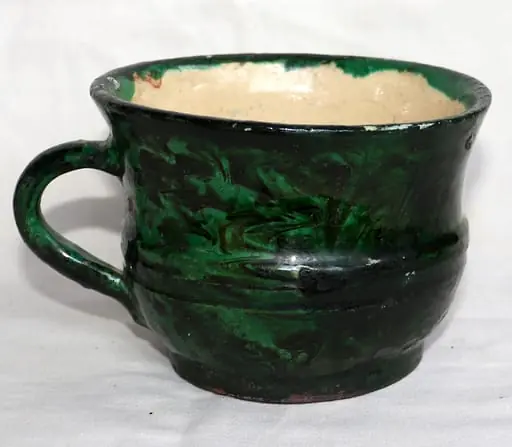 Piesa are o formă cilindrică, fiind lărgită în partea superioară și îngustată către bază. Are toartă situată în zona centrală a suprafeței. Este smălțuită și decorată cu motive geometrice: pe toată suprafața se găsesc forme geometrice (mai ascuțite și mai rotunjite), neregulate, realizate cu pensula; asemenea și toarta. La mijlocul cănii (în partea exterioară) se găsesc două cercuri incizate de jur-împrejur, acestea fiind singurele motive ornamentale ale obiectului. Culorile folosite pentru decorarea ulcelei sunt verde și negru, la interior piesa fiind de culoare bej (crem); fundul nu este smălțuit, culoarea fiind cea cărămizie.
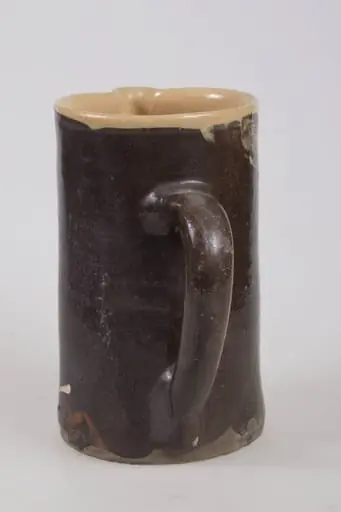 Cană de formă cilindrică cu pereți ușor înclinați spre bază, gura bilobată, buza ușor răsfrântă. Toarta este fixată între buză și bază. Angobă interioară. Smălțuit interior și exterior. Decor este dominat de doi ciorchini cu o ramură și două frunze, pe întreaga parte frontală a vasului. Cromatică: fond: cărămiziu; motive: alb; galben.
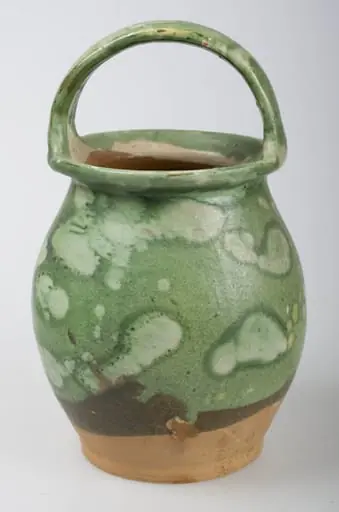 Oală de formă bitronconică cu baza plată cu pereții puternic arcuiți îngustându-se ușor în partea superioară. Buza este puțin răsfrântă la exterior. Prezintă o toartă de susținere plasată diametral, peste gură (mănușă). Angobat, stropit cu verde, smălțuit în interior și exterior. Cromatică: verde; maro; alb.
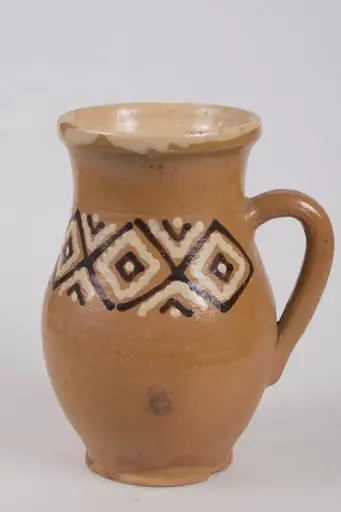 Vas mic de formă cilindrică cu gât svelt, gura dreaptă și buza ușor răsfrântă și inel la bază. Toarta este plasată de la mijlocul gâtului la mijlocul vasului. Interior angobat apoi smălțuit. Decor compus dintr-un brâu de romburi pictat cu cornul, din hume naturale; două dungi în partea superioară realizate prin apăsare cu pieptenul. Cromatică; fond: cărămiziu; motive; maron; crem
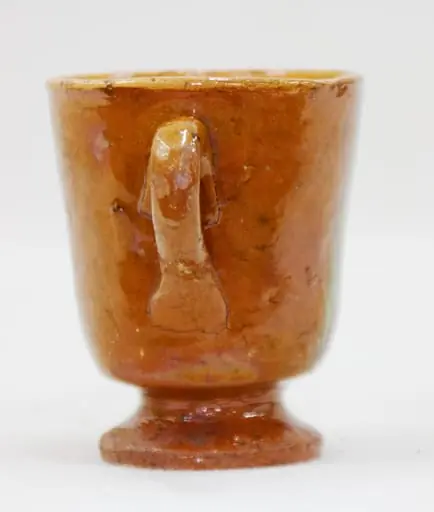 Piesa de formă relativ cilindrică, cu picior de susținere scund și toartă. Decorul este realizat prin pictare cu motive liber desenate (linii verticale). Cromatică: maro - roșcat (fondul), alb, verde, maro închis (decorul).
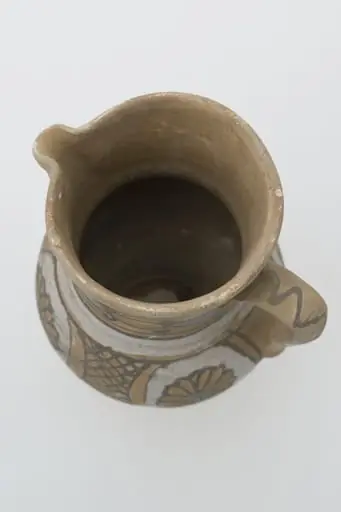 Cană de vin de formă bitronconică cu gâtul lung și buză dreaptă cu cioc. Registrele ornamentale se succed de jos în sus, delimitate de cercuri concentrice, și prezintă pe corpul vasului motive florale și geometrice sub formă de hașură întrerupte de partea de sus de o zonă cerc alb mai gros și mai apoi continuat cu cercuri concentrice ce delimitează de mijloc și de sub buză două cercuri albe groase (angoba). Cromatică: fond: alb; cărămiziu; motive: maro; gri; albastru.
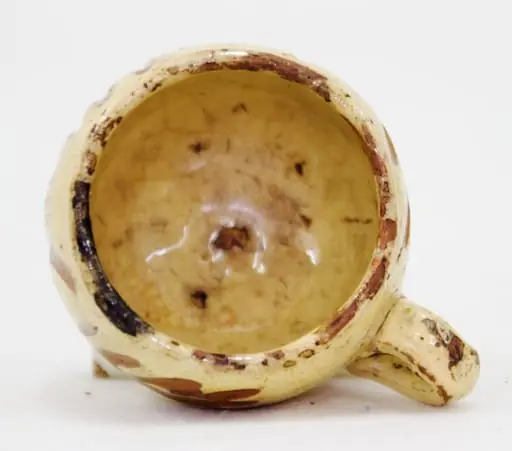 Piesa are o formă relativ cilindrică cu toartă. Are fundul îngustat și buza răsfrântă spre interior. Decorul este realizat prin incizie și pictare cu motive vegetale (crenguțe). Cromatică: galben lămâie (fondul), maro închis (decorul).
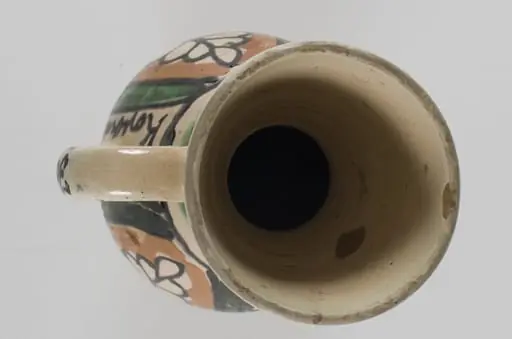 Cană cu gât lung, cu buza evazată și o toartă. Este smălțuită în interior și în exterior. Prezintă decor pe toată suprafața cu motive fitomorfe, motive florale stilizate și motive geometrice: linie, linie ondulată, punct, tablă de șah. Pe toartă scrie ”Jozsa Janos”, iar pe corp, chiar lângă toartă, scrie ”Korond 1974”. Cromatică: fond: alb; motive: bej, maro, verde, negru.
 Piesa are o formă relativ cilindrică, cu buza ușor evazată și toartă plină. Sub buză și la bază, câte un cerc concentric. Decorul pictat dispune de motive florale și vegetale (flori și frunze). Cromatică: alb (fondul), verzui (decorul).