Artwork
On trouve le corps mort de l'hote que l'on avait cache
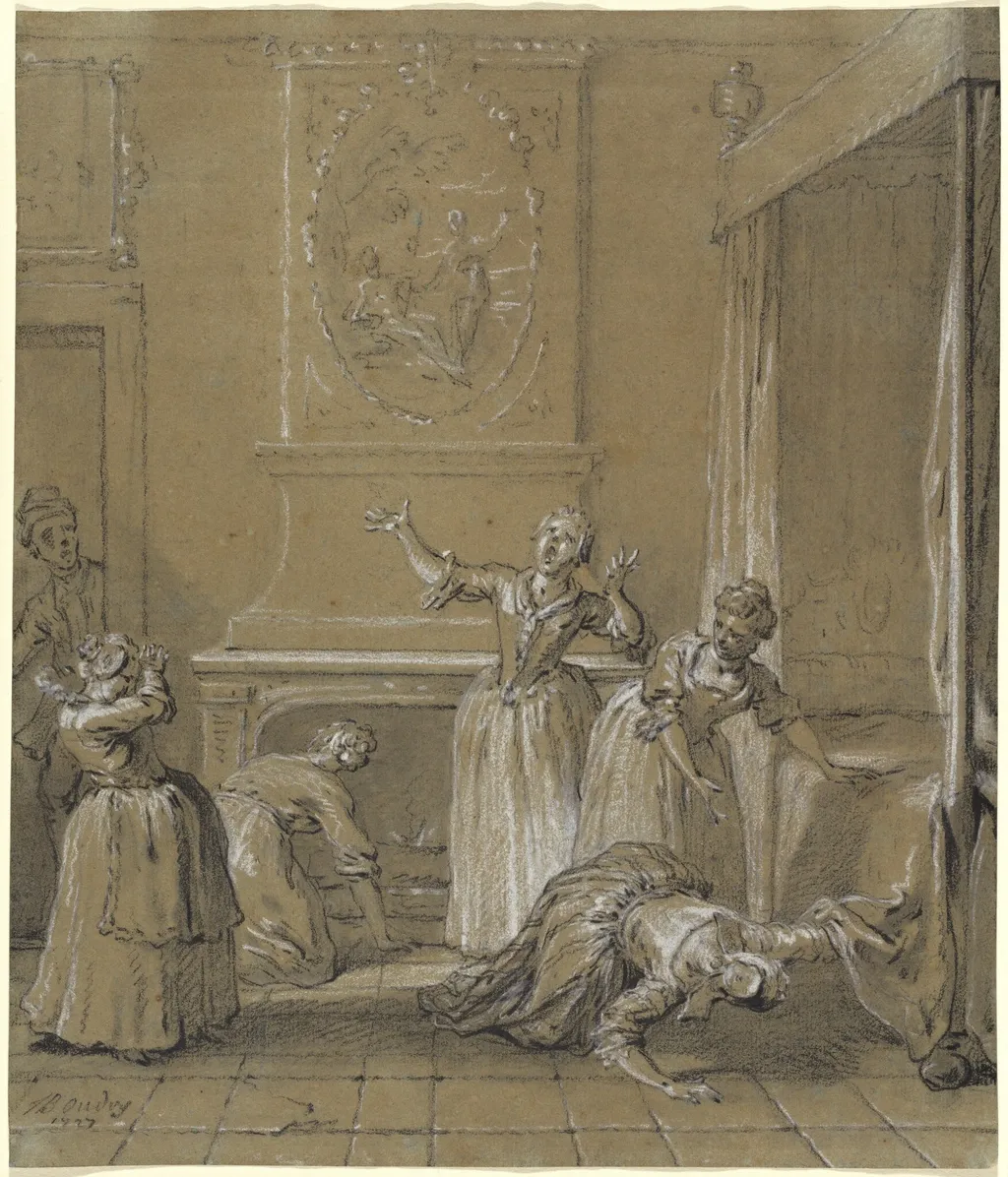
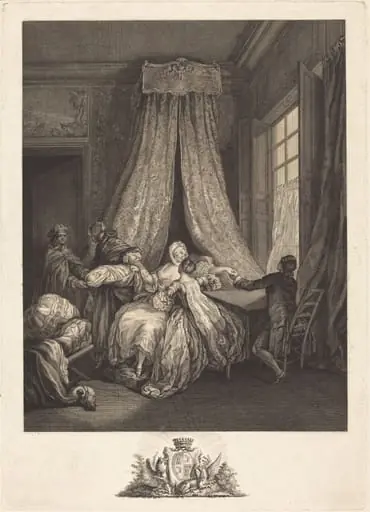
On trouve le corps mort de l'hote que l'on avait cache is a chalk drawing by the Baroque artist Jean-Baptiste Oudry. It dates from 1727 and is held in the collection of the National Gallery of Art.
About this work
Overview
On trouve le corps mort de l'hote que l'on avait cache, a drawing by Jean-Baptiste Oudry, dates to 1727. Executed in black and white chalk on blue laid paper, it depicts a dramatic indoor scene with multiple figures responding to a discovered corpse.
Subject & Meaning
The drawing illustrates a moment of tense discovery within a stone-walled room. Figures react with varied emotions to the corpse on the floor, conveying a sense of sudden, dramatic revelation. The title suggests the body was previously hidden, amplifying the scene's tension.
Technique & Style
Oudry employed black chalk heightened with white on blue paper to achieve bold contrasts, reminiscent of chiaroscuro. This technique, coupled with the Rococo's decorative aesthetic, results in a detailed, lifelike portrayal with pronounced lighting effects.
History & Provenance
Created in 1727 by Jean-Baptiste Oudry, a French Rococo artist known for naturalistic animal and hunt scenes, as well as tapestry designs. The drawing's precision reflects his expertise in these areas.
Context
While Oudry is renowned for animal scenes, this work showcases his ability to depict human drama within the Rococo style, characterized by its playful yet detailed approach to art.
Legacy
This drawing demonstrates Oudry's versatility beyond his typical subjects, highlighting his skill in capturing dramatic moments through chiaroscuro and precise draftsmanship, influencing the broader Rococo artistic movement.
Artist & collection

Artist
Jean-Baptiste Oudry was a French Rococo painter, engraver, and tapestry designer. He is particularly well known for his naturalistic pictures of animals and his hunt pieces depicting game. His son, Jacques-Charles Oudry, was also a painter.

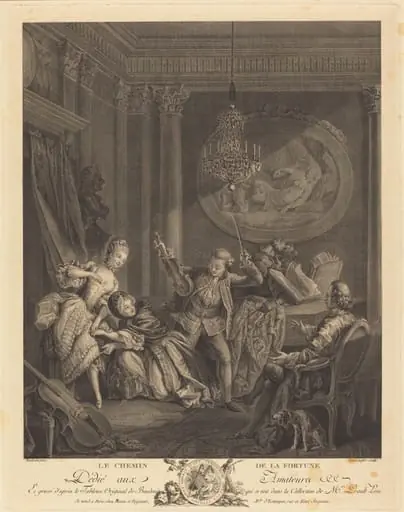 Le chemin de la fortune
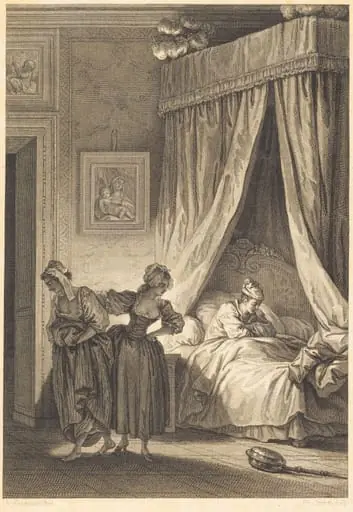 La gageure des trois commeres: La servante
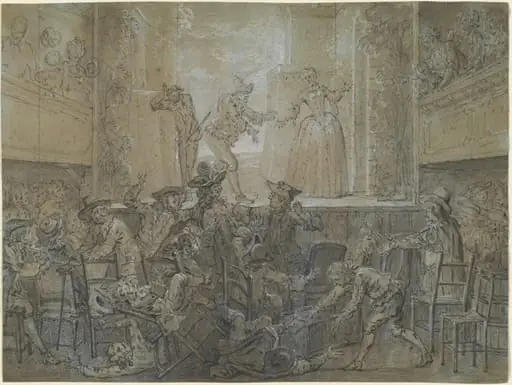 The Scene with the Tall Baguenodière
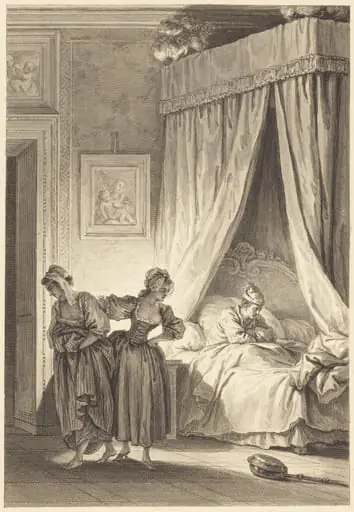 La gageure des trois commeres: La servante
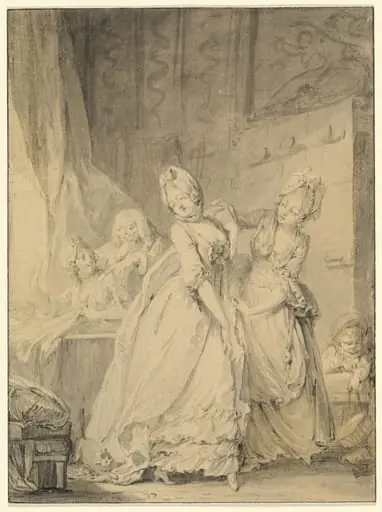 The Coquette
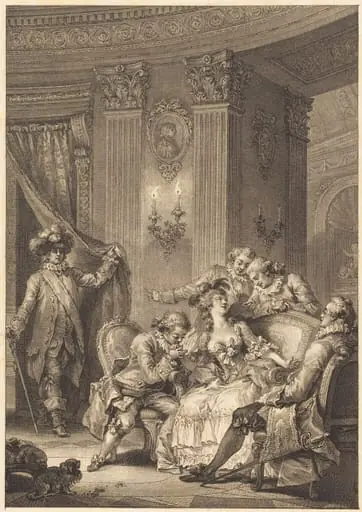 Le mari confesseur
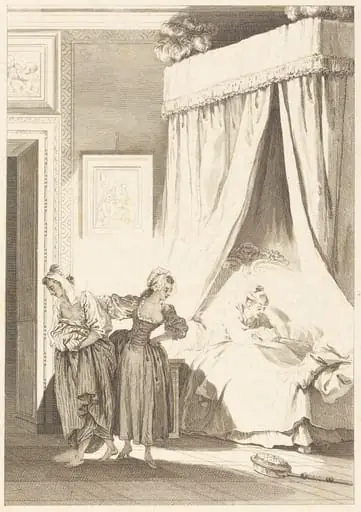 La gageure des trois commeres: La servante
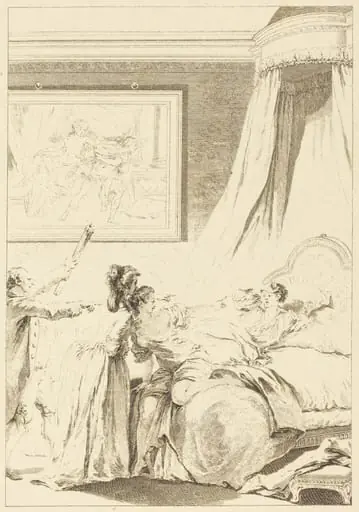 Le gascon puni
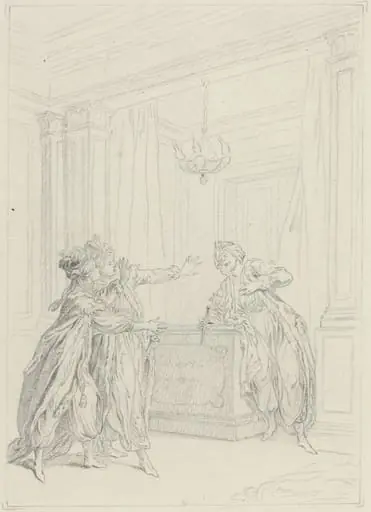 Calmine, quel objet vient Effrayer ma vue?
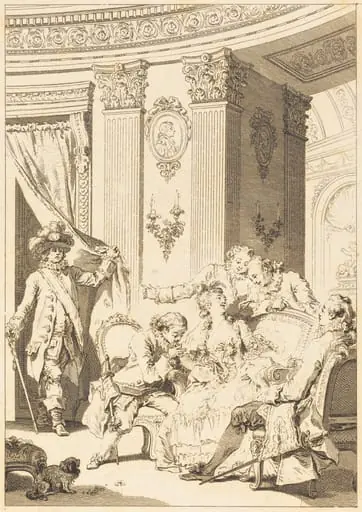 Le mari confesseur
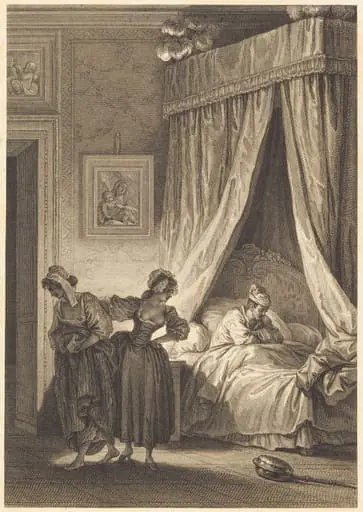 La gageure des trois commeres: La servante
 Le fruit de l'amour secret