Artwork
Calmine, quel objet vient Effrayer ma vue?
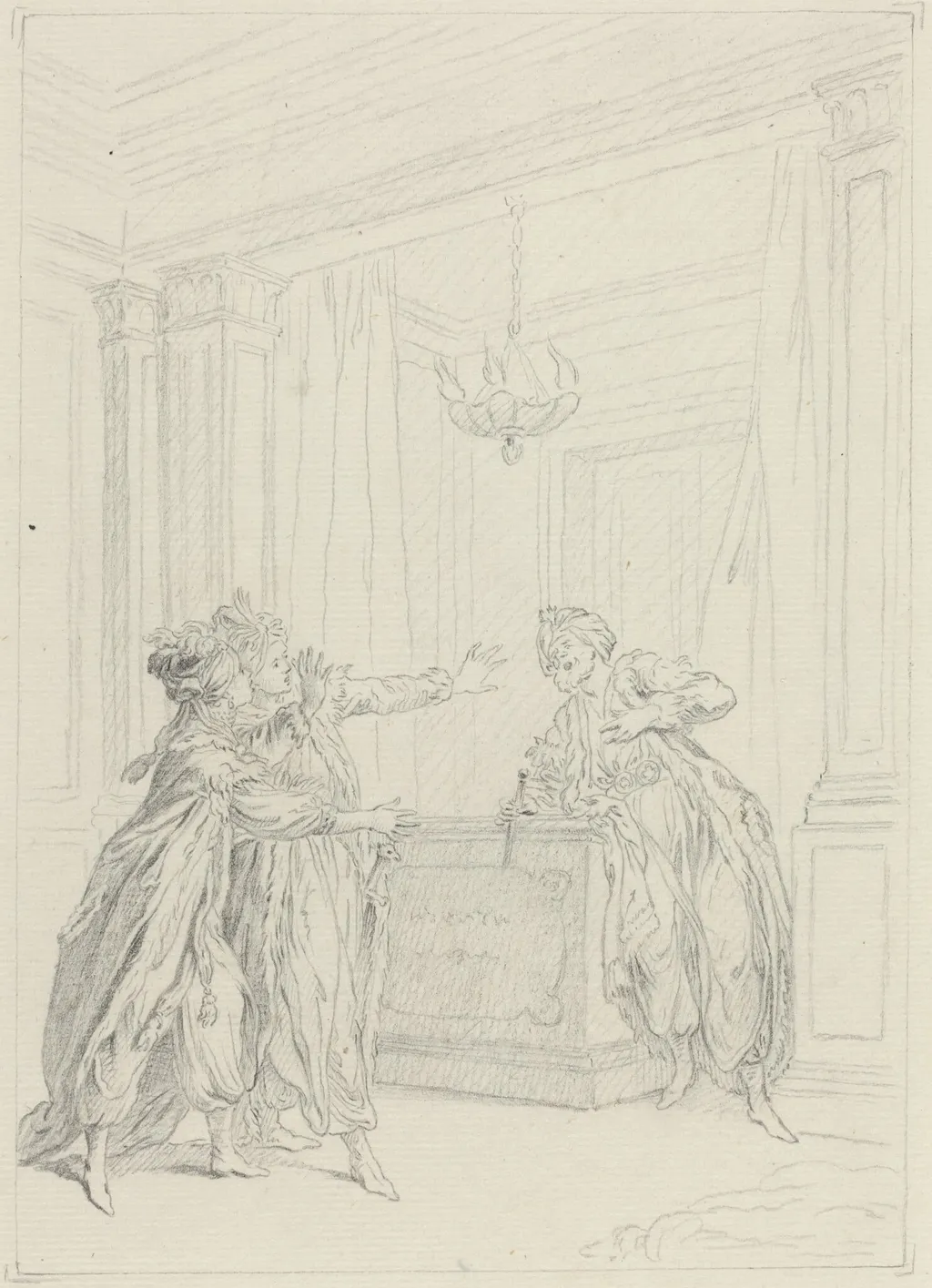
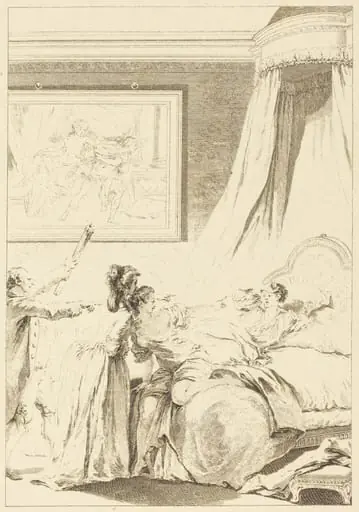
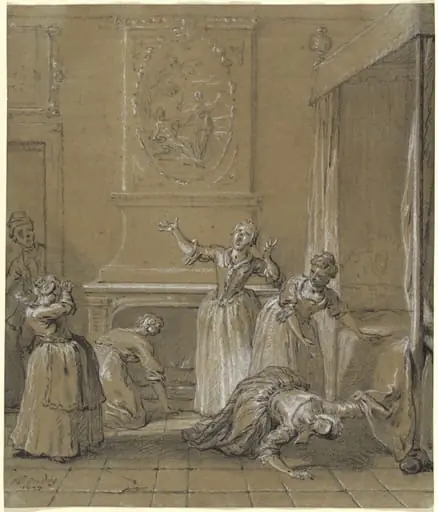
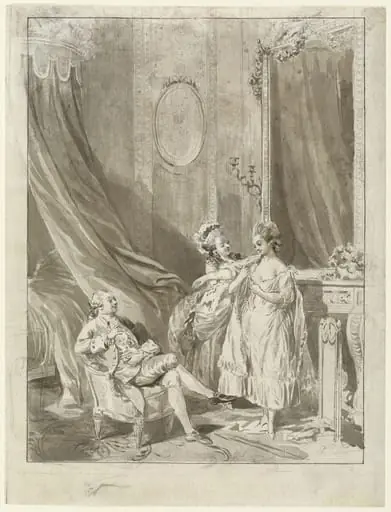
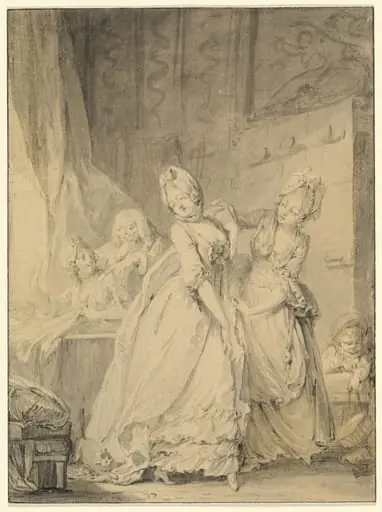
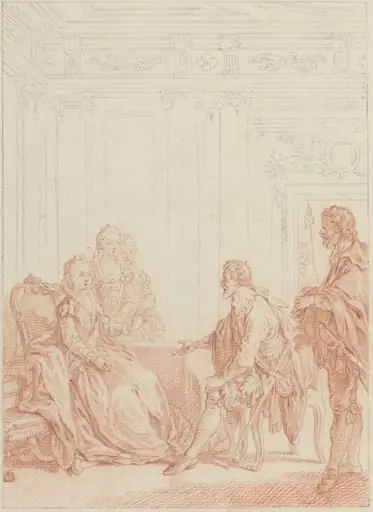
Calmine, quel objet vient Effrayer ma vue? is a graphite drawing by the Baroque artist Hubert François Gravelot. It dates from 1736 and is held in the collection of the National Gallery of Art. Created in 1736, this graphite drawing by Hubert-François Gravelot captures a moment of tension between two women in an interior setting.
About this work
Overview
Created in 1736, this graphite drawing by Hubert-François Gravelot captures a moment of tension between two women in an interior setting.
Created in 1736, this graphite drawing by Hubert-François Gravelot captures a moment of tension between two women in an interior setting. Executed on laid paper, the work reflects Gravelot’s skill as a draftsman and his transition from Paris to London, where he contributed to the dissemination of Rococo aesthetics. The medium’s immediacy suits the sketch’s spontaneous quality, suggesting a study for a larger composition or a narrative vignette.
Subject & Meaning
The scene depicts one woman standing with her back to the viewer, gesturing toward another seated at a table, who holds a fan. The title, translating to 'Calm, what object frightens my sight?', implies a moment of alarm or revelation. Though the exact narrative is unclear, the dynamic poses and expressive gestures suggest an emotional exchange—perhaps a reprimand, a warning, or a reaction to an unseen object or event.
Technique & Style
Gravelot employed loose, fluid graphite lines to convey movement and gesture rather than detail. The drawing’s economy of form emphasizes posture and gesture over precise rendering, characteristic of preparatory sketches. The interior elements—curtains, chandelier, tall windows—are suggested with minimal strokes, allowing the figures’ interaction to dominate. This approach aligns with Rococo’s preference for elegance and spontaneity over rigid structure.
History & Provenance
Gravelot, trained in Paris as an engraver and illustrator, relocated to London in 1732, where he worked on book illustrations and decorative designs. This drawing likely dates from his early years in England, a period when he influenced British artists through his refined draftsmanship. Its survival as a standalone sheet suggests it was valued as an independent work, not merely a study, though its early provenance remains undocumented.
Context
In 1730s London, French artistic styles were gaining traction among the elite. Gravelot’s drawings helped introduce the Rococo’s lightness and theatricality to British visual culture. This piece reflects the era’s fascination with intimate, narrative scenes in domestic settings, often drawn from literature or theater. The emphasis on gesture and fleeting emotion aligns with broader European trends in drawing as a vehicle for psychological nuance.
Legacy
Gravelot’s drawings, including this one, contributed to the evolution of British illustration and decorative arts. His ability to translate French Rococo sensibilities into accessible, expressive sketches influenced a generation of designers and engravers. Though not widely exhibited today, such works remain important for understanding the transmission of continental styles across 18th-century Europe.
Artist & collection

Artist
Hubert-François Bourguignon, commonly known as Gravelot (26 March 1699 – 20 April 1773), was a French engraver, a famous book illustrator, designer and drawing-master.

 Self-Portrait
 Ornamental Medallions with the Adoration of the Magi and Two Bibliophiles
 Coat of Arms with Three Putti
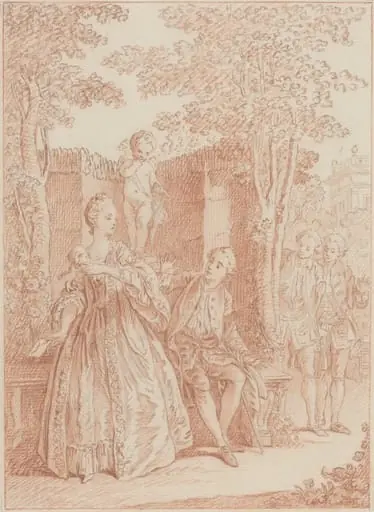 Oui, je la connais Traitre, et je connais ton Coeur
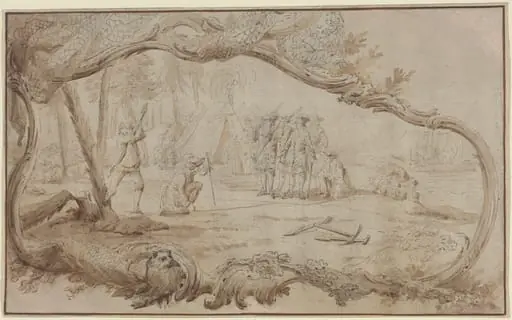 The Landing of the Dutch Expedition Party in New York
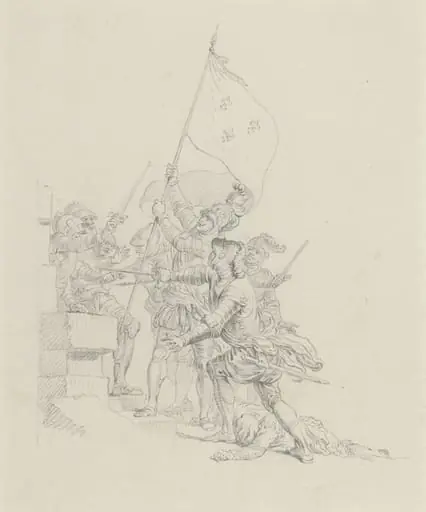 Il monte: il a déjà de ses mains triomphantes...
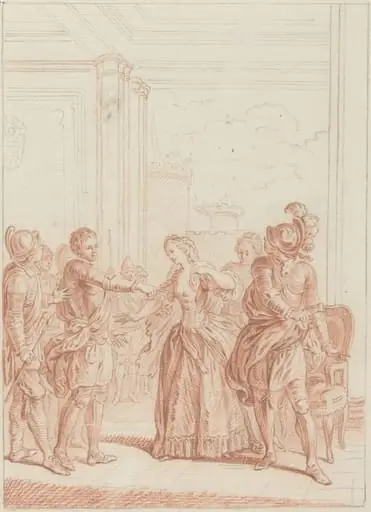 Je suis vengé de toi: l'on te hait, et l'on m'aime
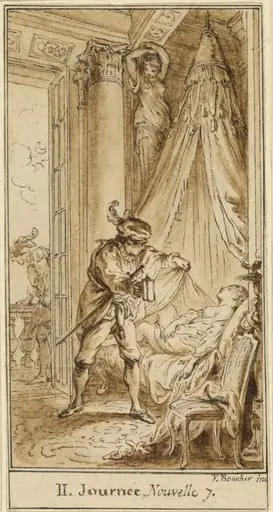 Second Day, Seventh Story: The Duke of Athens Contemplating the Sleeping Princess Alatiel