Artwork
The Choice of Hercules
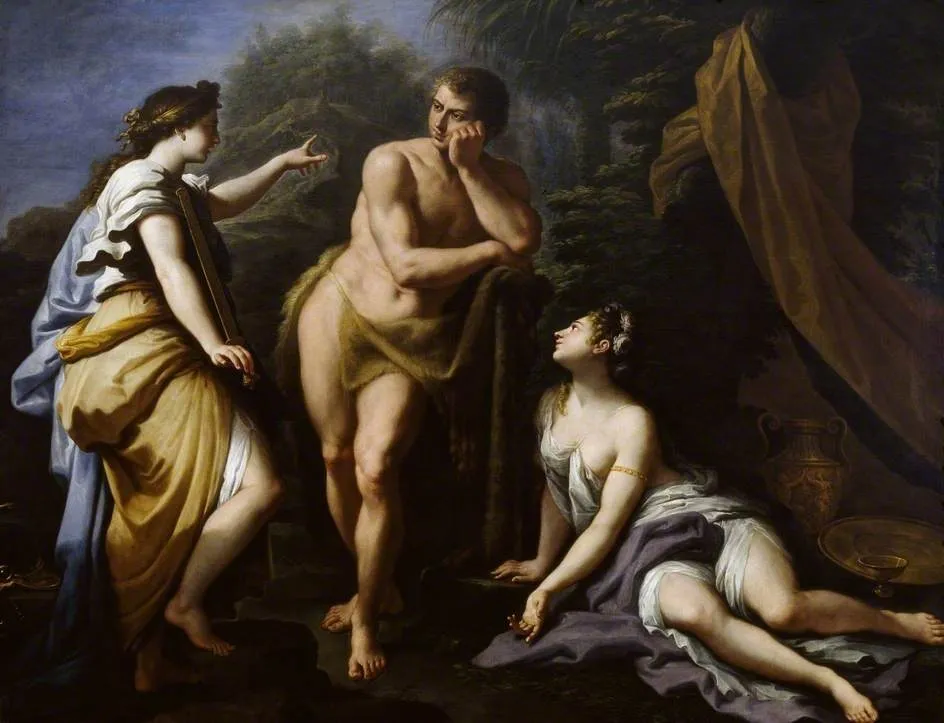
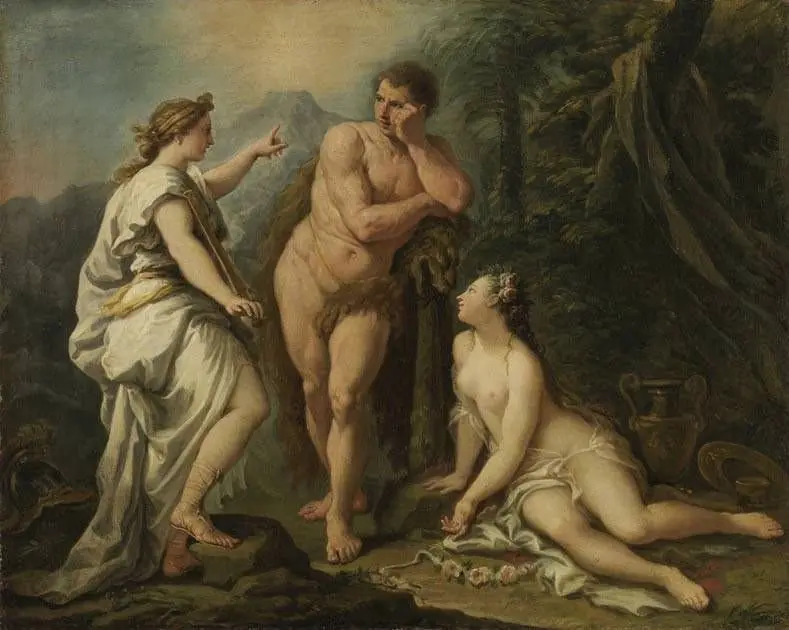
The Choice of Hercules is an oil painting by the Barbizon school artist Paolo de Matteis. It dates from 1712 and is held in the collection of the Ashmolean Museum.
About this work
Overview
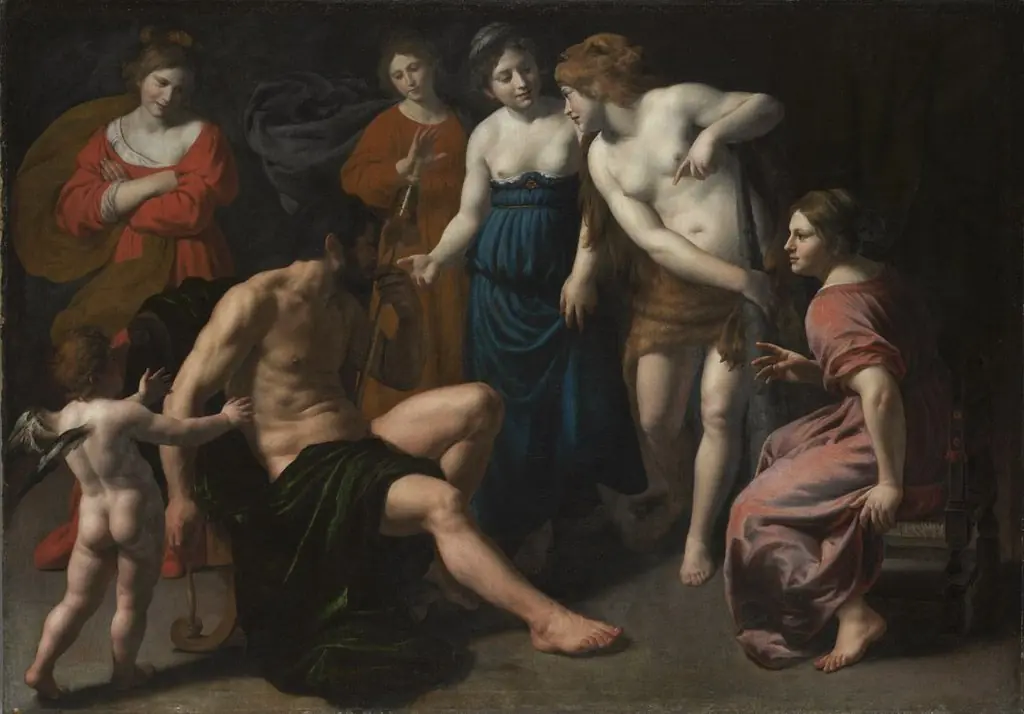
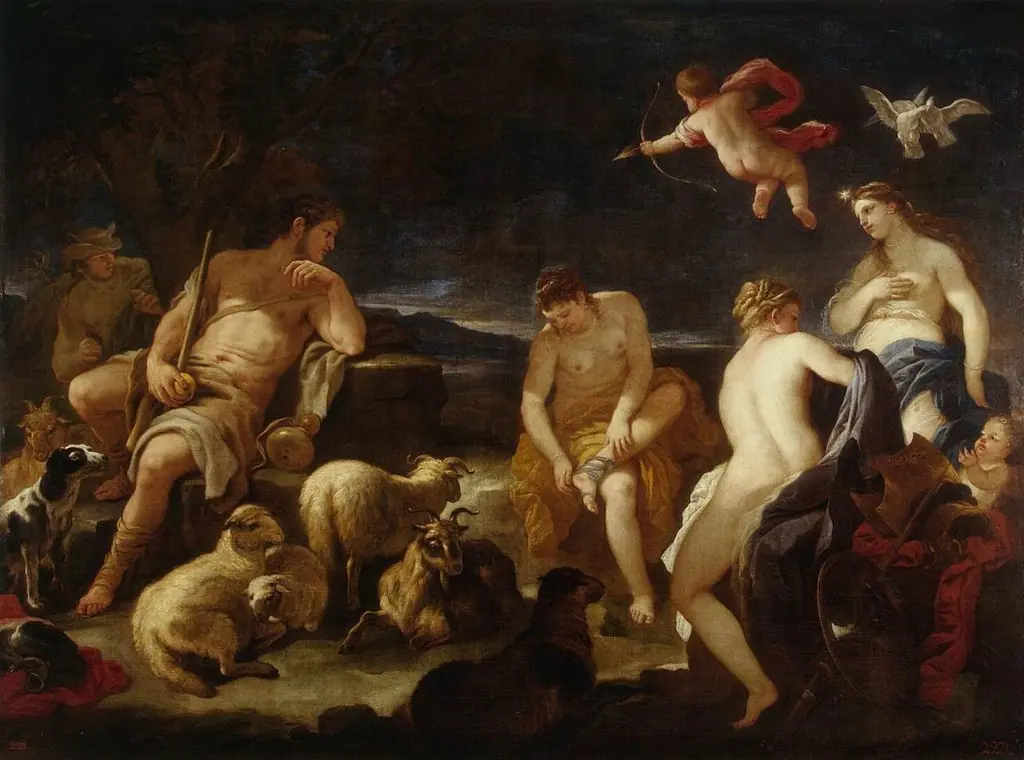
Paolo de Matteis's 1712 oil painting, The Choice of Hercules, is a mythological scene housed at the Ashmolean Museum. The work features three figures in a natural setting, characterized by a serene backdrop of trees and a blue sky.
Subject & Meaning
These women likely represent Virtue (left) and Pleasure (right), symbolizing the mythological choice Hercules must make between a life of virtue or indulgence.
The painting depicts Hercules (center) in contemplation, with a hand to his chin, flanked by two women. The figure on the left, dressed in white and gold, gestures towards him, while the woman on the right, in white and purple, sits on the ground. These women likely represent Virtue (left) and Pleasure (right), symbolizing the mythological choice Hercules must make between a life of virtue or indulgence.
Technique & Style
Executed in a classical style, the painting emphasizes detailed facial expressions and body language. De Matteis employs chiaroscuro to create depth, focusing the viewer's attention on the central figure through strategic lighting.
History & Provenance
Created in 1712, The Choice of Hercules is part of the Ashmolean Museum's collection, though the full provenance history prior to its acquisition is not detailed here.
Context
Painted during the Baroque period, the work reflects the era's interest in classical mythology and moral themes, while its style aligns with the transitional period towards Rococo's more serene and pastel tones.
Legacy
While not widely discussed in broad art historical narratives, The Choice of Hercules remains a notable example of early 18th-century mythological painting, offering insights into the artistic and thematic preoccupations of its time.
Artist & collection