Artwork
Sculptures - Details of Sculpture from the Column of Trajan
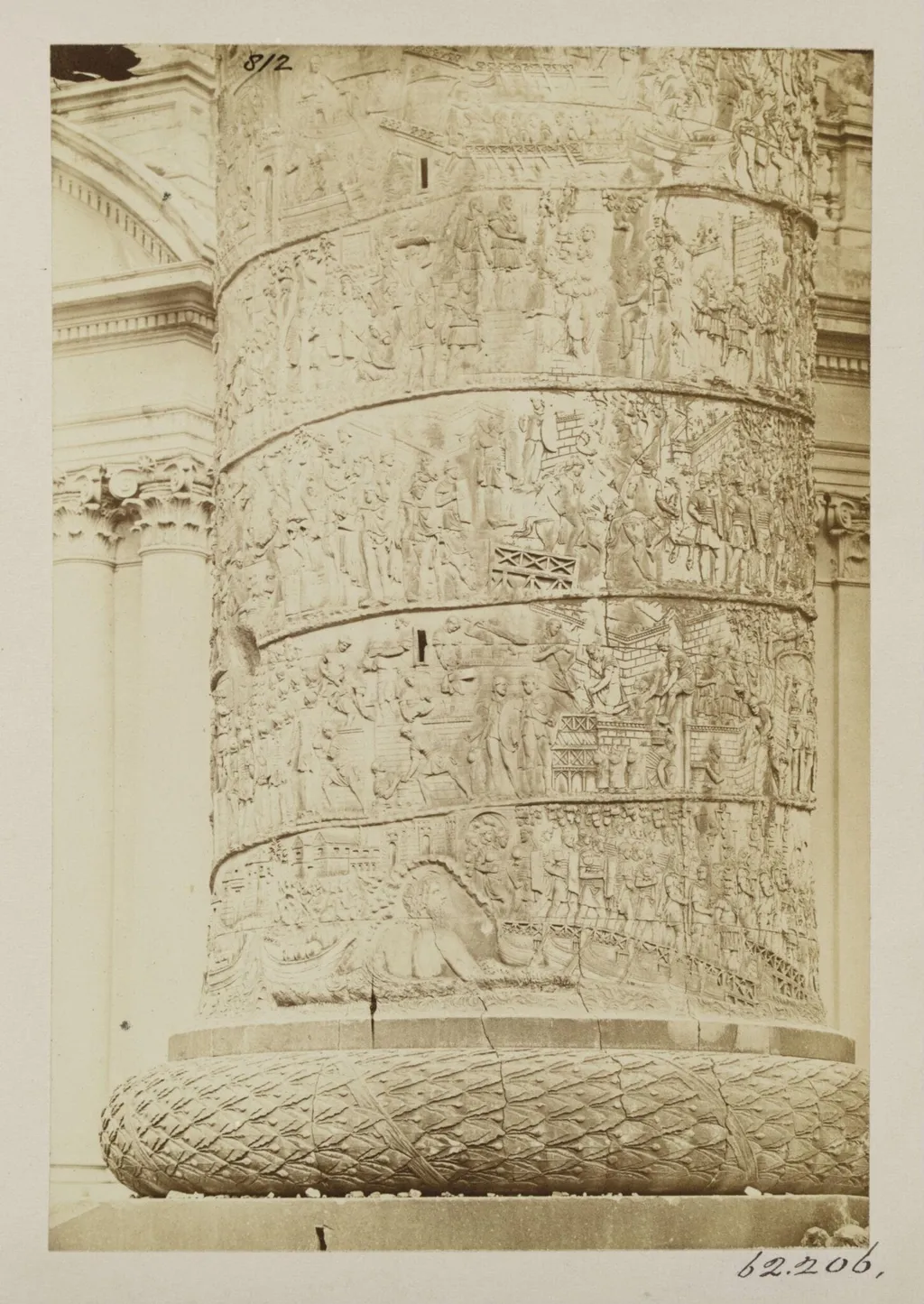
Sculptures - Details of Sculpture from the Column of Trajan is a photographic photography by the Impressionist artist John Henry Parker. It dates from 1868 and is held in the collection of the Victoria and Albert Museum.
About this work
Overview
The Victoria and Albert Museum holds a curated subset of these early photographic records.
This photograph captures selected sculptural reliefs from the Column of Trajan, taken between 1867 and 1870 as part of a systematic documentation project of Rome’s ancient monuments. The images were produced under the supervision of John Henry Parker, who coordinated a team of local and foreign photographers to record architectural details before modern degradation accelerated. The Victoria and Albert Museum holds a curated subset of these early photographic records.
Subject & Meaning
The carved panels depict military campaigns led by Emperor Trajan against the Dacians, illustrating battles, logistics, and ceremonial moments in a continuous spiral narrative. Scenes include soldiers crossing rivers, constructing fortifications, and receiving surrendering enemies. The imagery served as imperial propaganda, reinforcing Roman authority and the emperor’s role as a disciplined commander. The photograph preserves these narratives in their 19th-century state, before further weathering.
Technique & Style
The original reliefs are carved in low relief with precise, shallow incisions that emphasize depth through subtle modeling rather than dramatic undercutting. Figures are arranged in orderly rows, their postures and gestures conveying narrative progression. The photograph reveals the wear on the stone surface, yet the clarity of the carving remains legible, suggesting the skill of Roman artisans and the durability of the limestone medium used.
History & Provenance
The Column of Trajan was erected in 113 CE in Rome’s Forum to commemorate Trajan’s Dacian Wars. By the 19th century, it had endured centuries of exposure, urban development, and partial restoration. The photographic project led by Parker aimed to preserve its condition at a time when industrialization threatened ancient sites. These images became archival references, later acquired by institutions like the Victoria and Albert Museum for scholarly use.
Context
The photographs emerged during a period of heightened interest in classical antiquity, fueled by archaeological exploration and the rise of photographic documentation as a scholarly tool. Parker’s initiative aligned with broader European efforts to catalog cultural heritage, particularly in Rome, where the Vatican and emerging national museums sought to systematize visual records. This project contributed to the transition from antiquarian sketches to photographic evidence in art history.
Legacy
These photographs remain vital resources for studying the Column’s original appearance and condition before 20th-century conservation. They reflect early museum practices in preserving cultural memory through mechanical reproduction. Today, they are referenced in academic research and digital reconstructions, offering a baseline for understanding how ancient art has changed over time due to natural and human factors.
Artist & collection
Artist
John Henry Parker liked to explore old churches in Rome. He'd photograph the sculptures and carvings he found. One thing that stands out is his attention to detail - he'd capture tiny parts of bigger pieces, like the…

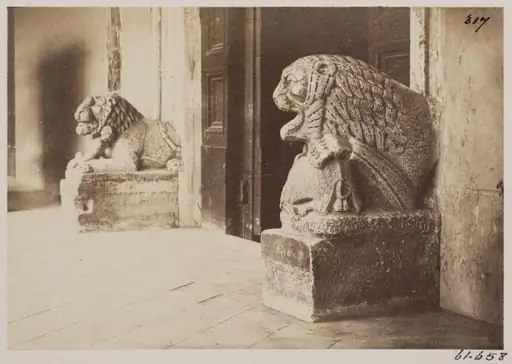 Sculptures - Lions at the Door of the Church of S. Lorenzo
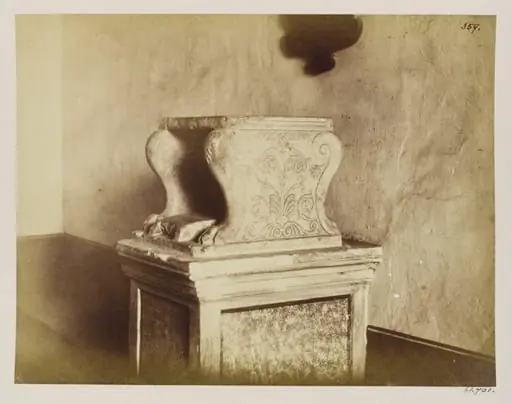 Sculptures - Marble Seat of S. Gregory in the Church of S. Stefano Rotondo, with Shallow Carving, c. A.D. 590.
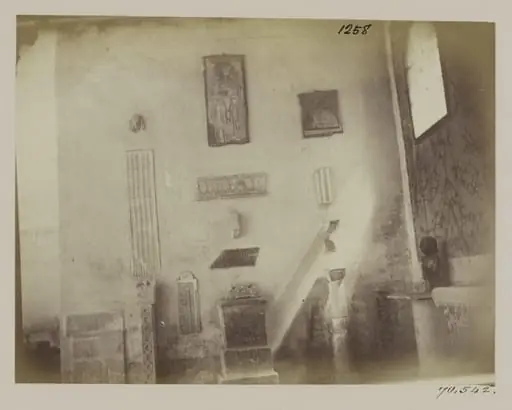 Church of S. Giorgio in Velabro - Fragments of marble sculpture, Tombs, &c., from the old Church, built into the wall.
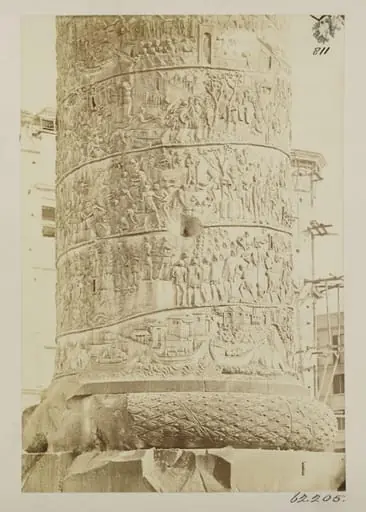 Sculptures - Details of Sculpture from Trajan's Column.
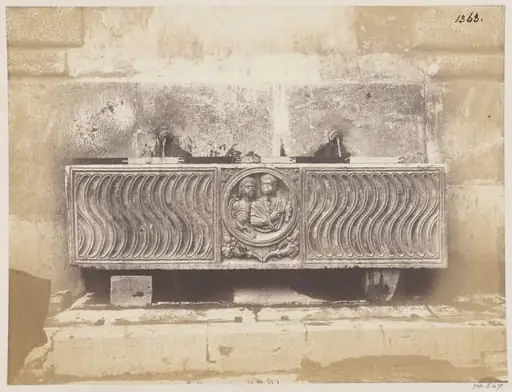 Sculpture - Sarcophagus of the fourth century made into a fountain, near the Church of S. Maria, in the Piazza del Popolo
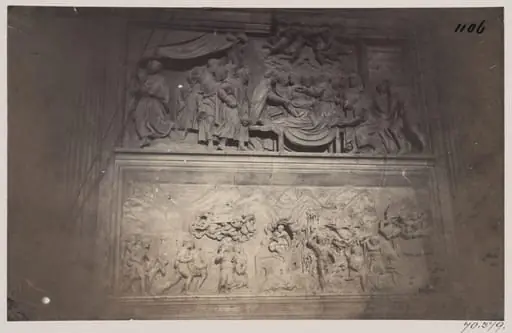 Out of Rome - House of the Blessed Virgin at Loreto. Sculpture of the Santissima Casa carried by Angels, A.D. 1520
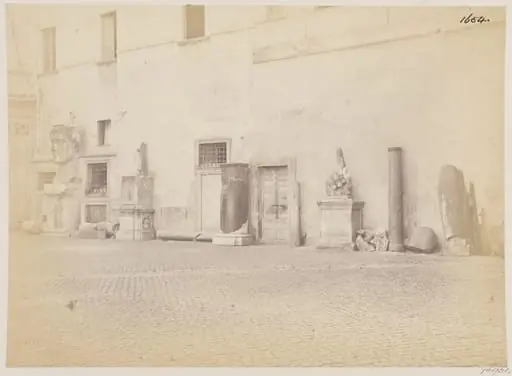 Sculpture - View on the left side of the Court-yard of the Palazzo de' Conservatori on the Capitol, shewing fragments of colossal Statues
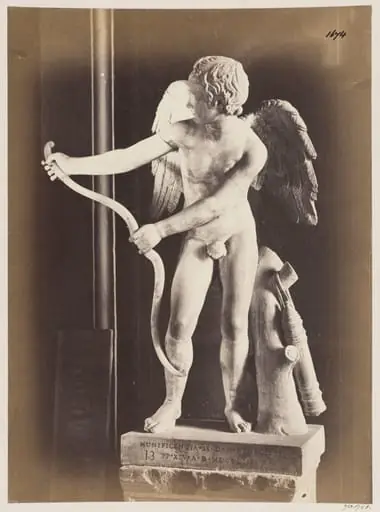 Sculpture - Statue of Cupid with his bow, in the Capitoline Museum.
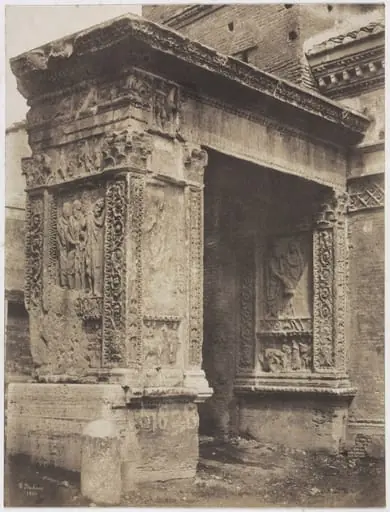 Goldsmith's Arch, Rome
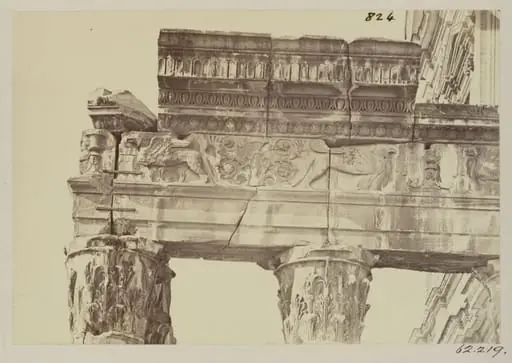 Sculptures - Frieze of the Temple of Antonius and Faustina, A.D. 138.
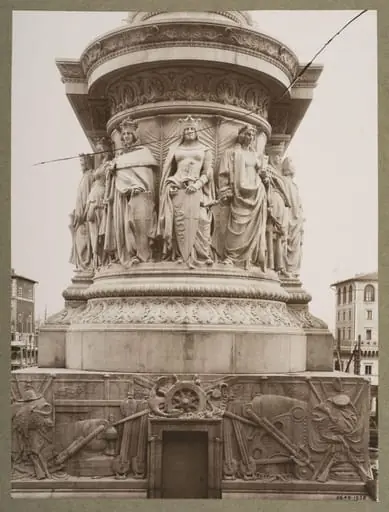 Untitled
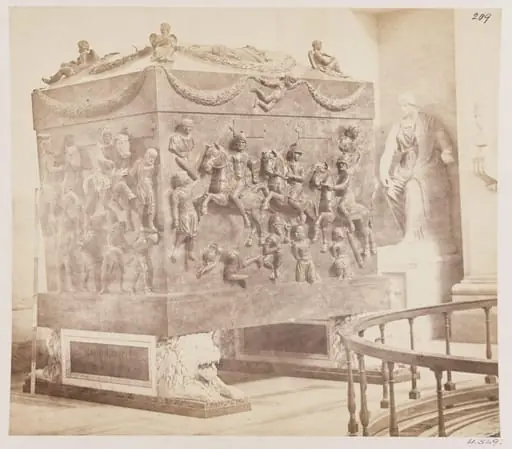 Sculpture - Sarcophagus of Porphyry of S. Helena, A.D. 330
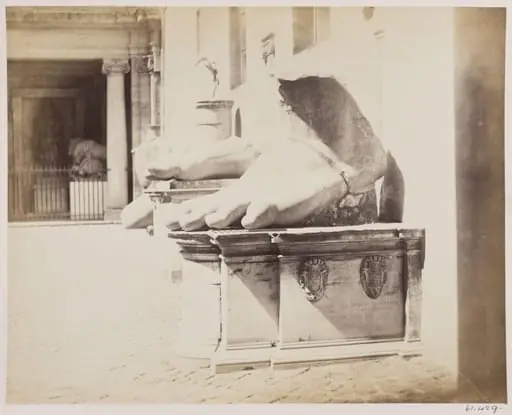 Sculpture - Colossal Foot, now in the Courtyard of the Palazzo de' Conservatori on the Capitol
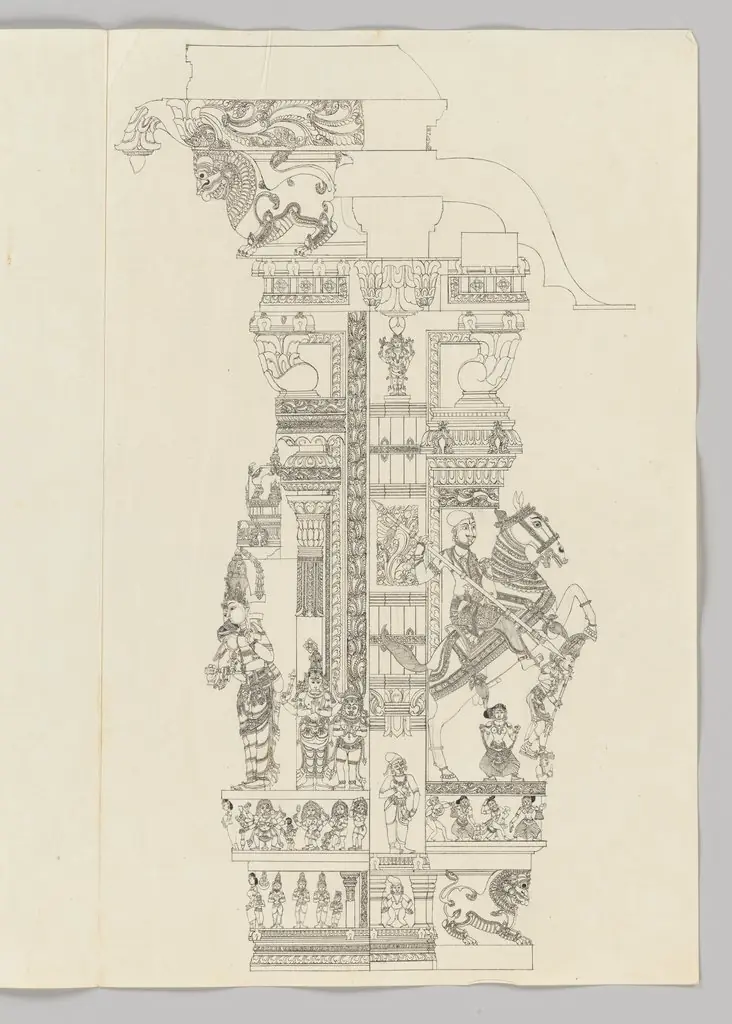 Marriage of Minakshi and Sundareshvara; equestrian warrior with spear
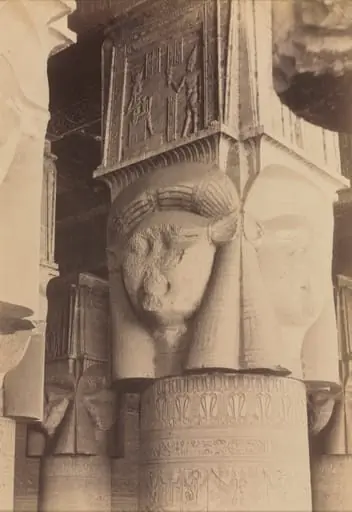 Dendera, Interior of the Temple, Hathor Capitals
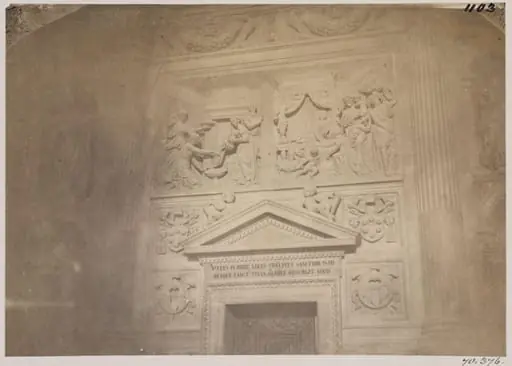 Out of Rome - House of the Blessed Virgin at Loreto. Sculpture of the Nativity over a Doorway, with the Arms of the Medici, Leo X., A.D. 1520
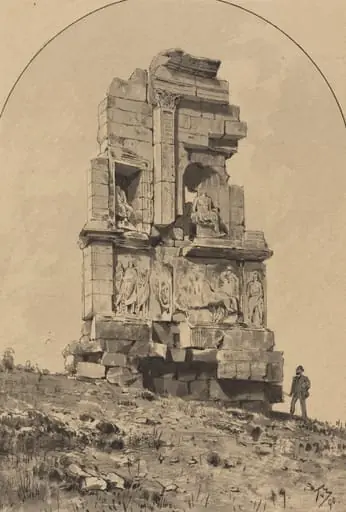 Monument of Philopappos