Artwork
Sculptures - The Colossal Horses, with the Statues of Castor and Pollux, the work of Phidias and Praxiteles (now in the Piazza di Monte Cavallo)
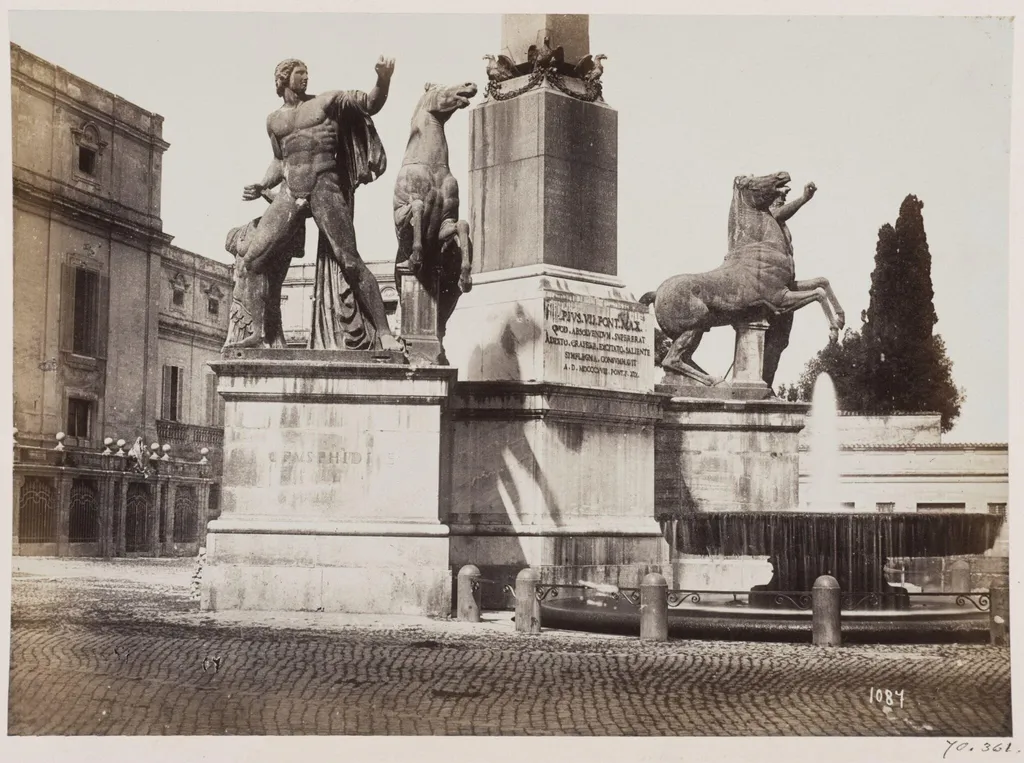
Sculptures - The Colossal Horses, with the Statues of Castor and Pollux, the work of Phidias and Praxiteles (now in the Piazza di Monte Cavallo) is a photographic photography by the Impressionist artist John Henry Parker. It dates from 1867 and is held in the collection of the Victoria and Albert Museum. This black-and-white photograph captures a monumental fountain on the Quirinal Hill in Rome, featuring four large statues.
About this work
Overview
This black-and-white photograph captures a monumental fountain on the Quirinal Hill in Rome, featuring four large statues. The image, taken in the 1860s, documents the fountain's appearance during that era.
Subject & Meaning
The fountain is adorned with two colossal marble horses and two standing male figures, traditionally identified as Castor and Pollux. The statues depict dynamic scenes, with the figures restraining the rearing horses.
Technique & Style
The photograph showcases the intricate details of the statues and the fountain's stone base, which bears a Latin inscription. The image highlights the monumental scale and classical style of the sculptures.
History & Provenance
The statues are attributed to the ancient Greek sculptors Phidias and Praxiteles. The photograph was taken by John Henry Parker in 1867, providing a historical record of the fountain's appearance during the 19th century.
Artist & collection
Artist
John Henry Parker liked to explore old churches in Rome. He'd photograph the sculptures and carvings he found. One thing that stands out is his attention to detail - he'd capture tiny parts of bigger pieces, like the…

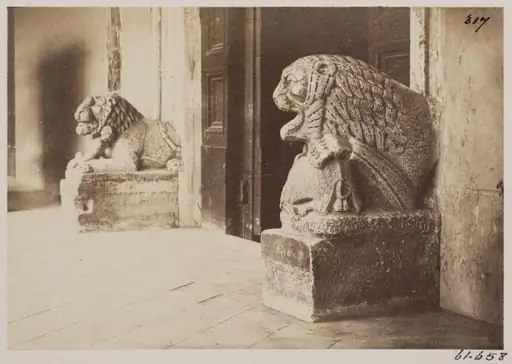 Sculptures - Lions at the Door of the Church of S. Lorenzo
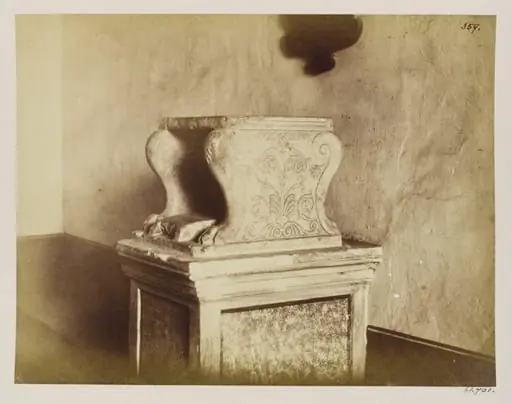 Sculptures - Marble Seat of S. Gregory in the Church of S. Stefano Rotondo, with Shallow Carving, c. A.D. 590.
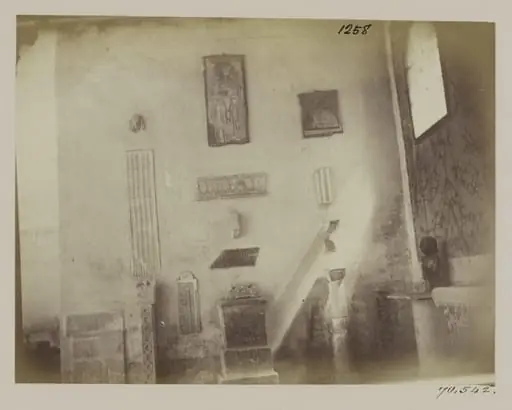 Church of S. Giorgio in Velabro - Fragments of marble sculpture, Tombs, &c., from the old Church, built into the wall.
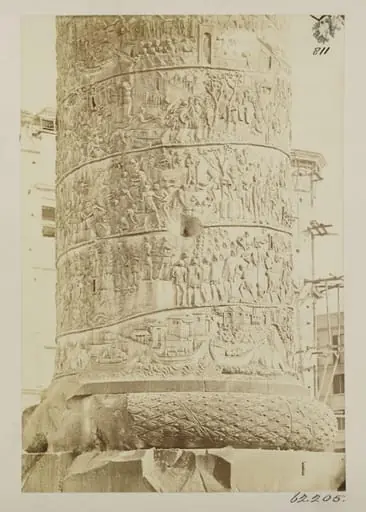 Sculptures - Details of Sculpture from Trajan's Column.
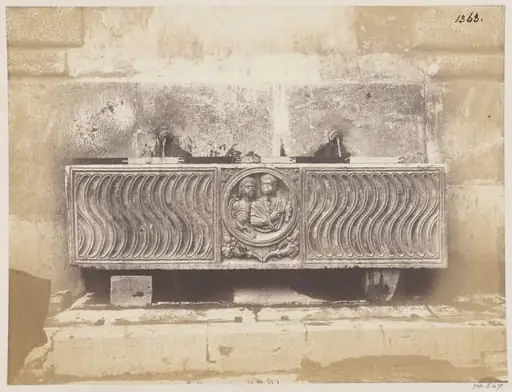 Sculpture - Sarcophagus of the fourth century made into a fountain, near the Church of S. Maria, in the Piazza del Popolo
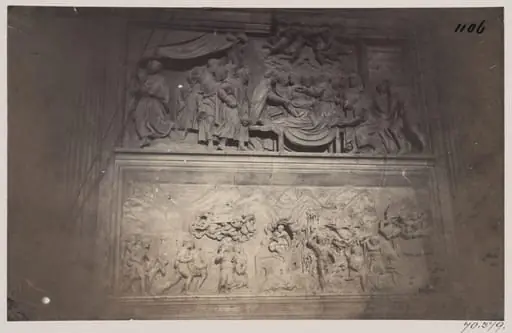 Out of Rome - House of the Blessed Virgin at Loreto. Sculpture of the Santissima Casa carried by Angels, A.D. 1520
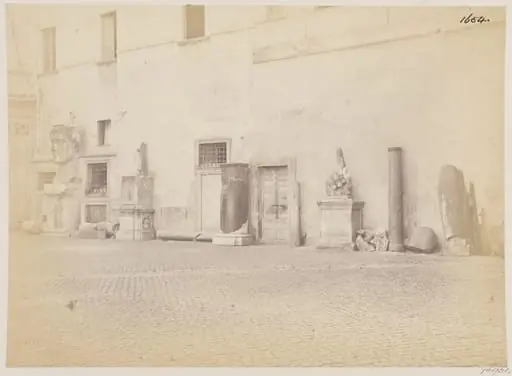 Sculpture - View on the left side of the Court-yard of the Palazzo de' Conservatori on the Capitol, shewing fragments of colossal Statues
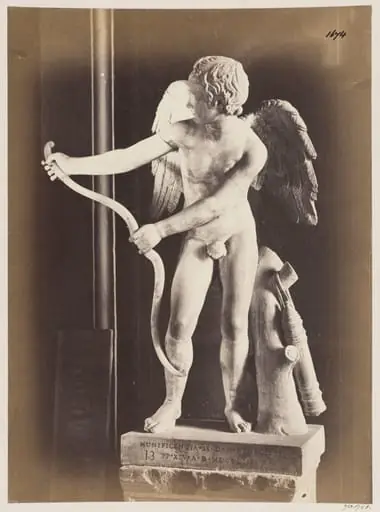 Sculpture - Statue of Cupid with his bow, in the Capitoline Museum.
 Untitled
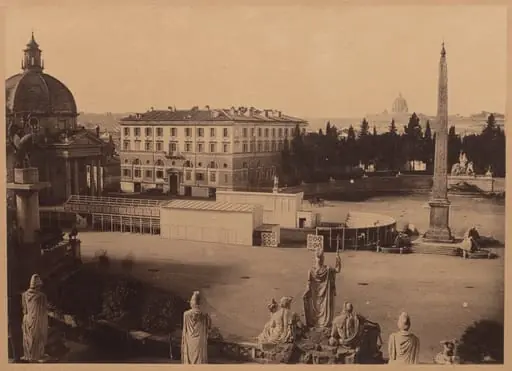 View of Rome
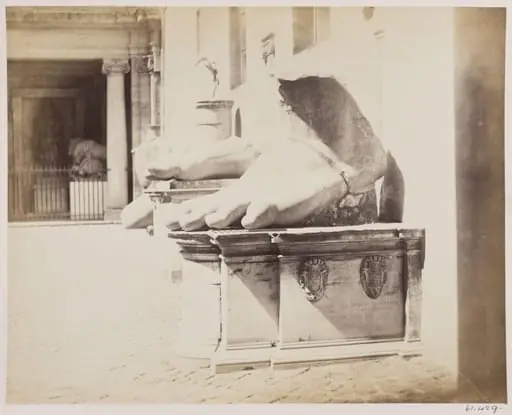 Sculpture - Colossal Foot, now in the Courtyard of the Palazzo de' Conservatori on the Capitol
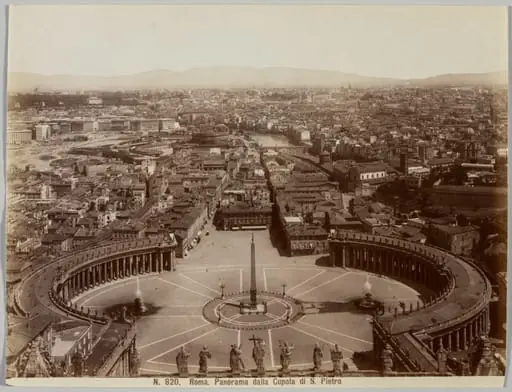 Panorama dalla Cupola di S. Pietro, Rome
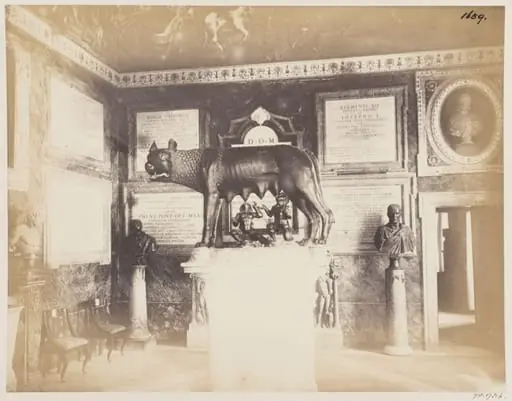 Untitled
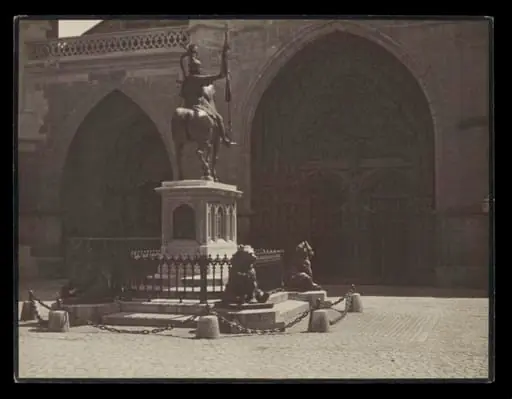 Sunshine
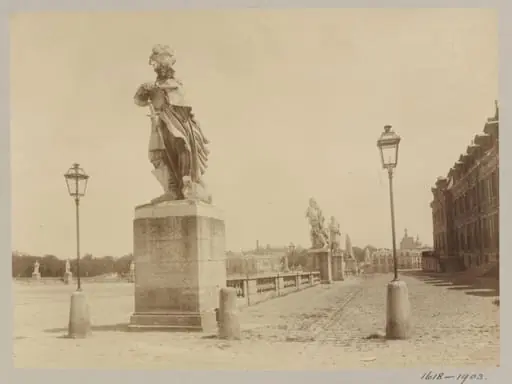 Cour d'honneur, Versailles, France
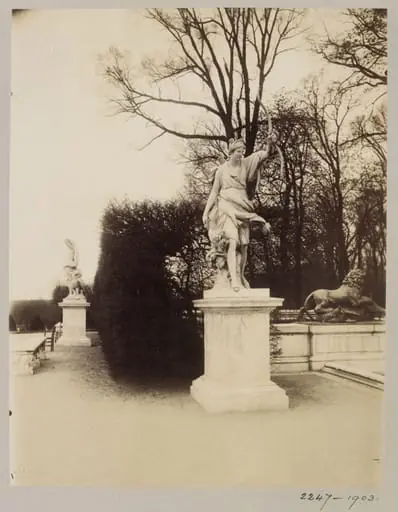 Sculpture of Diana, Versailles, France
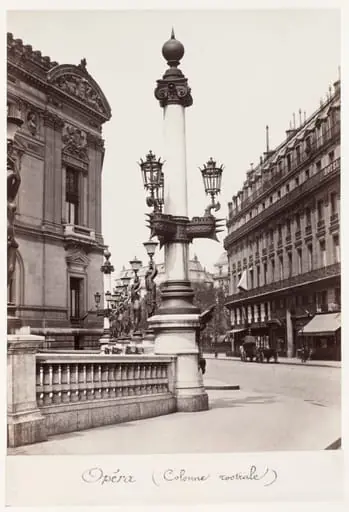 Opéra (Rostral Column)
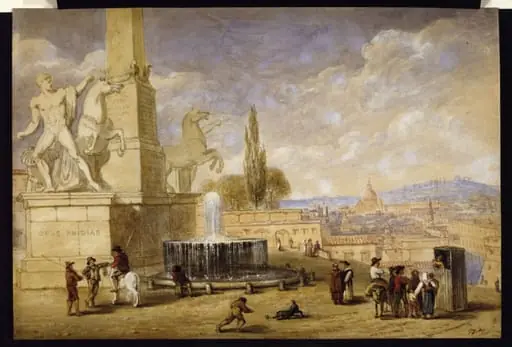 Monte Cavallo, Rome
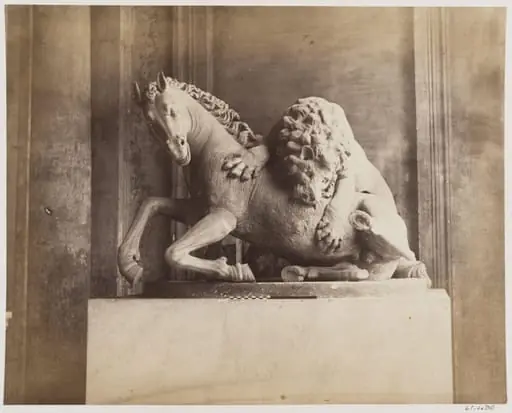 Sculpture - Of a Lion upon a Horse, now in the Palazzo de' Conservatori on the Capitol