Artwork
Aurora
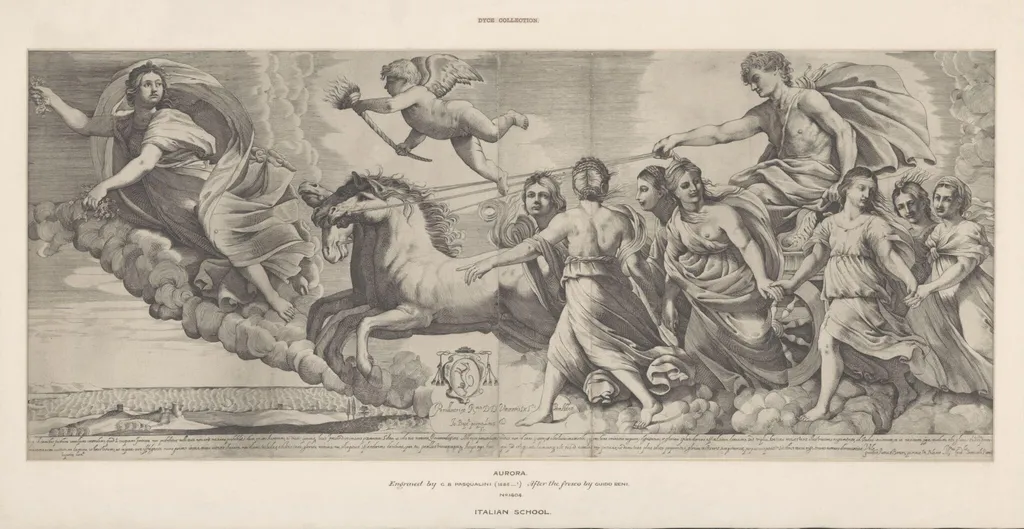
Aurora is a print by Giovanni Battista Pasqualini. It dates from 1650 and is held in the collection of the Victoria and Albert Museum.
About this work
Overview
Giovanni Battista Pasqualini’s print titled *Aurora* reproduces a composition originally executed as a fresco by Guido Reni in the Rospigliosi Palace. Executed on paper, the work translates a large wall painting into a portable graphic format, preserving the dramatic narrative of the original.
Subject & Meaning
The image portrays a tumultuous celestial scene populated by mythological figures. A winged figure on the left brandishes a torch, while a horse rears beneath, guided by nude women who pull its reins; another woman rides the animal. Above, two cherubic figures hover amid swirling clouds, suggesting a dynamic, perhaps allegorical, celebration of dawn or divine intervention.
Technique & Style
Pasqualini employs a printmaking technique that emphasizes strong chiaroscuro, creating stark contrasts between illuminated forms and deep shadows. This approach mirrors Reni’s baroque sensibility, highlighting the muscular tension of the figures and the atmospheric turbulence of the sky.
History & Provenance
The source fresco by Guido Reni was commissioned for the Rospigliosi Palace, a notable 17th‑century aristocratic residence. Pasqualini’s print, produced shortly after the fresco’s completion, served to disseminate the composition beyond its architectural setting, allowing broader circulation among collectors and scholars.
Context
Reni’s original fresco belongs to a period when Italian baroque artists frequently depicted mythological allegories to adorn palatial interiors. The choice of a sunrise motif aligns with contemporary interests in portraying the triumph of light over darkness, a theme resonant in both religious and secular art of the era.
Legacy
By rendering Reni’s fresco as a print, Pasqualini contributed to the early modern practice of reproducing monumental works for study and appreciation. The print remains a valuable reference for scholars examining the transmission of baroque visual ideas across media.
Artist & collection
Artist
Giovanni Battista Pasqualini’s prints from the early 1600s bring mythical scenes to life in black and white.

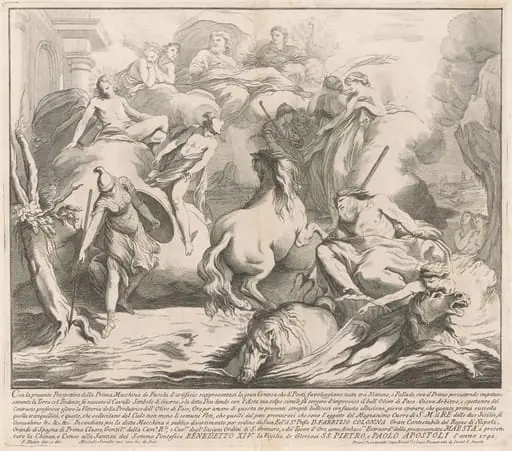 The Prima Macchina for the Chinea of 1742: The Contest of Neptune and Minerva
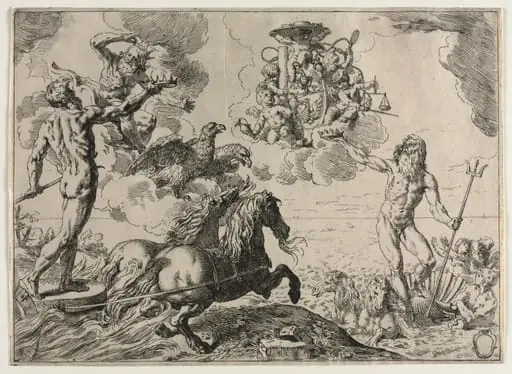 The "Quos Ego"
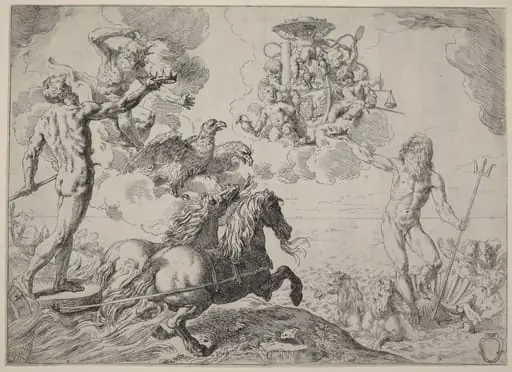 Jupiter, Neptune and Pluto
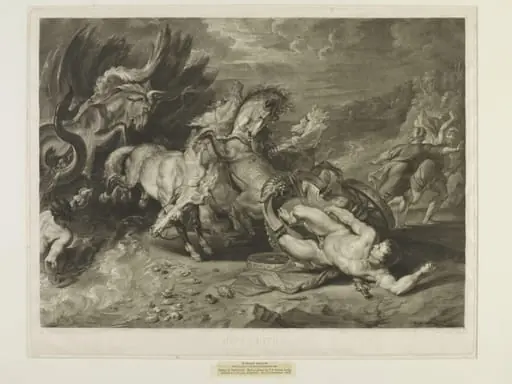 Death of Hippolytus
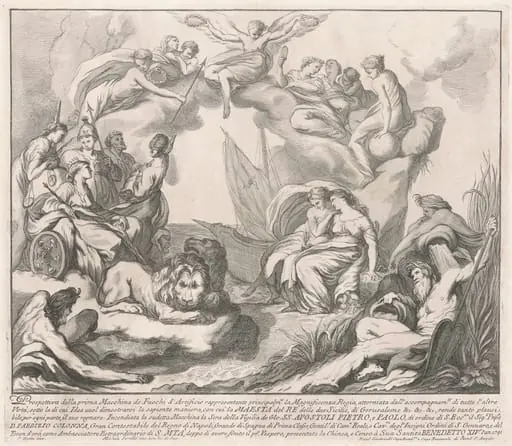 The Prima Macchina for the Chinea of 1741: Allegory of Regal Magnificence
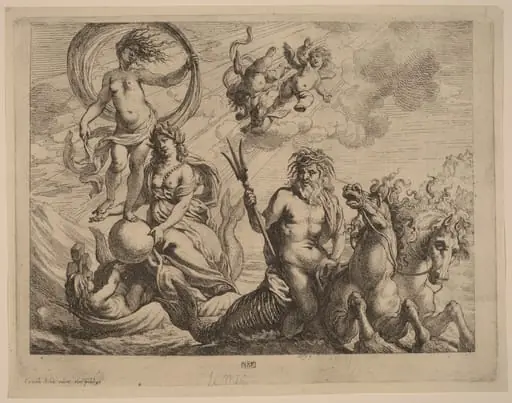 Neptune with Two Horses on the Sea
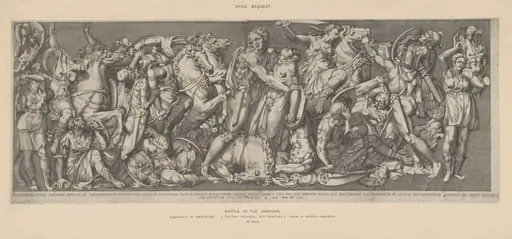 Battle of the Amazons
![The Dioscuri [Frontal View], by Italian 16th Century](https://artifactworldgallery.com/img/italian-16th-century--the-dioscuri-frontal-view--240168a96b76ef0b-w320.webp) The Dioscuri [Frontal View]
The Dioscuri [Frontal View]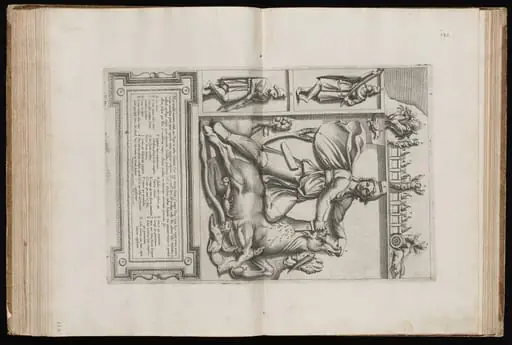 The Mithras Relief
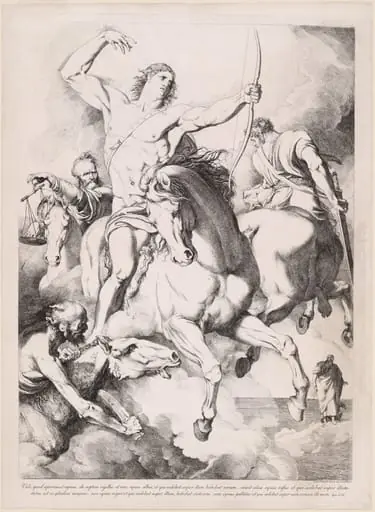 Vidi, quod aperuisset agnus... (The Four Horsemen of the Apocalypse)
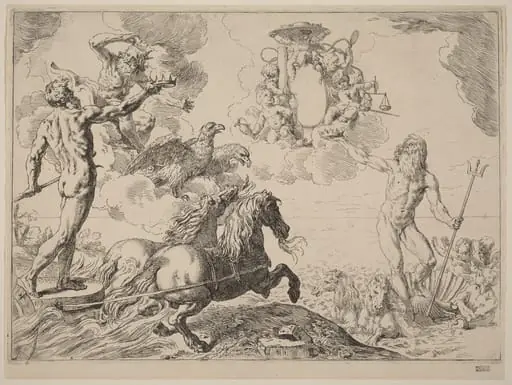 Jupiter, Neptune and Pluto
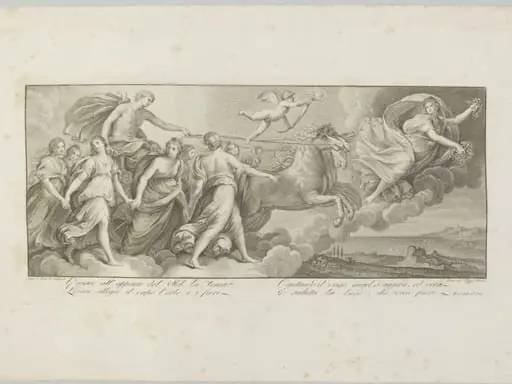 The Chariot of Aurora