Artwork
Amerigo Vespucci
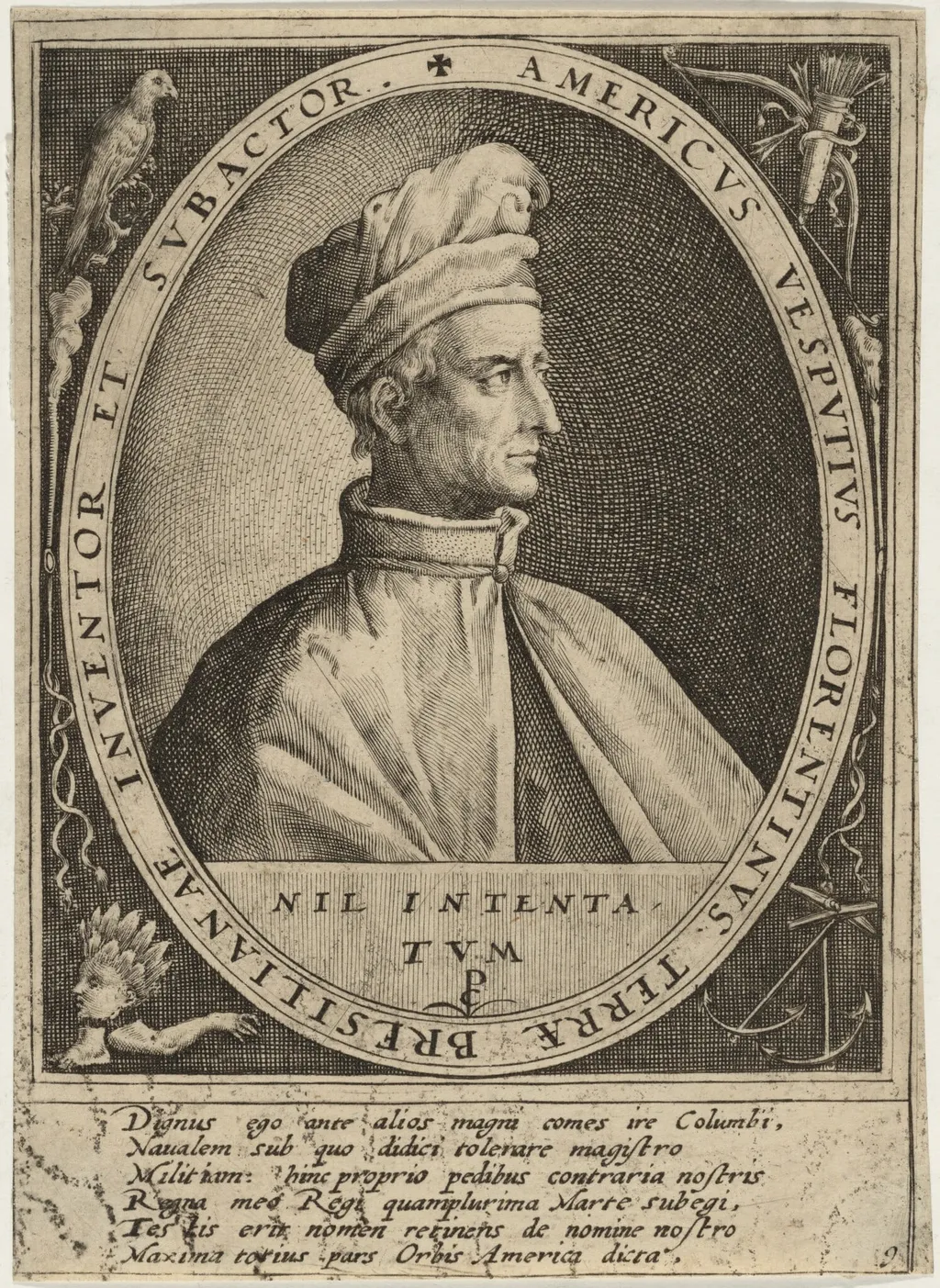
Amerigo Vespucci is an ink print by the Renaissance artist Crispijn van de Passe I. It dates from 1598 and is held in the collection of the National Gallery of Art.
About this work
Overview
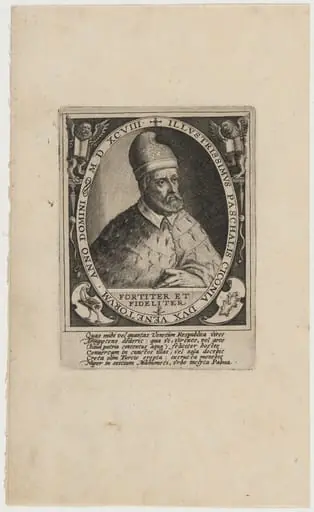
Crispijn van de Passe I produced this 1598 engraving of the Italian explorer Amerigo Vespucci. Executed in black ink on paper, the image presents a dignified portrait in profile, framed by a decorative wreath bearing a Latin legend. The composition is flanked by two small birds, adding a modest ornamental touch to the otherwise sober presentation.
Subject & Meaning
The figure depicted is the famed navigator Amerigo Vespucci, identified by the Latin inscription encircling the wreath. The profile pose, formal attire, and composed expression convey a sense of scholarly authority, reflecting the period’s practice of commemorating notable individuals through restrained, emblematic portraiture.
Technique & Style
Van de Passe employed fine, closely spaced lines to model the facial features and clothing, creating subtle tonal variations without the use of wash. The high-collar shirt and tall hat are rendered with precise hatching, while the surrounding wreath and birds are delineated through delicate linear work, exemplifying the meticulous engraving methods of late‑sixteenth‑century Northern Europe.
History & Provenance
Created in 1598, the print belongs to the prolific output of the van de Passe family, known for disseminating portraits of prominent figures across Europe. Original impressions circulated in print collections of the era, and the work has since entered museum holdings, where it serves as a documentary record of Vespucci’s posthumous reputation.
Artist & collection

Artist
Crispijn van de Passe I (1564–1637) was an artist, born in Arnemuiden.