Artwork
True Portraiture of the Jesuits and Priests from Vox Populi, by Thomas Scott
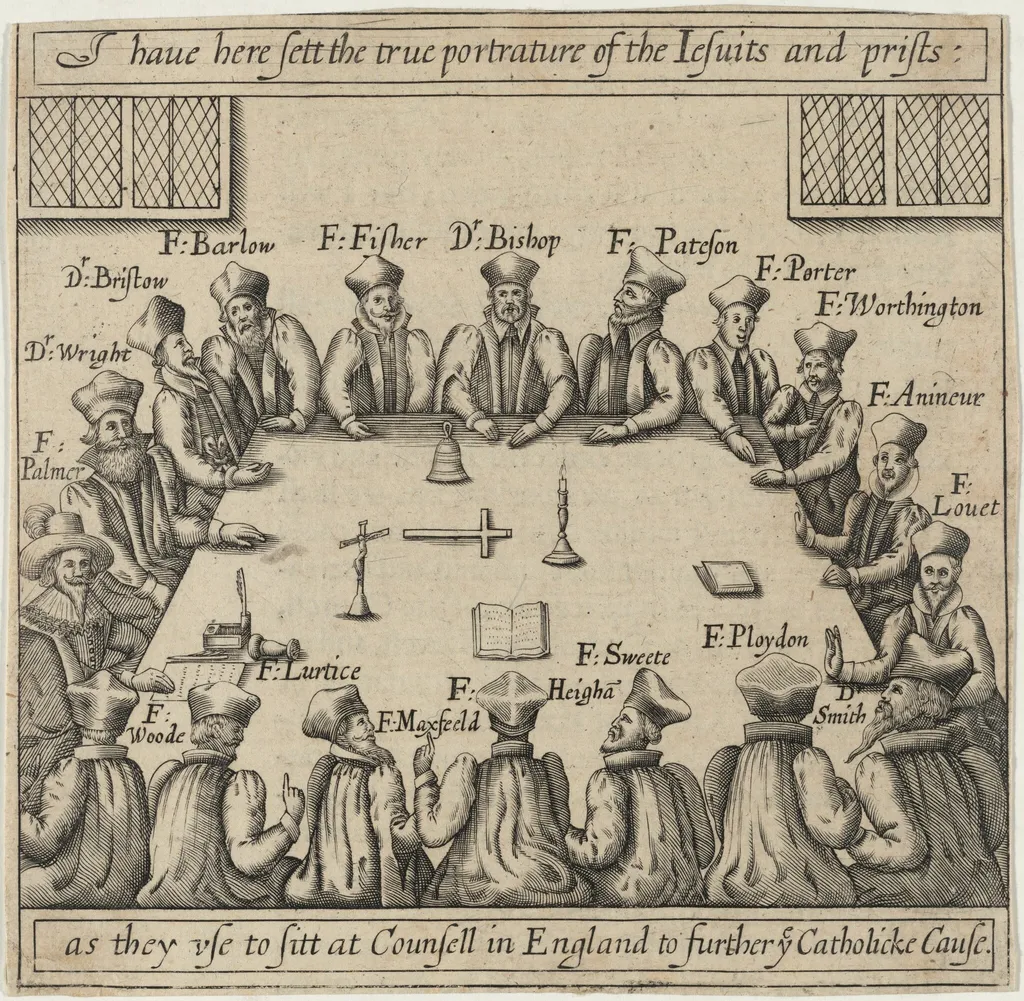
True Portraiture of the Jesuits and Priests from Vox Populi, by Thomas Scott is an ink print by the Baroque artist Crispijn van de Passe I. It dates from 1624 and is held in the collection of the Rosenwald Collection.
About this work
Overview
True Portraiture of the Jesuits and Priests from Vox Populi is a 1624 engraving attributed to Crispijn van de Passe I, though signed by Thomas Scott. The work depicts a bustling gathering of clergy.
Subject & Meaning
The engraving shows a crowded scene of Jesuits and priests engaged in a council meeting in England, as indicated by the inscription. Figures are shown in various states of engagement, with props like books, a cross, and a candle, conveying a sense of active deliberation.
Technique & Style
The artist employed sharp lines and nuanced shading to achieve depth, particularly in the textured rendering of the clerical robes. The level of detail extends to smaller elements such as rings and buttons.
History & Provenance
Created in 1624, the engraving is signed to Thomas Scott but attributed to the renowned engraver Crispijn van de Passe I. The provenance and ownership history beyond this attribution are not detailed in the provided sources.
Context
The work reflects the religious and possibly political tensions of its time, given the specific mention of Jesuits and their activities in England, a context where Catholic-Jesuit presence was controversial.
Legacy
The legacy of this specific engraving is not explicitly outlined in the provided information, though it contributes to the broader historical record of 17th-century religious life and the artistic techniques of the era.
Artist & collection

Artist
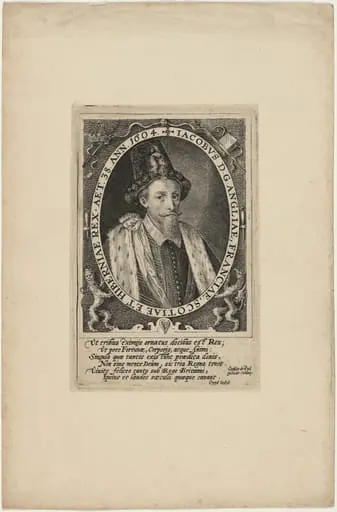
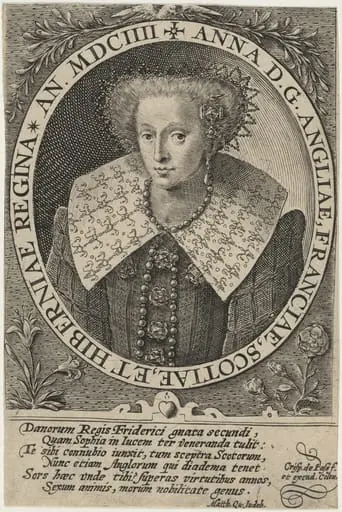
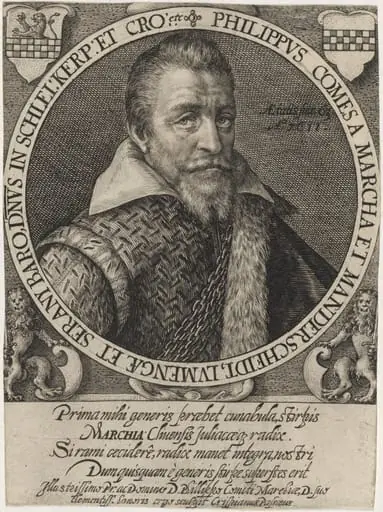
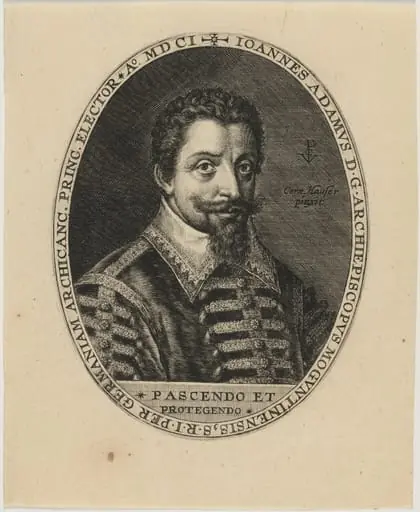
Crispijn van de Passe I (1564–1637) was an artist, born in Arnemuiden.
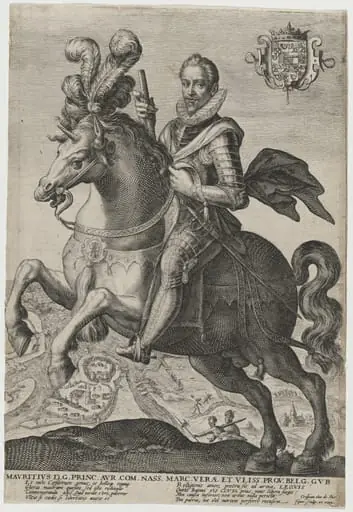
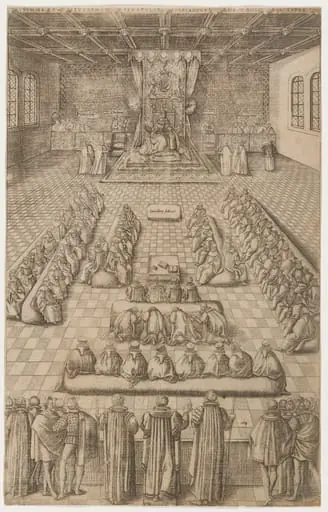 James I in Parliament
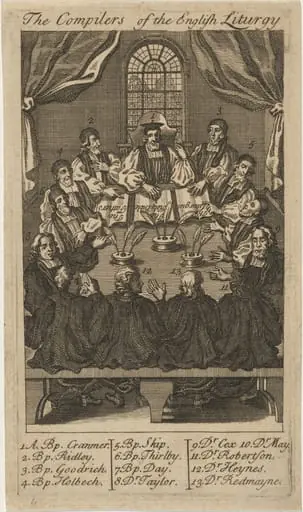 The Compilers of the English Liturgy
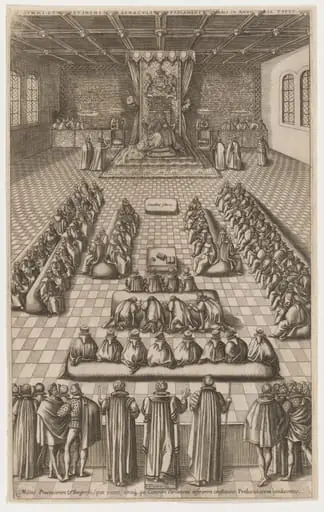 Queen Elizabeth in Parliament
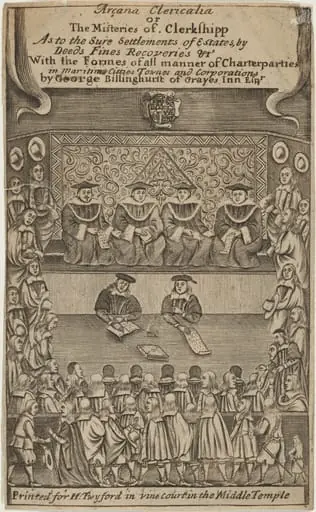 Title Page to Arcana Clericalia or the Misteries of Clerkshipp by George Billinghurst
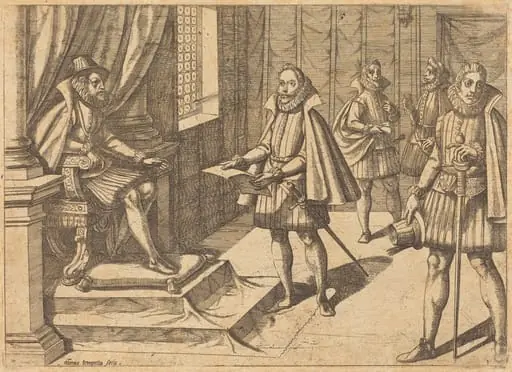 Philip II of Spain on His Throne
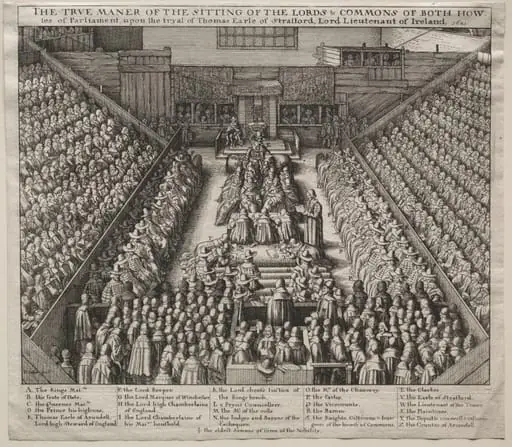 Westminster Hall, Interior, with The Trial of the Earl of Strafford
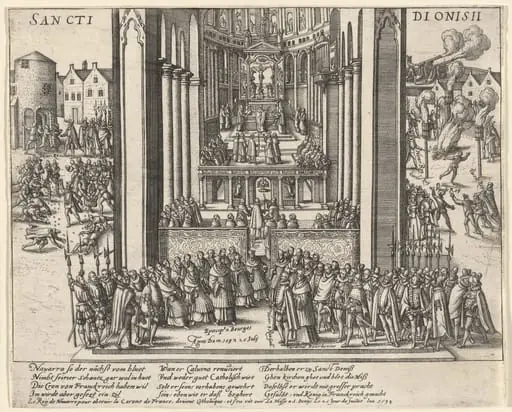 Composite Image Depicting Actions of Henri IV, King of France, upon His Abjuration of the Protestant Faith
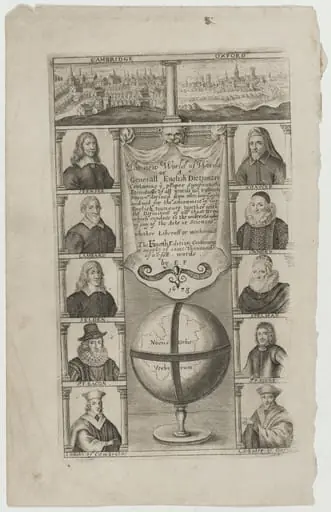 Title Page to The New World of Words or A General English Dictionary
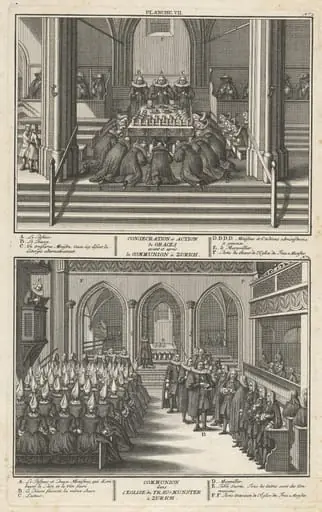 Consecration et Action de Graces avant et après la Communion à Zurich; Communion dans l’Eglise du Fraumunster à Zurich (Consecration and Communion at the Fraumunster, Zurich)
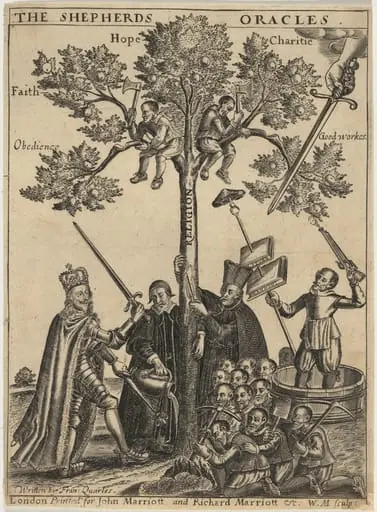 Title Page to Francis Quarles, Shepherds Oracles