Artwork
Vox Dei, by Thomas Scott
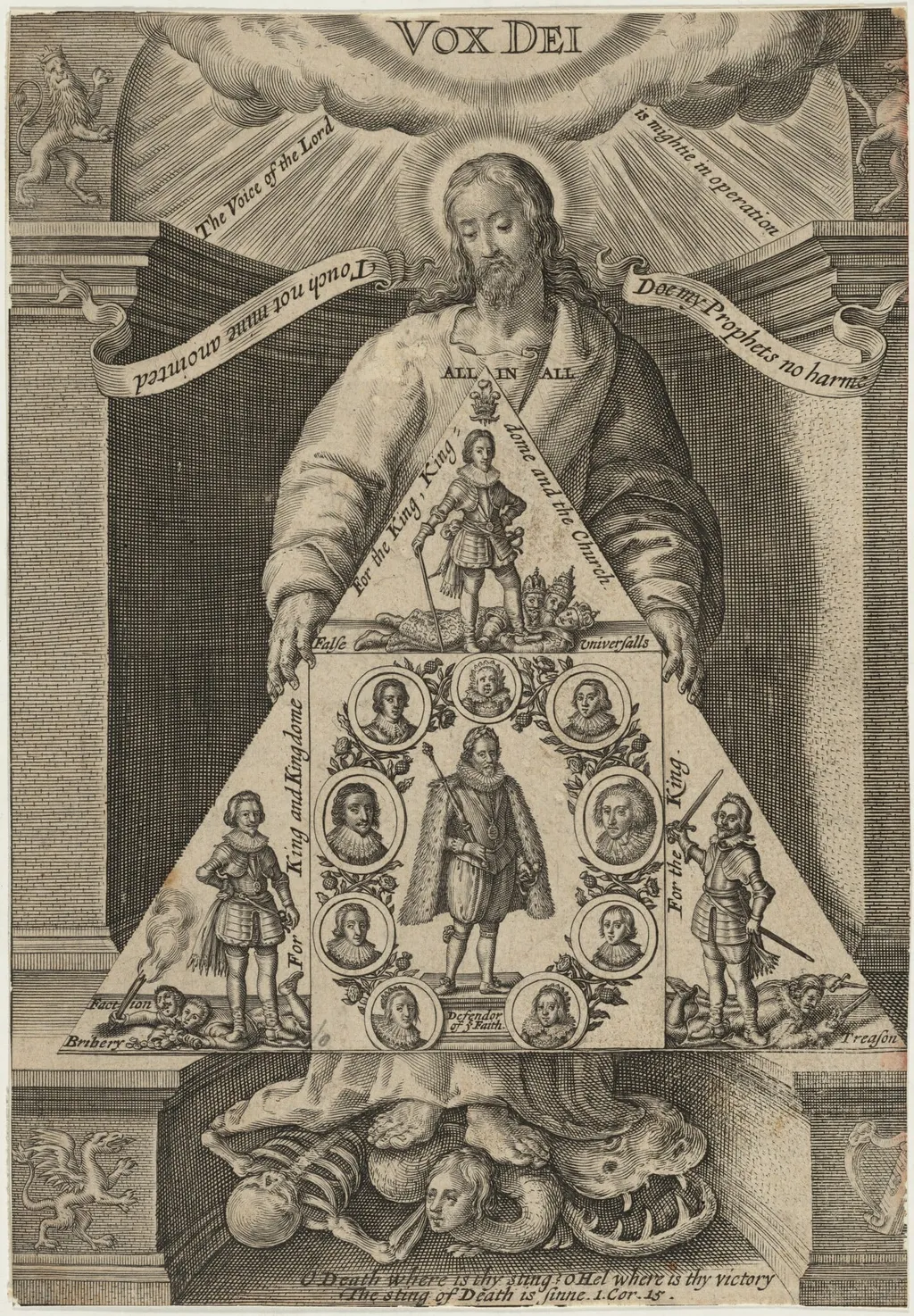
Vox Dei, by Thomas Scott is an ink print by the Baroque artist Crispijn van de Passe I. It dates from 1624 and is held in the collection of the Rosenwald Collection.
About this work
Overview
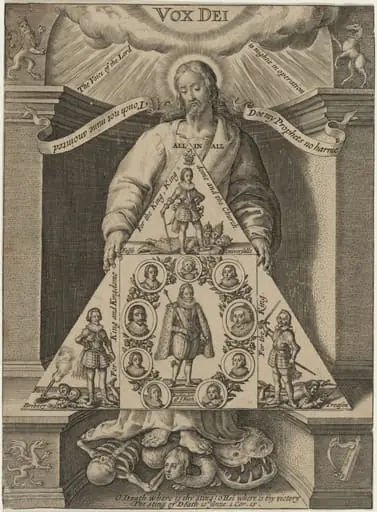
The print is composed around a central, bearded figure who raises a banner bearing the inscription “Vox Dei.
Vox Dei is a copperplate engraving dated 1624, attributed to the workshop of Crispijn van de Passe I and issued under the name of the English publisher Thomas Scott. The print is composed around a central, bearded figure who raises a banner bearing the inscription “Vox Dei.” Surrounding this focal point are a multitude of smaller vignettes depicting monarchs, soldiers, and individual faces, all arranged within a tightly packed triangular composition framed by scrolling text.
Subject & Meaning
The dominant, bearded figure functions as an allegorical personification of divine authority, his raised banner suggesting a proclamation of God’s voice. The surrounding miniatures—royal heads, armed men, and mournful visages—evoke the interplay of temporal power and religious judgment, implying that earthly rulers and warriors are subject to a higher, spiritual scrutiny.
Technique & Style
Executed in fine line engraving, the work demonstrates van de Passe’s characteristic precision in rendering intricate details and dense textual elements. The artist employs cross‑hatching to model volume and texture, while the composition’s tight, triangular arrangement creates a sense of visual compression, guiding the viewer’s eye from the central proclamation outward to the peripheral scenes.
History & Provenance
First issued in London by Thomas Scott, a prominent early‑17th‑century publisher of continental prints, Vox Dei entered the English market during a period of heightened religious tension. Surviving copies are documented in several major collections, including the British Museum and the Rijksmuseum, indicating its wide distribution and appeal among collectors of emblematic and moralizing imagery.
Context
The engraving emerges from the early Stuart era, a time when visual propaganda often linked monarchical authority with divine sanction. Its iconography reflects contemporary concerns about the legitimacy of rulers and the moral responsibilities of soldiers, resonating with the broader European tradition of emblem books that combined text and image to convey ethical lessons.
Artist & collection

Artist
Crispijn van de Passe I (1564–1637) was an artist, born in Arnemuiden.
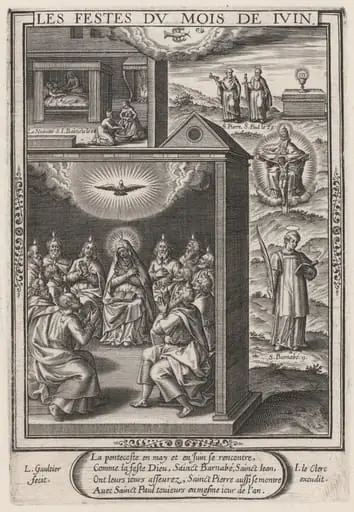 Les Festes du mois de Juin (June: The Pentecost)
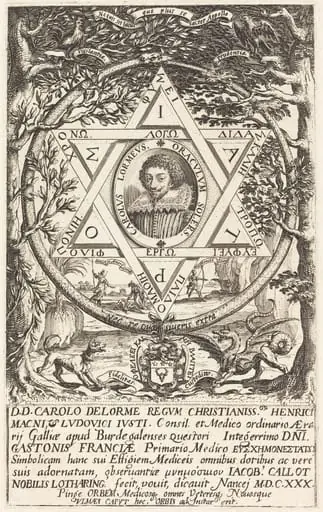 Charles De Lorme
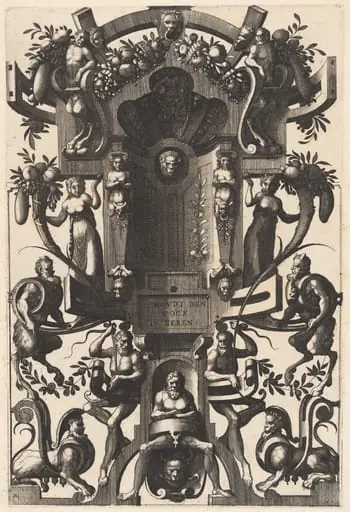 Grotesque with Strapwork in the Form of a Cartouche
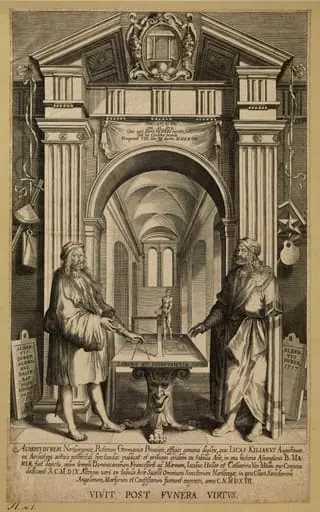 The Temple of Honor
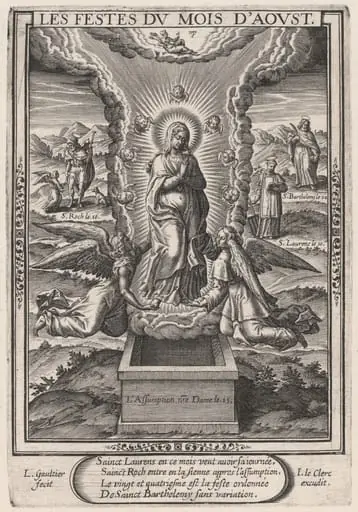 Les Festes du mois d'Aoust (August: The Assumption)
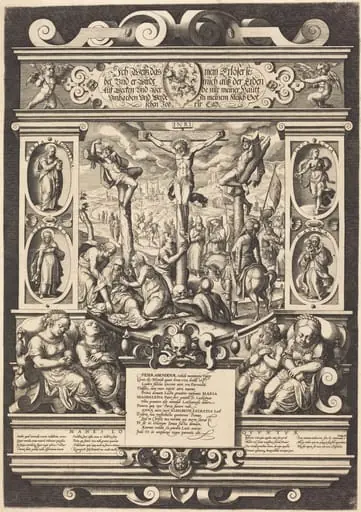 Funeral Monument to the Daughters of Feuerabend
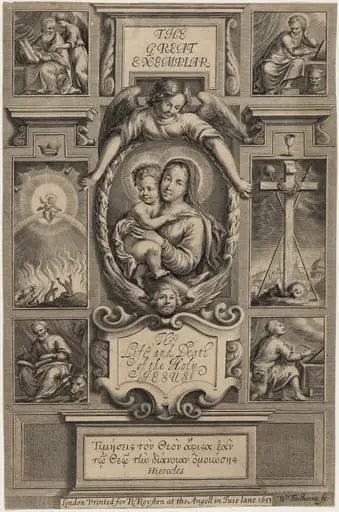 Title Page to Jeremy Taylor, The Great Exemplar
 Oliver Cromwell
 Title Page to The Life of Faith by Richard Baxter
 Triumphal Altar with Stages in the Life of Christ
 Vox Dei, by Thomas Scott
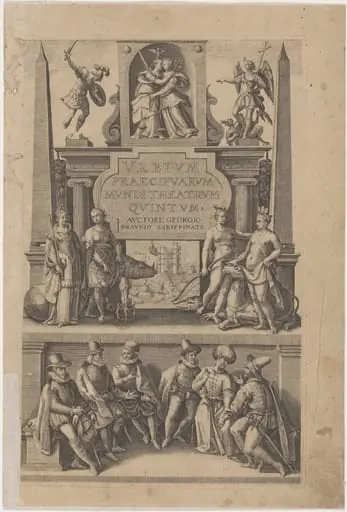 Title Page to Urbium Praecipuarum Mundi Theatrum Quintum